Interop 2023: Progress Report from October
With the final quarter of 2023 underway, browser engines have made substantial headway across the Interop 2023 focus areas. Here's a look at the current scores and the major features that have reached stable releases this year.
Scores at Launch and Now
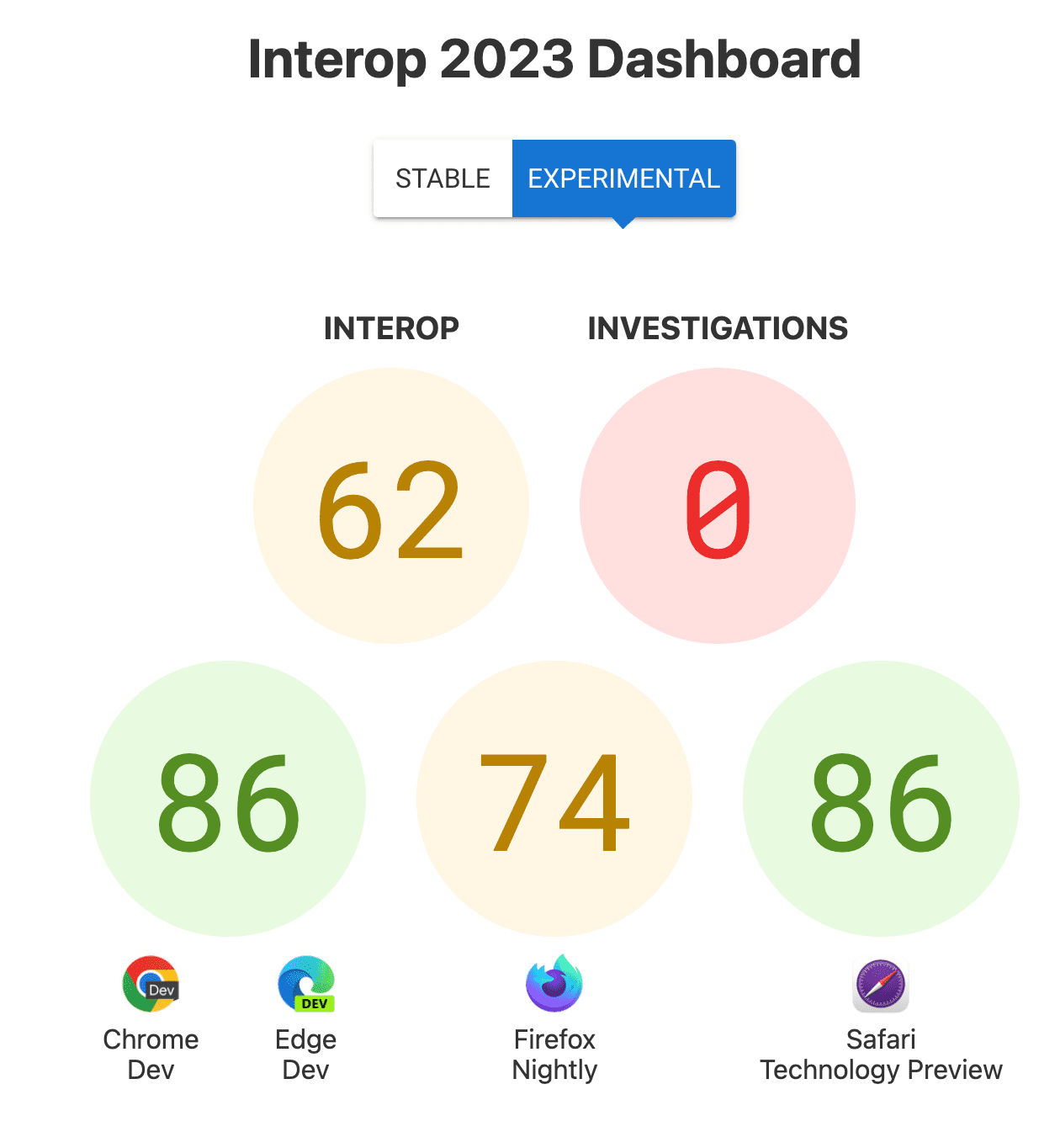
When Interop 2023 launched in January, the experimental browsers' overall score stood at 62 across the 26 focus areas. By October, that figure has climbed to 89. Looking at stable browser releases, the score is 75, reflecting features that have actually shipped to users rather than remaining in experimental builds. Behind these numbers are both small interoperability fixes and several large, long-requested platform capabilities.

Container Queries and Units
Size container queries became interoperable in February, marking a major milestone. For years, web developers had requested the ability to style elements based on their container's size rather than the viewport. Alongside this, container query units arrived, working much like viewport units such as vw but relative to the container instead of the viewport.
New Color Spaces and Functions
As of May, the Lab, LCH, Oklab, and Oklch color spaces are supported consistently across engines. The CSS functional notations lab(), lch(), oklab(), and oklch() provide developers with access to these spaces, joined by the color() and color-mix() functions.
Subgrid
The subgrid feature adds a new value for grid-template-columns and grid-template-rows, letting a nested grid adopt the track definition of its parent. This enables alignment of deeply nested elements within a grid structure, a task that previously required workarounds. The implementation complexity was considerable, as the specification's interactions with other grid features made it a challenging feature to standardize across engines.
The inert Attribute
The HTML inert global attribute is now widely supported. When applied, it blocks click and focus events and removes the element and its content from the accessibility tree. This is particularly useful for offscreen content that should be visually hidden yet remain reachable by assistive technologies unless marked inert.
What Remains
Beyond these headline features, numerous other fixes and additions have shipped this year. With browser releases still scheduled for the remainder of 2023, a full recap will follow once all scores are finalized.


