
The Web Doesn’t Have to Be a PDF
There's a certain joy in fussing over details that serve no practical purpose—slicing a grapefruit just so, or taking the time to poach an egg when scrambled would do. The same instinct applies to building for the web. While the industry obsesses over shipping features and chasing perfect Lighthouse scores, something has been lost: the sense that a website is a crafted experience, not just a document reader with a resume attached.
This isn't an argument against performance. SVGs can be tiny and still have a big visual impact. Many effects require only a few lines of CSS, and JavaScript animations can be lazy-loaded so they don't weigh down the initial render. Even without a single asset, you can make a site memorable with intentional word choice, color, and layout.
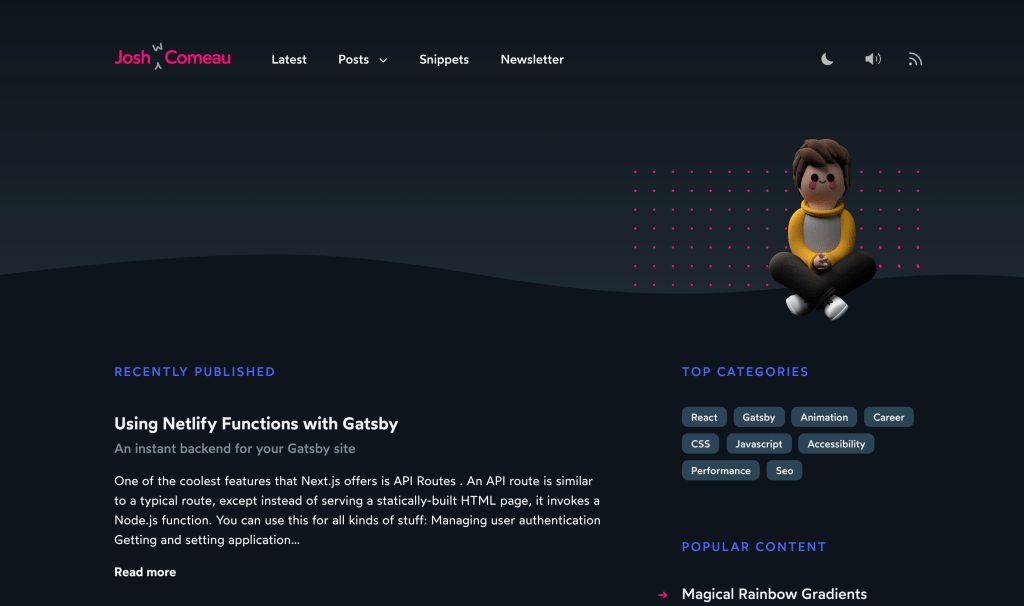
Some of the most compelling developer portfolios out there—think Josh Comeau, Johnson Ogwuru, or Cassie Evans—are full of small touches that make you stay. These are the little a-ha moments that turn a cursory glance into genuine exploration. They make you feel connected to the human behind the code rather than just scanning their career history. These details are often dismissed as "fluff," but they're actually doing the core job of the web: communicating through a computer as an extension of yourself.
The Value of a Good Impression
It's easy to fall into the trap of absolutes: if a site is fun or stylish, it must not be useful. But the opposite tends to be true. Emotion is linked to memory. A flat block of text is forgettable; a site that engages you is one you're likely to recall and cite.
Consider how often Stripe comes up in conversations about aspirational design. Teams at multiple companies have mentioned it as a benchmark—not because of a killer feature, but because it took chances and spoke directly to developers. It told a story and engaged the imagination.

The sad irony is that those same companies often stripped away the very qualities they admired, slowly chipping away creativity and risk in the name of "usefulness." They missed the forest for the trees.
When a site is built with care and excitement, you can feel it. The craft and cohesion are obvious, and that intention invites you to meet it halfway. These are the sites with the low bounce rates and the high engagement metrics—the ones that spark questions like "can I contribute?" No gimmicks required.
Starting Small Matters
Not everyone has the time to overhaul their site. But you can start with a single detail. Maybe it's a goofy animation instead of a poached egg. Challenge yourself to learn one new technique, outsource a single graphic, or introduce a tiny easter egg. Say something that doesn't sound like typical corporate jargon.
If you build something meaningful to you, the audience you gather will likely be the people who find it meaningful too.


