
Why Customer Relationships Matter in Research
The growth of customer relationship management (CRM) software suggests businesses increasingly value customer connections; Gartner estimates the market will expand over 14% through 2025, after reaching $69 billion worldwide in 2021. Yet genuine relationship management extends beyond scalable communication tools into person-to-person trust-building. Experts advise treating customer relationships as long-term assets, and the payoff is measurable: a 5% increase in retention can generate over a 25% increase in profit, as Forbes notes.
Engagement should not stop at sales or support. A critical opportunity is involving customers in the product development cycle after they have adopted your product. User research methods such as interviews, surveys, usability testing, and focus groups let customers shape the future of what they use. This signals investment in their experience while delivering data to refine and align product features with expectations.
The challenge is that getting busy customers to participate is difficult, especially in business-to-business (B2B) contexts. Email invitations sent through CRM systems often go unopened when no relationship exists beforehand. Asking someone to join a 1:1 research session is harder than asking for a survey response, and trust is a key factor in declining participation rates. Research shows participants frequently distrust the organization or perceive a lack of empathy. Nurturing relationships before you request time is essential, and it takes deliberate effort beyond deploying software.
Start With Internal Allies
Building a customer relationship program often starts inside your own company. Colleagues in sales, customer success, or support already have direct lines to the people you want to learn from. They may not know what user research is or why it matters, though, so your first job is education.
Begin with the people you work with most closely. Help them understand your goals, and don't be shy about asking for a personal introduction. A product manager who thinks client conversations are enough might not see the value of structured research. Showing how your work complements theirs—not replaces it—can turn skeptics into advocates.
Stakeholder involvement is critical. These are the people who act on your findings, so leaving them out of the process until the final report is a recipe for ignored results. As Tomer Sharon writes in It's Our Research, researchers often "plan a study with their stakeholders, then desert them and run the study by themselves, only to come back to stakeholders a month later expecting them to fix usability problems." Engaging stakeholders throughout avoids that disconnect.
Bring the right people into research planning:
- Product management understands business goals and can help define the right audience.
- Software developers will act on findings, so their early input matters.
- Design partners naturally on capturing observations and refining approaches.
- Sales has close customer ties and can support recruitment.
Ask stakeholders what they want to learn and what they plan to do with the answers. A senior research colleague once advised getting "three questions from your stakeholders that they want to be answered"—a solid rule of thumb. Don't wait for them to initiate planning. Schedule high-level meetings with senior product or engineering managers monthly or quarterly, and keep tactical check-ins with product managers or team leads every week or two. Attend their meetings too, so you see where your work fits.
Continuous involvement generates continuous buy-in. Invite stakeholders into your research sessions and put them to work taking notes. Review observations together afterward so nothing surprises them. Keeping studies small and agile also helps—long projects lose relevance as teams move on. When you present findings, resist the data dump. Show what you found and answer the questions they asked; what you leave out matters as much as what you include.
When colleagues experience research firsthand, they gain ownership of it. One product manager I worked with began seeing research as a sales tool because it showcased the redesigned product so well. Building customer relationships means building internal ones first.
Get Specific in Your Requests
A vague ask like "I want to talk to this customer" confuses the person you need help from. If you're new or working outside your immediate team, you'll face even more hesitation without a clear pitch.
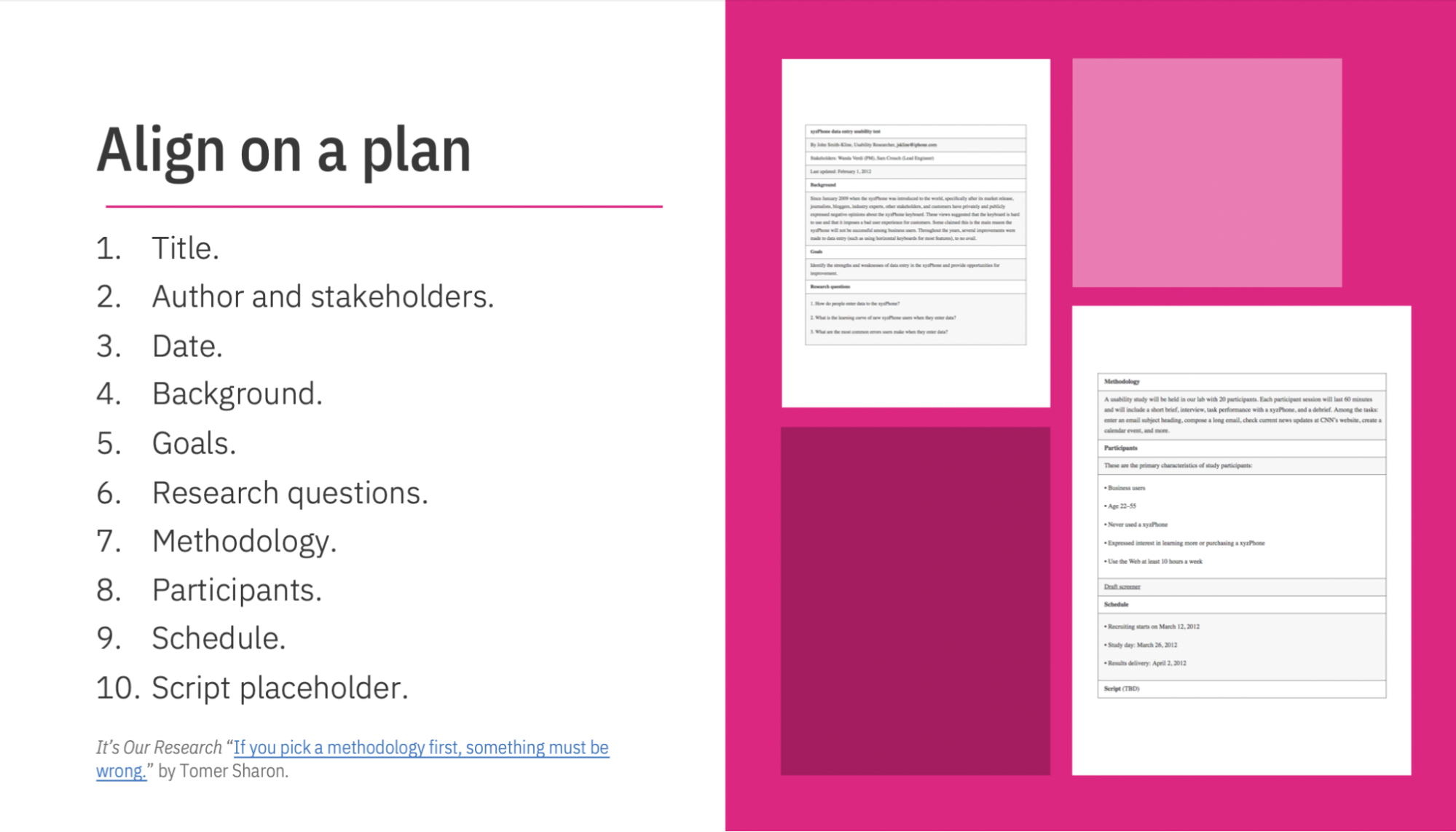
Develop a research plan before reaching out. It should cover the project title, the people involved, background and goals, research questions, method, target user, participant count, schedule, and script. Then pull out just what your colleague needs to know:
- Target user: who you need to connect with;
- Goal: what the study aims to achieve;
- Research questions: what you'll ask;
- Time commitment: how long participation takes.
That clarity helps colleagues judge whether they can help and how to frame the introduction. For broader reach, distill these details into a one-pager and post it where the right people gather—customer success managers often have their own Slack channel, for example.
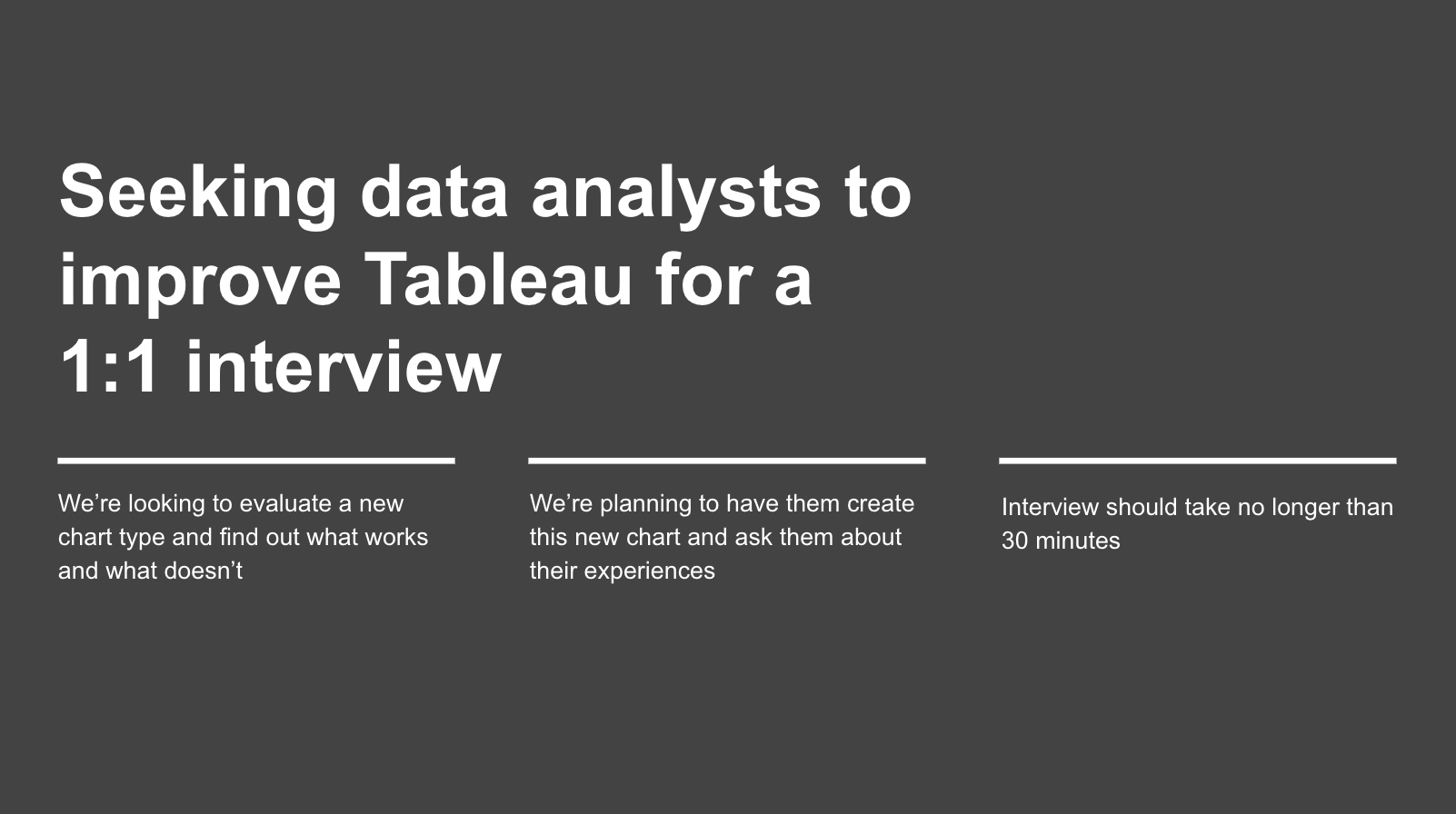
A one-pager works beyond Slack. Show it in person to anchor your request, or ask a product manager to include it at the end of a customer presentation as a call to action. Articulating your needs precisely also sharpens your own search for participants.
Go Where Your Users Already Are
If you don't know where customers spend their time, find out. Check web analytics to see referral sources, or ask current contacts which sites and apps they use daily. A reliable bet is an online community or user group tied to your product or industry. A forum for a tool like QuickBooks, for instance, surfaces both potential participants and unfiltered opinions about your space.
An IBM Community forum post illustrates the approach: include a product screenshot and ask what members think. Posts with visuals tied to commonly used features drew solid response rates. Adding a link to a sign-up page or survey—sometimes sweetened with raffle ticket entries—encouraged participation.
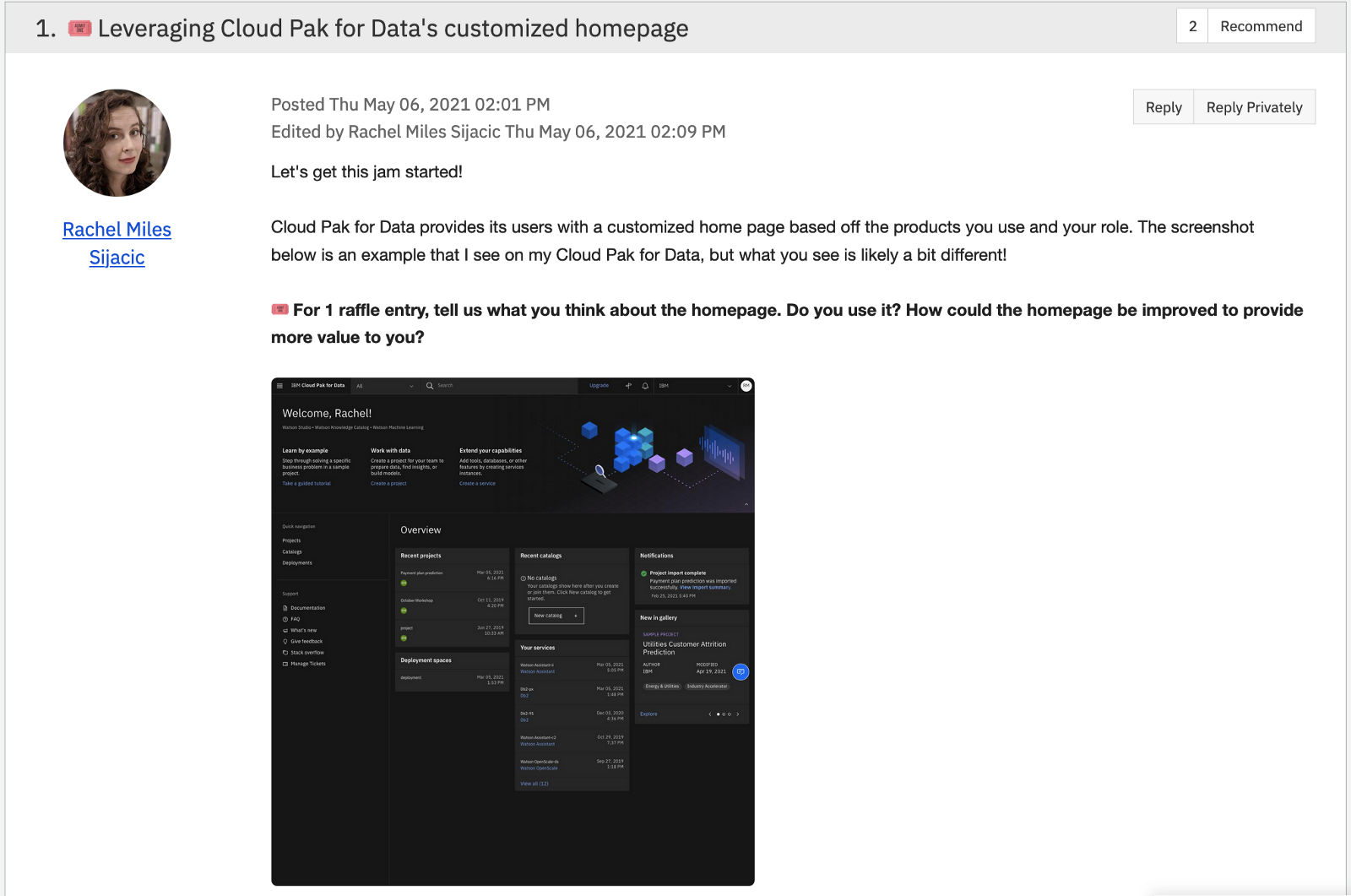
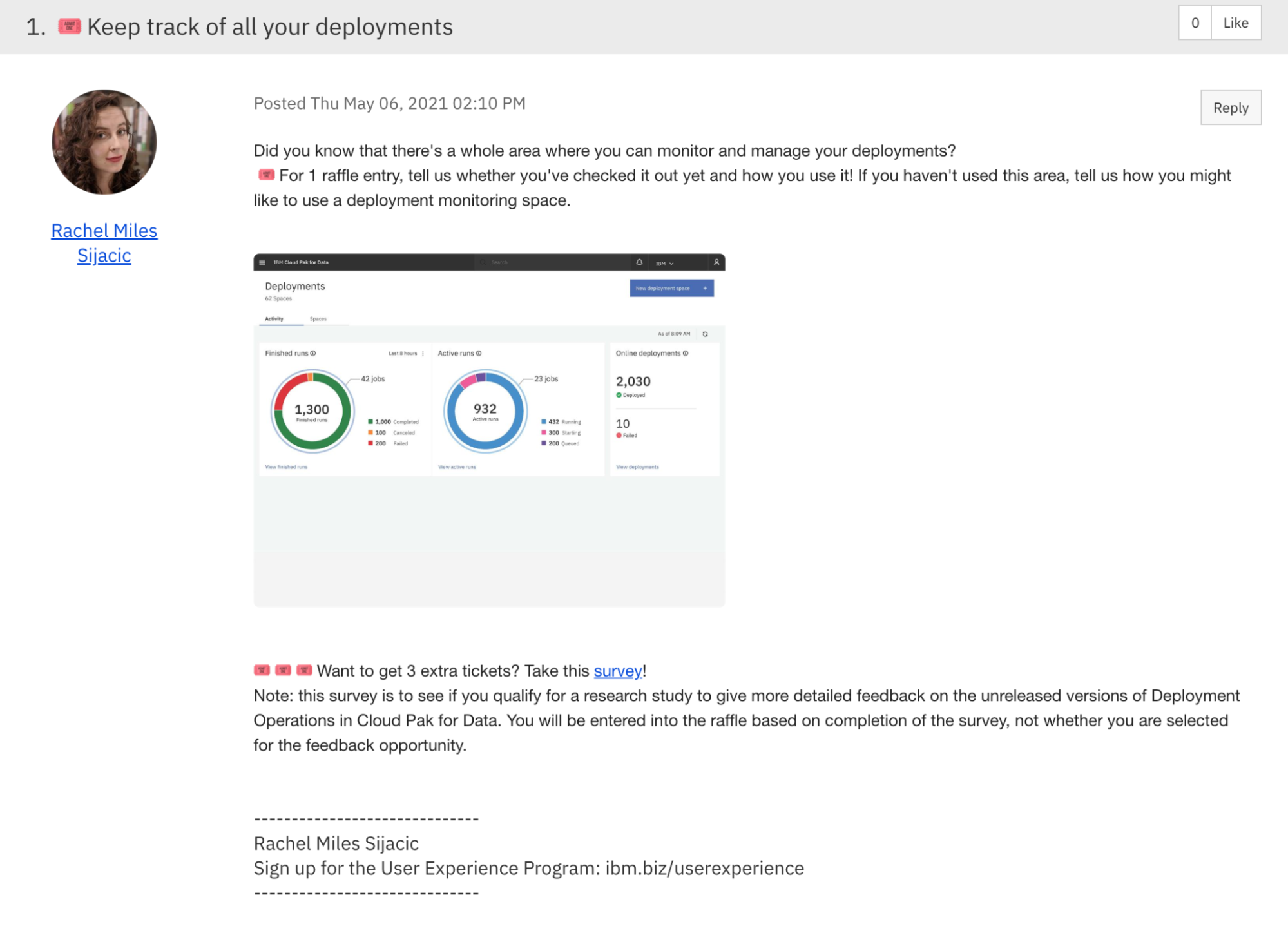
Forum engagement works as lightweight, continuous research between formal studies. Messaging that doesn't sound spammy takes trial and error, but the payoff is direct access to specific, engaged users.
Meet People in Person
Trade shows and conferences restore the face-to-face connection that digital tools strip away. Find events through online searches or by asking your marketing team where they're headed. Walk the floor, stop at booths of potential customers, and introduce yourself. Wear a clear name tag so people can find you.
Attend talks relevant to your product. Speakers are particularly good candidates—you've already seen they can articulate ideas. Introduce yourself after a presentation and ask if they'd like to join your research program. A user group conference led me to exactly that kind of partnership: the speaker I approached became a regular participant, and at the next event he was telling colleagues how much he valued the experience, generating even more interest.
Manage a Participant Panel
A panel doesn't require thousands of names. Even one customer counts—they can connect you to others in their network. Start small and grow.
Before storing any personal information, check your company's policies on data handling and approved tools.
Be sure to check your company's policies around storing personal information and what tools you can use to do that. You don't want to be in violation of any internal policies.
Your CRM can hold panel data, but it's built for marketing, sales, and support—not for the research workflow. Finding participants, screening them, scheduling sessions, collecting signed NDAs, and managing incentives are all extra steps in a CRM. Dedicated panel management tools like User Interviews or Great Question pull the relevant fields from your CRM and handle the research-specific work: screener surveys, calendar booking, consent forms, and incentive distribution. The trade-off is a second dataset to maintain unless the two tools integrate cleanly.
Access alone isn't enough. Relationships need upkeep, or participants drift away.
Maintain Relationships and Track Progress
It's easy to contact customers only when you want something from them. That feels one-sided and erodes goodwill. Ask about their work and their weekend. Share something about yourself. Common interests build connection. Send thank-you notes.
Newsletters are a useful maintenance tool. Updating participants on how their feedback shaped product improvements delivers the value they care about and reinforces why participation matters.
Results take time. You may not see traction for months, and wins can feel small at first. A colleague who invited you to present at their meeting counts. A stakeholder who previously resisted your work now asking for your opinion counts. Someone signing up from a forum post counts. Keep a record of these wins and revisit them when progress feels slow. Relationships are the long game—consistency pays off eventually.
Building relationships is the work
Strong customer relationships don’t form overnight, and they don’t happen by accident. The structured steps above give you a starting framework, but you’ll need to adapt them to your own product, audience, and team rhythm. What works for a B2B SaaS company won’t map cleanly onto a consumer mobile app, and that’s fine.
The core principle stays the same: user research depends on trust, and trust depends on consistency and genuine engagement. If you treat participants as a resource to be tapped, they’ll disappear. If you treat them as collaborators, they’ll keep showing up even when you hit a dry spell or need to ask harder questions.
Patience is the real differentiator here. Some of the most valuable research relationships you build may start slowly, with hesitant replies and short sessions, before opening up into the kind of candid feedback that actually improves your roadmap. Give people the time and space to engage on their terms, and you’ll get the depth of insight that makes research worth doing.
Above all, remember that research is a people practice, not just a process. The relationship you build before the study, and the way you maintain it after, will determine the quality of what you learn in between.



