
From Mills to Store Shelves: The Digital Backbone of Kimberly-Clark
Kimberly-Clark, the manufacturer behind household names like Kleenex, Scott, and Huggies, touches a quarter of the world's population daily. Yet, only a few years ago, the company faced a very different reality. Shifting consumer preferences, intense competition, and rising production costs were stifling demand. In response to these pressures, the company launched an initiative in 2018—amid significant cutbacks—to reignite growth by its 150th anniversary in 2022. The cornerstone of this strategy was a heavy investment in the digital customer experience.
The urgency of this transformation became apparent during the coronavirus outbreak, when Kimberly-Clark had to ramp up production and redirect inventory to meet consumer needs. The ability to pivot quickly proved vital, helping the company post revenue of $4.61 billion and beat Wall Street expectations.
Today, the company's operations span over 400 consumer websites and a vast portfolio of digital products. Every stage of the pipeline—from price management and manufacturing to distribution and merchandising—relies on a digital component to ensure products move efficiently from mills to local stores.
Overcoming Silos with a Unified Design Platform
Supporting this vast ecosystem across 175 countries presents a major challenge: building a cohesive digital experience. The core obstacle was internal. UX Manager Andy Ford noted that designers were burdened by an inefficient workflow—spending weeks alone in proprietary Mac-based applications, uploading files to a cloud prototyping service, waiting for stakeholder feedback, and repeating the loop for edits. This process slowed product launches exponentially, especially when handing off files to developers who did not use Macs.
To address these bottlenecks, Ford introduced Figma, a platform he had previously used. The shift consolidated tools into a single, accessible workspace. “With Figma, everything is just there,” Ford said. “It becomes the single source of truth. Nothing is saved locally and anyone you invite can easily join to view and edit a file.”
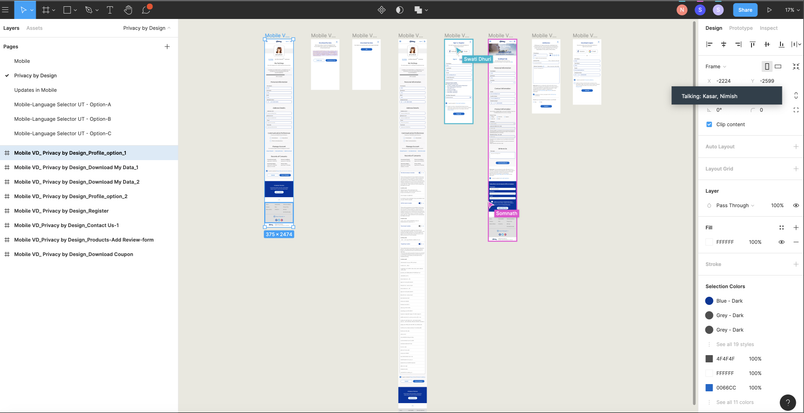
Rather than holding static design review meetings, teams began working in real-time. This collaborative environment allowed brand, marketing, and design teams to participate in the creation process, watching design updates materialize on screen together.
Measuring Success in Signups
Beyond improving workflows, Ford aimed to prove that tackling design problems as a team had a tangible impact on the consumer experience. He tracks engagement metrics like bounce rates, return visitors, and signups for awards, coupons, and newsletters.
One particular issue involved a website form with an excessive 13 fields, likely to yield low conversion rates. Instead of debating the issue in meetings, the brand, marketing, and design teams gathered in Figma to collaboratively redesign the solution, slashing the friction to just 5 fields.
The result was decisive: a 71% increase in signups after the new form went live. The collaborative approach prevented debates and allowed the team to solve the problem on the spot. Ford attributes this success to the ability to work toward a shared outcome during sessions, stating the tool’s speed helps get products to market faster.
Looking ahead, Kimberly-Clark’s digital transformation continues. The next initiative involves constructing a new design system that will integrate seamlessly from Figma into Storybook and their code repository. As the company approaches its 150th year, the focus on design-driven problem solving is poised to remain central to their operations.


