

Open source communities are finding new uses for GitHub Discussions
GitHub Discussions, the collaborative forum feature built into public and private repositories, has been out of beta since 2021 and available since 2020. It supports Q&A, pinned conversations, community announcements, and the ability to convert a discussion into an issue. While the feature was designed as a central place for project conversation, open source communities have stretched it in directions the GitHub team didn't predict — from release Q&A to spacecraft flight-system coordination. Below are five examples of communities doing just that.
A staging ground for major releases: React
When the React team introduced React 18, it didn't just post release notes. The team opened a Discussions board as part of the React 18 working group, giving collaborators and users a place to ask questions about the release and related proposals. The board has since become a continuous channel for the team to announce betas, GA releases, and deep-dive technical conversations, as well as collect feedback from the community. It's a useful model for any project preparing a widely depended-upon release.
Explore the React Discussions board.
Fielding feature requests in crypto: Dogecoin
Dogecoin has a community that extends well beyond its developer base, spanning Reddit, Twitter, and even NASCAR sponsorships. But the core open source project has turned to GitHub Discussions to consolidate input from a loud and dispersed audience. The Dogecoin maintainers use Discussions to gather feature requests from contributors, recruit new maintainers, and flag bad actors abusing the blockchain.
Browse the Dogecoin Discussions board.
Discussing rocket software: NASA
Among the more unusual uses of GitHub Discussions is NASA's Core Flight System (cFS) project. The agency uses Discussions for standard community activities — answering questions, sharing ideas, and surfacing proposals — but also for coordinating collaboration on flight software that is actively running in spacecraft. That distinction is worth noting: the project keeps detailed, trackable work in Issues while routing open-ended conversation to Discussions, which keeps the repository's action items clean.
Visit the NASA Discussions board.
Giving media software a home: Pixar's OpenTimelineIO
Pixar has been using GitHub Discussions since early 2020 for OpenTimelineIO, its editorial API for building ordered timelines for media production. The goal was to move community conversation out of chat apps and the repository's own GitHub Issues, giving contributors a single space to share ideas and field questions.
The result is a place to separate ad hoc conversation from tracked feature work.

Join the OpenTimelineIO Discussions board.
Scaling community conversation: Next.js
Next.js has one of the most active Discussions communities on GitHub — the project's board alone spans hundreds of pages of threads. The vercel team helped GitHub build Discussions from the beta phase and continues to request and test new features for it. Still, the community itself drives the content:
- Discussion threads run the gamut from show-and-tell and question-and-answer to project showcases.
- Public and pinned threads track companies using Next.js.
- Deeper discussions explore running the framework in cloud IDEs and new library-component ideas.
The space lets the project discuss roadmap items, connect with contributors, and generally keep the repository's Issues focused on work.
Join the Next.js Discussions board.
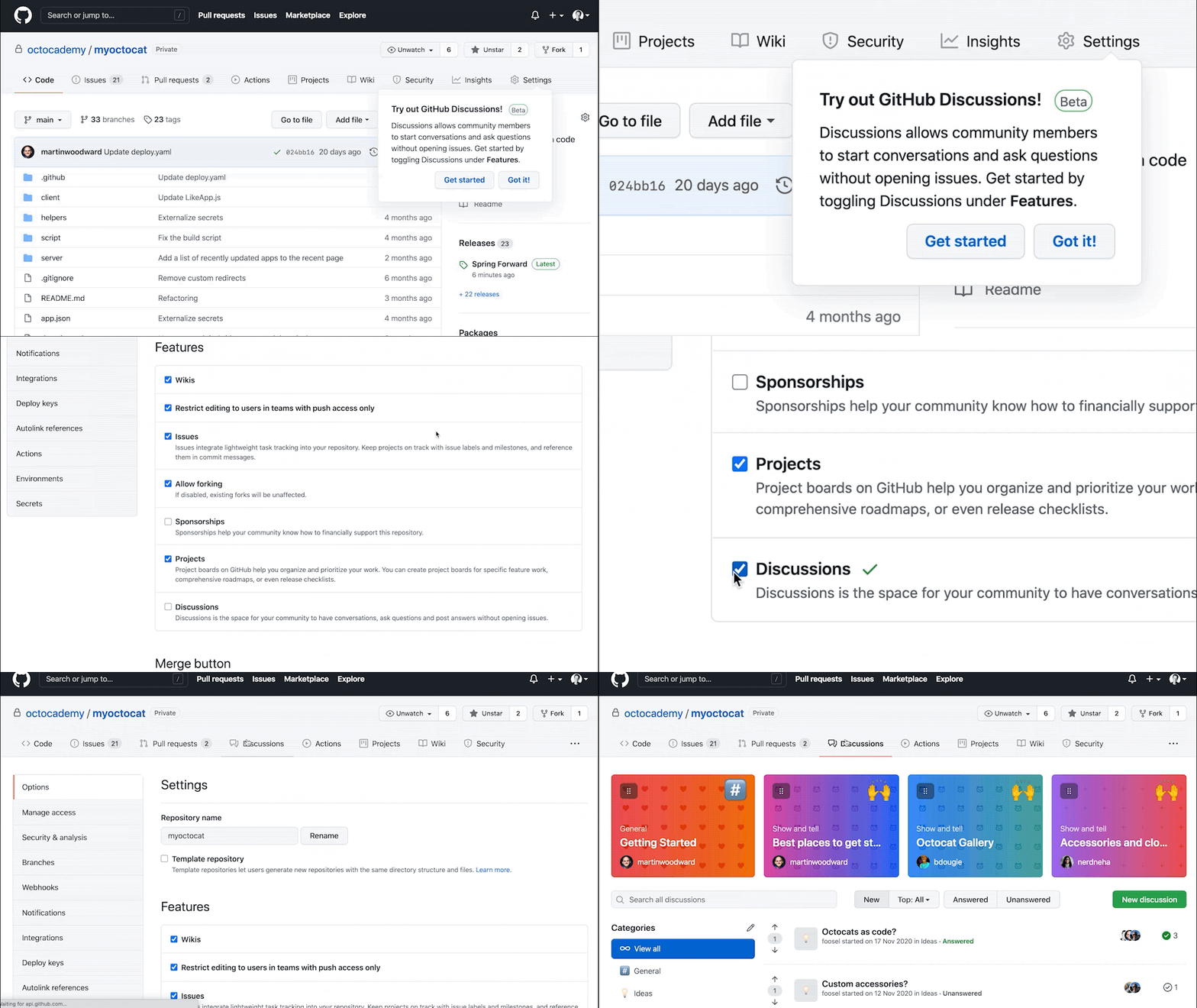
Enabling Discussions in your own repository
Any repository owner, admin, or maintainer with write access can enable Discussions for a public or private repo in three steps:
- Open your repository settings and navigate to "Features."
- Check the box next to "Discussions."
- Create a welcome post to get the conversation started.
For more ideas on what's possible, GitHub has documented some lesser-known Discussions features and provided a quickstart guide for setup.



