
Link's wallet for agents is now used by personal AI agents including Muse, Grok Bot and Instinct to drive consumer spending, and agentic purchases made through it grew 38x over the past month. Link is adding three capabilities in response to builder requests: incremental authorization with checkout guidance, spending analysis for recommendations, and purchase protections.
Incremental authorization and recovery guidance
Checkout flows are complicated, and agents often lack full information when a purchase begins—taxes, shipping and other costs can arrive later in the process. Link now supports incremental authorization, which allows an agent to raise the approved amount when the final price exceeds the original. If a consumer asks an agent to book a flight and then adds a checked bag to an already approved fare, the agent can update the approved amount to cover the baggage fee rather than restarting the purchase and placing a second hold on the card. The result is fewer incomplete purchases and less need for user intervention.
Link also returns specific next-step guidance when an agent hits a payment obstacle. One example is a URL the agent can send to the consumer so they can complete a 3D Secure challenge; another is a declined payment method, where the agent prompts the consumer to pick another method and creates a new spend request. Failures surface a structured next_action object describing the obstacle and its resolution.
~
Spending analysis for product recommendations
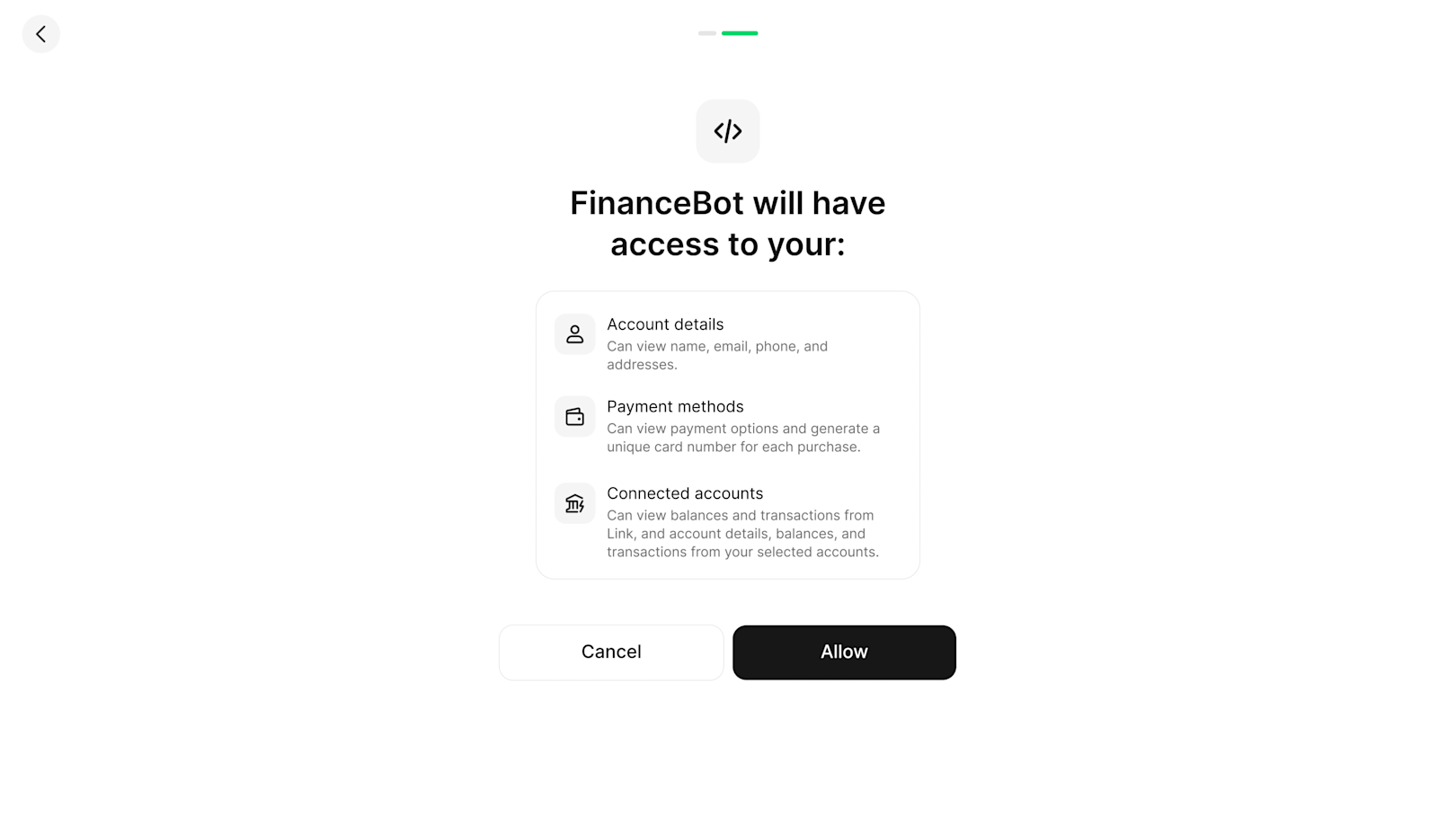
Link's financial insights let builders have their agents analyze purchase history to improve recommendations. With the consumer's permission, an agent can see which stores the person shops at, set a budget that matches their habits, make a relevant suggestion and then carry out the approved purchase. In the source's example, a consumer asking for cleaning supplies might be pointed to Sudsy on the strength of past orders.
The data comes through Financial Connections, Stripe's open banking product, which gives consumer-permissioned access to transaction data from more than 12,000 financial institutions covering over 97% of US bank accounts. Consumers select which bank and credit card accounts to share and can revoke access at any time.
Protections when an agent gets it wrong
Consumers who delegate a purchase need recourse if the agent errs. For eligible purchases completed through Link, they may now receive free purchase protections covering accidental damage, lost items, price drops after purchase, no-fee returns and return guarantees. Builders get these safeguards for their users without running a protection program or handling claims themselves. Muse is the first agent to offer the protections; Link says more agents will follow.
Next: agent budgets
Link plans spending controls that would let a consumer give an agent a budget and let the agent finish a task without approving each transaction—for instance, securing a limited-release pair of shoes when they go on sale at 1 a.m.



