
GitHub Universe 2026: Call for Sessions Now Open
GitHub Universe returns to San Francisco's Fort Mason Center on October 28–29, and this year's Call for Sessions is officially open. Whether you're ready to share your own work or want to put someone else in the spotlight, proposals and speaker nominations are being accepted through Friday, May 1 at 11:59 p.m. PT.
If you've built something worth talking about over the past year, or picked up lessons other developers could use, the team wants to hear it. Submit a proposal or nominate someone else who deserves a microphone.
Five Sessions That Showed What Universe Can Be
Still deciding whether to apply? These past talks from Universe give a sense of what resonates with the audience: sessions that pair real engineering substance with memorable presentation styles.
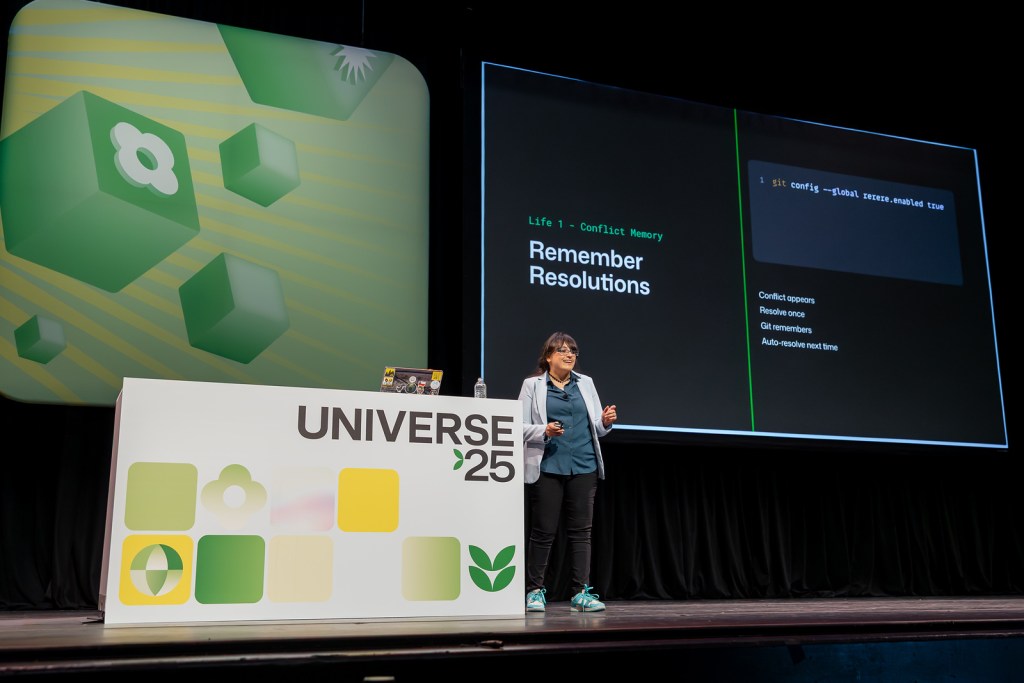
From casual suggestion to serious turnaround — In Git's Nine Lives, presenter Pillippa Pérez Pons took a universally painful problem set—messy rebases, bloated monorepos, and commits that vanish without explanation—and hung it on a different framework entirely. Framing the session as a cat's nine lives, each segment uncovered a lesser-discussed Git capability: sparse checkouts, partial clones, reflog-based recoveries, and optimizations that reduce friction on large repositories. The playful wrapper made the technical content stick.
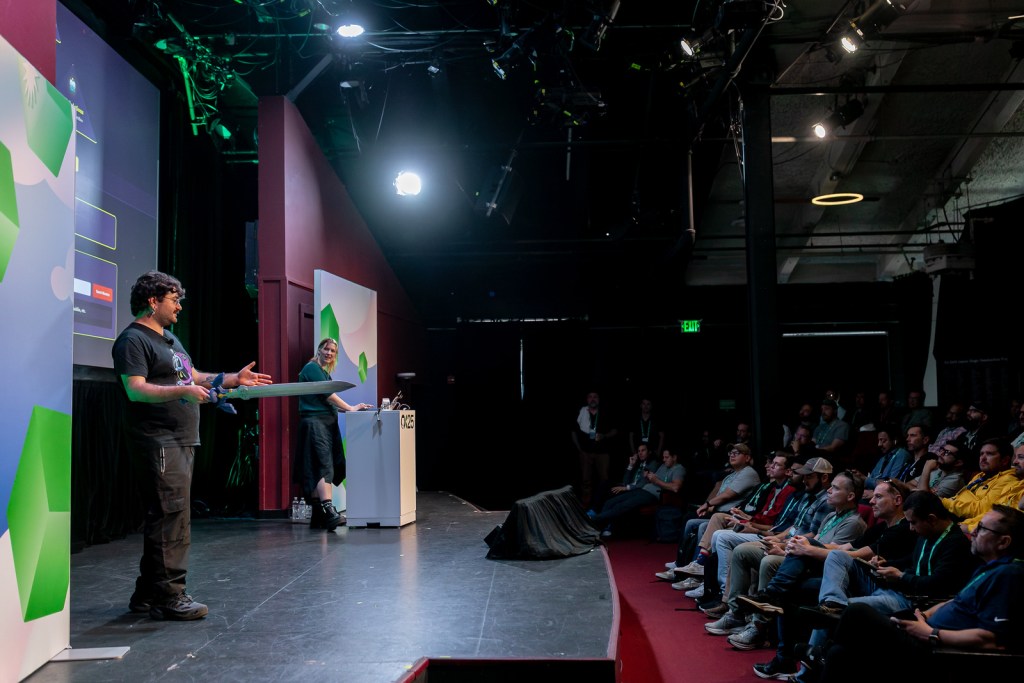
A fantasy narrative with a secure CI/CD payload — Matteo Bianchi (GitHub) and Alexandra Aldershaab (Eficode) delivered Breath of Copilot as a full-scale quest narrative, treating a modern CI/CD pipeline as the kingdom worth defending. Ancient script monsters and the ever-looming threat of supply chain compromise framed practical patterns for building secure GitHub Actions workflows, with Copilot along for the ride as a helpful companion. Real automation guidance, in character.
Speed as a creative lever, not a productivity score — Martin Woodward (GitHub) offered the most subdued of the five talks. Dream It in the Morning, Build It in the Afternoon argued that software's center of gravity has moved—the distance between good idea and working prototype has collapsed, forcing the question of what to do with that new speed. His point wasn't about delivery timers. Curious developers who keep experimenting outpace anyone clocking cycles.
Kubernetes security, roleplayed properly — For anyone whose eyes glaze over at the phrase "cluster security," the Dungeons and Deployments team delivered a party-based adventure with serious concepts intact. Noah Abrahams, Ian Coldwater, Kat Cosgrove, Seth McCombs, and Natali Vlatko led the audience through a chaotic fantasy world that happened to contain real security architecture lessons, villains and stakes included.
Application security as an operations film — In Mission Copilot Autofix, Nick Liffen (GitHub) and Niroshan Rajadurai staged their session like a near-future mission briefing. Beginning with practical details on how GitHub applies AI to streamline remediation and present alerts clearly, the talk concluded with a glimpse at direction: AI that may eventually defend proactively against emerging threats before they can turn into incidents.
Deciding on the Right Submission Format for Universe
This year's event features three distinct session types, so part of the work is picking the right format for what you want to say.
- Demo-style sessions — Product demos and Ship & Tell give a stage for showing what's possible and sharing what the audience should take away.
- Thought leadership — Breakout sessions, panels, and fireside chats support longer discussions of ideas and perspectives, with built-in time for questions.
- Interactive learning — Workshops and Sandbox sessions run more as structured, participatory experiences where attendees get hands-on in real time.
One format worth note is Ship & Tell, new this year and intended for startup founders and independent builders. The pitch: what did you ship, how did you take it to scale, what broke, and what worked? Promising a transparent look at what others can learn from.
More guidance on this year's content tracks, session types, and what makes a strong proposal can be found in the submission guide.
Above all else, these five sessions share one trait worth aspiring to: they grounded real technical narratives in strong point of view and a bit of personality. If that sounds like the kind of story you'd like to tell, the stage is open—but not forever. Proposals and nominations close Friday, May 1 at 11:59 p.m. PT.


