

GitHub Sponsors expands to 30 new regions
GitHub Sponsors is now available in 30 additional regions, bringing the total number of supported areas to 68. The expansion, announced three years after the program’s launch, removes the waitlist for maintainers in the newly added countries.
The new regions are Argentina, Bolivia, Chile, Colombia, Costa Rica, Croatia, Dominican Republic, Egypt, Gambia, Gibraltar, Hungary, Iceland, Indonesia, Israel, Kenya, Liechtenstein, Morocco, Paraguay, Peru, Philippines, Saudi Arabia, Serbia, South Africa, South Korea, Thailand, Trinidad and Tobago, Tunisia, Turkey, United Arab Emirates, and Uruguay. Maintainers in these areas can sign up immediately if they hold a bank account in one of the listed countries.
According to GitHub, the combined developer population across the 30 newly supported countries grew by 39% over the past year. Around 6,400 individuals who were previously on the waitlist can now join directly.
Developers in the newly supported regions can create GitHub Sponsors profiles and begin receiving financial support for their open source work. For guidance on profile setup and optimization, GitHub points to a community blog post by @blackgirlbytes on creating a Sponsors profile.
Explore view reorganized around maintainers
Alongside the regional expansion, GitHub has updated the GitHub Sponsors Explore tool to make it easier to find and support the dependencies your projects rely on. The tool displays projects and maintainers you depend on and can sponsor—via GitHub Sponsors or through another platform they use.
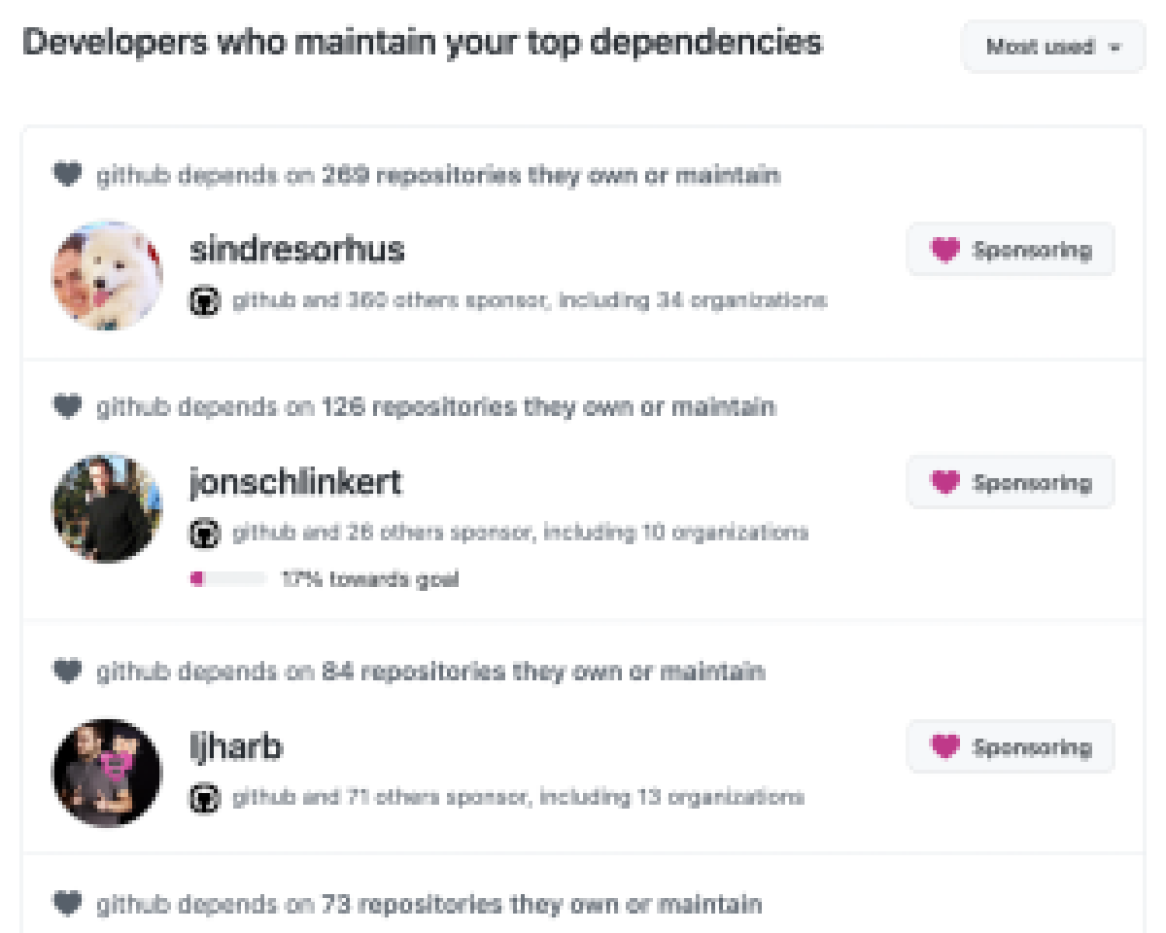
The listing is now organized by maintainer rather than project, so multiple dependencies from the same maintainer are aggregated into a single entry. Sorting options include “most depended on” and “new to the program,” which highlights maintainers in the 30 regions now eligible for sponsorship. New filters let you narrow results to first-level dependencies and to maintainers who accept one-time sponsorships. As before, you can view results for organizations you belong to and filter by ecosystem; Golang, GitHub Actions, and Rust’s Cargo have recently been added to the ecosystem filters.
The Explore update and regional expansion reflect GitHub’s ongoing effort to support sustainable open source development—though the company notes that further regions and features are still on the roadmap.


