
Gun Homicide in a Global Context: Prevalence vs. Inequality
Inspired by Mark Reid's work on the bimodal relationship between gun density and firearm homicide rates, a new analysis of the same data reveals a more complicated global picture than simple linearity. By applying a log(10) scale to firearm homicides per 100,000 people and plotting that against estimated gun prevalence, the relationship between low-homicide countries becomes clearer—and raises some difficult questions.
library(directlabels)
library(lattice)

guns <- read.table("guns/data/guns.csv", sep="\t", header=TRUE)
deaths <- read.table("guns/data/deaths.csv", sep="\t", header=TRUE)
oecd <- read.table("guns/data/oecd.csv", sep="\t", header=TRUE)

data <- merge(guns, deaths, by="Country")
data$OECD <- data$Country %in% oecd$Country

plot(
  direct.label(
    xyplot(Homicides ~ Guns, data,
           group=Country,
           main="Homicides vs. Guns",
           xlab="Guns per 100 people",
           ylab="Homicides vs 100k people",
           scales=list(y = list(log = 10))),
    "top.points"))
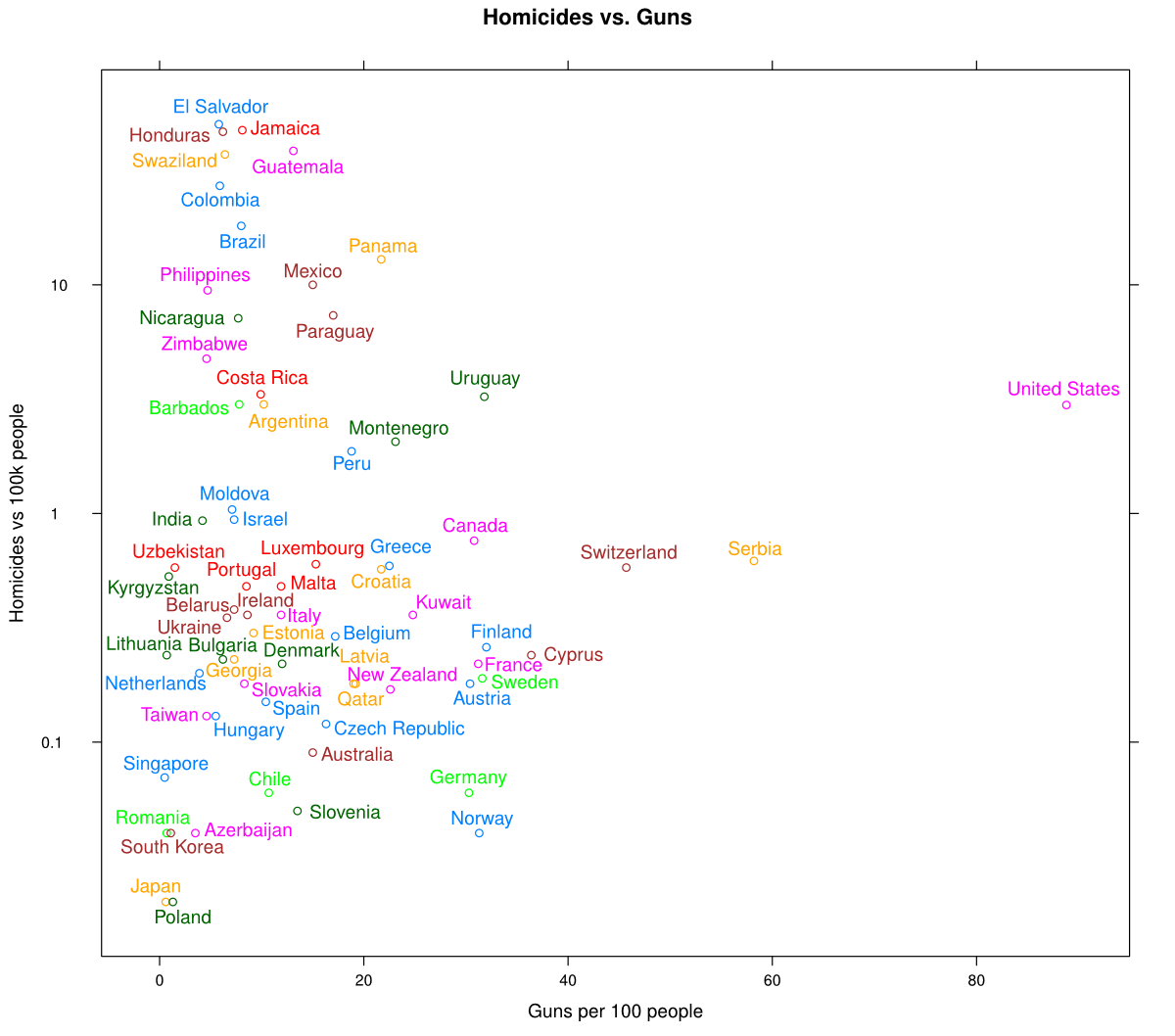
The chart prompts three immediate questions. First, how should we interpret the United States, which sits awkwardly separate from both major clusters? Second, why do two clusters exist with vague correlations in opposite directions? Third, where is Africa? That last one has a simple answer: reliable crime statistics are not available for many African nations, so they are excluded from the dataset.
The Danger of Seeing Linearity
It is tempting to focus on strong linear trends in plots like this:
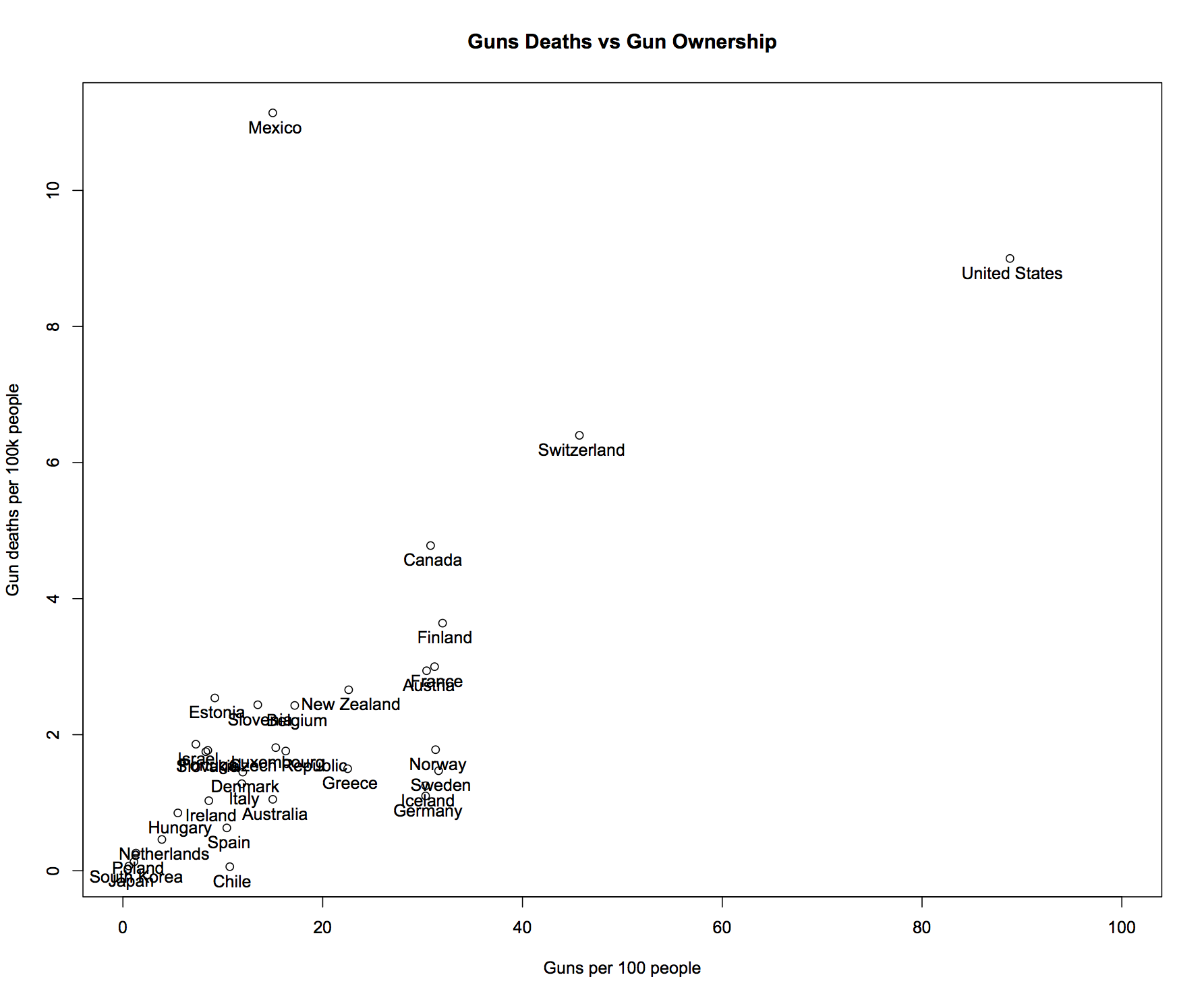
However, much of that apparent linearity is driven by gun suicides, not firearm homicides. Panel analysis of Australia's National Firearms Agreement (NFA)—the most consistently executed large-scale gun buyback we have data for—indicates that reducing firearm prevalence dramatically reduced firearm suicides. This aligns with common sense: when guns are less available, fewer people intent on suicide will use them.
For homicide, the evidence is far weaker. The NFA panel data shows a statistically significant effect from the buyback on firearm homicide, but the error bars are extremely large, even including nonzero possibilities of negative deaths. The post-hoc adjustments used in the analysis are not entirely convincing, but the core problem is sample size: Australia experienced fewer than 300 firearm homicides in five years, making it difficult to find statistical significance in such a small dataset.
Another confound is that non-firearm homicides and non-firearm suicides also dropped sharply after the NFA, making it hard to attribute the decline specifically to gun dynamics. Macroeconomic factors may have driven the reduction in violence, or the drop may have been due to lower firearm prevalence. Most panel, ANOVA, and timeseries analyses of state and country-level data yield mixed results around homicide. Some policy interventions show significant positive effects, but the field is plagued by confounding variables.
Does Inequality Predict Homicide Better Than Gun Prevalence?
Latin American nations with low GDP per capita suffer far higher rates of firearm homicide than social-democratic European nations with more guns per capita. This suggests a better predictor of gun homicide than prevalence exists:
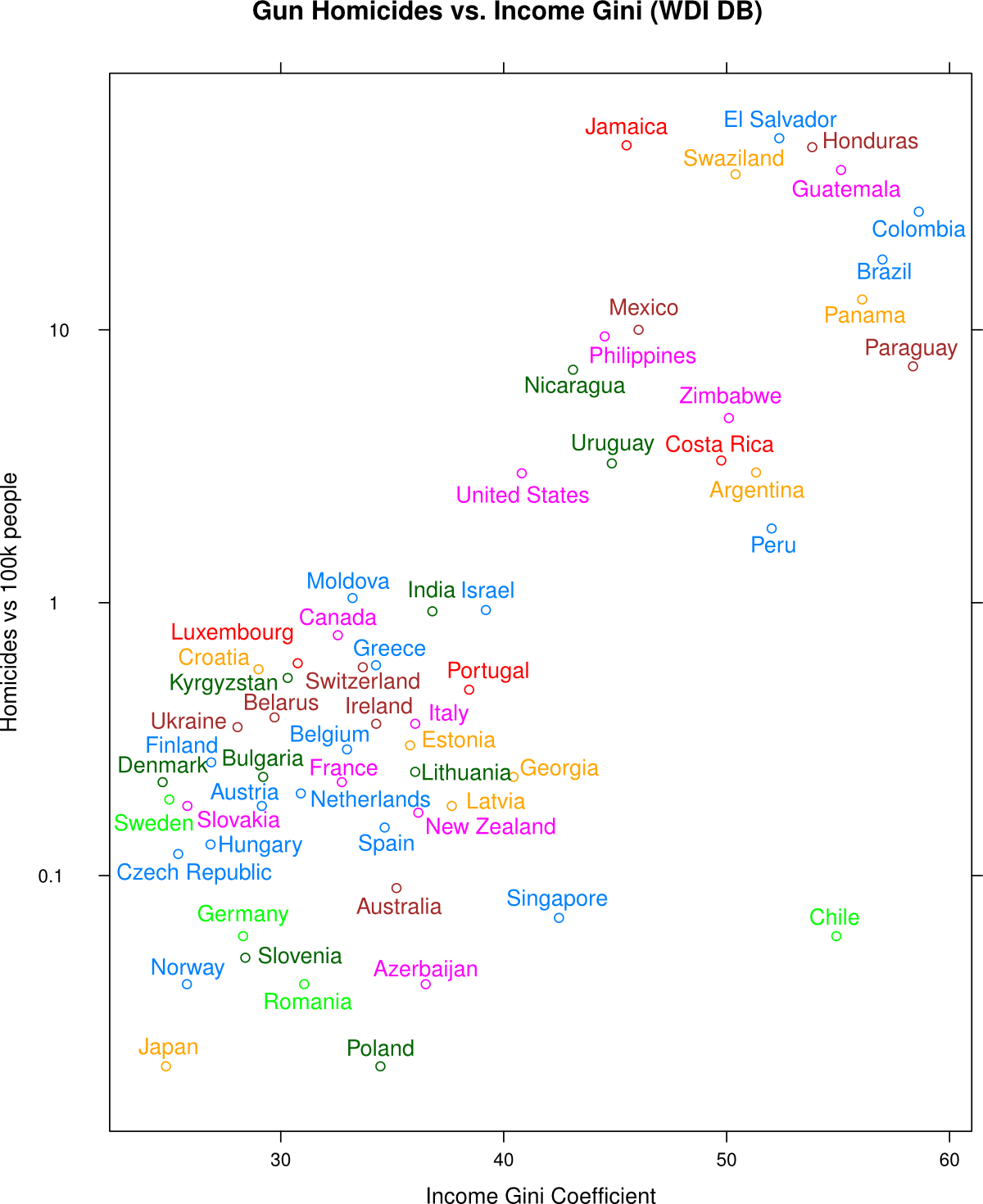
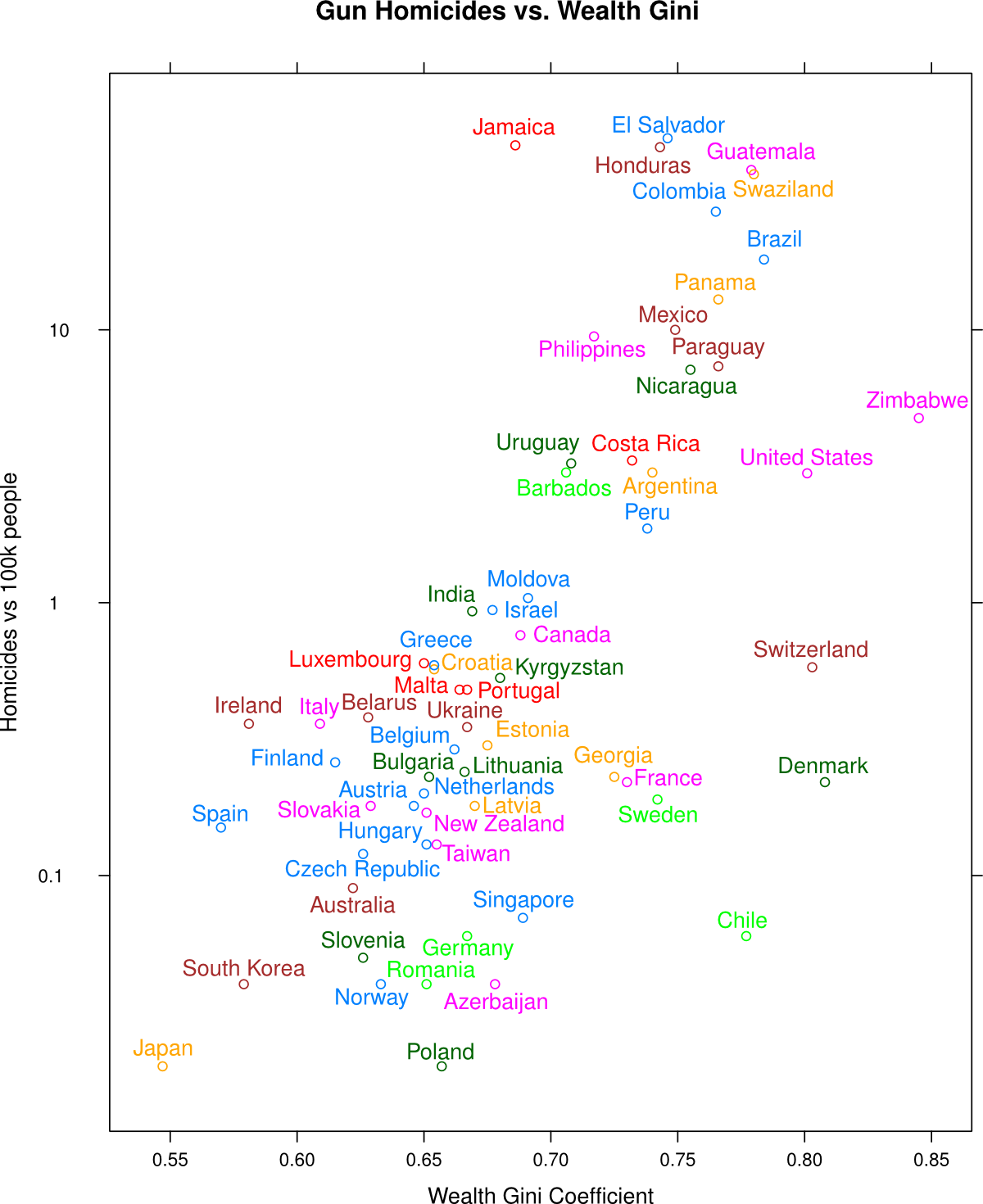
The correlation between economic inequality and violent crime is well established. Plausible causal links run both ways: lack of access to basic goods spurs some violent crime, and violence impedes the development of stable income channels by destroying or diverting human capital and property. Income inequality is negatively correlated with education access, social services, progressive taxation, social mobility, unionization, life expectancy, and social cohesion—a complex web of relationships that makes identifying a single causal mechanism difficult.
What the data does show is that prevalence alone is not the story. The lack of a strong global correlation between gun prevalence and homicide rates indicates that “lots of guns” does not directly cause violent crime. Brazil reports nearly ten times the firearm homicide rate of Argentina with comparable gun prevalence, suggesting socioeconomic conditions play a substantial role.


