
When the Plan Falls Apart Before Breakfast
A missed alarm on a rainy morning turns a planned flight to Portland into a 14-hour motorcycle slog. The bags were packed, the bike was ready, and the 101 looked clear. It wasn't. Rain starts within two hours and sticks around for most of California. Humidity at 95% leaves the visor permanently fogged, forcing sideways squints through the least-obscured edges. Summer gloves are useless after two hours; hands go white and numb, and only the heated grips keep things tolerable.
Those grips fail around Coos Bay near sundown. Pants and boots are soaked through despite waterproofing spray, Gore-Tex, and four layers. Hail gives way to snow, which is worse—it clings to the visor and demands constant wiping. The final three hours on I-5 alternate between cursing and pleading inside the helmet, with stops at gas stations every half-hour to run hands under hot water. Arrival in Portland brings a vow never to touch a road, motorcycle, or the outdoors again.
The Return: Chasing Clear Skies, Finding Snow
That resolve lasts about three days. Snowstorms closing in on Oregon make a southbound exit look wise. The ride down to Coos Bay is ideal—slightly chilly but dry, with a clear weather map. The decision to push further south still feels reasonable at that point.
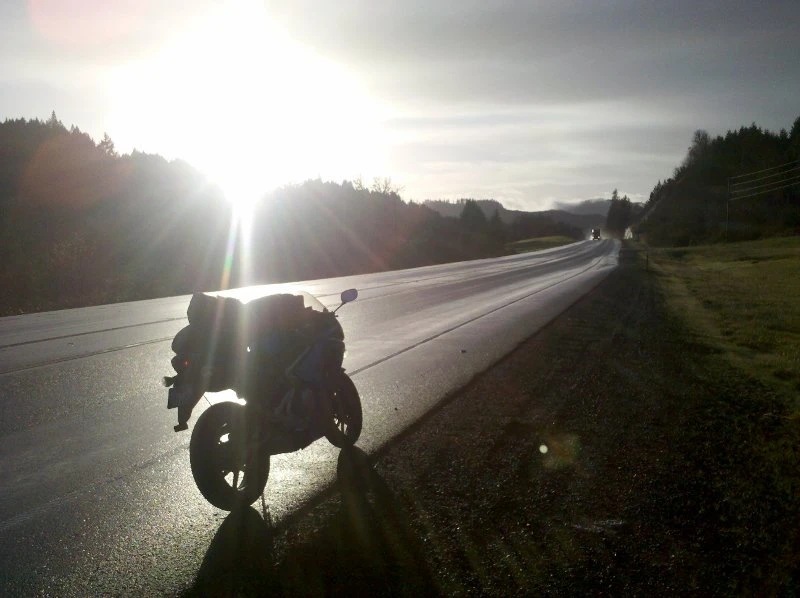
Ten miles past Coos Bay, reason evaporates. Snow is falling, an inch already on the ground, and the light is going fast. Heading downhill, there is no room to turn around, and steering at all feels like a bad idea given the sliding cars ahead. At the next crest, the temperature is still warm enough that ice hasn't formed, and backtracking up the pass is worse than pressing on. The bike makes it to Port Orford without losing serious traction, though the rider's mental state is less intact.
Dinner is an entire large pizza in Gold Beach. Rain returns, and the squelching boots finally find shelter at a $45 motel in Crescent City. Stripping off seven layers takes half an hour; the gear hangs to dry and sleep comes easily.
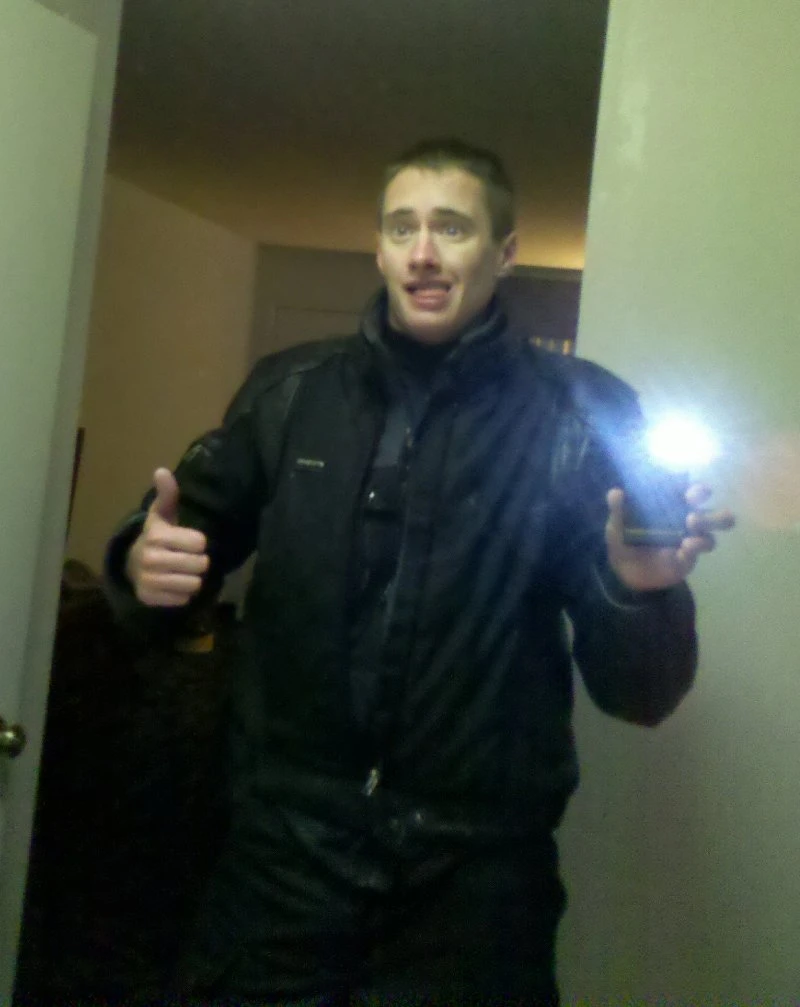
For the record, that is UnderArmour coldgear, a T-shirt, button-down, medium-weight fleece, thermal liner, rain liner, and a Revit Ignition jacket. The upper body stayed bone-dry but cold. Gloves and pants fared considerably worse.
Morning brings the discovery that gloves and boots are still soaked. A hair dryer becomes essential pre-ride equipment.
Snow, Confidence, and Fuel Math
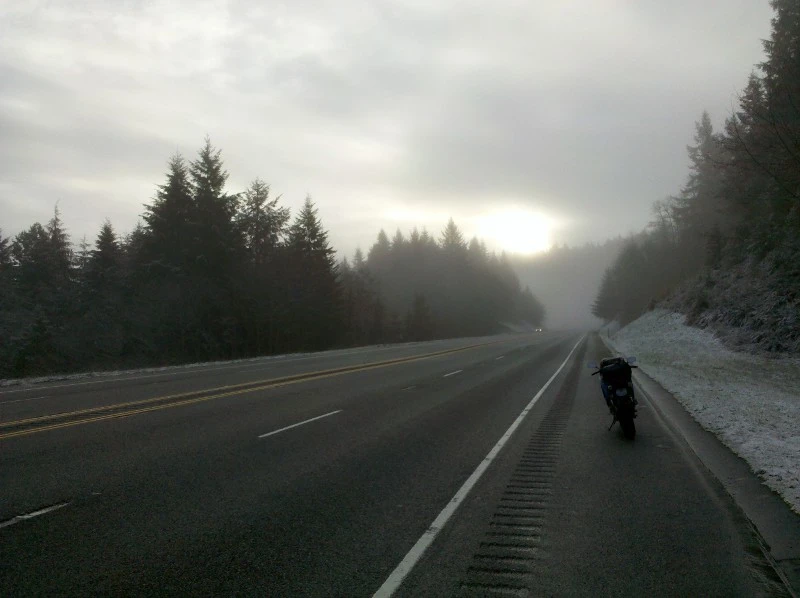
Snow returns in the Redwood passes, the diffused light through the clouds striking enough to pass two northbound motorcycles and inspire a can-do attitude. That confidence backfires a hundred miles later when the low-fuel light comes on and riding 20 miles back to the last town seems like too much trouble.
The engine lugs on the final hill before Garberville. Neutral is engaged, flashers go on, and the bike coasts to the off-ramp at about two miles an hour. The gas station sits uphill—a lucky angle that provides just enough fuel gravity to roll off the freeway and into town.
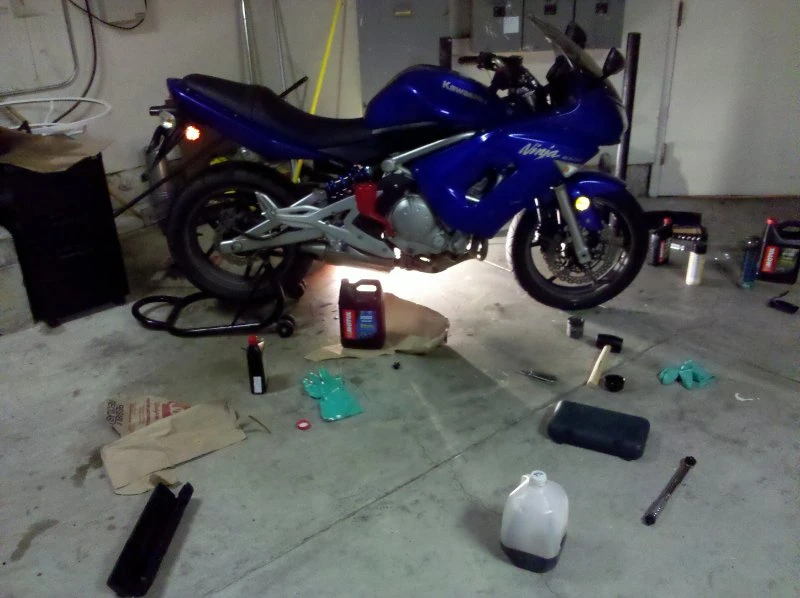
After Garberville, the ride turns pleasant. Sun breaks through, redwoods give way to farmland, and the snowline recedes. The trip ends at home with fresh oil, a thorough cleaning, and a regreasing.
Fourteen hundred miles in three days, with 14 contiguous hours of rain, snow, hail, fog, and night riding. Whether that qualifies as adventure riding is debatable. Either way, being back in the Bay riding in the sun is the right call.


