
Pablo Stanley is an illustrator who pairs his artwork with modern design tooling. His illustration libraries ship as Sketch and Figma plugins, letting you mix and match characters along with their clothes, hair and skin color.
Two libraries from one illustrator
Humaaans is one example of the approach:

OpenPeeps applies a different visual style to the same idea:

Blush: multiple illustrators in one product
Stanley and a team are building Blush to unify this work. It includes not only his illustrations but those of other artists, among them Susana Ortiz, Elina Cecila Giglio, Isabela Humphrey and Else Ramirez.
Needing people illustrations for a project of his own, the author signed up and found the experience enjoyable — plugins like this in Figma turned out to be possible at all. The result is anything but white-centric:

What the default stock sites returned
Searching a usual stock art source for business-style people doing vague business-like things produced heavily tilted results:

The company did carry diverse illustrations, and poking around uncovered plenty of good material, but search results leaned toward groups of white people. For a project headed into a social experience in a very global product, that was not an appropriate fit.
The author's counterpoint for anyone bothered by that observation is a set of diverse Buttsss.

Going straight to the source
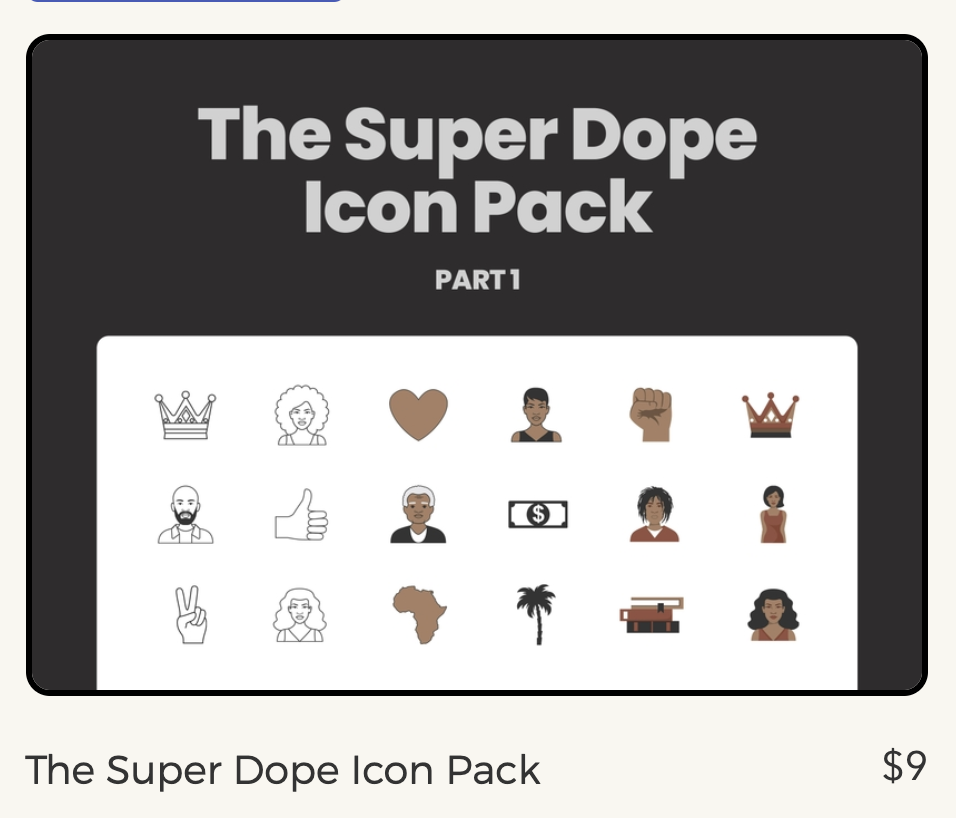
Black Illustrations tackles the problem directly, with some material free and some for purchase, covering design assets that also suffer from a lack of representation, such as icon sets:

unDraw, from Katerina Limpitsouni, is another solid resource:

A CSS aside
Not an illustration, but likely to amuse CSS people:

All proceeds from that shirt go to the Black Lives Matter foundation.
Yes, IDs cannot start with a number. An element with id="000000" would need the selector #\30 00000 in CSS, because of how escaping works. The point lands anyway.



