Home/Engineering/Digital Museums For Digital History — Smashing Magazine
Engineering
Digital Museums For Digital History — Smashing Magazine
Computer technologies have simplified the process of recording historical events, technological breakthroughs, contemporary art, and everyday life. However, the notion of digital archiving can be deceptive. Often our technical footprints are carved in sand rather than stone.
AP
Alexey Pomigalov Alexander AndreevSmashing Magazine
·June 7, 2022
Preserving the Bits We Take for Granted
The tools we use to record history have changed. In the past, canvas and parchment survived for centuries; today, an increasing share of our cultural and technical memory is stored on diskettes, CDs, magnetic tapes and the hardware that reads them. Those media degrade far faster than paper ever did, and the machines that ran them are discarded as they lose commercial value. As a result, decades of technological development risk vanishing not with a bang, but with a bit rot.
This challenge is not purely theoretical. Technological progress is iterative, and the path from early processing systems to contemporary applications is becoming harder to trace with each passing generation. Without dedicated preservation efforts, the evolution of software, computers and the Internet could become as obscure as pre-industrial manual crafts are to many people today.
This concern is what drives the DataArt IT Museum, an ongoing project to preserve digital heritage — and the stories surrounding it — in digital form for a global audience. The project’s curators share the thinking behind their digital museum, and how the field of digital preservation is itself evolving.
From Cabinets of Curiosity to Collections of Ideas
The concept of the public museum is only a few centuries old. The Kunstmuseum Basel, founded in 1661, and the Ashmolean Museum in Oxford, established in 1683, were early examples of institutions designed to open collections to broader audiences. In the nineteenth century, large industrial exhibitions expanded the scope of what museums could contain. London’s Crystal Palace Exhibition of 1851 fed directly into the creation of the Victoria and Albert Museum and the Science Museum. Displays from the 1873 Vienna World’s Fair became the basis for the Museum of Applied Arts, while the International Exposition of Electricity in 1881 inspired Munich’s Deutsches Museum. Similar patterns unfolded in the United States, with the Smithsonian Institution drawing on the 1876 Centennial Exhibition in Philadelphia, and Chicago’s Science and Industry Museum following the World’s Columbian Exposition of 1893.
The historian George Brown Goode, who oversaw early exhibitions at the Smithsonian, had a clear vision for these emerging institutions. He believed they were not just repositories, but vehicles for adult education. A museum, in his phrase, should be “a house full of ideas.” That framing — focused on knowledge and inspiration rather than mere storage — remains central to how museums function. Technical museums, in particular, were assembled from working machinery and exacting craft to serve that purpose, inspiring new generations of engineers much as galleries inspire artists.
A digital collection provides access beyond the physical limits of a building. The possibility was recognized early: in the 1960s, institutions began experimenting with digitization, and in 1967 the Metropolitan Museum of Art helped launch the Museum Computer Network. That body now aims to connect museum professionals and share proven practices in the digital domain. The network’s scope was initially modest, limited to scholar-facing records; in the 1990s, however, falling hardware costs and expanding broadband access made digital collections viable for ordinary audiences, enabling anyone with a connection to view artefacts, research topics or absorb cultural context. Digital material also allowed curators to crosslink objects, placing individual pieces in relation to each other through time or theme. Rich media and high-resolution scans made these collections far more engaging than text-based records could be.
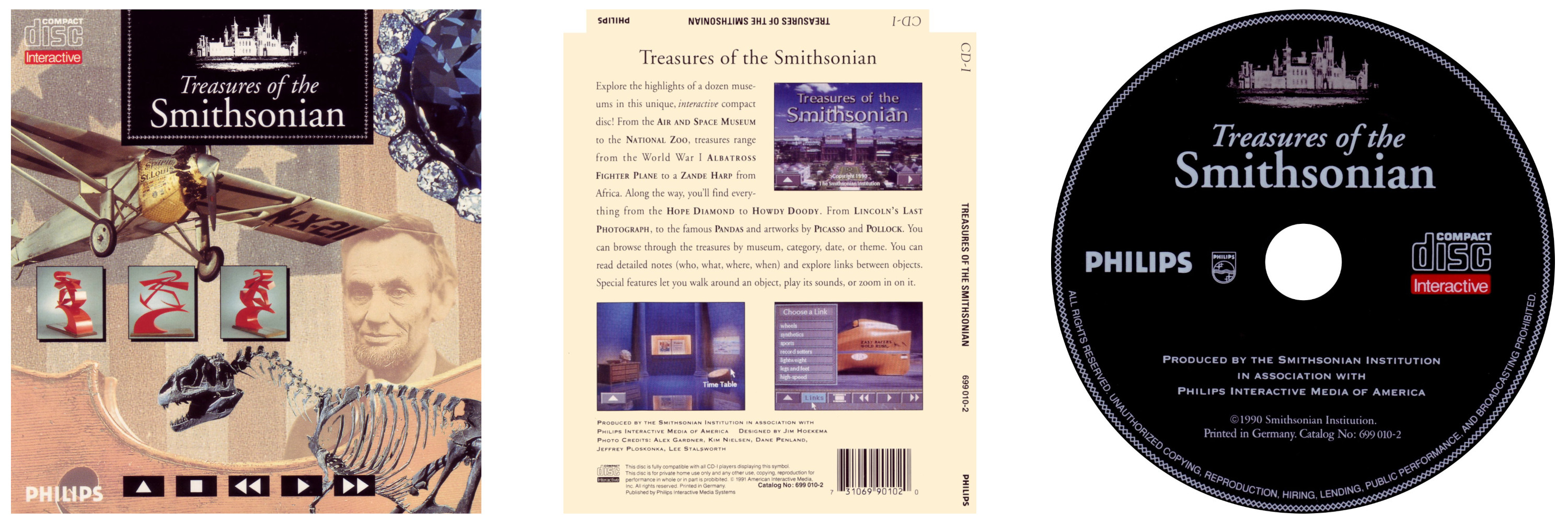
‘You can browse through the treasures by museum, category, date or theme. Popular columnist Edward Park provides interesting commentary. Special features let you walk around an object, play its sounds or zoom in on it.’ Nice! (Large preview)
Building a Museum of Their Own
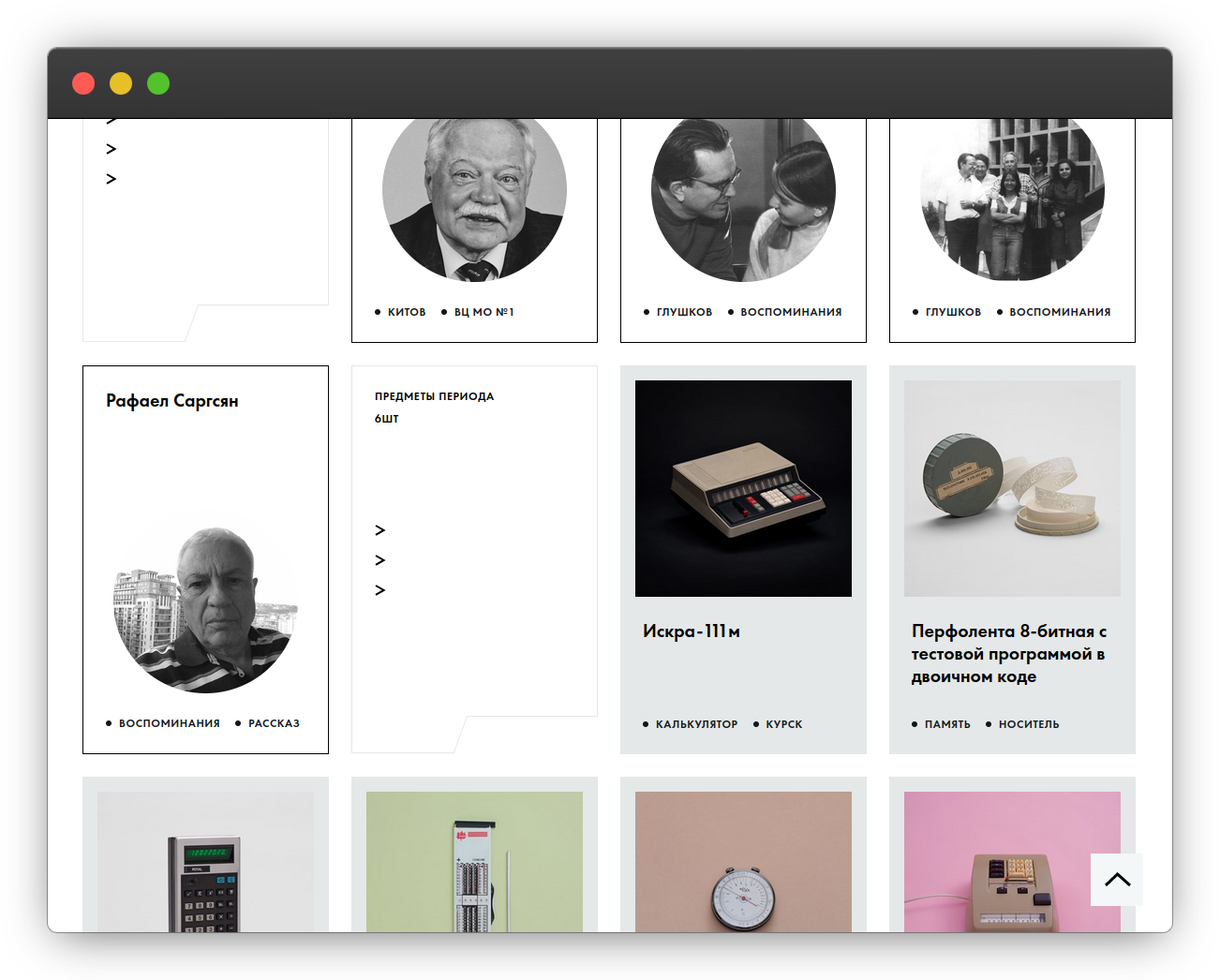
DataArt’s museum did not begin with an explicit mission. It grew out of a cache of obsolete hardware — laptops, joysticks, terminals and other relics of earlier computing eras — collected informally in one office. That trove was smaller and less spectacular than the holdings of the Computer History Museum or the National Museum of Computing, and the company decided not to imitate such institutions. A collection of mainframes and monitors is of interest only to a narrow audience of devotees, and there was little value in recreating that model on a smaller scale.
The shift in thinking came in focusing on context. Hardware becomes meaningful when it is placed alongside history, society and culture, and a museum’s task is to make that meaning explicit. On that basis, DataArt chose a story it could tell better than anyone else: the history of computing in the former Soviet bloc, stretching from East Germany to Armenia. The company was founded by Eastern Europeans, and the region’s engineers are alumni of an unusual technical ecosystem.
That system had stark differences from Western tech development. Computer pioneers in the East worked under central planning with limited resources, restricted access to foreign publications, and severe restrictions on communication. In 1962, for example, Hrachya Hovsepyan, an engineer in Yerevan, was given a brief to clone the French CAB 500 computer. He instead designed something different — a parallel-action machine with microprogrammed control — a deviation notable enough that officials later forced him out of his jobs and, for years, prevented him from leaving the USSR. Hovsepyan’s line of work became known as the Nairi series of computers, which brought his team closer to true personal machines than anyone else in the region.
These hidden histories inspired DataArt’s effort to document the engineers, scientists, inventors and electronics hobbyists from behind the Iron Curtain. That effort included engineers who built extraordinary systems on ternary logic, military programmers who worked on Soviet networking, and a broad community of enthusiasts who assembled computers in their kitchens — an approach born of necessity that, according to the museum’s research, is embedded in the professional practice of Eastern European developers to this day.
Veronika Glushkova, an engineer and historian of computing in Kyiv, supplied an example of how far such communal expertise could go. She describes the engineer Evgeny Bondarenko, an alumnus of the MIR-computer project, whose workspace was layered with chips and circuits — sufficient for him to build anything from simple radios to advanced processors, regardless of what formal projects were assigned. Even where such work strayed beyond official orders, the technical culture supported it.
For the digital museum’s curators, this emphasis on personal testimony is itself a preservation method. It lets them capture context that no hardware alone could reveal and make a digital museum about people as much as artefacts. Their collections hold audio and video recordings with participants of these projects, alongside scanned documents, photographs and papers gathered from private archives. This mix separates the museum from a simple online blog, and preserves the flexibility to follow curatorial leads as new material is unearthed.
Digital collections offer both convenience and resilience. Links between objects and context can deepen almost infinitely with cross-referencing, carrying well beyond physical display space. However, maintaining distinction from an ordinary web editorial project requires discipline. A digital museum fails if it becomes just another media channel. It must retain its capacity as an artefact storage and preserve the fabric of primary sources even as it embraces the possibility of continuous reinterpretation.
The museum’s curators describe the project as a balance between corporate social responsibility and marketing. It is consistent with DataArt’s professional culture of tinkering, and passes along primary material — original audio and sometimes video — to scholars and historians on request.
Preservation can connect surprising parts of history. One example traces an Armenian scientist’s amateur studio at the Yerevan Institute of Mathematical Machines. Radik Ananyan, an engineer, acted, directed and worked there on a comedy film, “The Heist at Midnight”, shot within the institute itself — capturing inside views of 1950s computers. Much later, Ananyan digitalized the footage and gave access to DataArt’s museum, allowing the project to fold the story into its research on Armenian computing, which eventually became a book.
Threats to digital history are real. Physical hardware decay, and short-lived formats are a very modern kind of oblivion. Historians of computing are working against the same clock as archivists of contemporary life, and the record they preserve is as fragile as the earliest code ever was. Crucially, good digital museums preserve more than machines. They preserve the idea of them — the social, personal and political context that brought them into existence. And they depend on contributions from outside their walls, whether that’s a scrap of film, a box of personal papers, or the willingness of someone who was once inside the room coding for systems now only a dim memory to share the details.
Catastrophes have always claimed more than human lives. Books, documents, art, and design objects have been lost throughout history, erasing traditions and threatening cultural identities. As recent world events demonstrate, this kind of destruction is hardly behind us.
Preserving knowledge ranks among the essential skills in science, the humanities, and fine art alike. Individual contributions matter here, not just institutional ones. There is a role for everyone, from curating personal archives to supporting large-scale data preservation efforts.
Every day, people generate billions of media files: photos, videos, scanned documents, spreadsheets, and written work. Each person makes choices about what to keep and what to discard, storing archives according to the capabilities of modern devices, often using metadata and descriptive file names.
Adding descriptions to stored files is a habit you will appreciate later — and a researcher of the future may find such incidental details and visuals in family files genuinely fascinating. A few practical steps can get you started on organizing a private archive:
Begin with a first-pass analysis of your data to understand how to prioritize and arrange files.
Separate data into logical groups based on origin or topic.
Create a folder for each group and sort files accordingly.
Describe content in file names and add metadata where supported, such as geotags, tags, or comments.
Avoid keeping duplicates or near-identical files that waste archival space.
Regularly back up significant data both to the cloud and to offline storage.
Private archives are our own responsibility, and we never know what will interest our heirs later. Tending to your personal pieces of history is a modest but meaningful act.
Supporting Large-Scale Preservation
Sustaining the history of an organization, a professional community, a technology, an industry, a region, or a conflict is far more complex. Governments partially support such projects, but national institutions cannot cover them fully. This leaves data vulnerable to manipulation or outright removal from archives — a risk that applies to digital artefacts just as it historically did to paper, parchment, or clay tablets.
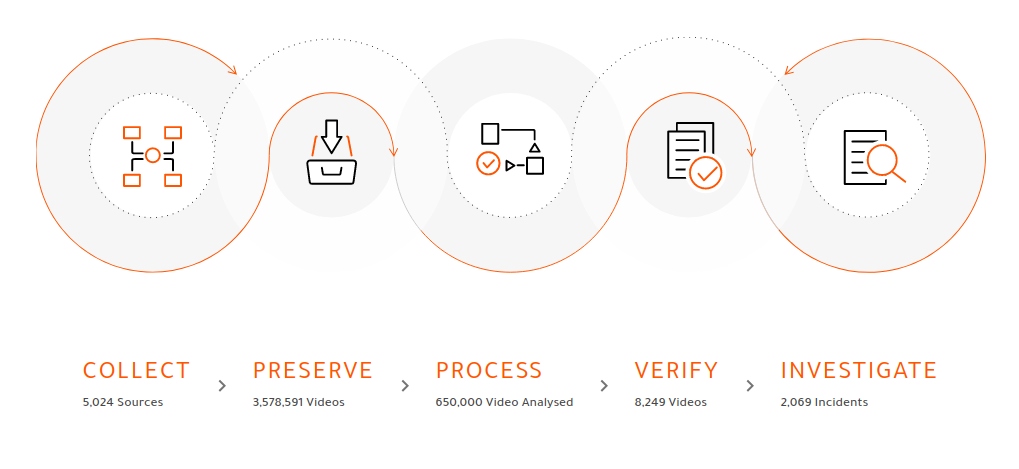
Projects like the Syrian Archive preserve digital media not for creative reasons but to further advocacy, justice, and accountability. (Large preview)
Non-profit organizations and individual enthusiasts work to preserve copies of printed and digitally created materials, but they depend on outside help. Contributions can take the form of donations or direct volunteer assistance. If you are looking for a place to start, these projects accept support:
Our digital heritage holds genuine potential as a source of inspiration and understanding. Computer hardware merits the same respect historically afforded to antique writing implements in museum displays. Preserving this legacy is a mission anyone can join.
Alexey Pomigalov has a Ph.D in history, worked as a researcher and curator in the State Hermitage Museum and the Fabergé Museum. Since 2019, he has been … More about Alexey & Alexander ↬
One of the most wonderful aspects of math is how deep we can get by studying seemingly trivial questions. Consider the roots of unity, where "unity" simply means the number 1. Basics: roots of unity for real numbers Studying the roots of unity usually begins in middle school: what is …
Cloudflare Gateway and Data Loss Prevention have inherited the flexibility and power of Cloudflare Workers through our full-stack integration with the Cloudflare Developer platform.