Google’s Nano Banana Pro: When Image Models Get Context
AI image generation has moved past the novelty stage. The release of Google’s Gemini 3 Pro, complete with the latest Nano Banana model, signals a shift toward tools that respect design context rather than just producing isolated visuals. Figma’s VP of Design, Noah Levin, has been testing the model across the company’s product suite, and the results highlight a model that understands brand DNA and handles precision edits without sacrificing creative flexibility.
For designers who have spent hours manually adjusting pixels, the appeal is immediate: describe a change and get a result that matches the intended look in seconds. But the more interesting capability here is coherence—keeping visual identity intact while exploring new directions.
Retaining Visual DNA Through Iteration
Levin tested Nano Banana Pro against a range of design tasks in Figma Buzz, Figma Design, and Figma Slides. He found that the model excels at preserving key visual elements—palette, texture, type, composition—even when generating new directions.
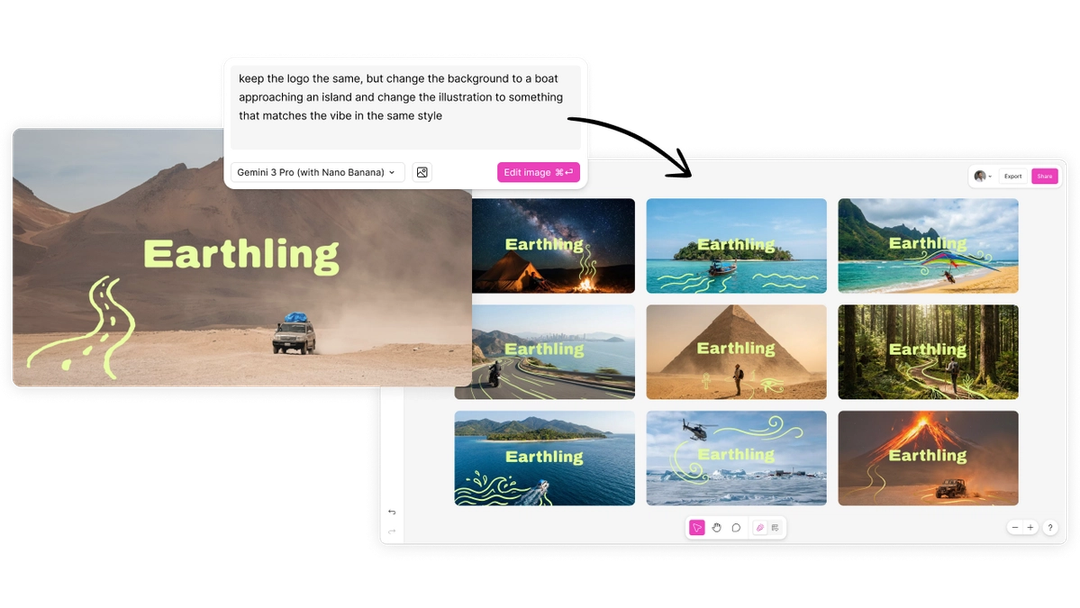
Taking a simple concept with a logo, background, and illustration, the model can produce variations that keep the general brand feel with just a simple prompt. The lightweight drawing style, the compositional balance of a small subject beside a larger landscape, and the logo itself all remain intact without distortion.
This extends to adapting existing work for new contexts. An illustration series made for a fictional news app about winter activities in New York can be individually adjusted with simple prompts so that when the UI switches to dark mode, the images light up to match. Previously, recreating each asset to achieve this effect would have required hours of manual work—enough that many designers would skip it entirely.
Placing Images in New Scenes
The model’s ability to composite is where it becomes a genuine design tool. Take an illustration created for a fictional astrology app. Setting it into a scene of someone reading in a cozy environment for a presentation doesn’t just paste the asset into place. The model positions the image on the phone correctly and takes lighting cues from a reference mood board to match the scene, going so far as to add a star light that feels right for the concept.
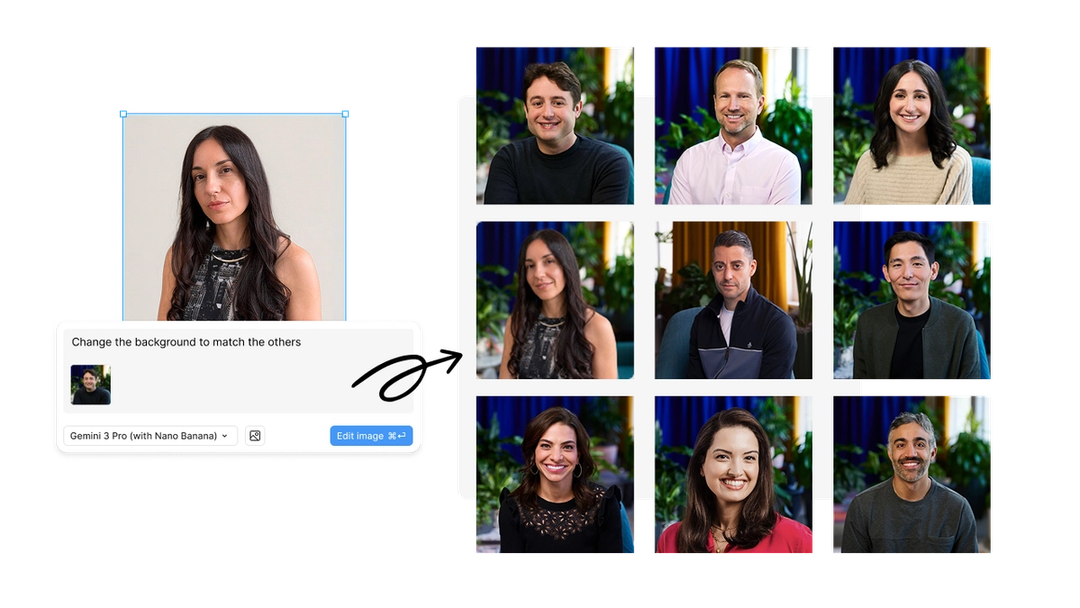
The practical upside of this kind of contextual intelligence is clear in a common workplace challenge: updating profile photos to look consistent across a team. The model can reframe a shot, suggest a new camera angle, or update the background while staying true to the scene. Human likenesses are notoriously difficult for AI to handle, and they remain contentious. Getting edits that respect facial features without introducing distortion means assets across product and brand can remain usable and consistent.
Building Scenes from Mixed Inputs
The flexibility expands further when paired with other tools. Using Figma Weave, teams can composite multiple images into a single rendering—combining 2D graphics, copy, and photography from a brand mood board to build a cohesive scene. That same output can then be fed into Google’s Veo video model to animate the space with activity. And Nano Banana Pro integrates with existing workflows around 3D models, upscalers, background removal tools, and even prompt refinement through LLMs.
This modular approach benefits from the model’s ability to refine rather than merely regenerate. Edits to text and tweaks to spot colors can be prompted directly without degrading the original image. Faces remain natural, typography localizes, context stays put.
Rollout and Availability
Nano Banana Pro is rolling out to all Figma users on paid plans gradually throughout the day, available in all products where image generation is supported. It is yet another example of a model aimed squarely at precision work—not just creative doodling, but the kind of iterative, brand-aware production work that design teams rely on daily. Testing is the best way to judge its limits, but early signals suggest the era of "describe and refine" is arriving in earnest.


