
Turning “Keep Learning” Into a Plan
Every developer faces the same paradox: the field changes faster than any individual can track, yet most advice on continuing education stops at “learn the fundamentals.” After finishing a bootcamp in March 2019, Kirsty Simmonds found herself drowning in options — frameworks, libraries, languages, and courses all competing for attention, while every well-meaning mentor gave a different answer on what actually mattered. Even after landing her first developer job, the pressure didn’t ease; the role demanded regular extra-curricular study just to keep pace.
The problem wasn’t motivation. It was structure. Simmonds bounced between Udemy courses, dutifully copying instructors, but realized she wasn’t building problem-solving skills. The material only clicked when she built her own small scratch-pad project. That discovery shaped her entire approach: first expose yourself to ideas, then solidify them through a personal project, then apply them in real work when possible.
That short-term cycle is useful, but the harder question is what it means for long-term learning. Here is the framework she developed for structuring ongoing education — one that works whether you’re new to software development or a seasoned engineer.
Diagnose Your Learning Style First
Before planning what to learn, you have to be honest about how you learn. For Simmonds, passive consumption — watching videos, following tutorials — was insufficient. She needed to build something independently to make knowledge stick. Your own style may differ, but identifying the point at which you actually internalize material is the prerequisite to any curriculum.
The takeaway isn’t that any single method is correct. It’s that your curriculum must be built around your actual cognitive process, not the process that marketing materials assume. If you’re prone to copying tutorial code without comprehension, the fix may not be more tutorials; it may be deliberately breaking the pattern with self-directed practice.
Define “Fundamentals” in Concrete Terms
One of the most common refrains Simmonds heard was that “the fundamentals” mattered most. But nobody specified what those were. Rather than accepting the vagueness, she had to define fundamentals operationally for her own career: the core concepts that would underpin whatever frameworks she touched next. Without that definition, any learning plan becomes an unsorted list of everything that exists.
This doesn’t mean the same fundamentals for everyone — the underlying logic is that structure requires you to identify which concepts will transfer across projects, rather than simply chasing the newest shiny library or framework. Practical fundamentals are the building blocks that survive technology churn.
Design a Curriculum with Room to Breathe
The goal is structured learning that doesn’t lead to burnout. Simmonds discovered that constant pressure and undefined direction were a recipe for exhaustion, and merely “working through courses” usually meant completing without learning. She designed a slower, more sustainable rhythm: one initial exposure to a new idea, then deliberate practice that forces independent problem-solving, then application through daily work or a self-directed side project.
That pattern mirrors what many successful self-taught devs eventually discover, but the advantage of putting it in a written structure is accountability. You aren’t just learning whatever floats by — you’re tracking progress against a plan that includes both absorption and application phases.
The strategies scale with experience. A junior learning their first framework and a senior picking up a new paradigm both benefit from explicit learning styles, defined fundamentals, and regular, non-pressured practice. The important part wasn’t the specific tools Simmonds used; it was moving from an accidental pattern of study to one that she had deliberately designed around how her mind works.
Turning Job Ads Into a Learning Roadmap
Constructing a personal learning curriculum is less about picking topics that interest you and more about identifying what will actually move your career forward. For those prone to distraction or impulsive learning detours, anchoring your goals to real-world requirements can provide the structure needed to stay focused.
Start With Job Specs, Not Interests
An effective way to filter out the noise is to treat job descriptions for roles you actually want as your syllabus. Even if you have no desire to work at a large tech company, their hiring priorities often shape industry standards, making their job ads a useful barometer for what skills matter.
Collect specifications from several target companies and positions. Look for the common requirements that appear repeatedly rather than niche asks. These recurring themes become your core focus areas, while interesting-but-irrelevant topics can be set aside for later.
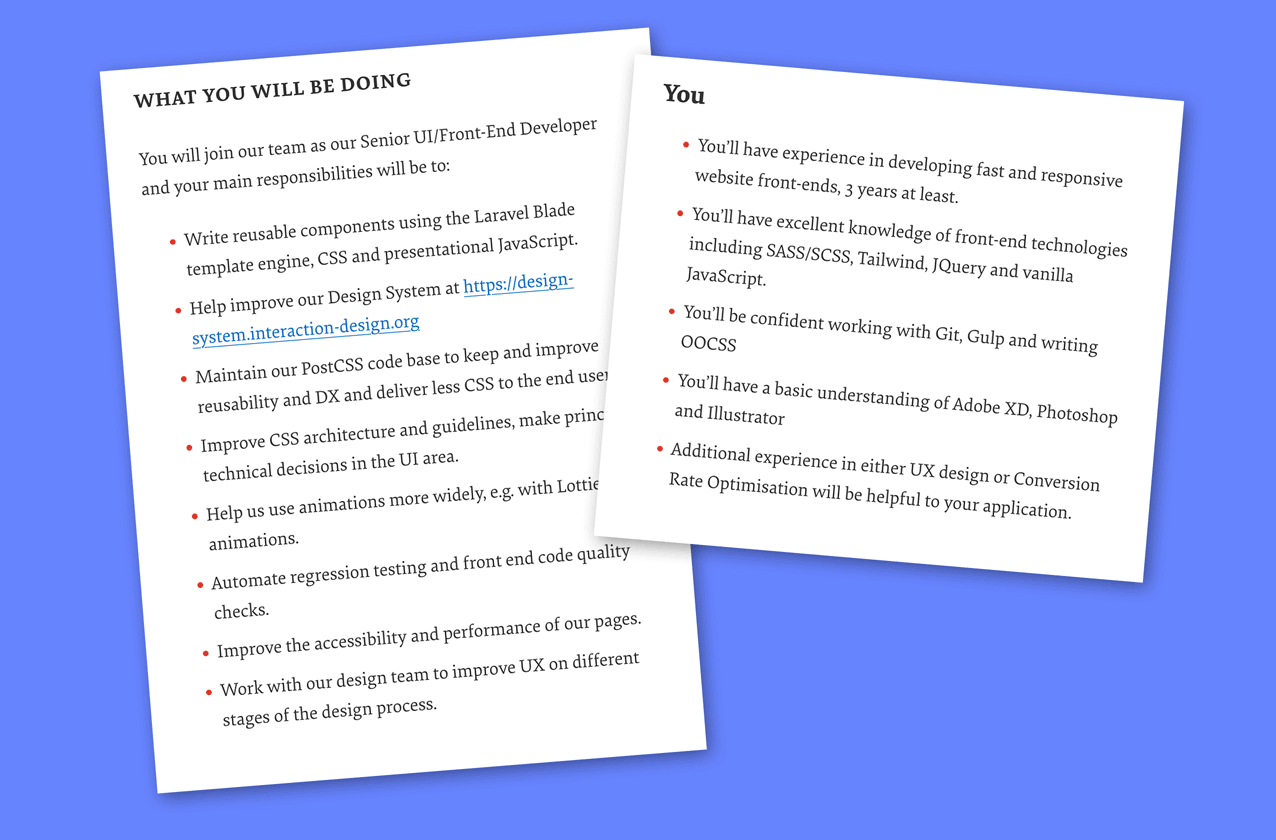
Regularly checking job boards and the careers pages of companies you admire will give you a steady read on what skills are actually in demand. Once you have gathered several descriptions, identify the commonalities between them — those shared requirements are what you should be prioritizing.
Split Skill Development Across Work and Home
Once you have identified your target skills, divide them into two categories: those you can develop during your regular job and those requiring dedicated personal study time.
In the Office
Skills already exercised in your day job will improve naturally with time. To accelerate that growth, seek out colleagues who excel in areas where you have gaps. Schedule a conversation with them, ask how they stay current, and find out which resources they follow. If your organization has developers with different specialisms, take advantage of that collective knowledge whenever possible.
Outside Working Hours
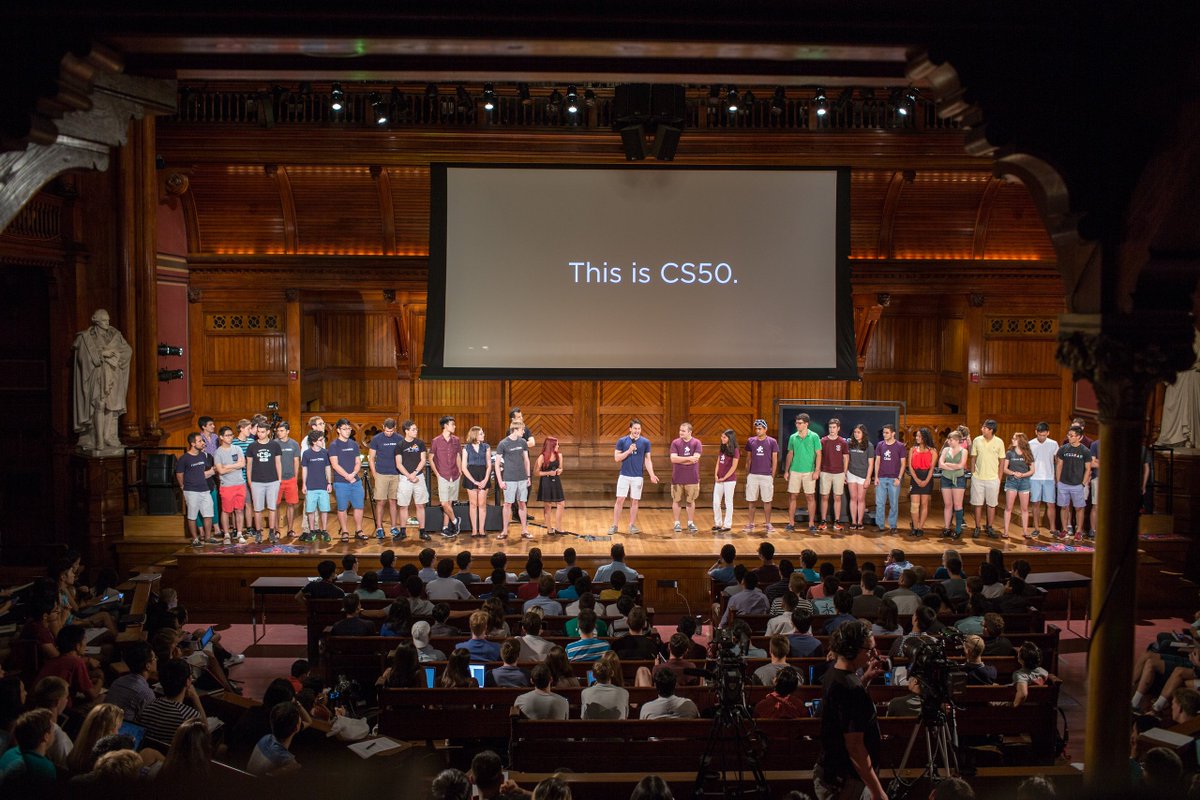
For skills outside your professional remit, structured courses are often the most efficient route. While there are plenty of free options, some paid platforms offer exceptional depth. A subscription to a service like Frontend Masters is worthwhile for its well-designed computer science courses. For a free alternative, CS50 from Harvard University offers an excellent introduction to C, Python, JavaScript, and data structures with no time constraints.
FreeCodeCamp remains a solid starting point for foundational skills, while Udemy provides a marketplace of specialized courses — though it is wise to wait for the frequent discount cycles before purchasing. Whatever resources you select, the goal is not to consume everything but to identify and combine the courses that align with the job requirements you researched earlier.
Your professional network can also bridge gaps that structured courses cannot. Twitter, for instance, is an effective vector for finding assistance with specific coding problems, and the #CodeNewbie community regularly supports newer developers.
Set Realistic Targets and Timetables
Having identified the skills, map them to concrete deadlines. The most common mistake is setting expectations too high; an overly ambitious target either consumes the rest of your life or ends in failure that undermines any confidence the learning was meant to build. The purpose of targets is gentle, forward momentum, not dangerous pressure.
Consider your personal energy patterns when allocating time for study. If you concentrate best in the morning, protect that time of day. A time-tracking tool can also be valuable for developing a sense of progress — you do not have to depend on intuition when you can see concrete evidence of how many hours you have spent learning.
A realistic initial set of personal goals looks like this:
- Complete a single, comprehensive course in one core skill by a specific month-end date.
- Implement a small, habitual practice block of daily review, such as thirty minutes before work.
Schedule your study during the periods when you can secure the least interrupted focus. If your responsibilities preclude that, take time as you can get it. Start with lower initial targets, then increase them only after you have built a track record of success.
Find a Mentor, or a Buddy
Mentorship is widely recommended for advancing developer skills, but it is also hard to find in practice. Services like Coding Coach attempt to match developers with guidance, and some practitioners have successful experiences at meet-ups or via social media. For those who find a mentor, the benefits include help with deciding where to focus, visibility into professional practices, and a grounding perspective on where the industry is heading.
Getting a mentor is not the only way forward, however. There is strong support for the idea that being accountable to another person is essential to retaining and applying what you learn. If a senior developer is not available, partner with a fellow developer at a similar experience level and work through the same exercise material together. Sharing a course creates an environment of mutual support where you can discuss challenges, validate that the work is genuinely difficult, and confirm you are not the only person struggling.
"As a developer, you need to look for opportunities to demonstrate what you know, and how you're learning. Having someone else to talk to about the challenges you're facing, and having space to talk it over with someone and to realize 'this thing that I'm trying to do is complicated, I'm not a terrible developer', having that validation can be huge."
Pair this arrangement with challenging material or simulated interview preparations and synchronize your study schedules with a peer. Progress through the exercises at the same pace and use your conversations to explore what aspects proved easiest or most difficult for each of you.
Embrace Scratch-Pad Projects
Side projects carry an expectation of magnitude, but that pressure is counterproductive for many people. A better model is the scratch-pad application — a small, throwaway idea designed only to test one concept. If a project successfully makes an API call, presents the data in a basic way, and teaches you something, it has achieved its purpose.
Expanding every project into a full application is unnecessary and will quickly erode motivation. Learning is valid regardless of the scope of the vehicle used for it. Small, exploratory exercises that function as personal reference points will teach you the same fundamentals as a large-scale endeavor, without the considerable investment of time and energy that would otherwise be diverted from the curriculum you have already built.
Making It Stick Without Burning Out
The point of a self-directed curriculum isn’t to squeeze every spare minute into productive work. The steps above are meant to help you learn steadily over time, with a structure that keeps you moving without piling on pressure. If they suit your pace, use them; if not, adjust to what works for you.
The Process at a Glance
- Start with job descriptions to pinpoint the skills employers actually want.
- Divide those skills into two tracks: things you can learn while working and things you’ll practice in your own time.
- Define goals that are specific, realistic and measurable; only increase the difficulty once you’ve established a routine.
- Pair up with a mentor or a peer who can hold you accountable to that plan.
- Give yourself permission to learn messily. Partial progress beats a clean sheet with no progress at all.
Tools and Communities
A practical way to build the curriculum is to combine structured course platforms with community support. Good starting points include FreeCodeCamp and CS50 for foundations, Udemy and Frontend Masters for broader topics, and Interview Cake for coding interview prep.
For mentorship, look at Coding Coach. To develop specific, practical skills, Execute Program and Smashing Mag’s Online Workshops are worth a look. Track the time you spend on each track with Toggl to keep an honest picture of your routine.
Engaging with the community also helps with persistence. The #CodeNewbie hashtag on Twitter is a place to share progress and find encouragement.
Job Boards for Research
Job listings are useful beyond getting hired — they also tell you which technologies and practices are in demand in your area. Compare several of them when you’re building your skills list, not just one. Useful sources include Indeed, Guardian Jobs and LinkedIn.



