Figma brings back Make Designs as First Draft
Figma is reintroducing its AI-powered design generation tool under a new name, First Draft, following a temporary takedown earlier this year. The feature, originally called Make Designs, was disabled after the company discovered that its underlying design system was producing mockups that too closely resembled existing apps. After what Figma describes as extensive analysis, iteration, and testing, the tool is now returning in limited beta with changes aimed at making it a more flexible starting point for designers.
How First Draft works
First Draft does not train on customer content. It relies on off-the-shelf AI models, including OpenAI’s GPT-4 and Amazon Titan, combined with three key inputs: model, context, and prompt. The context consists of proprietary mobile and desktop design systems with components and assembly examples. When a user describes their design goals, the AI selects, arranges, and customizes components from those design systems to generate a starting point.
Library choices and exploration
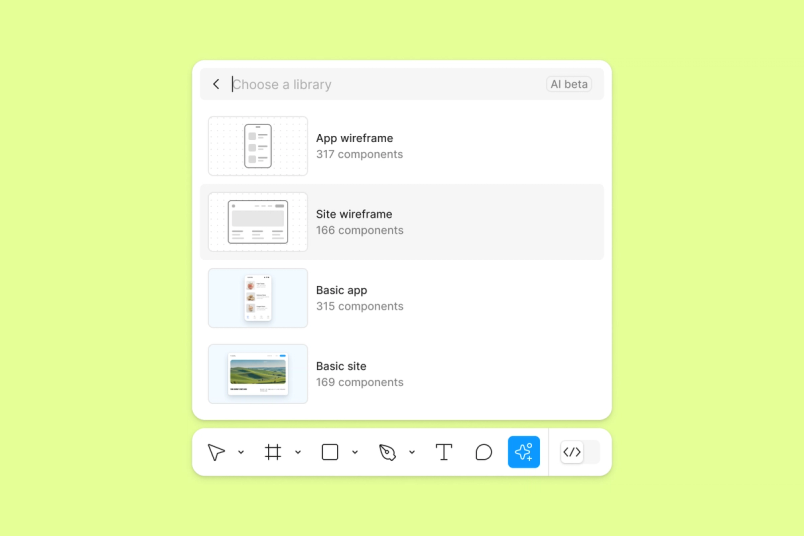
A notable update is the ability to choose from four different libraries depending on the task at hand. Users can select a wireframing library built from less opinionated, low-fidelity primitives, or opt for higher-fidelity libraries that offer more visual expressions and patterns. Figma positions this as a complement to its Visual Search feature, which locates existing files or components via prompt or image. The goal is to support exploration of design options before committing to a direction.

Why the name change
Figma notes that First Draft is actually the original internal project name for the feature. The company believes the new name better communicates the intent: giving designers a simple jumping-off point rather than a finished product. The shift also sets expectations for the tool's role in the design process, which Figma describes as one of several ways to move from a vague idea toward something concrete enough to discuss and iterate on.
Future directions
Figma's longer-term vision for First Draft involves support for custom libraries beyond the current built-in ones. The company is exploring a proof of concept with industry-standard design systems such as Google Material 3, with an eye toward letting teams draft ideas using their own design language without manually sifting through hundreds of components. The company sees this as a way to extend existing toolkits and accelerate iteration in product teams.
Figma also notes that First Draft has been folded into the capabilities of its purpose-built design agent announced alongside this update. That agent supports re-prompting, deeper iteration, automated bulk edits, and live feedback on designs, all while preserving the core functionality introduced with First Draft.


