Content output and a new guides pipeline
September saw 16 guest-authored articles and another 15 from the in-house team published on CSS-Tricks, alongside ongoing maintenance work: more than 50 older articles have already been refreshed with newly linked resources, a task the team says will continue as part of daily work.
The site is also beginning work on new guides, a free resource the community has had since the first one appeared in 2019. Because the workflow is new to the team, it wants the author process free of snags before taking public applications; until then, guides will come from hand-selected authors across a range of topics.
Separately, CloudWays is joining DigitalOcean and is offering a $50 credit to community members. Platform-agnostic resources remain the priority, but readers can expect CloudWays content going forward, based on the team's view that its managed offering could suit the community well.
Migrating the site off WordPress
The DigitalOcean team is moving CSS-Tricks from WordPress into the same hand-rolled CMS used across its other sites, including DigitalOcean's tutorial library. The site stays standalone at the same hyphenated domain. The hard part so far has been aligning WordPress data with the internal system's structure.
That internal system runs on a vetted, maintained and organized PostgreSQL database, interfaced through in-repository services under tight code control. In contrast, the WordPress database structure is described as unintuitive, forcing obscure and possibly overly complex solutions to reconcile the two.
The migration is expected to preserve complex database relationships and future-proof them: faster queries, more efficient relationships across three or more dimensions, and accurate modeling of new relationships as features are developed.
In short, that means we will no longer be reliant on a monolithic WordPress instance to serve a response to every request. We can statically export all the publicly accessible content to a CDN, with the services handling edit operations only when needed.
A replacement proposal form
Guest article proposals now go through a new form. The previous one was tied to Jira to manage proposals through the editing flow, but that integration was failing, so the team moved to a Typeform-powered version instead.
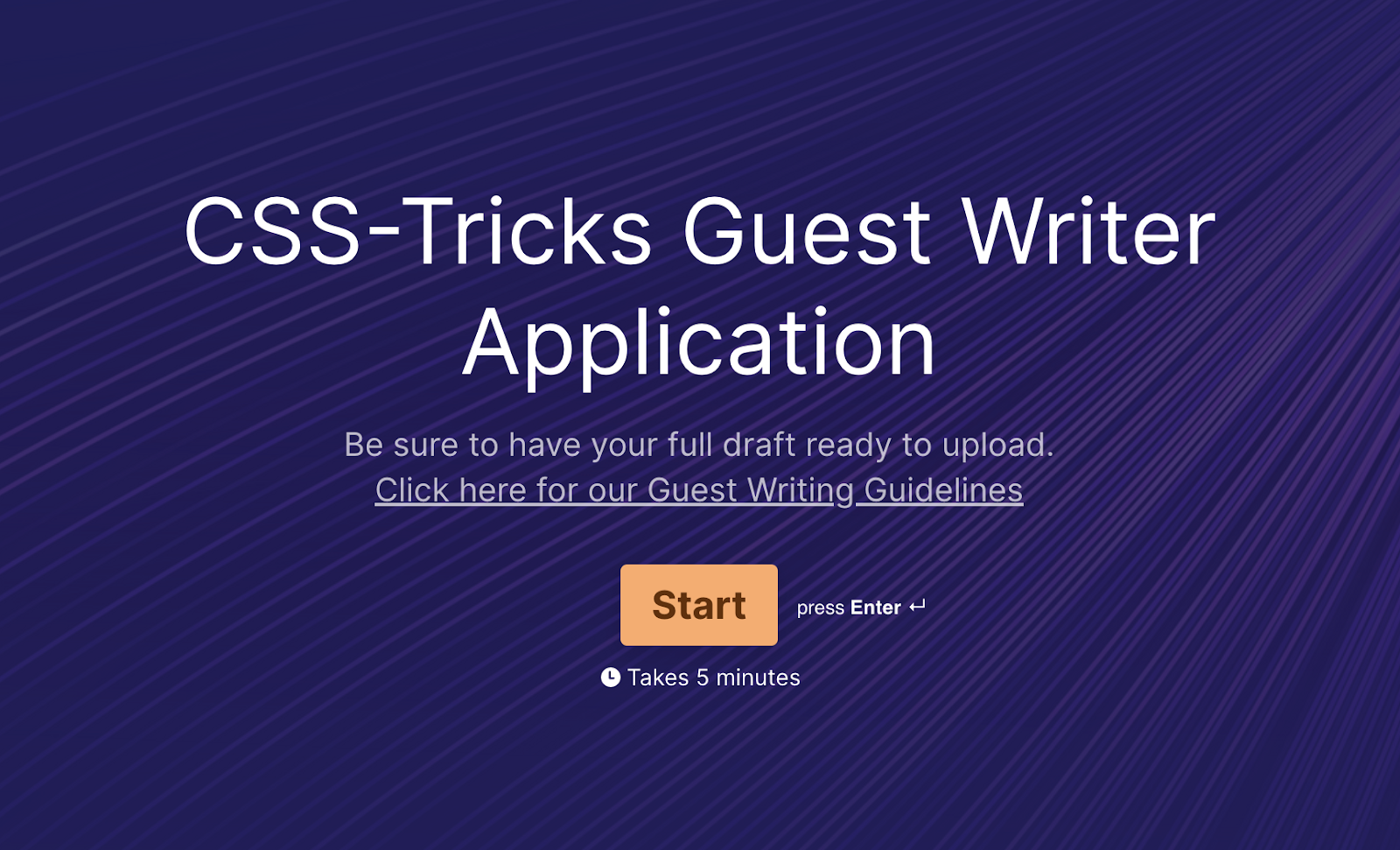
The change is treated as more than housekeeping: it makes proposals easier to submit and keeps them from slipping through the cracks, supporting a steady flow of fresh front-end content. Authors submitting proposals are asked to flag anything that could make the form easier or more helpful.
Five new contributors
Five new voices joined the site last month:
Returning authors were likewise credited, among them Temani Afif, Preethi, Ollie Williams and Mojtaba Seyedi.



