A website's dark mode is normally the site author's decision: styles are prepared in advance and applied when the visitor signals a preference, either through a direct toggle or an OS-level setting. Chrome is experimenting with removing that decision from the author's hands. When a user has opted into dark themes at the operating system level, the browser will generate and apply a dark theme to light-themed sites on its own. Testers can turn the behavior off either at the OS level or through a dedicated Chrome setting.
The feature can be exercised from inside Chrome DevTools, which is how the screenshots below were produced.

What it does to real sites
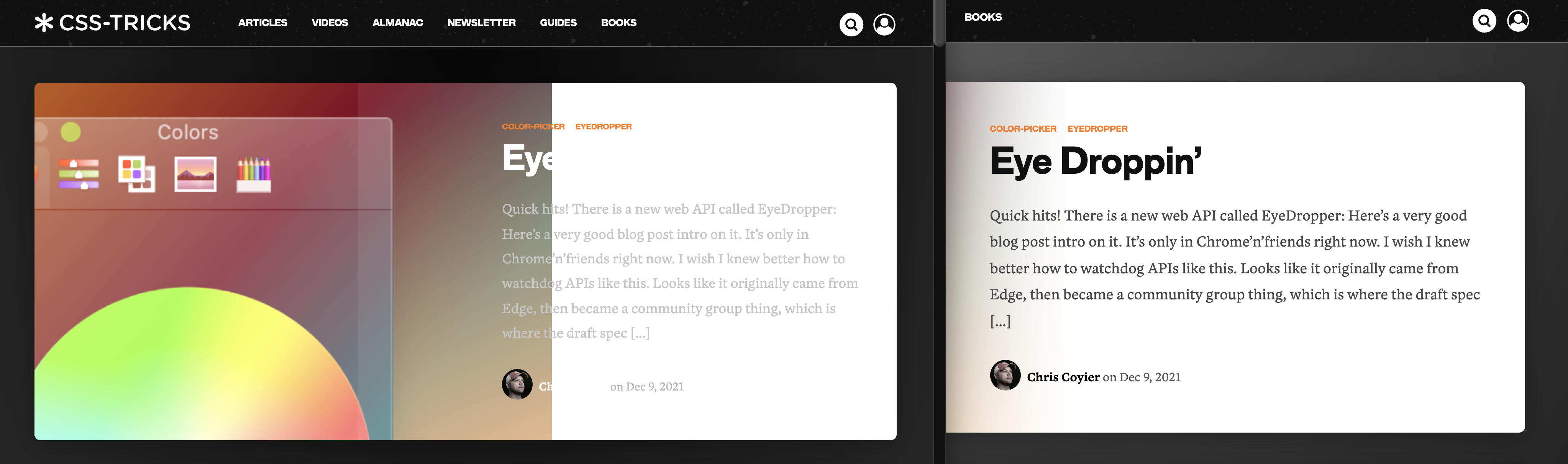
Results vary by page. On a personal homepage, the rendering was poor, apparently because an explicit white background color wasn't flipped. Article pages on the same site fared noticeably better:

The WordPress admin, which has famously never shipped a dark mode, was also run through it:

The accessibility argument cuts both ways
There's a defensible principle behind the experiment: users ought to control how their own browser renders pages. Nobody argues against high contrast, invert colors or reduced motion modes, all of which alter website rendering directly. Auto dark theme could be filed under the same category.
But the feature can also introduce accessibility failures, and the contrast problems in the first screenshot are an example. Those failures aren't hypothetical edge cases either — the web is enormous, and perfecting automatic theming across it will be extremely difficult.
Open questions before shipping
For now this remains an Origin Trial, so there should be time to fix problems before it ships. Still, several things are unresolved:
- Whether the capability stays limited to Chrome on Android or extends to other platforms.
- Whether sites that already ship a hand-crafted dark mode are left untouched, or whether the automatic theme still overrides their design.
Until those details are settled, the cautious move is to use the provided opt-out mechanism.