
A Distributed Cloud Team, From Sydney to Seattle
Georgi, a Senior Cloud Engineer on Slack's VM team, works from an inner-city Sydney neighbourhood. Her team is split roughly evenly between Australia and North America, a structure that widens coverage of systems but narrows the daily window for synchronous collaboration. During North American summer, when daylight saving isn't in effect, that overlap shrinks to just a couple of hours.
“There’s not that many big tech companies with engineering presences in Australia,” she notes, “so working on this team at Slack is a really unique experience.” The team spans the VM, Foundations, and Containers groups, and Georgi was the first engineering hire Slack made in Australia outside of Melbourne before the pandemic spread the team further around the country.
Making the Overlap Hours Count
Georgi’s workday starts at 9:00 AM, opening with the Cloud Infra Weekly Meeting that pulls together all three cloud teams. The agenda covers incidents from the past week, relevant news, and upcoming production changes. It’s also the main chance to hear updates from the other two teams and any company-wide news that might have slipped past while she was offline.
With that meeting done, she moves to catching up on project channels in Slack. Since the team’s North American half has been active through her night, unread in-channel messages provide a reliable record of what happened. She checks @-mentions and responds to anything needing direct input. Any questions or synchronous conversations that require North American colleagues happen now, before their day ends.
School runs are a normal part of the day for many teammates. Around 3:00 PM, someone will post in the shared channel that they are stepping away to pick up kids. Ad hoc huddles become a common tool in the afternoon for talking through technical issues or architectural questions.
Go Code, Terraform, and Cloud Infrastructure Variety
The late-morning stretch after the meeting rush is reserved for deep coding flow. Georgi is currently building a greenfield service in Go that bootstraps AWS EC2 instances at provisioning time. She emphasises that the project is being written as a clean, idiomatic codebase with thorough test coverage, a deliberate contrast to the legacy system it replaces.
“One of the downfalls of the system this one is replacing [was] that it was not tested very well and everyone felt a bit nervous making changes.” This project, she says, is a chance to do it differently.
Code review happens through pull request URLs shared directly into channels, which avoids relying on GitHub email notifications. Feedback is delivered with care anyway. “Sometimes tone can be hard to get across correctly in text,” she explains, so teammates make an effort to be considerate in comments.
She keeps extensive notes throughout the day: helpful commands for Linux boxes, workflow steps, anything that makes future work faster. The notes live in Markdown within an app called Bear that syncs across devices. The cloud team’s variety is part of the attraction—a single day can move from Go code to AWS IAM fixes to Kubernetes cluster setup using Terraform, her current afternoon task.
Winding Down and Wrapping Up
By 5:30 PM, Georgi is closing out. Before logging off, she posts messages and a brief daily summary for North American teammates to find when they start their morning—a practice that keeps projects moving across the timezone gap.
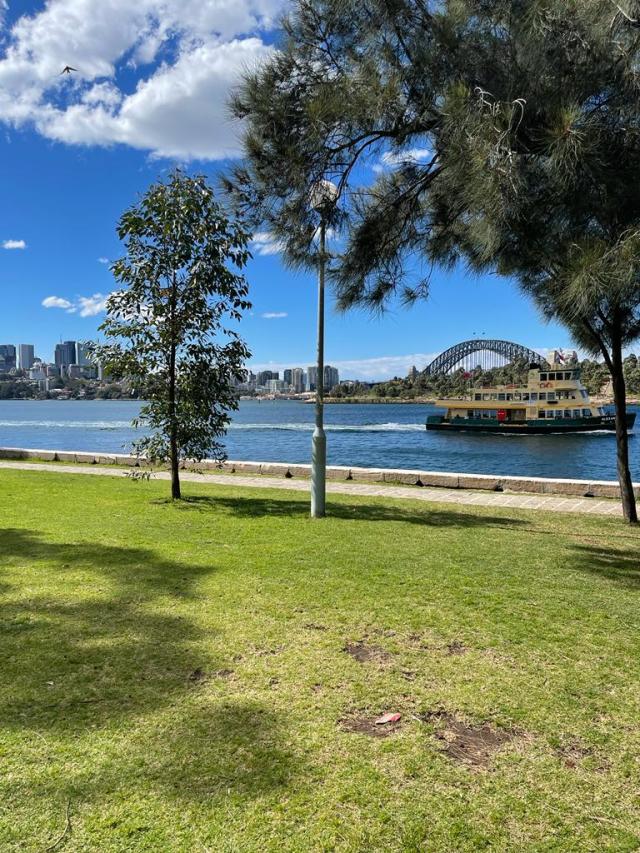
Her shorter Australian workday also includes a real lunch break. A favourite spot serves a Tofu Vermicelli Salad with hot sauce, which she’ll sometimes take to a park or eat while wandering the neighbourhood near Sydney Harbour, with views of the Harbour Bridge and the CBD.
Evenings are for family time—board games like Catan Junior, puzzles, and bedtime routines that include each child’s “good thing of the day” and “bad thing of the day.” When she has energy left, Georgi sews, a hobby she has kept for about three years. She currently has a blazer in progress.
Just last week, she transferred from Sydney to New York City—and the point of the move, she notes, is that she will remain on the same Cloud team. “It’s pretty awesome how I can travel so far around the world and yet still keep working on the same projects and with the same teammates.”


