Why Inclusive Design Work Stumbles Before It Starts
Unconscious biases are arguably the single greatest threat to inclusive design. They shape who we recruit for research, how we frame our questions, and which findings we ultimately trust. For anyone involved in creating products — writers, researchers, designers, developers, testers, managers, and stakeholders — recognizing these biases is a prerequisite for serving the full diversity of people a product will reach.
Inclusive design demands that we account for a wide range of social identities, including disability, race/ethnicity, gender, skin color, age, sexual orientation, and language. Yet because we all carry unconscious biases, our designs often reflect them. Below are six common biases that undermine inclusivity, along with practical steps teams can take to counter each one.
Confirmation Bias: Researching What We Already Believe
Confirmation bias is the tendency to unconsciously seek out and give more weight to data, feedback, and behavior that affirms our existing assumptions. It is one of the most widely recognized biases, yet it remains underestimated because it shapes our own behavior in subtle ways.
The Cost of Seeking Validation
When we approach research with a mindset of confirmation rather than discovery, we skew our research plans and dismiss findings that contradict our beliefs. This undermines the entire purpose of research and inclusive design, leading teams to build the wrong solution or the right solution in the wrong way. It also breeds overconfidence in assumptions and can discourage research altogether.
The decline of Abercrombie & Fitch illustrates the consequences. The brand dominated the teen apparel market through an exclusive, all-American image. When consumer preferences shifted in the early 2010s, the company failed to listen. After three years of declining sales, CEO Mike Jefferies resigned. His successor, Fran Horowitz, acknowledged the problem directly: “We are a much more inclusive company, we are closer to the customer, we’re responding to the customer wants and not what we want them to want.”
Fighting Confirmation Bias
- Approach users with genuine curiosity. Ask open-ended, non-leading questions, and have someone else take notes so you can cross-check what was actually said. Document exact quotes whenever possible rather than paraphrased inferences.
- Treat every design as a hypothesis. Be willing to pivot when research contradicts your assumptions. Design concepts should be tested with a diverse cross-section of users before coding rather than shipped on faith. As researcher Renee Reid puts it, we should “investigate not validate” our design concepts.

Optimism Bias: Assuming Inclusion Can Wait
While optimism has well-documented benefits, optimism bias is the tendency to underestimate risks and minimize the potential for negative outcomes — including the harm of skipping socially responsible design practices.
When Optimism Masks Harm
Optimism bias leads teams to skip user research, ignore accessibility, and ship products without considering all the people who will use them. The business impact is real: a 2021 survey found that 65% of global consumers buy from brands that promote diversity and inclusion. Microsoft research found that 49% of Gen-Z consumers in the US stopped purchasing from brands that did not represent their values.
Countering Optimism Bias
- Account for negativity bias on the receiving end. Psychologists consistently find that people expect good experiences but are far more unhappy about bad ones, meaning one negative interaction outweighs many positive ones. Inclusive design failures carry disproportionate weight with users.
- Run a project premortem. Nobel Prize-winning psychologist Daniel Kahneman recommends this technique to counter optimism bias. The loss aversion exercise asks teams to brainstorm potential oversights early in a project and identify preventive measures before problems become expensive or embarrassing.
Omission Bias: The Danger of Inaction
Omission bias is similar to optimism bias but turns on a distinction between action and inaction. We tend to judge harmful outcomes caused by action as worse than those caused by doing nothing. This leads teams to feel that deliberately deceptive design is a worse offense than failing to implement inclusive practices at all.
The Illusion of Innocence
Omitting inclusive design considerations feels safer than actively doing harm — but it isn't. Products launched without considering diverse user expectations can create seriously harmful experiences. This bias explains why inclusive work often gets pushed to the backlog or cut entirely.
It also enables a market for problematic third-party accessibility overlays. These post-production tools attempt to detect and fix accessibility issues in real time, yet they have been widely documented as ineffective — sometimes worsening access for the very users they claim to help.
Taking Responsibility for Inaction
- Remember that inaction has consequences. Whether barriers are created intentionally or through neglect, the experience feels the same to the user. Failing to act is no less damaging than deliberately harmful behavior.
- Budget for inclusive work from the start. Include the necessary time, people, and money in the product roadmap rather than treating it as a retrofit. Studies show that fixing a design after release can cost up to 100 times as much as addressing it during development.

False Consensus Bias: Assuming Everyone Is Like Us
False consensus bias is the assumption that others think and behave as we do. Jakob Nielsen captured it in the phrase “you are not the user.” This bias leads decision-makers to say “well, I'm a user too” and treat personal preference as universal truth.
Why Intersectionality Matters
We design for a broad range of people, most of whom are not like us.
The concept of intersectionality, coined by law professor Kimberlé Crenshaw, explains why this is essential: race, class, gender, and other characteristics “intersect” and overlap, producing unique needs and expectations across users. Our individual mix of identities is exactly that — individual.
Consider Olay's 2022 redesign of its facial moisturizer packaging. Design strategist Kate Patterson created the Easy Open Lid with side handles for grip, Braille lettering, and larger, higher-contrast type for vision needs. Rather than assuming one solution worked for everyone, Olay released a limited edition with an online feedback form to inform a second version — demonstrating user-centric iteration over assumption.
Escaping the Consensus Trap
- Don't rely on personal preference. Design guidelines are useful conventions, but they are generic and cannot address contextual situations. Inclusive experiences come from context-sensitive design informed by actual users.
- Let go of the average user. Primary research through interviews, usability and accessibility testing reveals how intersecting identities shape expectations, behavior, and use cases. No amount of internal debate can substitute for empirical insight.
When We Assume, We Exclude
Stereotyping is a shortcut our brains take when we hold overgeneralized beliefs about people based on group attributes. It becomes a problem in UX when we use those assumptions to fill gaps in our research. Surveys rarely capture a person’s motivation or intent, for instance, which leaves us to speculate about the “why” behind answers. That speculation is fertile ground for bias.
The results can be damaging. A Mr. Clean Magic Eraser ad once told mothers to “get back to the job that really matters,” reinforcing outdated gender roles. A Dolce & Gabbana campaign mocked an Asian woman struggling with chopsticks while eating Italian food, sparking public outrage. Designing from stereotypes and tropes risks insulting and alienating whole segments of our user base.
To counter this, we can:
- Broaden our participant pool to include a wide spectrum of users. The more we understand people of different ages, ethnicities, abilities, and gender identities, the less we rely on harmful generalizations.
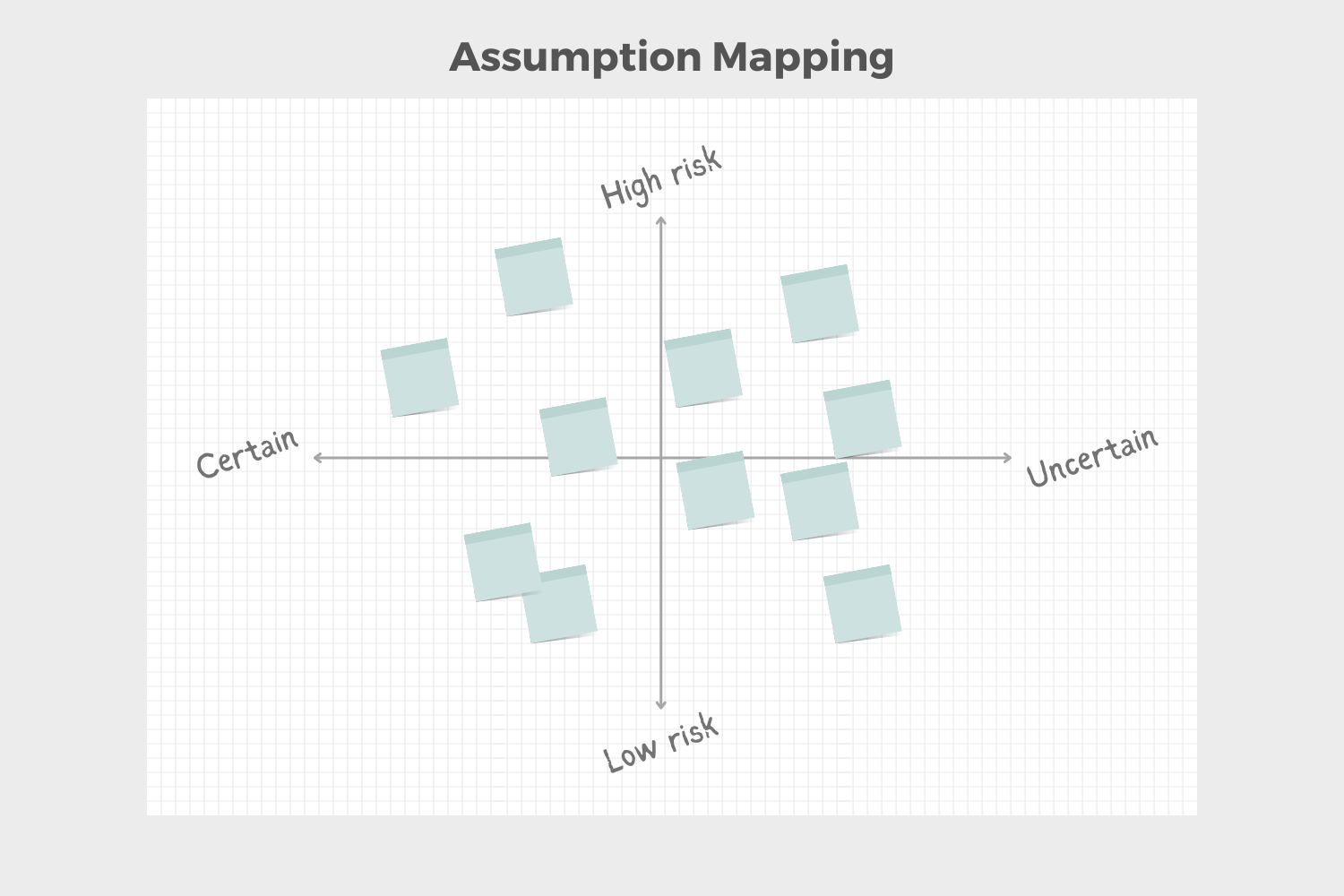
- Conduct assumption mapping—an activity where we document our questions and assumptions about users, then note the degree of certainty and risk for each. This helps reveal how much we depend on oversimplified views and where our design may not account for certain audience segments.
Sticking With What’s Safe
Status quo bias is our tendency to prefer things as they are and resist change. We view current practices as ideal and treat the unfamiliar with suspicion—even when changes would lead to better outcomes.
Default thinking and societal norms can quietly perpetuate systemic social biases. Without input and critique from a diverse range of people, we miss chances to create solutions that serve a broader audience. The classic example: Johnson & Johnson took 100 years to redesign its skin-tone bandages. Released in 1920, the product was built for light skin tones; only in 2020 did Band-Aid add more shades to reflect diverse skin.
To break the default, consider:
- Leaders building non-homogenous teams where it’s safe to challenge the status quo. Team members with different lived experiences bring varied perspectives and open up divergent ways of thinking. Teams encouraged to question the default are far less likely to embed bias in their processes.
- As individuals, using System 2 thinking—the slow, effortful, analytical mode popularized by Daniel Kahneman. In this state, we can challenge our automatic System 1 impulses, get curious about novel approaches, and seek out people and ideas outside our usual circles.
Acknowledgment Is the First Step
Designing for many means designing for demographics whose needs differ from ours. Unconscious biases keep us in comfort zones and are rooted in social constructs that historically worked against inclusivity. When they go unchallenged, these biases seep into our research and design decisions.
The fix starts with admitting we all have biases. From there, we can work to be more mindful of how our products affect the people who use them—and strive to create inclusive experiences.
Further Reading
- “Learning to Recognize Exclusion”—Lesley-Ann Noel and Marcelo Paiva on what it means to exclude and how to step outside comfort zones.
- Biased by Design—A resource on other biases that shape design, with links to additional material.
- Coded Bias—A Netflix documentary on algorithmic bias, sparked by Joy Buolamwini’s research into facial recognition flaws.
- Thinking, Fast and Slow—Daniel Kahneman’s book on how slow thinking can reduce biased decisions.
- Design for Cognitive Bias—David Dylan Thomas on how biases affect decision-making and how to notice them for more conscious design.