
Why Strong Data Gets Questioned
There is a common assumption in UX work that solid, unbiased research will naturally win people over. The logic seems simple: gather enough evidence, present it clearly, and the path forward becomes obvious. In practice, the opposite is often true. The clearer and louder the data, the more likely it is to be challenged.
One reason is that decisive research often exposes uncomfortable truths. When findings point to failing projects, wrong assumptions, or decisions made years ago that are now protected by budgets and promotions, the data is not just information — it becomes a challenge to authority. Few organizations are eager to confront that.

This dynamic explains many familiar frustrations: research being dismissed as unnecessary, difficulty getting access to users, or the sense that loud voices always win the argument. When data is presented with strong conviction in a big meeting, it still gets doubted and explained away. Not because the research is flawed, but because of reluctance to change and the layers of internal politics surrounding any significant shift.
Criticism of research validity and accuracy often comes down to this: both sides are right in different ways. The researcher has found a truth about user behavior; the skeptic sees a truth about organizational constraints. Neither is wrong, but they are looking at different parts of the puzzle.
Reconciling Conflicting Data
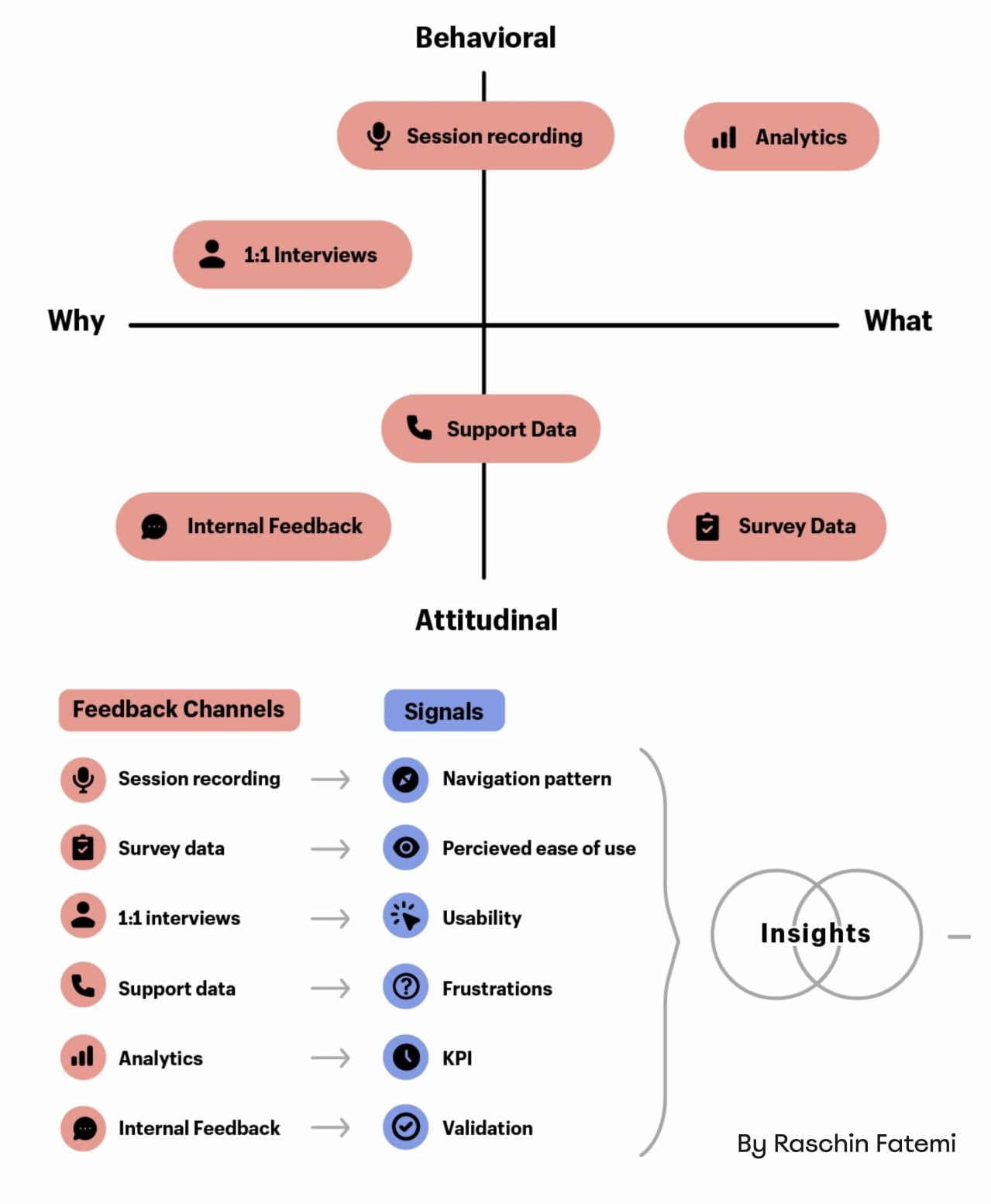
Data never tells just one story. Different research methods produce different perspectives, and each perspective reveals a different part of an incomplete picture. In digital products, most stories have two sides:
- Quantitative data — the what and when: behavior patterns at scale, usually from analytics, surveys, and experiments.
- Qualitative data — the why and how: user needs and motivations, gathered through tests, observations, and open-ended surveys.
Each type of data has its own distortions. Risk-averse teams tend to overestimate the weight of big numbers from quantitative research. Meanwhile, users exaggerate the frequency and severity of issues that matter most to them, and designers can get carried away by these confident responses.
When data from different teams paints different pictures, the solution is to reconcile and triangulate. Reconciliation means tracking what is missing, omitted, or overlooked. Triangulation means cross-validating the data — pairing quantitative and qualitative streams, clustering them together, and exploring what is present and what is absent.
Even after conflicts are resolved, one critical step remains: the research needs a compelling story around it to be effective.
Building a Story That Persuades
Facts alone rarely win arguments; powerful stories do. But a presentation that opens with a spreadsheet does not inspire anyone to action. It may highlight a problem, but doesn't lead to a resolution.
An effective narrative starts by emphasizing what unites the audience — shared goals, principles, and commitments relevant to the topic. From there, show how the new data confirms or confronts those commitments, and which specific problems need to be addressed.
When questions about data quality arise, the answer is to demonstrate that the research has already been reconciled and triangulated, and that it has been discussed with other teams. This preempts concerns about validity before they become obstacles.
A good story also needs a strong ending. People need to see an alternative future to trust the data — and a clear, safe path forward to commit to it. This means presenting options and solutions, and explaining the reasoning behind them.
The proposed future must feel within reach. Even under tight timelines or limited resources, stakeholders need to believe they can pull it off. It also helps to frame a compelling shared goal that people can rally around — ideally one with direct benefits for them and their teams.
In the end, data is just the starting point. It carries weight only when wrapped in a story that connects with the audience's values and gives them a reason to act.
Preparing for Resistance
There is nothing more disappointing than uncovering a real problem that real people struggle with, only to face the reality that the research is not trusted or valued. It happens to every researcher at some point.
The best defense is preparation:
- Have strong data to back up your claims.
- Include both quantitative and qualitative research, preferably with video clips from real customers.
- Paint a viable future that seems within reach for your audience.
"Data doesn't change minds, and facts don't settle fights. Having answers isn't the same as learning, and it for sure isn't the same as making evidence-based decisions." — Erika Hall
Sometimes nothing changes until something breaks. In those cases, there isn't much you can do — unless you are prepared for the moment when it happens.