Elsewhen's collaborative practice in Figma
Elsewhen is a UK-based digital product consultancy that builds B2B and enterprise tools for clients across industries worldwide. Its work centres on finding broken systems and improving day-to-day operations with better tooling, so that client teams can focus on their own products and problems. Because that work depends on close partnership with clients, Elsewhen uses Figma as a shared home base for design and collaboration.
According to Tadhg McCarthy, Founder and Design Director at Elsewhen, the tool removes routine steps such as exporting, uploading, and distributing assets. McCarthy stresses that Figma is not reserved for final product screens: the team relies on it across the entire process, from exploration and workshopping through to prototyping with clients.

Spotify: measuring design productivity
At the start of last year, Spotify was examining how design organizations can measure and evaluate designer productivity without damaging the creative process. In a blog post, the Spotify design team described measuring productivity for a creative role as "a treacherous undertaking," warning that counting screens, components, solutions or the time taken to produce each one would be a mistake, and arguing that the right metrics first need to be identified. Working from the idea that improving design productivity could unlock design creativity, Spotify brought in Elsewhen.
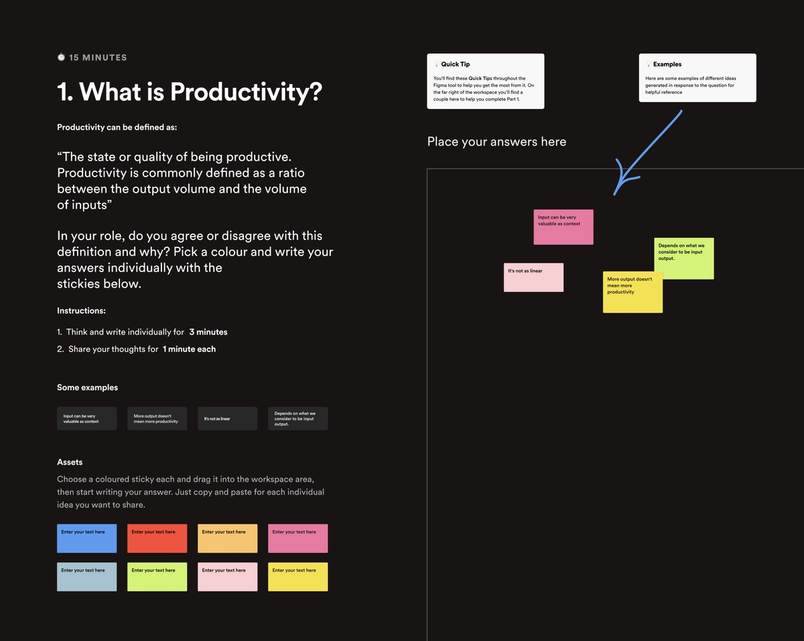
The two teams created the Design Productivity Blueprint, a framework for helping design teams understand current workflow challenges and locate key opportunities. It is an open-sourced Figma file containing a collection of workshops and interview templates that any team can use. The hope is that design teams will spend more time designing and less on the tasks that slow them down.
Inmarsat: a first design system
Inmarsat, a British telecommunications company running satellite communication networks for cities, companies, ships and planes, faced the familiar problems of a distributed workforce. With many offices and no internal design team, the company relies on agencies for design partnership — a model that offers flexibility but can disconnect in-house developers from incoming designers who lack context or tools. Without a single source of truth for commonly used components, files and assets, onboarding and managing those designers was a heavy lift. Matt Soczywko, Head of Marketing at Elsewhen, recalls that components "were constantly rebuilding components from scratch," which prolonged the process of shipping products.
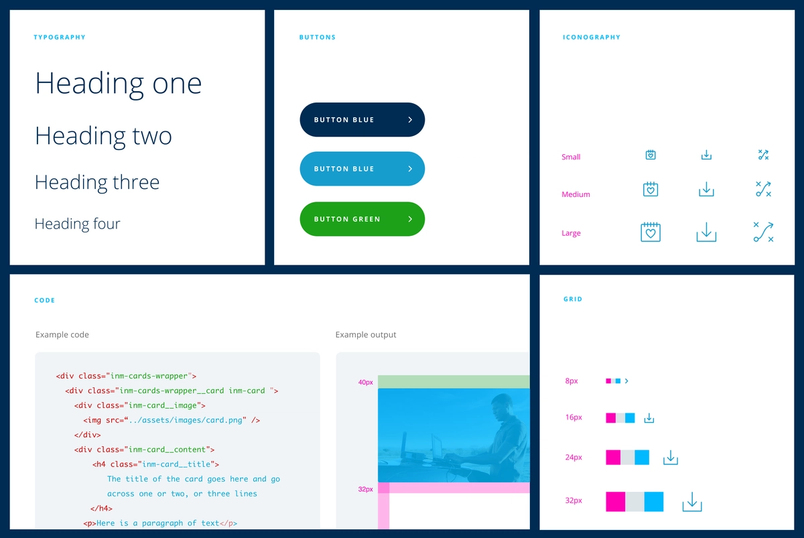
Elsewhen was tasked with creating Inmarsat's first design system in Figma, built on an ongoing project: a self-service portal for enterprise customers. That project supplied the foundational elements for the new component libraries, from which Elsewhen developed a framework for common components including type, buttons, icons and grids.
Brandon James, Director of Marketing at Inmarsat, says the organization and its partnering agencies now have a source of truth for design components in Figma, with critical design assets easily accessible to designers and developers alike. As a result, the business is building new products faster and staying ahead of the curve of technological change.