Calm Leadership in an AI-Driven Design Era

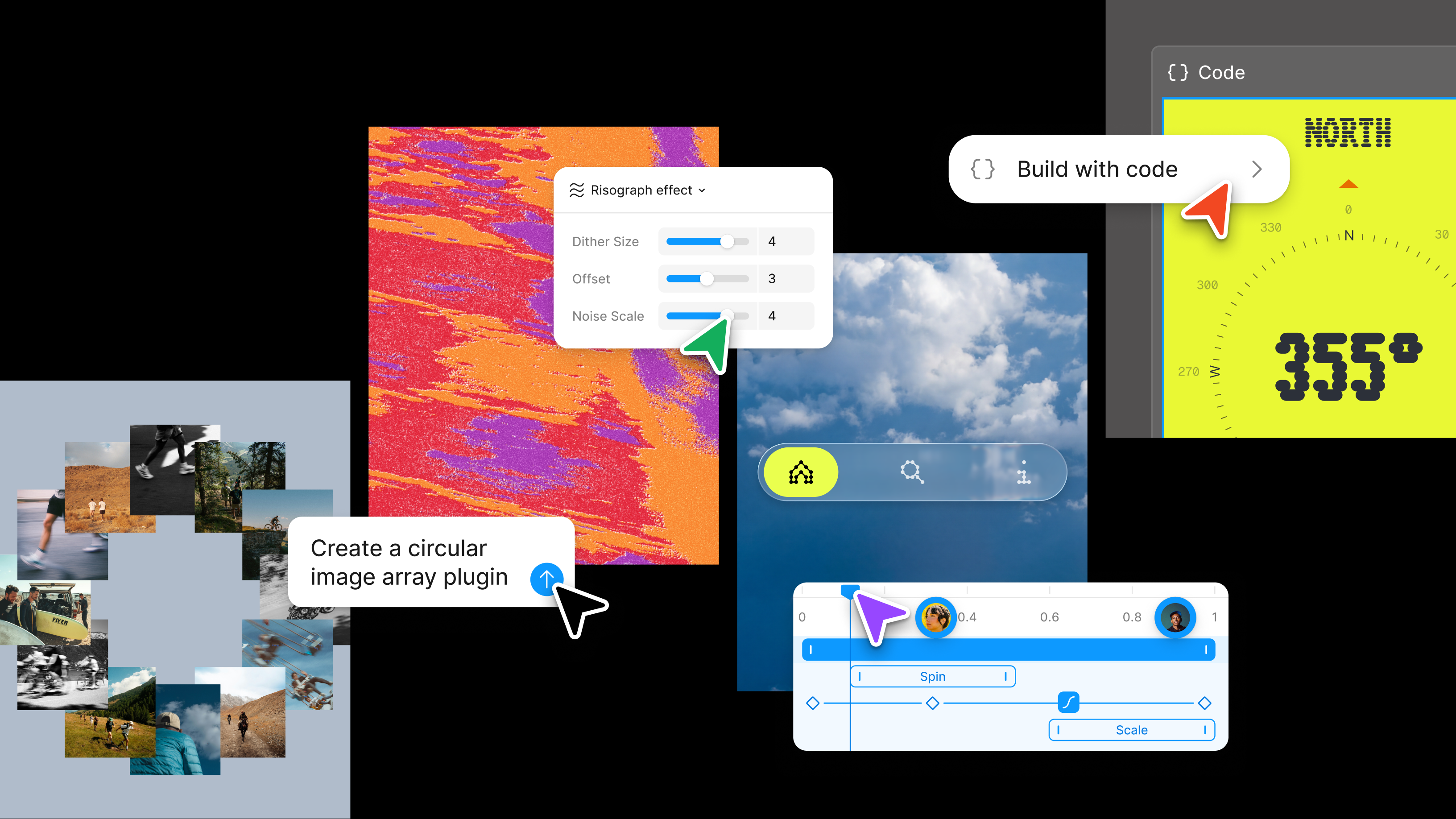
Jen Dunnam, VP of Futures at Hinge, has spent her career leading design teams through periods of intense change. From her time at Shopify and Patreon to her current role, she has developed a clear perspective on how design leaders should navigate the uncertainty that AI has introduced. In a conversation with Pedro Hernández, Advocacy Manager at Figma, at Collage-style product graphic showcasing AI-assisted design and development workflows, with plugin creation prompts, visual effect controls, code generation tools, and interactive UI components arranged across a creative workspace. she shared practical advice on steadying a team, hiring for the right traits, and matching the speed of work to the organization's actual needs.

Defining the Leader's Role

Most leaders in Dunnam's position feel a strong pull to act as an accelerant—to instill a sense of urgency in their reports. She sees it differently. The designers she works with typically bring a high level of drive themselves, so she doesn't see her role as adding fuel to the fire. Instead, Dunnam focuses on steadying the team, helping them break down complex problems, strategize an approach, and evaluate tools against solid principles. She cautions against becoming reactive to what AI promises, warning against the urge to chase capabilities that look shiny on the surface. From her perspective, the fundamental goal has not changed: teams still design for humans. Her method for staying grounded relies on steady experimentation and continuous learning.

Selection Criteria for a New Era

Hiring looks different when building a team for this environment. Dunnam actively seeks out and invests in talent fresh out of school, making a point to pair juniors with more experienced product designers who can transform early thinking into shippable artifacts. Dismissing new graduates would sacrifice a great deal of talent that has been caught in the crossfire of the current shipping pace. When it comes to experience, she prioritizes a specific hybrid for researchers: those with the curiosity to find the right insights, supplemented by the decisiveness and conviction to push product decisions. This combination of rigor and perspective is what makes research actionable rather than just interesting. For all candidates, one trait has jumped to the top. Critical thinking has never been more valuable in her interview process. To test it, she asks tough questions: Where did they dissent? How did they push back on a stakeholder? What are they still unsatisfied about in a product they designed? This rigor is a necessary counterweight to the current AI moment, which tends to reward convincing output over careful reasoning.

Cultivating a Culture of Disagreement

A telling indicator that a team is functioning well isn't alignment, but dispute. If a team seems to be nodding along, Dunnam assumes they are either disengaged, confused, or not being honest. A healthy design organization creates a space where fierce, respectful debate is the norm. That kind of environment doesn't arise on its own. Design leaders have to model it. She points to the design critique as the best tool for protecting this kind of thinking. It only works if the leadership sits in the conversation and displays the willingness to be questioned, to revisit decisions a week later, and to break things down for a rethink. Practicing that in an open forum teaches designers that there is a safe space to ask hard questions and strip work down to its core.

Defining Both the Work and the Timeline

Beyond the critique, ensuring people have time to think requires deliberate scheduling that suits the objective. For generating new ideas, Dunnam prefers dedicated multi-day blocks rather than lengthy innovation sprints. Her experience has pushed her away from long, process-heavy ideation exercises. These are sessions that need to happen without the pressure of meetings or fixed deliverables, and they require the active participation of everyone—from researchers and designers to creative technologists. Critically, those blocks fit best during an off-site environment in the open space of the schedule, where there is room to think and explore free from the constraints of the workday.

Speed Isn't Universal

A mistake leaders frequently fall into is treating "move fast" as a single, generic directive. Dunnam advises running a precise assessment of what kind of speed the organization actually needs. Her model revisits the classic fast/cheap/good equation. When companies want it all—rapid ideation, refined execution, and new features—something has to give, and that tradeoff must be discussed honestly. Her product experiences illustrate that perfectly. Shopify's success rested on quickly restructuring a core product using a developed product vision. For the community of developers, that meant rebuilding a core product with speed was paramount. Patreon was pursuing an entirely different lane of velocity, operating more like a media and community platform. In that case, speed meant shipping a steady stream of new functionality through MVPs to see how creators would respond and build businesses with those tools. A full and honest read of the organization's needs dictates which of the two outcomes you prioritize, regardless of your desire for launch velocity.