
Education As A Maturity Driver
The growth of UX maturity within an organization depends largely on a simple but often overlooked resource: education. This applies both to UX practitioners seeking deeper expertise and to non-UX staff who need to understand UX principles and the processes that surround them. Ongoing education gives practitioners the ability to work more effectively at higher maturity levels, particularly when the organization's expectations of UX shift from low-level design support to strategic leadership.
The connection between an individual's UX training and an organization-wide maturity level is less direct than other tactics, such as showcasing ROI or executive championing. But without continuous educational opportunities, UX staff will not develop the capabilities required for more advanced work. UX maturity at scale is largely an outcome of a team that is not only growing in skill, but doing so on a consistent basis, with all practitioners learning new tools and techniques or deepening existing ones. When training is organization-wide and consistent, those practices simply become the way UX gets done.
Consider an organization in Chapman and Plewes' stage three, Adopting, with the goal of moving into stage four, Realizing. It is difficult to grow team members into the UX leadership roles stage four requires, unless they have both experience and training under their belt. Hiring external candidates with the pre-existing skill set is often necessary to move from stage one to stage two, but in most cases those leadership skills already exist within an organization and only need educational support. Similarly, continuous discovery and iterative design that happens prior to coding demands a different skillset compared to improving a product that is already code-based. Education on design techniques and research methods is essential for the team to engage effectively within new, higher-maturity UX processes.
Before UX practitioners even introduce UX work that occurs earlier in the development process, they will also need to educate others. These educational efforts require their own skill sets: workshop facilitation and communication that is capable of spreading UX understanding throughout an organization's broader staff.
Investing In UX Training
Regardless of the current maturity stage, UX training requires advocacy for budget and resources. In the earliest stages, budgets may be non-existent, but a large number of low-cost (under $100) and free options exist for getting started. Organizations in earlier stages can select training based on low-cost options before advancing to more comprehensive investments in education.
There are many training providers that focus exclusively on business UX and design thinking practices. When selecting a provider, it is worth investigating vendors in business categories your organization holds as values, including minority-owned and women-run businesses.
Format, cost, and time remain critical factors when deciding between educational options. Various training formats—from online courses and books to on-site engagements—differ meaningfully in their cost and the amount of time required from staff. A deliberate and balanced spread of these factors will inform which choices move your team forward.
To round out learning options, there is a deep trove of resources to draw from: writers, speakers, practitioners, and online and local community groups. It helps to keep your sources broad, so that one particular expert's viewpoint isn't internalized as dogma. In a field as relatively young as UX, it is essential to remember that no particular individual's guidance applies 100% in all situations.
Subject Areas Worth Training On
Here are some categories to consider for ongoing education. These are suggestions to customize to your own team's eventual targets.
UX Research
Every member of a UX team should have a foundation in conducting ethical research. This ensures better experience concepts are built, providing a strong basis for advocating at earlier points in the product cycle to create opportunities to research. Even non-researchers on UX teams should feel comfortable with common methods, particularly interviewing, observation, and usability testing, along with understanding the data type generated and how to apply it to inform design.
Organizations in early maturity stages rarely have specialist researchers on staff, but having those people as resources eventually allows them to serve as internal course providers to both other practitioners and non-UX staff.
Facilitating Workshops
Workshop planning and facilitation belong in the core toolkit of any UXer. Their delivery can span everything from design thinking and service design blueprinting to prioritization exercises that balance user needs, business requirements, and technical opportunities. Facilitation is a learnable skill, and the quality of delivery has a direct impact on the outcome of those sessions.
Specific Tools
Design teams need expert depth in the design and prototyping tools they use, while project and product managers need to work deeply in agile and issue tracking tools. Developers, in turn, need mastery of relevant programming languages. Cross-training others on each specialty should also occur where beneficial, including whatever applications the team uses for screen sharing, presenting findings, running qualitative or quantitative data analysis, and creating and deploying surveys.
Soft Skills
Communication, leadership, and creativity produce some of the most systemic benefits for the maturity of the organization. They let practitioners share UX purpose in a compelling way, collaborate meaningfully with non-design roles, and maintain productive respect for the work across the broader team. The team should engage in soft-skills training at least twice per year, but because many of these are learned on the job, tying them to a mentorship program keeps growth practical rather than merely academic.
UX Leadership
Strategic and professional growth go beyond basic staff management; the point is to have team members who know how to represent UX in multidisciplinary environments. That presence is most important in settings with large technology or transformation-related decisions, where managing the *experience* can easily be bypassed when the focus is on what tech makes possible. A solid base also includes UX strategy — understanding how components fit together, their purpose, and the implications for what comes next. You begin growing your team into leadership as they learn communication and business navigation, translating UX value from design terms into broader business outcomes.
Merge education with a mentorship structure wherever possible. Practice, especially tied to projects in day-to-day work, generally cements new knowledge faster than isolated examples. As your team converts new learning into workspace habits and passes that on to other staff, those habits cumulatively reinforce an organization's maturity rather than functioning as mere additions to individual resumes.
Bringing the Rest of the Organization Into UX
Expanding UX maturity beyond the practitioner level depends on educating the wider organization. Without a shared baseline of UX knowledge, efforts tend to stall at Chapman and Plewes’ Stage two. Product owners, project leaders, and others who shape product decisions need to understand how UX processes work and where they add value. That awareness is what enables a shift from fixing products after the fact to applying UX early.
Having your own UX practitioners create and deliver training is a strong approach. It gives attendees across the organization a chance to meet the people doing UX work and understand their role in the product lifecycle. Add design thinking workshops, case studies, and showcases of completed UX work to reinforce the message.
Training on How UX Works
Agile teams often receive upfront training to introduce the methodology. UX deserves similar treatment. Training doesn’t need to create UX experts—it should help colleagues see how to engage with UX, what UX activities look like at different development stages, and how UX coordinates with disciplines like change management and product development.
You can offer this training at project kickoffs or as a standalone session. But before designing any training, think through three areas:
- Who to invite. For product work, include product owners, developers, project managers, and directors. For large transformation efforts, add project leaders and managers. Decide whether mixed roles in one session or role-specific sessions better serve your goals. Consider the dynamics between roles before structuring the invite list.
- Activities and topics. Build a curriculum around desired outcomes. Start with a high-level walkthrough of the design thinking process, then map each step to a relevant product. Follow with a deep dive into a specific UX role or task. Use hands-on exercises that let participants apply what they learn to their own work.
- Outcomes. Be explicit about what the session should achieve. If you want deeper UX involvement in one product, ground the training in that product and invite its key stakeholders. If the goal is org-wide growth, frame content so it applies across multiple roles, or run separate tracks.
Using Workshops to Demonstrate and Grow UX
Workshops offer a different path to maturity. Instead of teaching people about UX, you invite them to participate in it. Led by your UX practitioners, these sessions give stakeholders firsthand experience of UX methods while producing useful outputs. Inviting leadership to observe sessions run for other products can also build support.
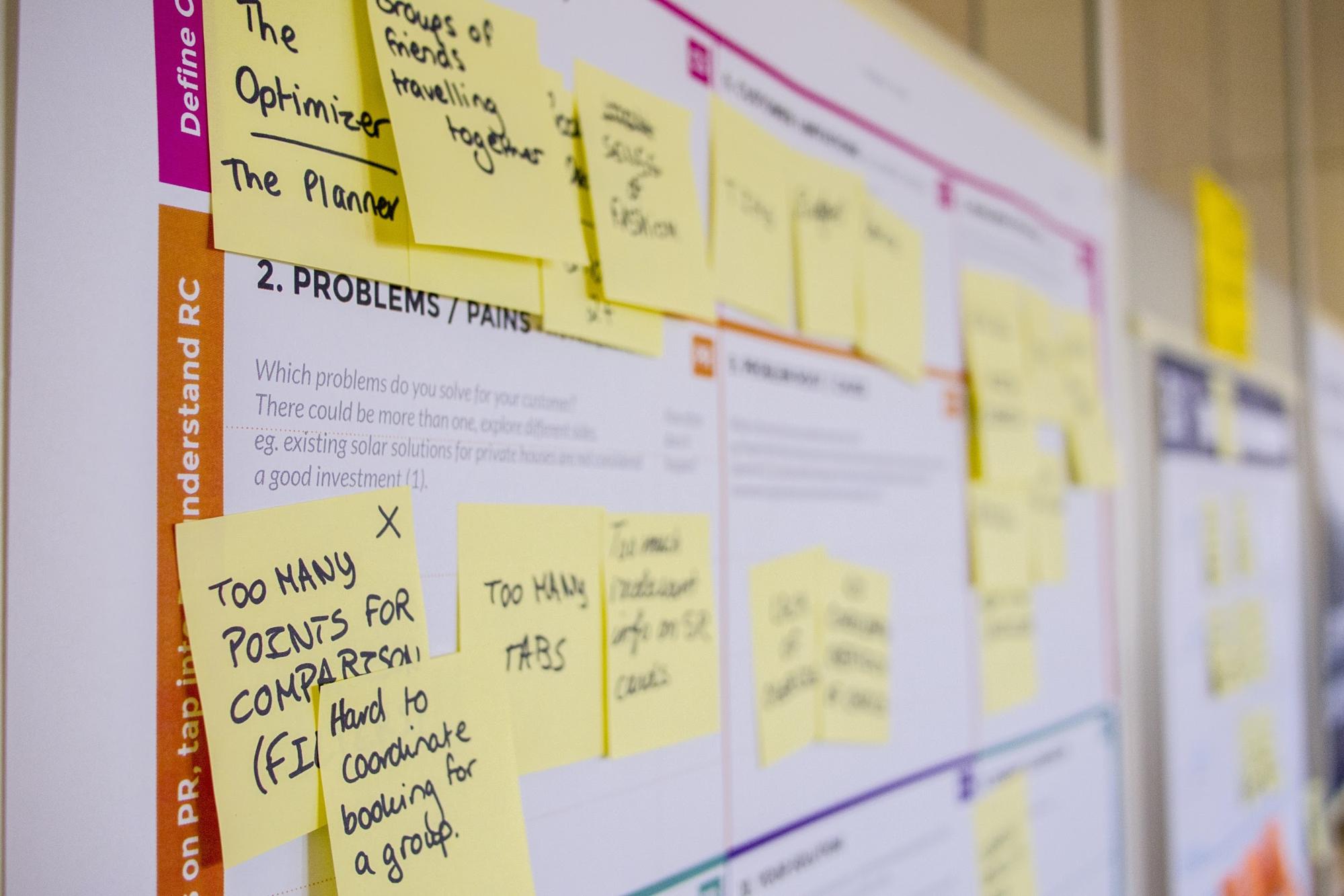
Several workshop formats work well for this purpose:
- Discovery sessions. Bring the full product team together to align on user needs, product state, goals, and known pain points. Use the time to present existing research or to inform an upcoming research plan. Consider inviting end-users for part of the session. Activities like idea generation, consensus building, and affinity mapping keep the group productive.
- Service design blueprinting. This format brings together diverse parts of the organization to map how a service is actually delivered. It overlaps closely with UX work and is useful when you need a shared view of a service’s end-to-end journey.
- Ideation sessions. These generate the breadth of options needed for genuine problem solving. They can run in as little as two hours, which makes them practical for busy groups. Invite product stakeholders plus people with outside perspectives—fresh thinking is often more useful than deep product knowledge. Prior research can brief participants quickly.
- Feature prioritization. Once you have user data, business requirements, and technical estimates, a prioritization session brings product, business, and technology people together to decide what gets built first. Take care with senior leadership in the room: their authority can skew priorities. Set expectations for how decisions will be made before the session starts.
These formats are not exhaustive, but they demonstrate a pattern. Widely shared workshop practices both socialize UX across an organization and signal increasing maturity. Moving past Stage two is difficult without regular opportunities for non-UX members to see and take part in the work.
Teaching UX Research to Non-Designers: A Financial Institution Case Study
Training sessions have proven effective at promoting UX growth, though not every attempt succeeds. A case study with an international financial institution — over 70,000 employees, numerous internal and customer-facing digital products — offers useful lessons for both wins and failures.
Introducing UX Research: The First Workshop Series
UX research is a solid entry topic because it builds empathy with users, uses concepts many professionals already recognize, and requires no design tools like Sketch or Adobe products. At this client (Chapman and Plewes Stage 2 maturity at most), a new executive brought us in after experience with our UX team elsewhere. The ask: spread UX awareness and give product teams concrete examples of how UX fits into product design. We ran two separate two-day workshops (16 hours each, 10-12 participants per session).
Our UX Champion connected us with key members of each product team. Participants ended up being product owners, project managers, and lead developers — notably, no designers, since on these products developers handled design and that gap needed addressing.
The curriculum covered why research matters, timing of research relative to coding, generative versus evaluative methods, and increasingly selective detail on interviews and usability testing — including hands-on activities like scripted peer interviews on digital productivity tools and usability tests on publicly accessible websites, brief data analysis exercises, and ending with participants writing realistic research plans for their own products. Because the Champion recruited participants, we shaped examples and scenarios around the products represented.
Intended Verses Actual UX Research Outcomes
The central goal, never explicitly stated, was creating traction for UX research on some of the represented products — under the theory that research has the lowest barrier to entry. Additional aims were understanding research methods, when to use them, and how research informs design.
Post-workshop evaluations scored highly on presentation, structure, and topics. We got invited to many product meetings — often irrelevant or expecting more budget than we had — but those conversations still gave UX visibility and realistic resource assessments. Crucially, we completed research on two products: interviews with end-users whose input shaped upcoming releases (the first time user voices touched the backlog), and usability testing that surfaced improvements for an existing product. Both resulted directly from the workshops.
The Design Thinking Workshop: What Fell Flat
Separately, we ran two three-hour design thinking workshops for a broader leadership audience — including budget owners over product lines — to educate on the Stanford d school framework and demonstrate ideation activities. We wanted decision-makers to grip the value of UX and possibly hire us for product-specific sessions.
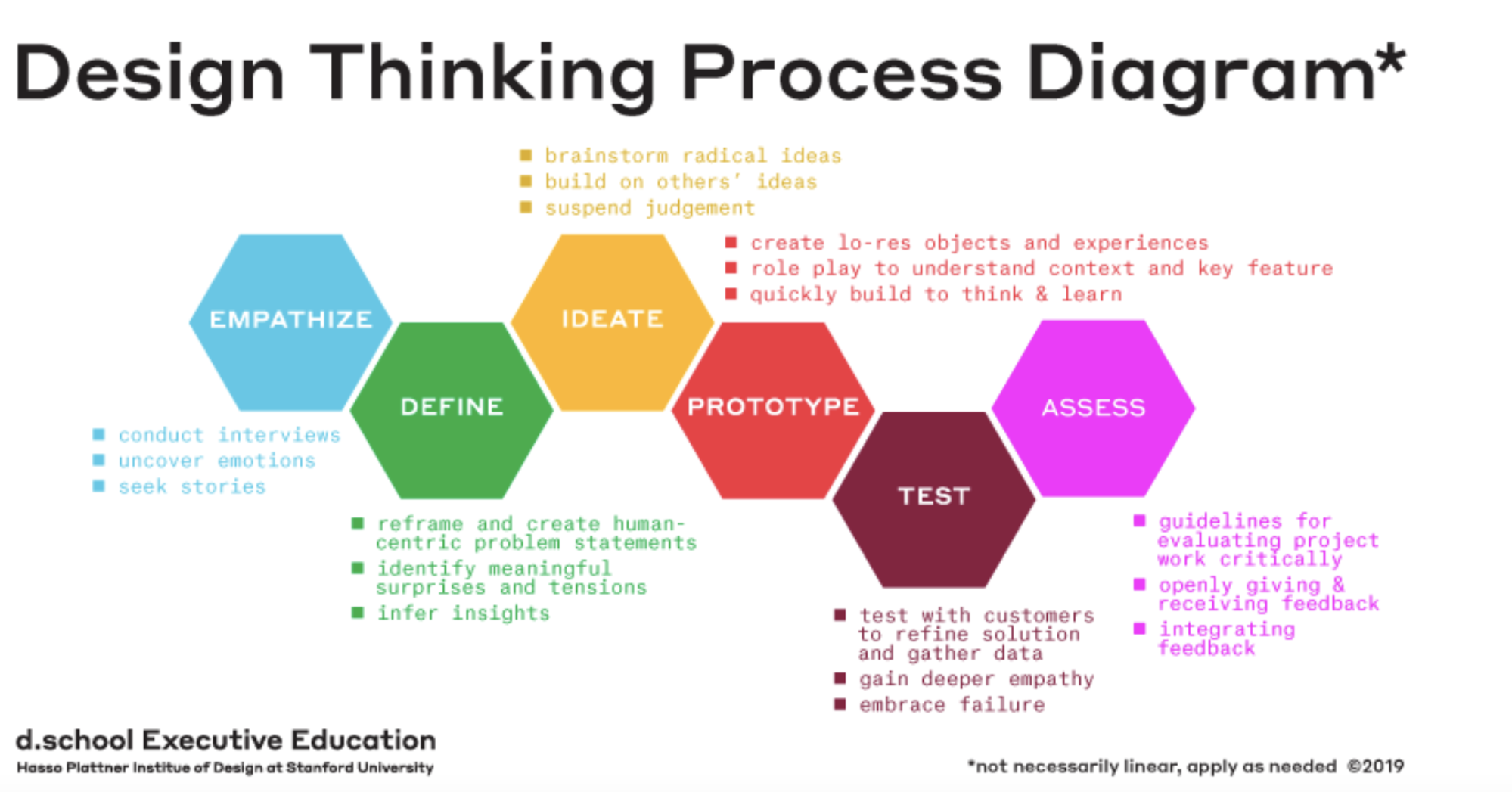
The agenda walked through design thinking steps with examples, discussed application to represented products, split into small groups of 3-4 to ideate on solutions to common organizational challenges, reconvened for sharing, and closed on how to apply the approach to product or business-unit problems.
Yet this series substantially underdelivered. No product requested follow-up workshops. The critical lesson: our participant pool was too broad, spanning too many products and business units. In small-group activities, participants struggled to align on a focus—each pushed their own product or concern. Several felt unheard by colleagues. The result was time spent deciding what to ideate around rather than ideating.
The fix, since adopted in similar contexts: for broad mixed groups already working on an idea, propose the problem upfront. Our UX research workshops had done exactly that by framing activities around shared trouble areas; we wrongly assumed that giving design thinking participants free rein would generate buy-in and relevance.
Long-Term Impact and Maturity Growth
Despite the hiccups, the client — whom we engaged over five years ago and have worked with since — has since grown from roughly Stage 1 or 2 maturity to a solid Stage 4 across most products, eventually developing an in-house UX offering. Our workshops were likely not the sole driver, but alongside the other practices detailed in the first article, training was a significant lever in raising that organization’s UX maturity.
Wrapping Up the Series: A Practitioner’s Playbook for Raising UX Maturity
Working within an organization that undervalues UX is a familiar frustration for many practitioners. The good news is that individual contributors and small teams don’t have to wait for a top-down mandate to drive change. Across this three-part series, we’ve detailed six concrete tactics that UX professionals can use to nudge their organizations toward greater UX maturity, regardless of their current position on the ladder.
The earlier installments offered strategies suited to specific maturity levels. The tactics of finding UX champions and demonstrating the return on investment of UX are prime starting points for lower-maturity environments. These approaches require minimal resources, making them viable for organizations where UX hasn’t yet had the time—or the internal advocacy—to prove its worth. You’ll often find quick wins here simply because the groundwork hasn’t been laid.
In the mid-range of maturity, typically correlating with Chapman and Plewes stages 3 and 4, the focus shifts to internal strengthening. Part 1 covered the necessity of knowledge sharing and documenting UX work. An organization stagnates at this level if there’s no formal record of achievements and no rotation of insights. This is also the stage where mentoring becomes essential for preserving the UX culture you’ve built, using your experienced staff to guide those just starting their UX journey within the company. Without these practices, growth beyond that point is unlikely.
This concluding part centers on the education of both UX and non-UX staff. While education tactics can be employed at any maturity level, they exhibit significant depth and utility at stage 3 and beyond. The logic is straightforward: you must train your UXers to advance your own practice, but if that knowledge remains siloed within the design team, the organization as a whole will fail to mature. Success in this area requires that non-UX colleagues—in product, engineering, and management—are also exposed to the principles that make mature UX teams effective.
A Flexible Approach
These six tactics aren’t a one-size-fits-all prescription. They are tools to be used alone or combined depending on your specific context and organizational pain points.
No single playbook is universal, so we encourage practitioners to observe what works in their unique corporate culture and adapt accordingly. There’s also a collective benefit to sharing your experiments—whether they succeed or fail. Documenting what you tried to grow UX, and posting your findings on blogs, at webinars, or in forum discussions like the Smashing Magazine comments, steers the entire profession forward.