The end goal: a design system published as a dependency
The clearest sign of a mature design system is a versioned package published to a registry, so that product teams can install it and consume it the way they would any other dependency. Working backwards from that goal, the chain is straightforward: the system lives on GitHub, and it is published from there. The development environment that produces those pushes to GitHub is where Backlight sits.
Backlight is an all-in-one development tool for design systems. It is not prescriptive about the underlying stack: Lit and Web Components, React with Emotion, plain Vue, or Nunjucks and Sass are all viable choices.
Starting from a template or from scratch
Backlight offers starter templates, though using one is optional. A starter is the faster route if you are comfortable adopting something off the shelf and customizing it, collapsing what might otherwise feel like weeks of setup into an instant. A fully custom system remains entirely possible.
Client-side tooling built on standard workflows
Creating a GitHub or GitLab repository and pushing to it takes a few clicks.
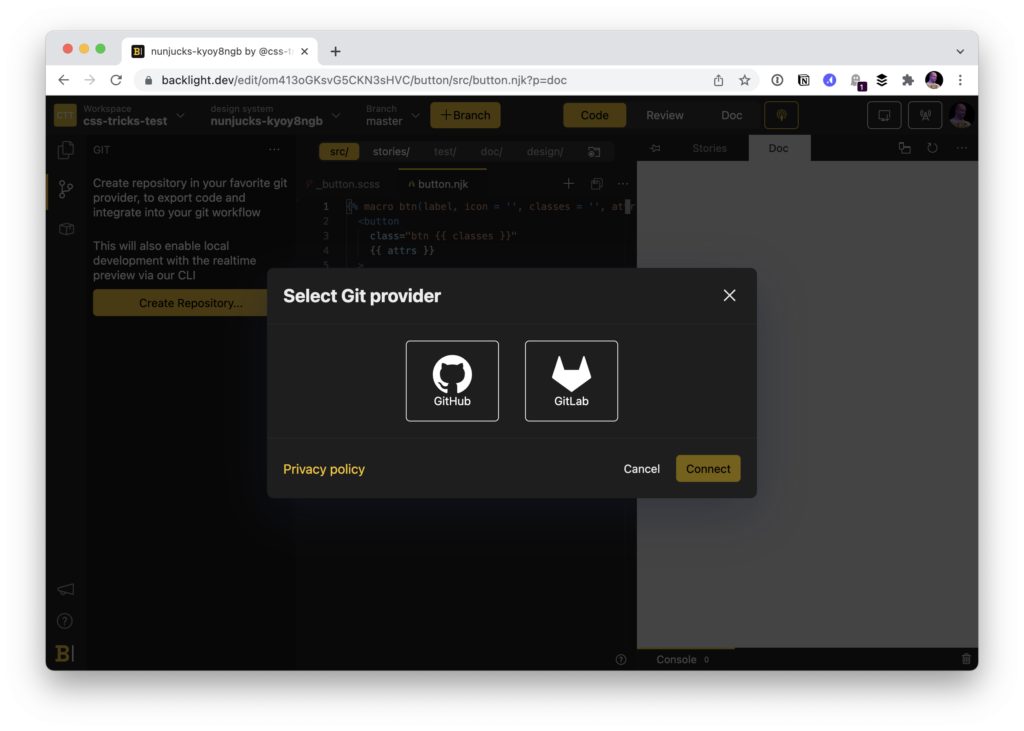
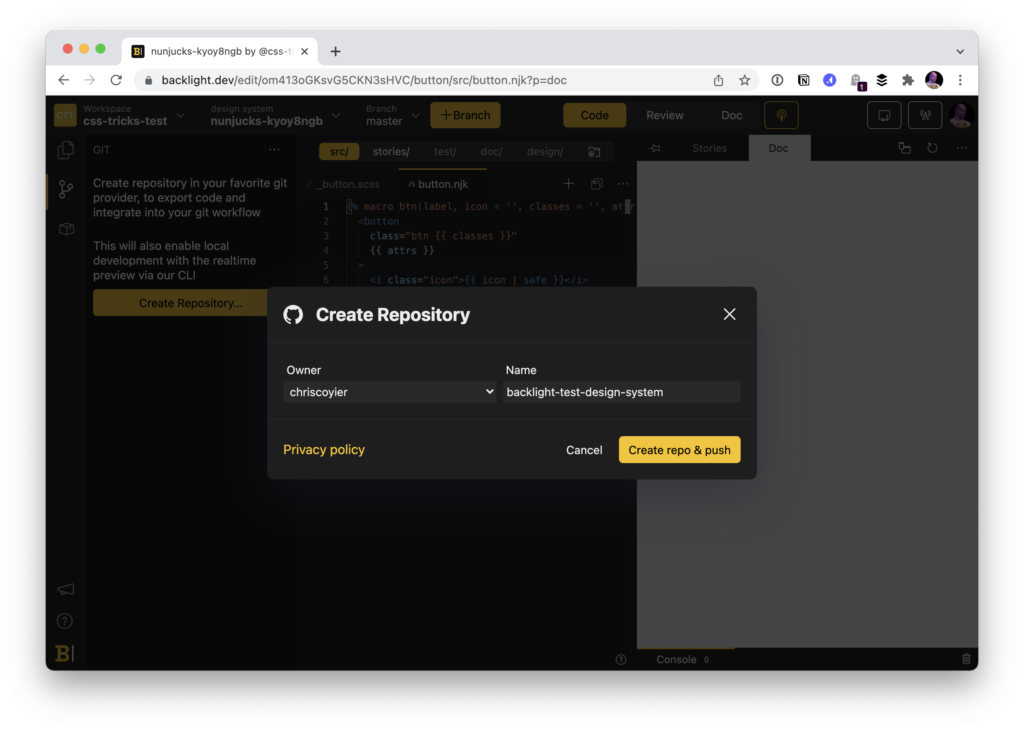
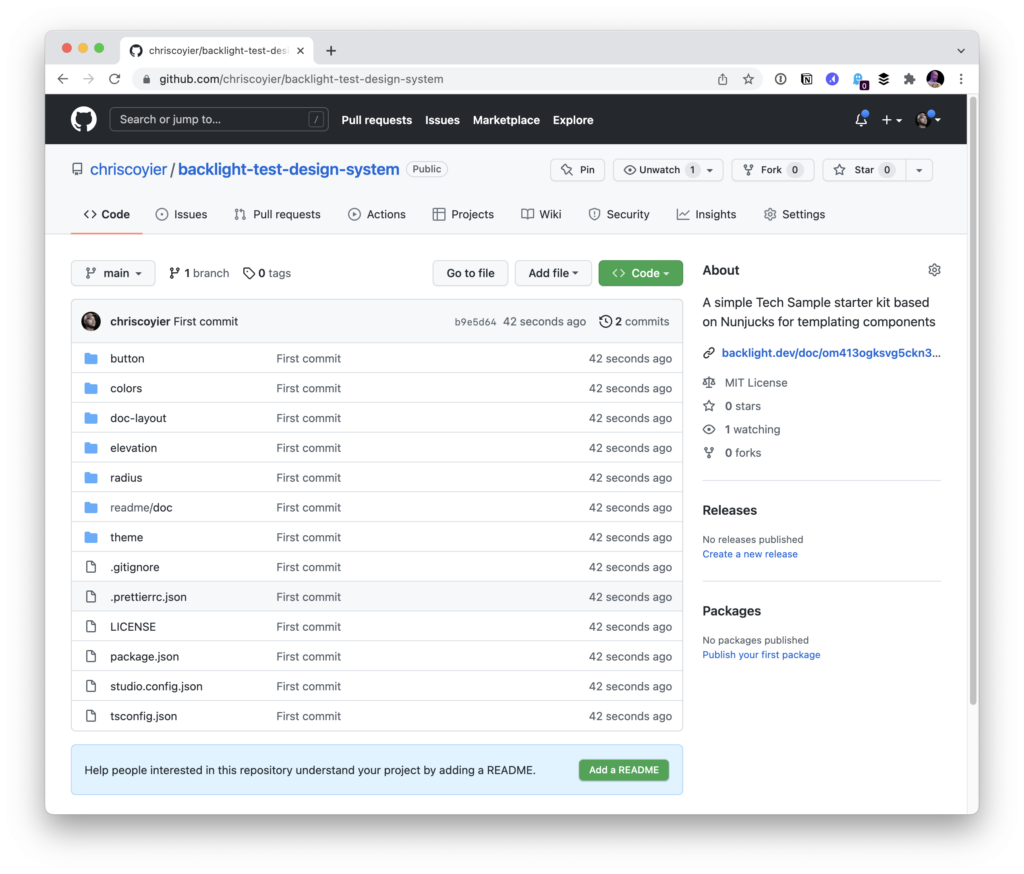
The significance is that Backlight does not force teams into a proprietary tool with no exit; it takes industry-standard practices and makes them easier to work with. The same applies to releases: pushing to a registry such as npm or GitHub Packages is a few button presses, after which anyone can install the system as a normal dependency.
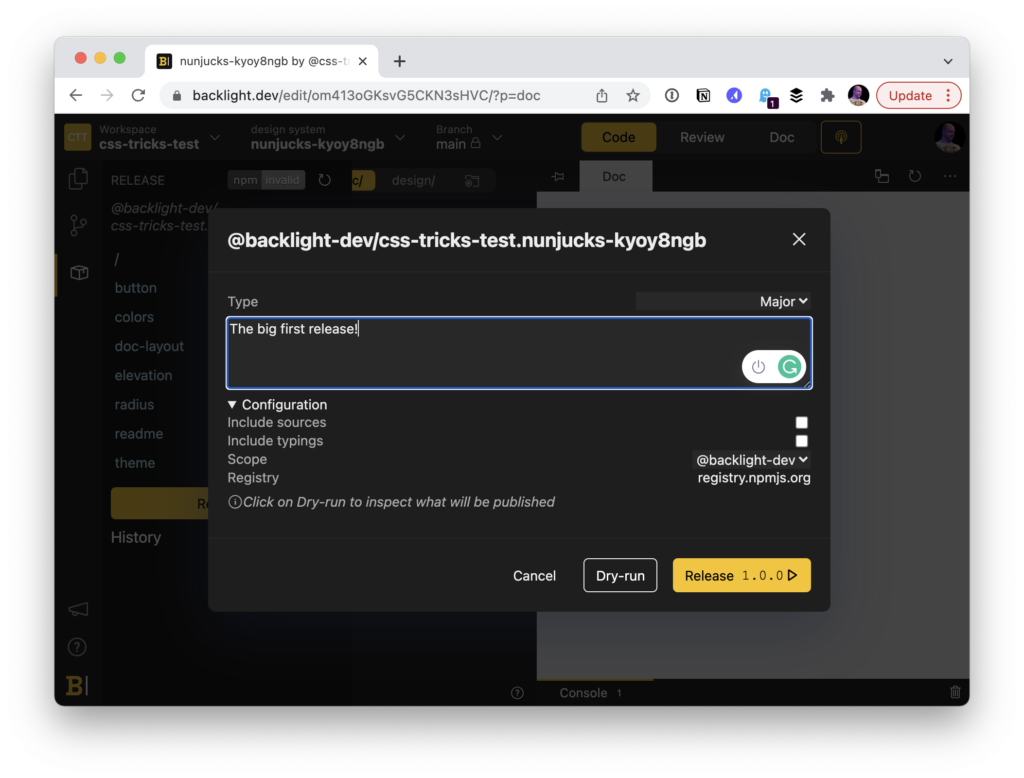
A PRO membership lets you change the scope to your own organization, and releases, including major, minor, and patch versions, will eventually be handled from there.
Authoring components in the browser
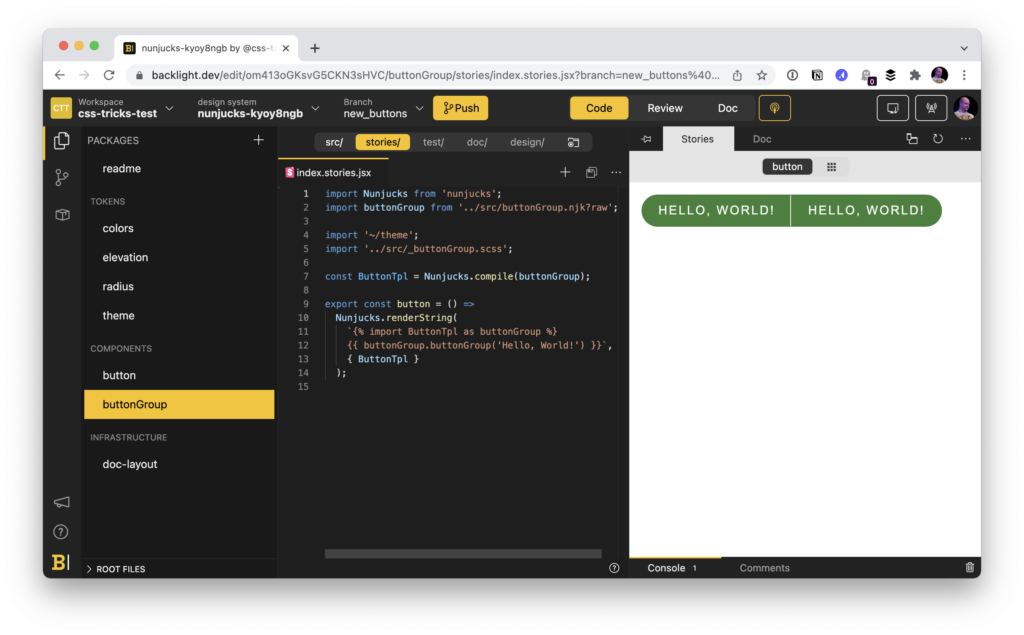
A new component can be created without reading the documentation or outside help. In one example, that meant writing a Nunjucks macro, adding SCSS styles, and creating a Storybook “story” as a demo, using an existing component as the reference. The in-browser IDE rebuilds changes quickly (it behaves like a Vite process) and surfaces errors helpfully.
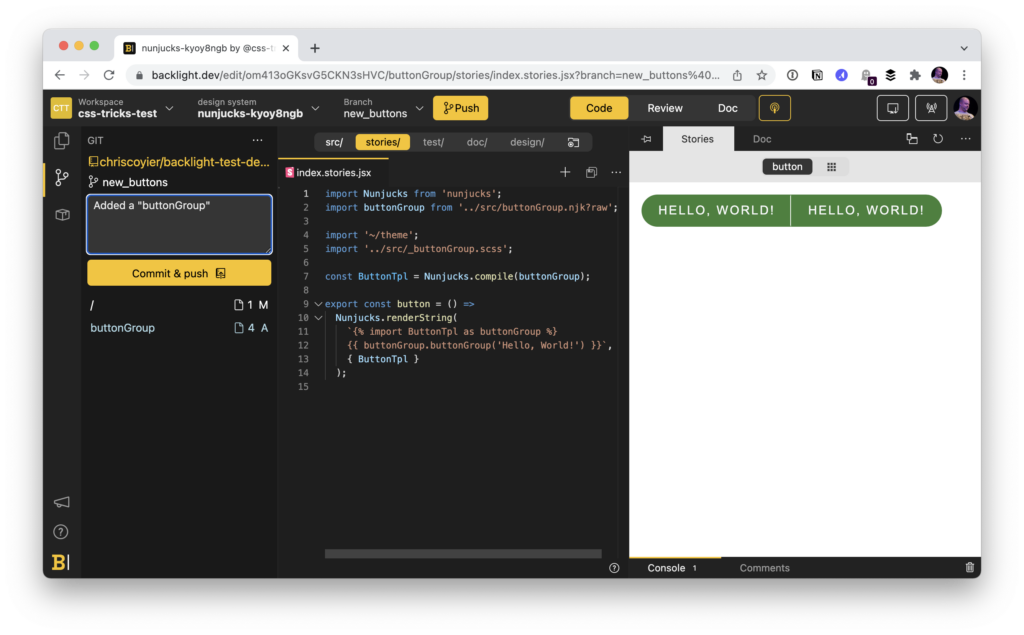
Committing properly is part of the flow too. A new component need not go straight to master: it becomes a branch first, then a commit lands on that branch, and doing so requires no prior Git knowledge.
Sharing with people, not just tooling
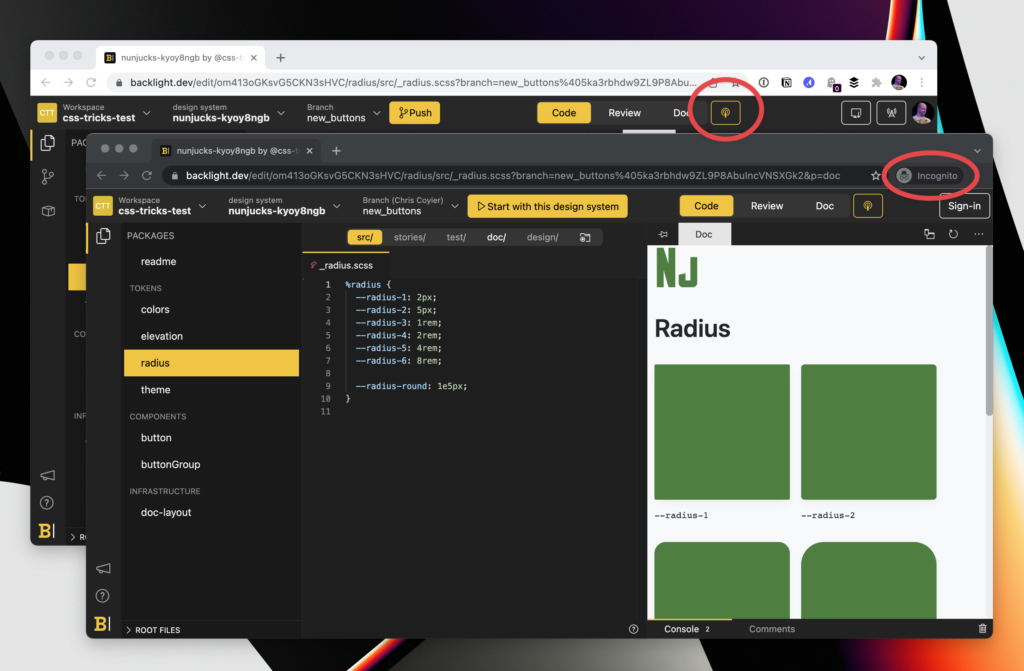
Design systems are a people concern as much as a technical one, and they need to be discussed. Backlight can be shared with anyone, including people who are not logged in, via an otherwise unguessable sharing link.
Scope of the environment
An entire system can be managed inside Backlight, from atomic tokens up to example pages and the assembly of the system itself. Templates, stories, and tests are all written there.
Teams that prefer to stay in their local environments are not forced out. Backlight provides a CLI for local development, including a server to preview work in progress. Documentation can be written directly in Backlight, and design documents from tools such as Figma, Sketch, or Adobe XD can be linked in, keeping them easy to find and organized.