
Uphill thinking in an age of shortcuts
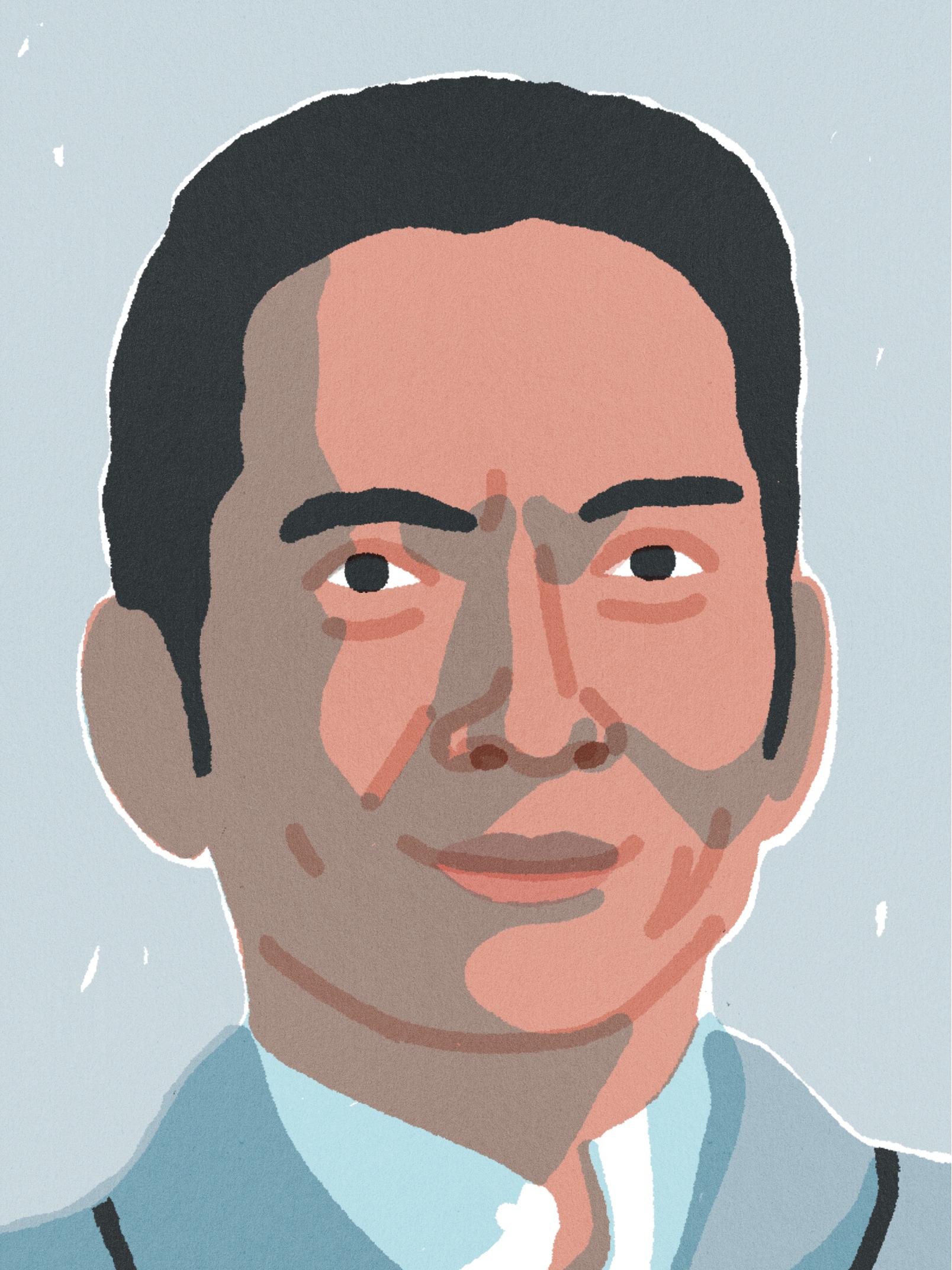
John Maeda, Vice President of Design and Artificial Intelligence at Microsoft, has spent years observing how technology shapes creative practice. In his Design in Tech Report and in conversations with design teams, he keeps returning to a central tension: while AI systems are built to optimize and streamline, the most valuable human thinking often runs in the opposite direction.
Maeda calls this "uphill thinking" — the deliberate choice to take the harder path when an easier one is available. In a world where tools are increasingly designed to remove friction, he argues that creatives need to consciously resist the pull of efficiency for its own sake.
The pull of the downhill path
Most software, including AI-powered tools, is designed to make tasks easier. That is generally a good thing: it lowers barriers to entry and lets people focus on higher-level decisions. But Maeda points out that when everything is optimized for convenience, there is a subtle cost. The friction of a difficult process is often where learning happens, where unexpected ideas emerge, and where personal voice develops.
When an AI tool offers a polished result in seconds, the user may never encounter the messy middle ground where craft is built. Maeda sees this as a generational challenge for designers: how do you develop taste and judgment when the system does the heavy lifting before you have had a chance to struggle with the problem yourself?
AI as a collaborator, not a replacement
Maeda's view of AI is pragmatic rather than utopian. He describes it as a partner that can handle repetitive or low-level tasks, freeing the designer to concentrate on areas where human judgment is irreplaceable — such as understanding context, empathizing with users, and making ethical choices.
He draws a distinction between doing and thinking. AI can do many things quickly and well. But the thinking about what should be done, and why, remains a human responsibility. In practice, this means designers need to change how they work: rather than executing every step themselves, they direct, critique, and refine what the AI produces.
Lessons from the Design in Tech Report
Maeda's annual report has tracked the intersection of design and technology for years. Recent editions have focused on how AI changes the economics of creativity. When content generation becomes nearly free, the value shifts to curation, context, and point of view — the qualities that cannot be easily automated.
He also highlights that AI tools are not neutral. They inherit biases from their training data and the choices of their builders. Designers who use these tools therefore have an obligation to question outputs rather than accept them at face value. Being a good user of AI, in Maeda's framing, means being a good critic of it.
Deliberate difficulty
Maeda encourages makers to see difficulty not as a bug but as a feature. He points to traditions like calligraphy or hand-drawn type, where the physical constraint of the medium is part of what gives the work character. Similarly, imposing intentional limits — using fewer colors, a restricted typeface, or a slow process — can lead to more distinctive outcomes than relying on infinite options.
In a professional context, uphill thinking might mean declining a shortcut that would save time but flatten the work, or pushing a concept further even when a "good enough" version is available. It is a choice to value the journey of making as much as the final artifact.
Practical guidance for makers
Maeda offers some concrete advice for those who want to work with AI without losing their own edge. These are practical suggestions, not abstract principles:
- Use AI to widen the possibility space, not just to accelerate what you already know how to do. Generating alternatives can reveal directions the designer would not have considered alone.
- Stay in the loop on final decisions. Automation can handle drafts and variations, but the last mile of judgment — choosing, refining, adjusting — belongs to the human.
- Practice craft outside of AI, so that the skills remain sharp even when tools change.
- Ask yourself why before relying on a given tool or workflow. Understanding the underlying purpose keeps the thinking uphill.
For Maeda, this is not about rejecting AI. It is about being intentional with it — knowing when the easy path is genuinely the right one, and when the harder path is what makes the work worth doing. In an environment flooded with automated output, deliberate difficulty becomes a form of differentiation.
AI Chooses the Shortcut. Humans Need the Longcut.
AI is built to optimize. It can evaluate millions of paths in an instant and select the most efficient one. That is its superpower. But the most efficient route is rarely the most creative one—and it is almost never the most memorable. The route of greatest efficiency might actually prevent us from reaching a more meaningful destination.
Because AI is efficiency-oriented, it gravitates toward the most common, expected solution. It repeats tried-and-tested patterns. Combined with safety guardrails, it becomes inherently risk-averse. In many areas of life, that is a very good thing. In creativity, however, higher risk often yields an unexpected reward. When people take risks and commit fully, they are forced to think strategically under pressure. There is an old saying: "Burn the ships!" When there is no turning back, things get interesting quickly.
Humans are innately drawn to the adventurous, longer route. Our traits of creativity, innovation, and uphill thinking push us to explore the unseen, even when it looks rationally "wrong." This spirit appears across entrepreneurs, athletes, and artists. It shows up in our history of remarkable art and groundbreaking discoveries. The willingness to embrace challenges, endure setbacks, and choose "longcuts" over shortcuts is what defines our creative capacity. AI, by design, is constrained to play it safe. It is less suited to the daring and transformative work that creatives take on. The uphill thinking that looks suboptimal from an AI-centric view is, in essence, the core of what makes human creativity valuable.
Can AI truly understand that winding, high-risk, effortful journey humans take to produce great output? Only to an extent. AI is not sentient. There is no direct 1:1 notion of "understanding" in an AI the way humans understand a concept. Instead, AI can be instructed to do things with specificity. Do this, don't do that. In that sense, it's no different from computer programming of the past.
Vibranium and the Industrial Parallel
What is different is that this kind of programming feels like being powered by Vibranium—the fictional Marvel metal with alien properties. It is a momentous shift that has supercharged our technology almost beyond comprehension. But we've seen shift like this before. There was a time when electricity was the day's Vibranium, and steam power before it caused immense excitement and fear. Steam posed a frightening disruption for the textile industry: new mills could fabricate in days what took humans months and years.
The response was the Arts and Crafts movement of the 1860s and 1870s, which advocated for "products that not only had more integrity but which were also made in a less dehumanizing way." Some of its fiercest supporters were self-proclaimed Luddites, who opposed machines replacing skilled labor. They engaged in "frame breaking"—destroying automated weaving machines—often getting jailed and fined. But the important legacy of the Arts & Crafts movement is how it led to an enlightenment of objects that could only be made by human hands: textiles, furniture, and other items so intricate that no machine could replicate them.
This reverence for human creativity shaped the educational institutions of the era, such as the Rhode Island School of Design (RISD), founded to support Rhode Island's textiles and jewelry industries. RISD pioneered the use of the first wave of "generative art software" in the form of punch cards for Jacquard looms—the GPUs of the day. Each row of punched holes in the cards corresponded to a row of the textile being woven. Students designed distinctive textile patterns that married artistry with the new technology.
Fast-forward to today, and RISD still champions that Arts & Crafts ethos. Students are taught to embrace the complexity of the design process and not shy away from the long, winding road of creative discovery. That attitude prepares them to go beyond efficiency-driven AI solutions and produce work with nuance and authenticity only human touch can achieve.
A Win-Win Relationship with AI
So where does AI fit? It fits where efficiency and precision thrive. AI's proficiency in automation, data analysis, and pattern recognition can handle mundane tasks—endless variations of slides, mockups, and retouches that nobody enjoys anyway. By offloading the drudgery, AI frees us to focus on the aspects that require human ingenuity.
As my artist friend Jessie Shefrin once said, "By the time you come to the perfect solution, the problem has already changed." If AI can handle the problems of today, we can turn our attention to the problems of tomorrow. That means investing time in seeking and identifying new problems to solve, ones that lead to better outcomes for people.
In his recent post on AI and design, Noah Levin hypothesizes about AI's broader impact: "AI will lift this ceiling, leading to more creative outputs made possible by more powerful tools; it will also lower the floor, making it easier for anyone to design and visually collaborate." If the floor is lower and the ceiling is higher, the room to explore is bigger—provided we choose to explore it.
The more time we spend on the uphill journey—embracing the struggle, rejoicing in the climb—with AI empowering us to spend that time, the more of a win-win relationship we build with AI in creative fields. It gives us more time to step off the beaten path. It frees us to do the only thing that truly matters: spend a little more time than is strictly necessary, in order to end up somewhere unexpected.
Forward, not faster
Perhaps the deepest implication for thinking with AI is not that it automates the finish, but that it renders the climb itself a more deliberate choice. As Papert noted, the virtue of an equation is that it lets you push boundaries and explore "what if my mountain had a different shape?"—a creative act that requires the human to hold a map of possibility in mind.
That map is what model builders and users increasingly call intent: the question, constraint, or framing you bring to a blank field. When a model fills in a line of prose or code, it is solving the local problem of what comes next. The honest "uphill" work remains deciding what problem is worth having next, and articulating it precisely enough that the model's inference becomes a prompt for your own reasoning.
No model yet asks the better question first. Each improvement in output quality risk makes the aim easier to refine—what was once a climb down a cliff face becomes a shortcut between two camps, or a ladder you can build and dismantle. But the summit, the orientation, and the decision to ascend remain in the hands of the person looking at the range. The tool does not make you want the climb; it just lets you find a route that fits your stride.
Working well with these systems means treating them as co-creators in a shared, iterative sketch—not as an oracle of final form, and not as an automaton to replace thinking. Your contributions are the ones no feed can predict: the pattern you notice across cases, the constraint you refuse to relax, the mountain you choose to run up because the running itself has become part of the design.


