

Fun-first projects take top honors in GitHub’s first passion competition
GitHub’s inaugural For the Love of Code challenge drew more than 300 developers building projects for the sheer enjoyment of it. Entries spanned six whimsical categories, from hardware hacks and terminal tools to browser experiments, AI agents, games, and miscellaneous oddities. Many participants leaned on GitHub Copilot for refactoring, debugging, and jump-starting ideas.
The submissions showcased the range of what developers create when constraints are minimal: a Breakout game powered by GitHub contribution graphs, a laugh track triggered by commits, a VS Code reviewer styled after Yelp, and even a comic strip generated from release notes. Here are the top three entries in each category.
Hardware hacks: Buttons, beeps & blinkenlights
Plane Tracker
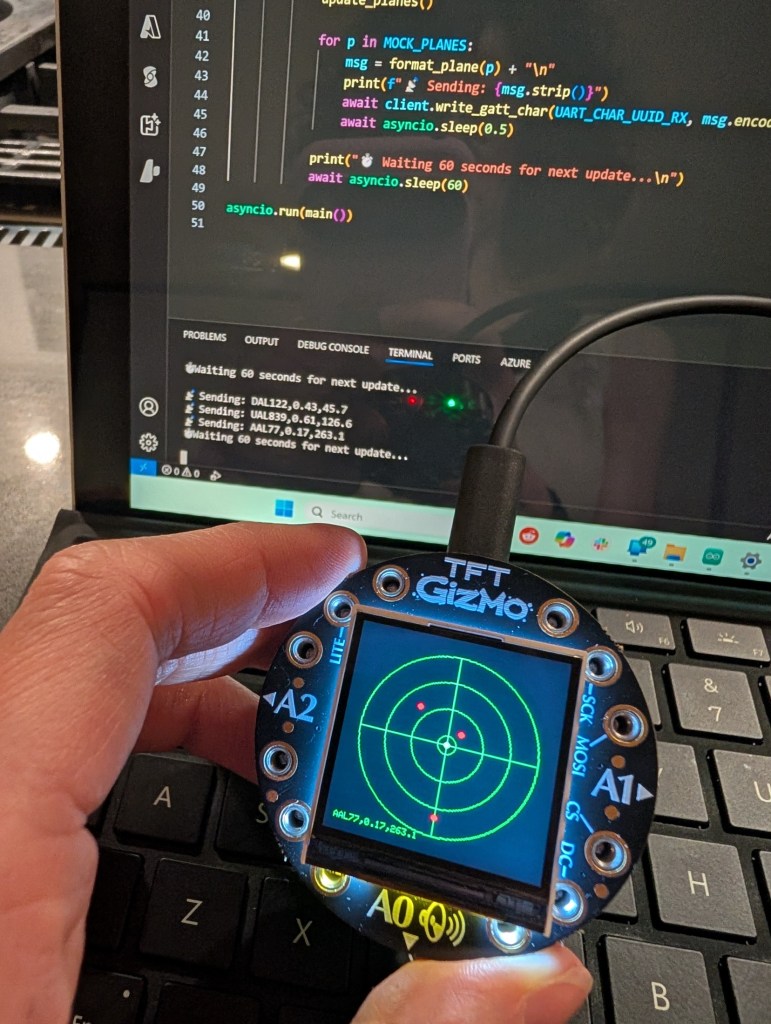
Plane Tracker by @cpstroum builds a DIY radar using an Adafruit Circuit Playground, Bluetooth, and the ADS-B Exchange API to pull live flight data and render nearby aircraft on a real-time mini display. GitHub Copilot assisted with Git workflow and initial project structure for the developer’s first significant push.
Cadrephoto
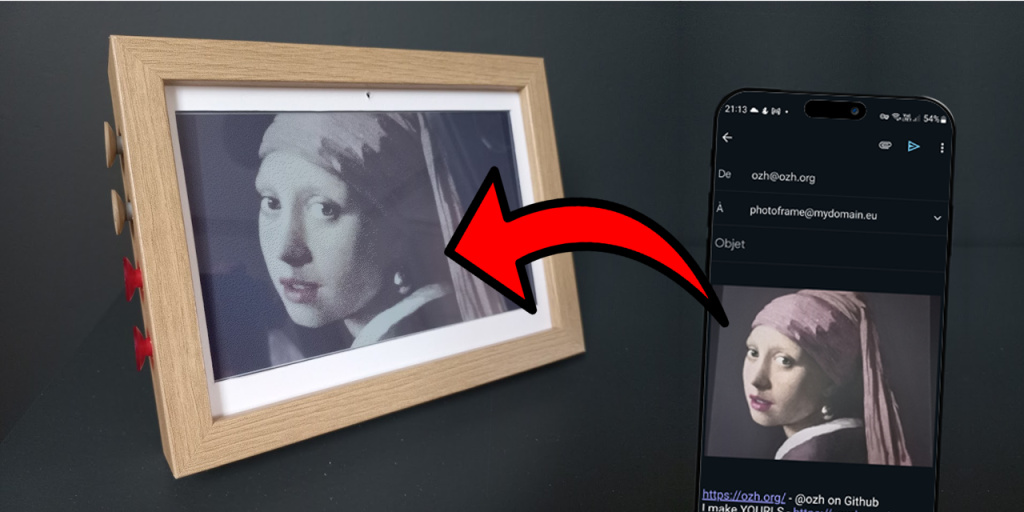
Cadrephoto by @ozh is a Raspberry Pi and e-ink photo frame that displays images sent via email—no app or setup required, making it approachable for non-technical users. It checks an inbox, downloads the newest photo, and refreshes the screen automatically. Copilot helped @ozh complete their first Python project, with smooth integration inside JetBrains IDEs.
BuildIn
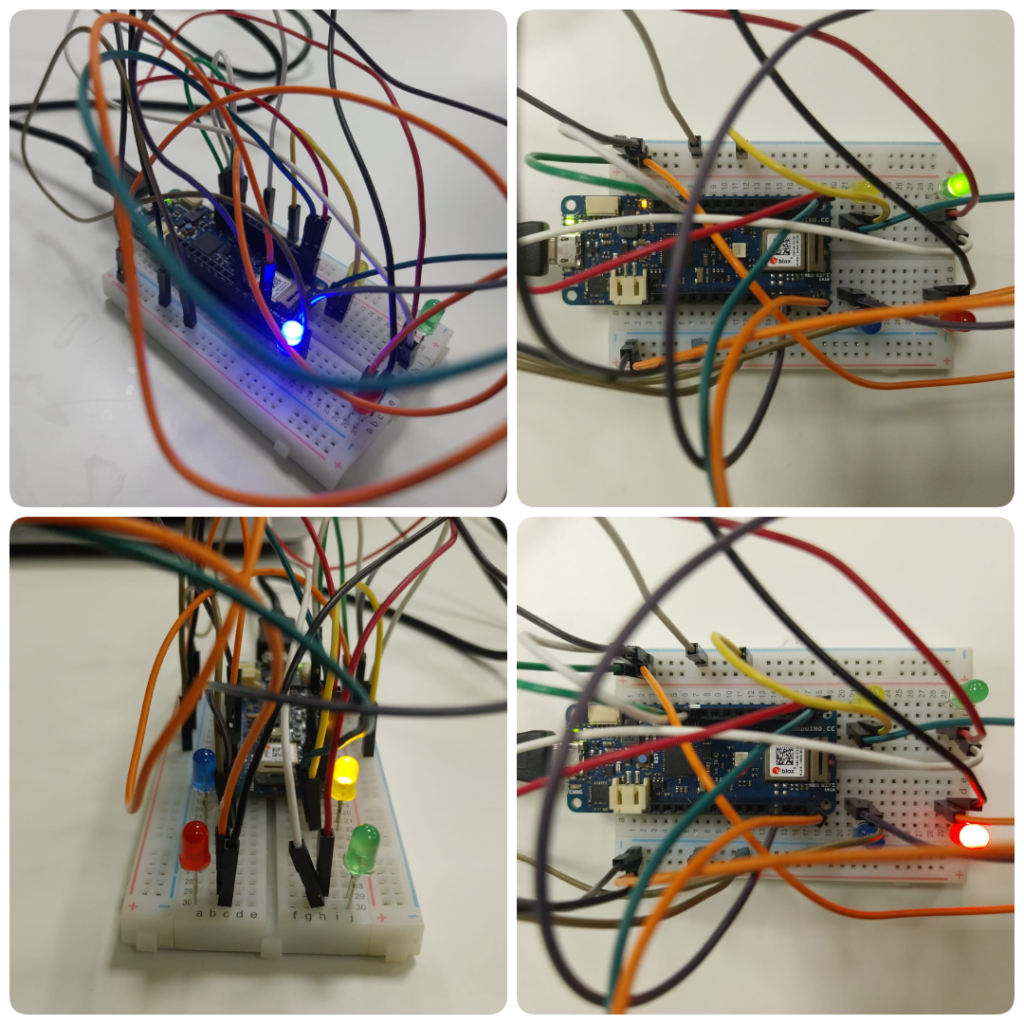
BuildIn by @SUNSET-Sejong-University and @lepetitprince99 is a desk-sized traffic light reflecting your repository’s build status. An Arduino and the GitHub API drive red, yellow, green, or blue indicators at a glance. Copilot aided debugging and code optimization, cutting time spent on hardware-related troubleshooting.
Command-line creations: Terminal talent
RestoHack
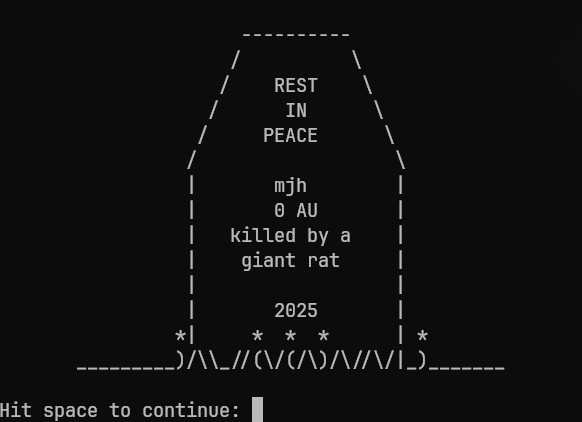
RestoHack by @Critlist revives the 1984 roguelike that inspired NetHack, rebuilt from the original source with modern tooling. It compiles cleanly and runs faithfully—proof that four-decade-old permadeath mechanics still carry weight.
Jukebox CLI
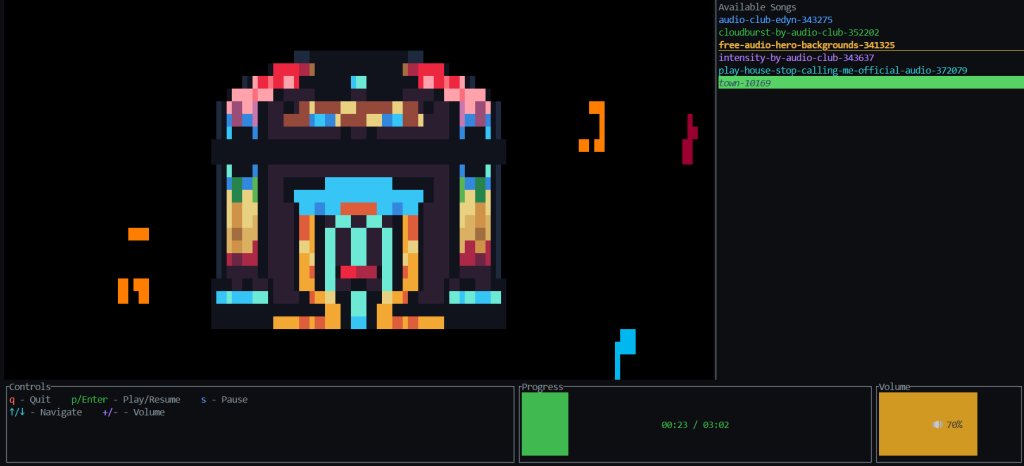
Jukebox CLI by @FedeCarollo is a Rust and Ratatui-built jukebox running directly in the terminal. It plays MP3s with floating musical notes, a color-coded scrollable playlist, and full playback controls. Copilot helped explore unfamiliar Rust libraries.
Tuneminal

Tuneminal by @heza-ru transforms the terminal into a karaoke stage featuring scrolling lyrics, live audio visualization, and scoring. The cross-platform open-source project offers entertainment while waiting out long git clone operations.
Browser experiments: World wide wonders
Netstalgia
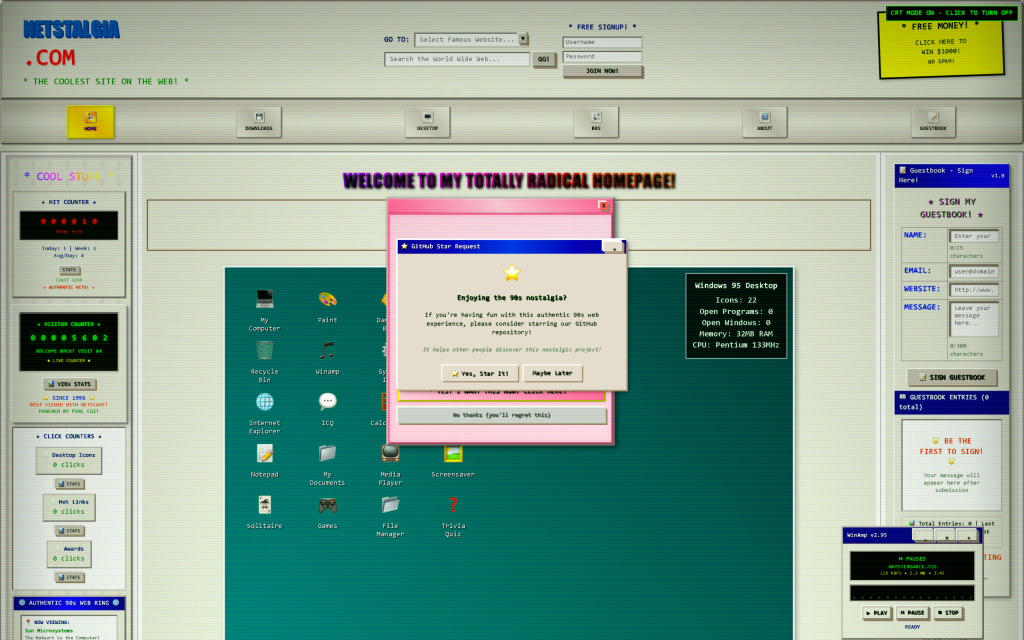
Netstalgia by @heza-ru delivers a ‘90s web experience built with modern technology: dancing babies, popup ads, a fake BBS, and CRT-style glow. It even includes a tongue-in-cheek GitHub Star Ransomware—a harmless “virus” demanding a repo star to “decrypt your files.”
Bionic Reader
Bionic Reader by @Awesome-XV bolds the initial letters of each word, prompting the brain to fill in the rest for faster reading. Copilot wrote project documentation and scaffolded the initial codebase.
The Git Roast Show
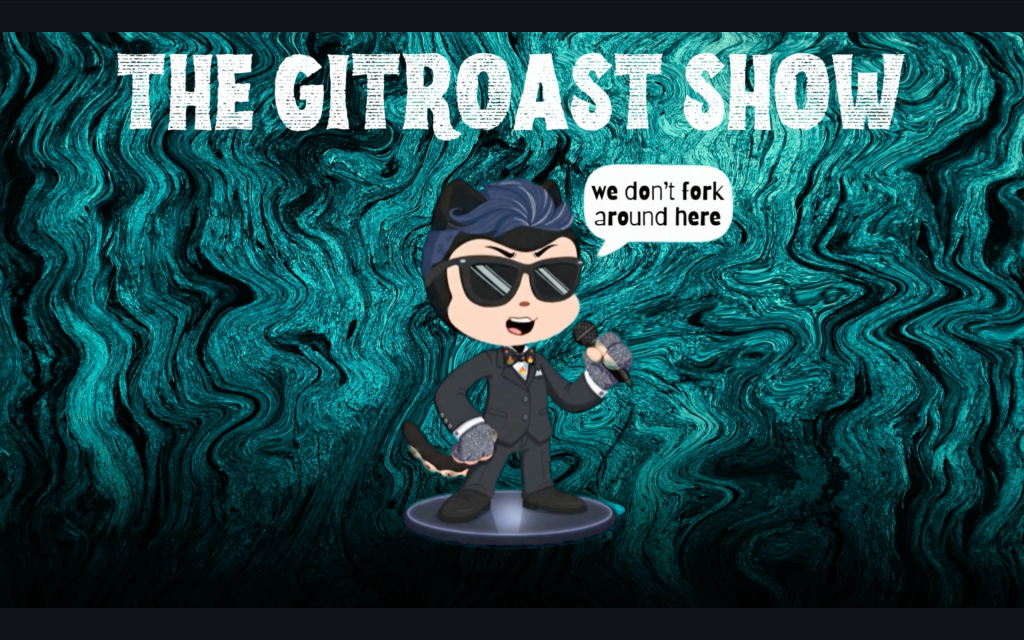
Git Roast Show by @rawrnuck and @Anmol0201 fetches live GitHub data to generate animated, sound-enhanced comedic roasts of user profiles. The full-stack app uses React, Vite, and Express. Copilot assisted with algorithmic understanding and repetitive implementation work.
Nightlio
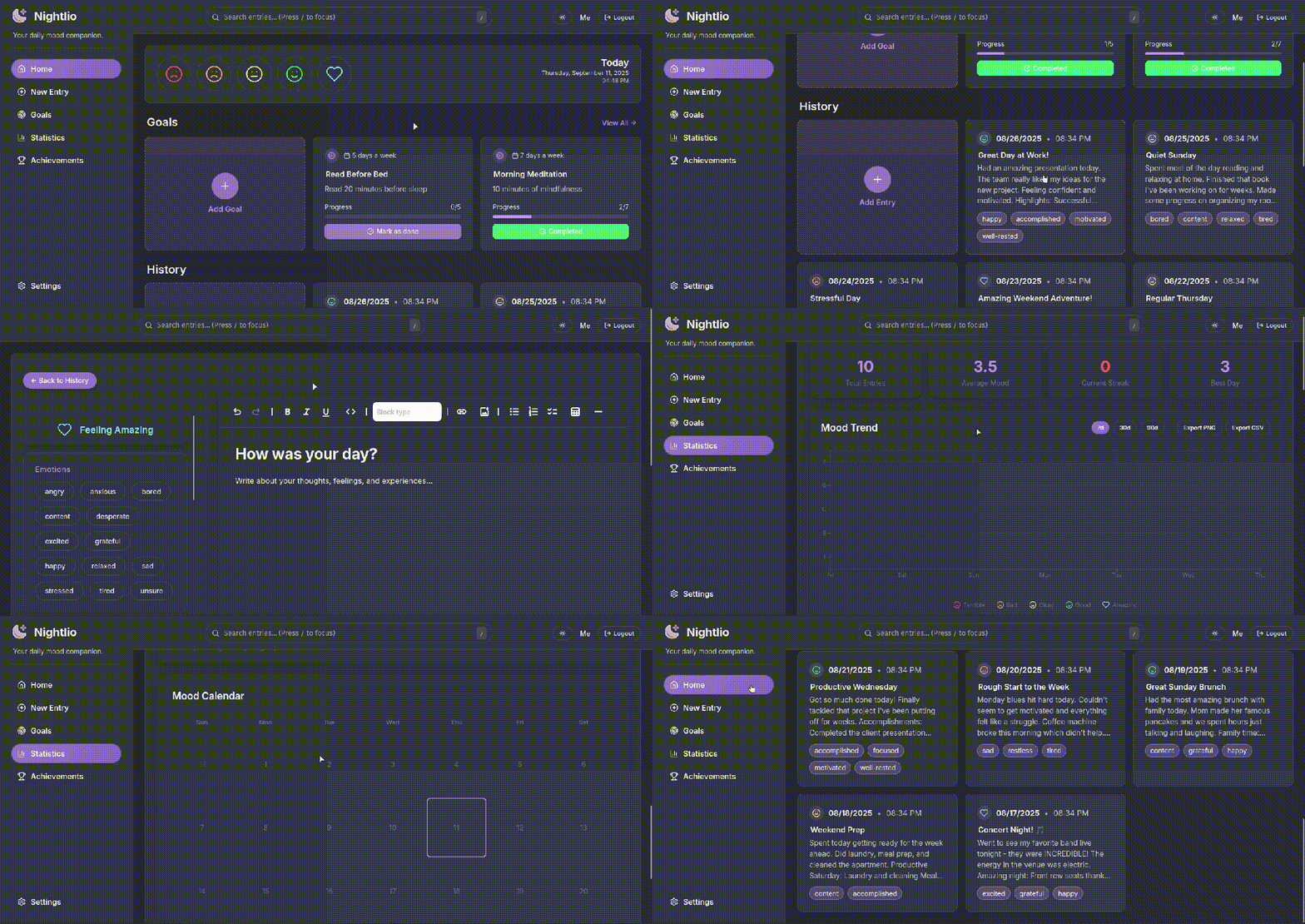
Nightlio by @shirsakm is a self-hosted, privacy-first mood tracker and journal. Entries log on a 5-point scale with Markdown notes and tags like #Sleep or #Productivity; calendars, streaks, and simple statistics surface patterns. Docker deployment, a local SQLite file, JWT-protected APIs, and a React/Vite front end with optional Google OAuth keep everything under your control. Copilot handled refactors, palette updates, and broad codebase changes.
Note: Because @heza-ru placed in two categories, a fourth winner was added here.
AI and automation: Agents of change
Neosgenesis
Neosgenesis by @answeryt is a metacognitive AI framework running a five-stage loop—think, verify, learn, optimize, decide—while coordinating multiple LLMs, tools, and real-time feedback. A multi-armed bandit selects optimal reasoning patterns, with an “aha” mode to explore alternative paths when progress stalls.
MediVision Assistant
MediVision Assistant by @omkardongre supports elderly and disabled users with voice, image, and video health management: scanning medications, analyzing skin conditions, logging symptoms by voice, and chatting with an AI doctor-like assistant. Copilot generated React components, API templates, and AI integration boilerplate.
Quiviva
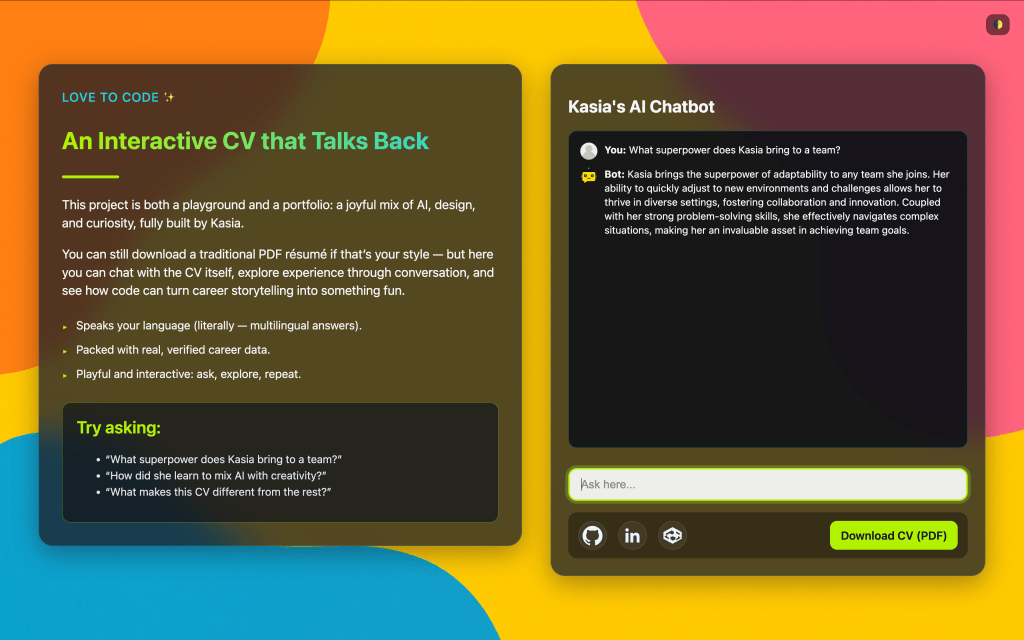
Quiviva by @katawiecz turns a résumé into an interactive chat experience. Ask about skills or projects, or type “Gandalf” to unlock a secret nerd mode.
Playtime: Game on
AI-Dventure
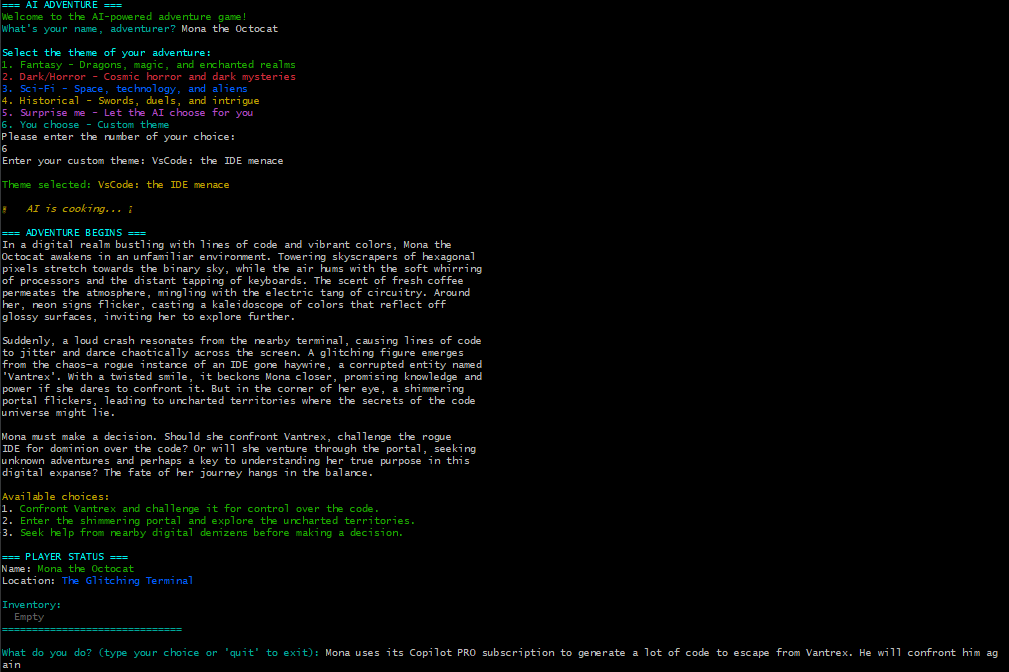
AI-Dventure by @FedeCarollo is a Rust-based text adventure powered by OpenAI models. Players explore dynamically generated fantasy, horror, sci-fi, or historical worlds where every command influences the story.
BeatBugging
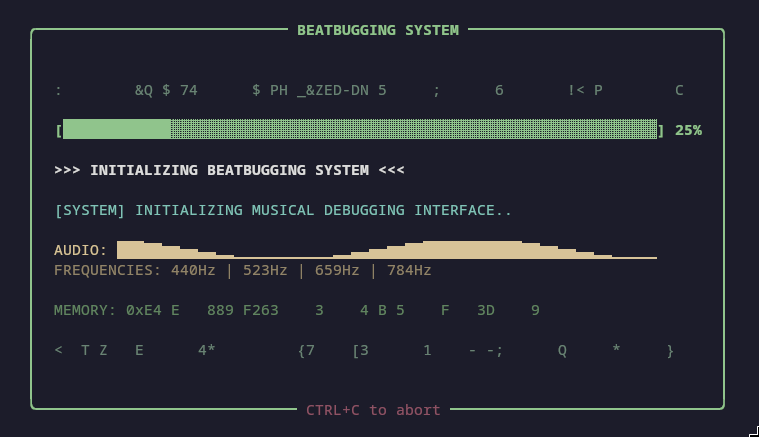
BeatBugging by @sandra-aliaga, @Joshep-c, @RyanValdivia, and @tniia is a rhythm game converting system logs into musical beats on a 5-by-5 grid. The Python-built project makes bug fixing rhythmic. Copilot offered next-step suggestions when the team got stuck.
MuMind
MuMind by @FontesHabana adapts the party game Herd Mentality for the web. Players match majority answers to score points in a React, Tailwind CSS, and Framer Motion interface with multilingual support and responsive animations.
Wildcard wonders: Everything but the kitchen sink
GitFrag
GitFrag by @chornonoh-vova reorders your contribution graph using classic sorting algorithms—bubble, merge, quick, and counting sort—each visualized with smooth progress animations. GitHub login and dark mode round out the presentation, with a developer writeup of the process. Copilot reinforced algorithmic understanding and added illustrative touches.
Code Sensei
Code Sensei by @redhatsam09 merges focus tracking with a pixel-art adventure inside VS Code: type to walk, pause to hop, and tab away too long to trigger an 8-bit tragedy.
Reviewer Karma
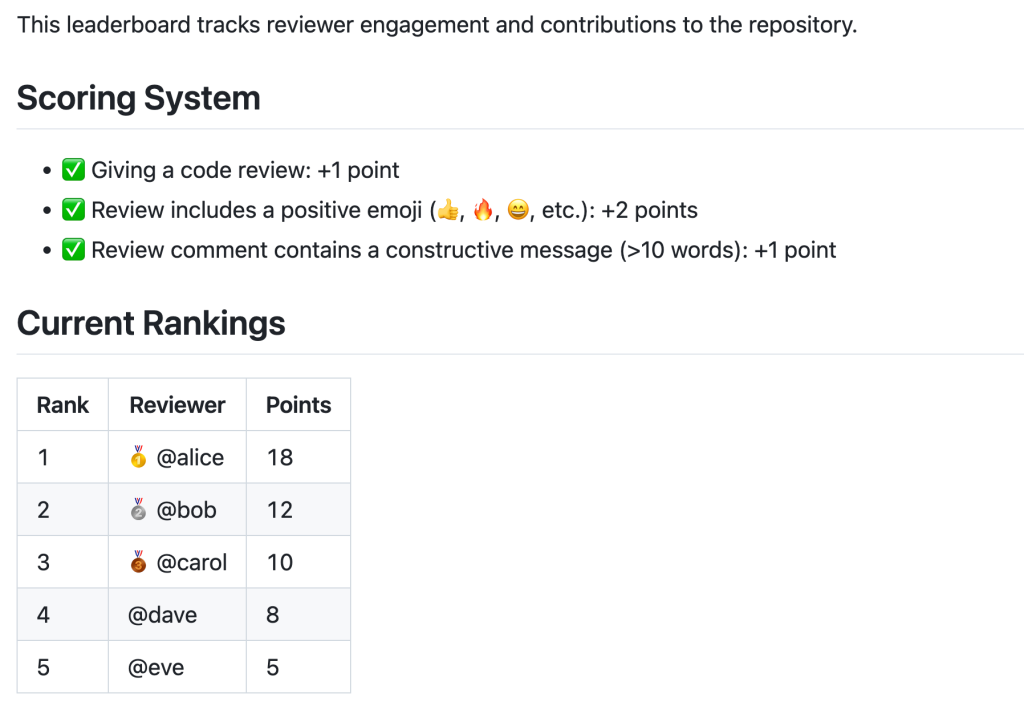
Reviewer Karma by @master-wayne7 gamifies pull request reviews. Emoji, comments, and critiques earn points on a live leaderboard, making code review a friendly competition. Copilot assisted with Go code for the GitHub API, karma point assignment logic, and routine tasks like error handling and markdown generation.
Curiosity-driven code pays off
These are hackathon projects—possibly incomplete, buggy, or held together with metaphorical duct tape. But they demonstrate where unstructured creativity leads. All category winners receive 12 months of GitHub Copilot Pro+, and the exercise reinforces that code and creativity thrive together, especially with an AI assistant sharing the load.
Recognition beyond the podium
Beyond the top projects, a broad field of participants earned praise for their work. The complete list of winners includes: @Anmol0201, @answeryt, @Awesome-XV, @chornonoh-vova, @cpstroum, @Critlist, @FedeCarollo, @FontesHabana, @heza-ru, @joshep-c, @katawiecz, @lepetitprince99, @master-wayne7, @omkardongre, @RyanValdivia, @ozh, @rawrnuck, @redhatsam09, @sandra-aliaga, @shirsakm, @SUNSET-Sejong-University, and @tniia.
The judging panel drew from GitHub Stars, Campus Experts, and the Developer Relations team, with @Ba4bes, @colbyfayock, @j0ashm, @JuanGdev, @howard-lio, @luckyjoseph, @metzinaround, @Taiwrash, and @xavidop all contributing their time.
A tradition continues
For the Love of Code may have wrapped, but the fun doesn't stop here. GitHub's Game Off 2025 is scheduled to begin this November, keeping the momentum going for the community's builders and tinkerers.


