A New Core for Serverless Compute
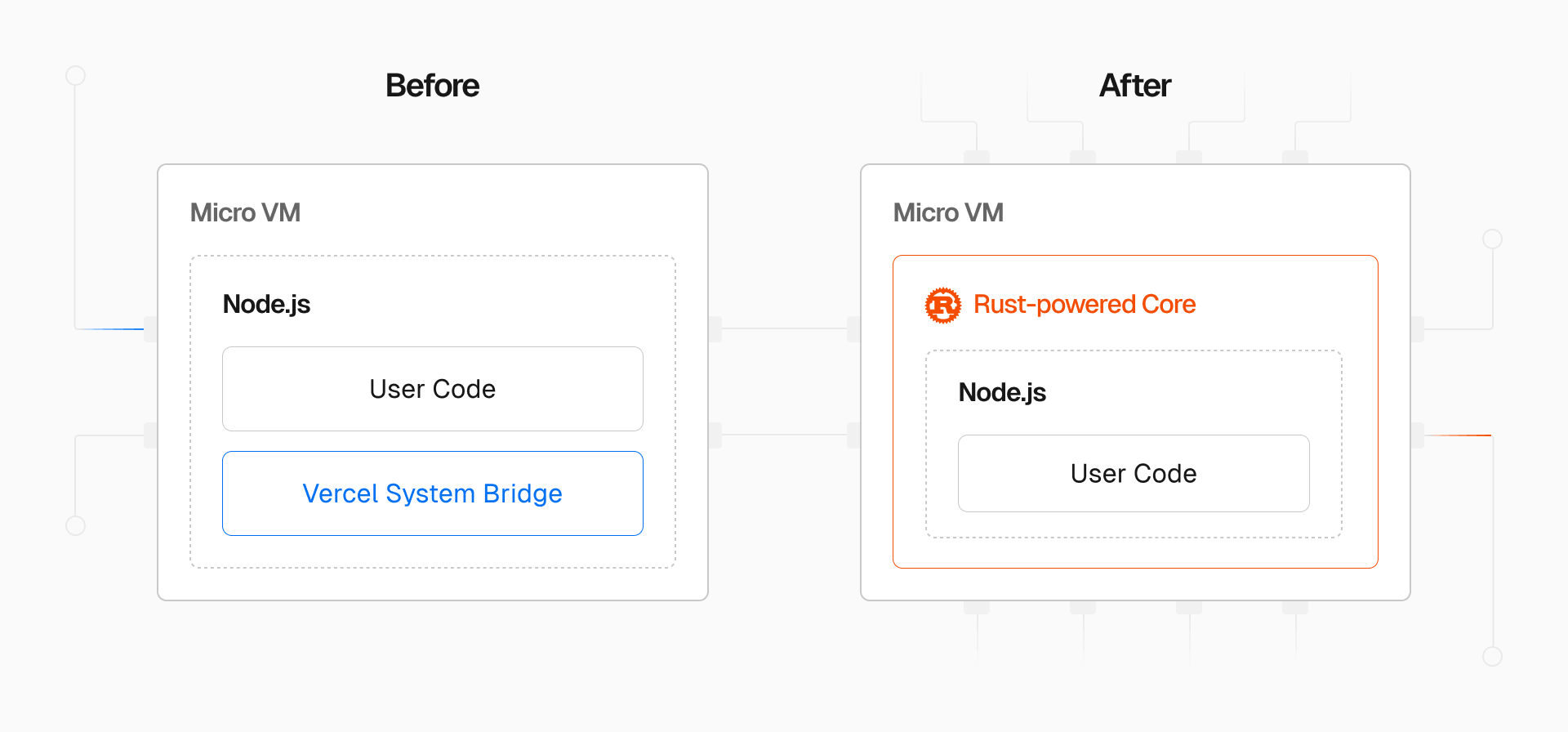
Vercel has rebuilt the underlying runtime of its Functions product with Rust, replacing the previous Node.js-based infrastructure. The change is rolling out gradually, with new deployments getting the Rust-powered system first. Vercel says all customers will be on the new infrastructure within weeks, and no action is needed on the user side.
According to benchmarks shared by the company, the migration delivers measurable wins across cold starts, request handling, and streaming performance. Vercel notes it has already processed billions of invocations on the new system with no compatibility issues.
- 30% faster cold starts for smaller workloads
- 80ms faster (average) and 500ms faster (p99) for larger workloads
- 47% faster streaming connection time on average (21ms to 11ms), and 77% faster at p99 (120ms to 27ms)
Why the Runtime Switch Matters
Vercel Functions have accumulated features that pushed against the limits of the original JavaScript-based core. Streaming responses, Web API-compatible signatures, and automatic recursion protection all required extending the base primitives of the platform. Over the past year of profiling function performance, the team identified startup time as a key bottleneck, particularly during the initialization phase (process startup) and the invocation phase (request handling).
Rust is not a universal fix, but it offers clear advantages for this kind of low-level infrastructure work. The team decided to move specific parts of the "bridge"—the layer between the platform and the user's function—into Rust:
- Reading and attaching environment variables
- Spawning the Node.js process
- Streaming and encrypting chunked responses
- Using APIs like
waitUntilbefore completing the invocation
Real-World Gains Beyond Synthetic Tests
Initial validation used a synthetic "hello world" function running in US East, with invocations scheduled every 15 minutes to ensure cold starts. That test showed the Rust-powered functions were 150ms faster on average. The team then moved to production traffic on vercel.com to confirm the results with larger, more realistic workloads.

The improvements extend beyond raw execution speed. Streaming functions connect to the nearest Vercel Edge Network region, and that handshake is now considerably faster. Since Next.js App Router workloads stream responses by default, and other streaming frameworks and standalone Functions also benefit, the performance gains apply broadly across the platform.
One of the knock-on effects is a slightly shorter billing duration for each invocation, since functions complete faster. Vercel also improved regional routing for new deployments, so users should see consistently faster startups across the board. CPU and memory selection for functions has also been made more accessible directly from the Vercel dashboard.
What's Still to Come
The Rust migration is not the endpoint. Vercel says it will share more details about automatic optimizations to user code and enhancements to concurrency for I/O-bound workloads in the coming weeks. The company is positioning this runtime change as the foundation for future performance and reliability work across its compute products.



