

Why Agile Teams Ship Better Code
Agile methodologies have become the default for modern software teams, and one of the strongest arguments in their favor is the effect they have on code quality. High-quality code — code that is reliable, maintainable, and scalable — is critical to the longevity of any application, and Agile's focus on short delivery cycles and continuous feedback creates conditions where quality issues surface early rather than late.
The core of Agile is captured in the Agile Manifesto (2001), which prioritizes individuals and interactions over processes and tools, working software over documentation, customer collaboration over contract negotiation, and responding to change over rigid planning. These principles translate into a development style where projects are split into sprints — typically two-to-four-week cycles handled by cross-functional, self-organizing teams. Each sprint targets a specific set of tasks, and at its end the team reviews the work and adjusts the next iteration based on feedback.
That cadence keeps the process responsive. Because teams deliver working software in short increments, they can pivot quickly when new information arrives from customers or stakeholders.
Key Agile Frameworks
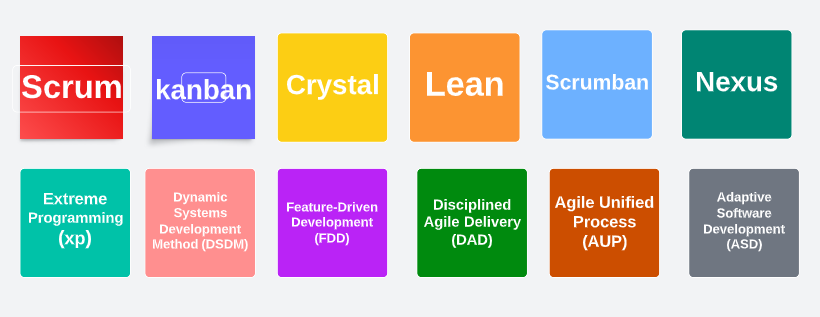
Several established flavors of Agile give teams a starting point:
- Scrum is the most widely used approach, with small teams delivering product increments in two-to-four-week sprints.
- Kanban focuses on continuous delivery and workflow efficiency, visualizing work on a board (as in Trello or Notion) and pulling new items only when capacity is available.
- Extreme Programming (XP) puts code quality and customer satisfaction first, relying on pair programming, test-driven development, and continuous integration.
- Lean Development targets waste reduction and efficiency, emphasizing continuous improvement and customer value.
- Crystal suits small teams working under high uncertainty, leaning on frequent communication and tight feedback loops.
The Mechanics Behind Better Code
Agile's effect on code isn't incidental — its practices are designed to make the codebase cleaner, smaller, and less error-prone.
- Simplicity and efficiency. Developers are expected to write code that is comprehensible and easy to test and modify. A clean, minimal codebase has less surface area for bugs.
- Modularization. Work is broken into small user stories or epics, which pushes developers to produce modular components. Smaller building blocks are more reusable, reduce verbose code, and let teams validate each piece before it lands in the main codebase.
- Readability. Using self-descriptive names and avoiding convoluted structures means future readers — including the original authors long after the fact — can understand the code's intent without wading through complex logic.
- Test-driven development (TDD). Writing tests before implementation forces the code itself to be well-structured and understandable. It also gives developers continuous feedback while the code is being written, heading off problems instead of excavating them later.
- Continuous integration. Frequent merging into a shared repository means the code is automatically compiled, tested, and validated. This keeps the codebase in a releasable state at all times and catches integration issues as they occur, not when they've compounded.
Principles That Keep Quality On Track
Agile methodologies value individuals and their interactions over following strict processes and tools.
That means communication and collaboration are treated as core instruments in the development effort. The methodology's stated values — set out in the Manifesto and its related principles (pictured above) — put the customer at the center of development.

- Customer satisfaction tops the list. The customer is involved at every stage, from planning through testing, which keeps the software honest to its actual purpose.
- Teamwork is structural. Cross-functional teams sharing a common goal reflect the belief that quality is a group outcome, owned across the process rather than handed between silos.
- Flexibility is built in. The process is designed to change course mid-stream, responding to customer feedback in place of adherence to an exhausted plan.
- Open communication matters. Team members and customers should both be comfortable raising ideas, concerns, and findings at whichever point they arise.
- An iterative rhythm. Chunking work into smaller pieces keeps the team moving quickly, checking in at each increment instead of all at the end.
- Relentless improvement. Each cycle includes reflection on how the process itself can be improved, so the team isn't only shipping code but getting better at shipping it.
Why Communication Shapes Code Quality
Agile’s emphasis on collaboration is not just a cultural nicety; it has direct implications for the codebase. When developers work in isolation, they miss perspectives that can catch defects early. A colleague reviewing a module might spot a security weakness or a logic error that the original author overlooked. This interdependence means that communication breakdowns can cascade, leading to delays and, in severe cases, project failure.
To make collaboration a daily practice rather than an afterthought, consider these mechanisms:
- Cross-functional teams. Mixing business owners with the technical team ensures that product goals and engineering realities stay aligned.
- Breaking silos. When departments work in isolation, you get duplicated effort and slower delivery. Removing those barriers lets expertise flow where it is needed.
- Regular check-ins. Short feedback loops keep priorities clear and prevent team members from drifting off-course.
- Proper communication tools. Instant messaging and video calls make collaboration feasible, especially for remote teams, by keeping everyone visible.
- "Ask Me Anything" sessions. These help managers understand the reasoning behind Agile practices, making them more comfortable with delegating control.
If these practices are neglected, the consequences are tangible: misunderstandings create rework, deadlines slip, and motivation drops when developers feel unheard.
The Rituals of Refactoring and Review
Two practices form the backbone of sustaining code quality in an Agile environment: refactoring and code review. Both serve different purposes but work best when performed regularly.
Refactoring restructures code without altering its external behavior. It keeps the design clean and prevents the accumulation of technical debt. In Agile projects, this should happen frequently, sometimes mid-sprint, to avoid large cleanup efforts later. A practical sequence is:
- Identify code areas that have become difficult to read or modify.
- Explain to the team why the refactoring adds value.
- Prioritize changes by their impact on the project.
- Break work into small, safe steps.
- Refactor while ensuring the existing test suite passes.
- Gather feedback on the result.
Code reviews are a systematic check of code written by others, focused on catching bugs, ensuring adherence to standards, and improving maintainability. Reviews work best when they start early and happen often. A typical process involves a reviewer reading for readability and standards, offering concrete suggestions, discussing fixes with the author, and re-reviewing the changes after they are implemented.
Together, these habits improve the system’s structural integrity, reduce future maintenance costs, and accelerate delivery times by catching problems when they are cheapest to fix.
Agile vs. Linear Workflows
Traditional workflows like Waterfall, the V-model, Spiral, and the Rational Unified Process are often called "plan-driven" because they rely on defined phases and heavy documentation up front. In Waterfall, for instance, the project passes through distinct stages—requirements, design, implementation, testing, deployment, and maintenance—with no going back. This approach offers a clear structure but suffers from rigidity.
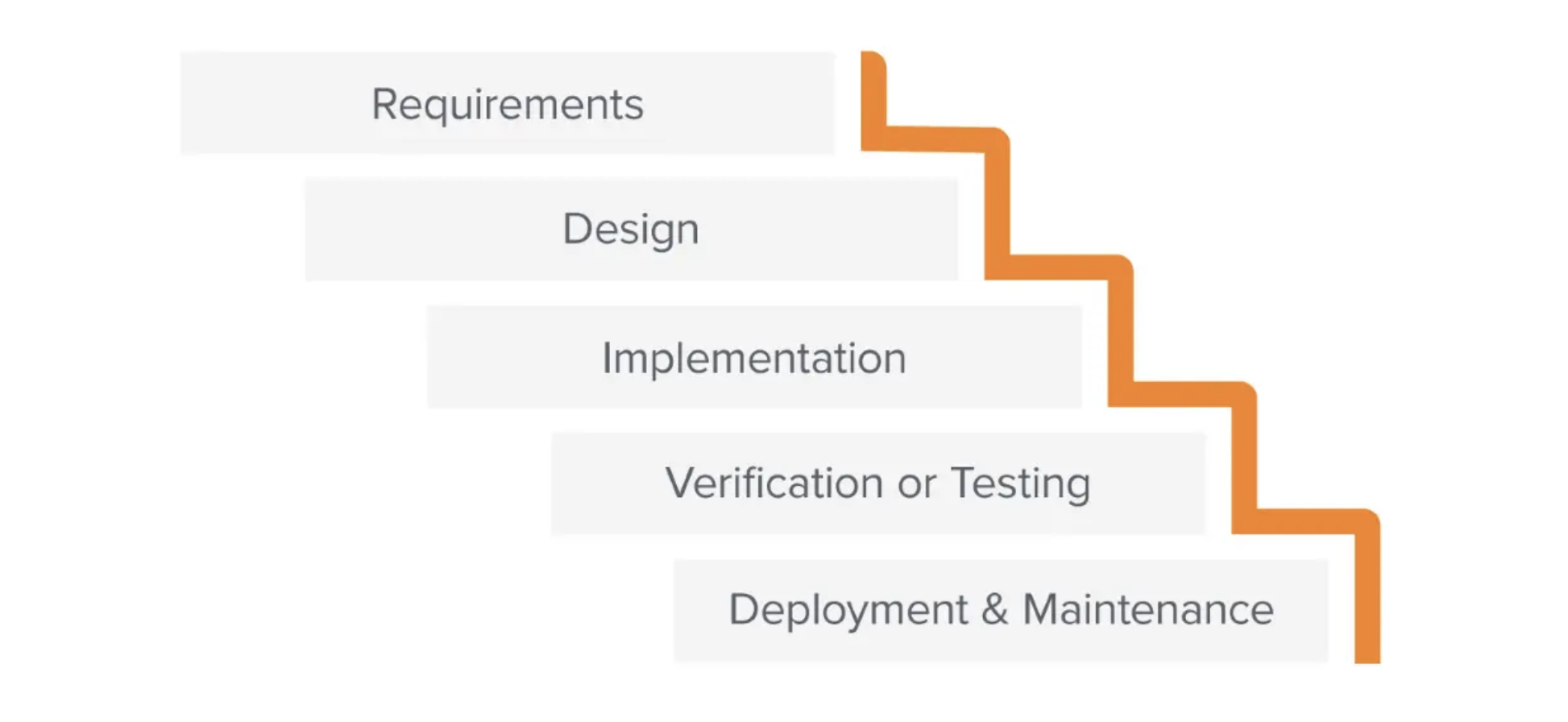
Changes are hard to incorporate once a phase is complete. Heavy emphasis is placed on getting plans right before code starts, which is both time-consuming and prone to failure, as requirements frequently shift after a project begins.
| Agile | Traditional | |
|---|---|---|
| Flexibility | Flexible and adaptable. | Rigid and structured. |
| Customer involvement | Prioritize customer involvement and feedback throughout the development process. | Limited customer involvement, with the customer being presented with the final product at the end of the process. |
| Team structure | Cross-functional and collaborative. | Specialized and isolated. |
| Testing | Occurs throughout the development process. | Occurs the end of the development cycle. |
Agile, by contrast, embraces change and feedback loops, making it more adaptable for modern development where requirements evolve rapidly. While traditional methods provide a defined map, Agile offers the ability to navigate based on real-world learning, which is often a better fit for delivering high-quality software today.
Final Verdict
Agile’s structure improves code quality by forcing habits like shared ownership, incremental refinement, and continuous verification. These practices make code easier to maintain and better aligned with user needs. The challenges, such as scope creep, exist—collaboration can lead to unplanned features accumulating. Yet, organizations that commit to Agile still report high customer satisfaction and faster launch times. As software demands grow more complex, the case for adopting these principles will likely keep strengthening.



