
Open Source Collaboration Keeps Climbing in Q1 2026
Cross-border open source activity hit a new milestone in the first quarter of 2026, according to the latest data release from the GitHub Innovation Graph. The economy collaborators metric—which tracks the combined total of git pushes and pull requests sent from developers in one economy to public repositories in another—rose 16% quarter-over-quarter from Q4 2025 to Q1 2026.
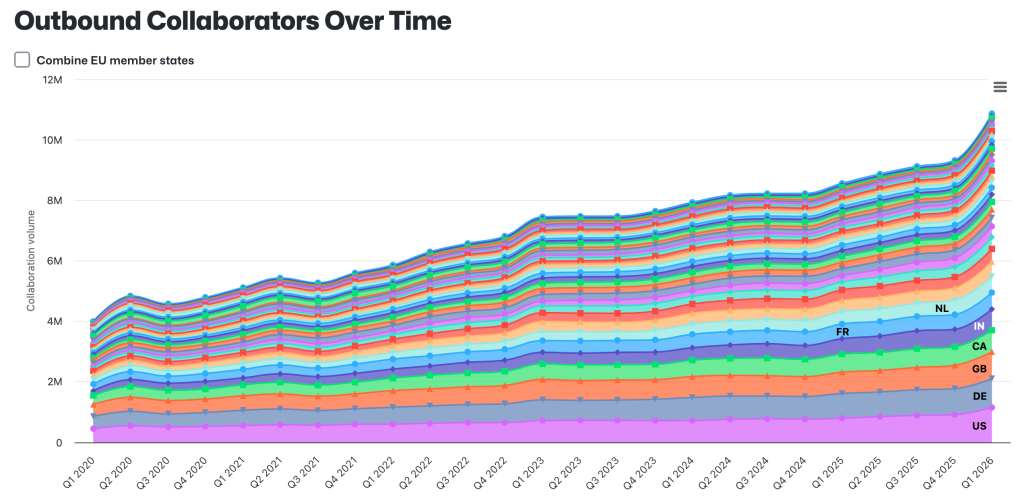
That marks the second-largest quarterly jump recorded since 2020. The only steeper increase came in Q2 2020, when outbound collaboration grew 21% as lockdowns drove a surge in remote development activity. The next closest quarter was Q1 2023, which saw 9% growth after a widely publicized new AI chatbot encouraged users to sign up and file bug reports in exchange for a chance to win API credits.
Regional Trajectories Diverge
While global collaboration is accelerating, disaggregating the data by economy reveals starkly different growth patterns across developer communities.

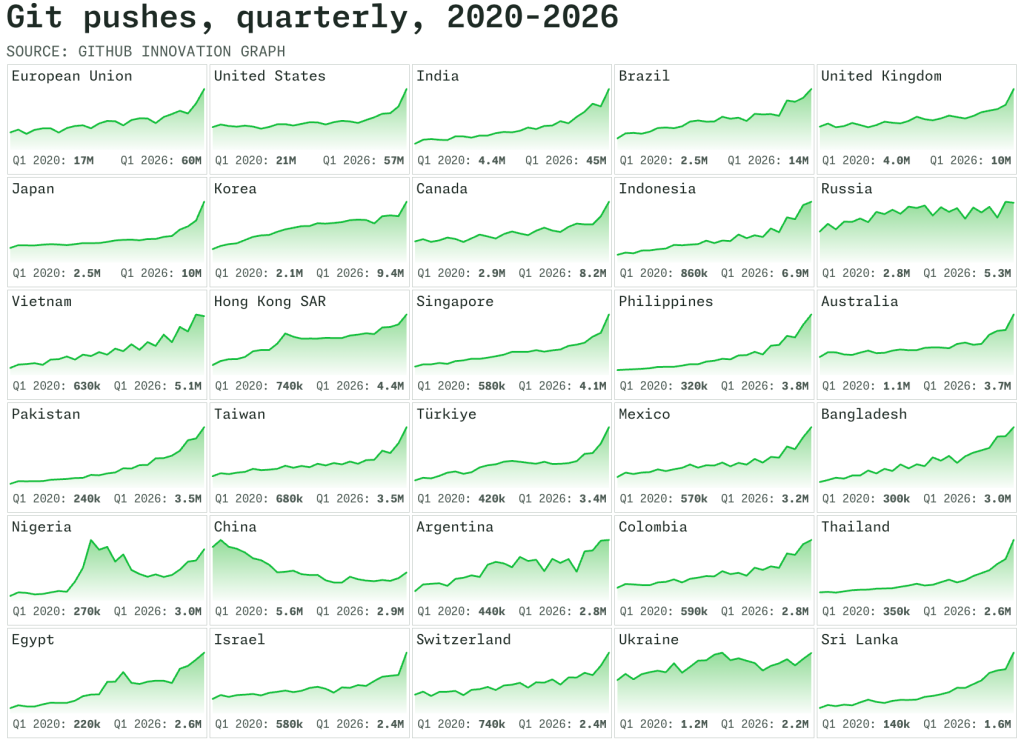
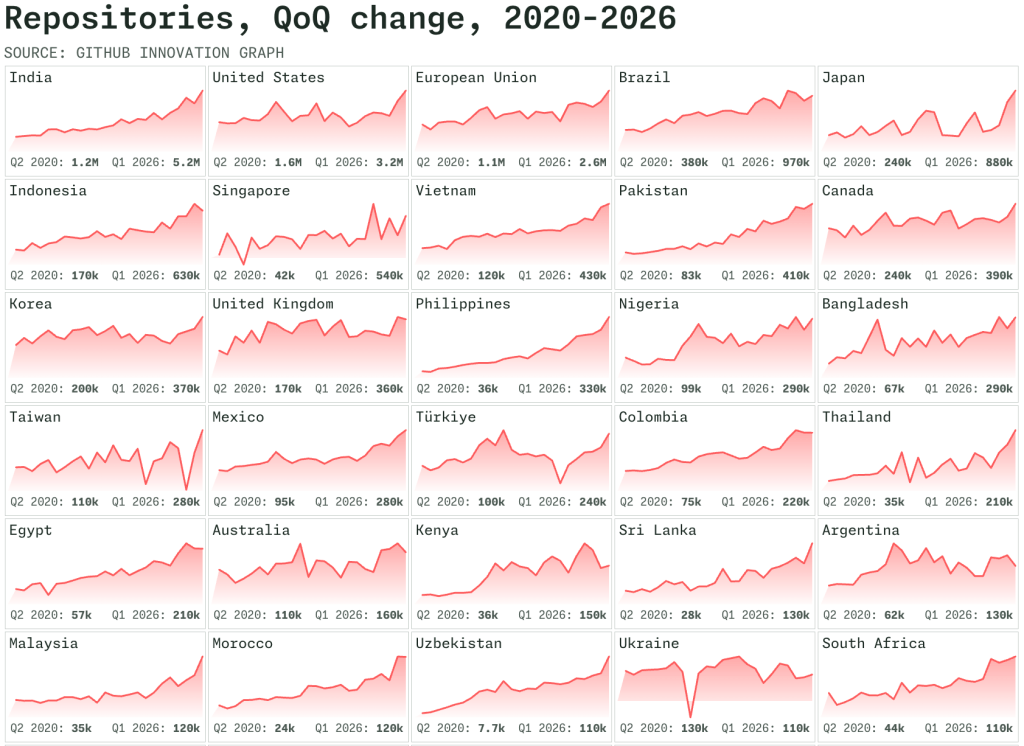
A notable outlier is Syria, which has experienced substantial recent growth starting in Q4 2025. That uptick coincides with GitHub expanding functionality for developers in the country after sanctions and export controls were relaxed.
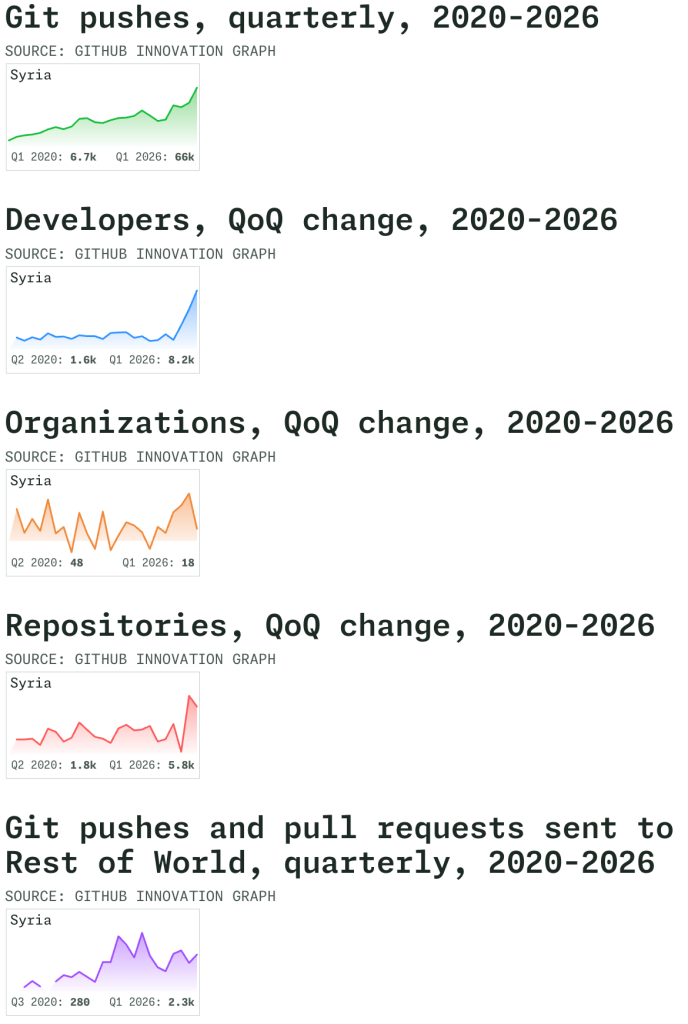
That expansion was made possible in part by advocacy from developers and community groups such as GitSyria. GitHub reports it has provided the GitHub Student Developer Pack to more than 8,000 verified Syrian students over the last six months.
New Tools to Help Maintainers Cope With Volume
The rapid rise in contribution volume has created new challenges for open source maintainers, a dynamic GitHub's Director of Open Source Programs, Ashley Wolf, described in February 2026 as the "Eternal September of Open Source." To help projects manage the influx, GitHub has shipped several features aimed at reducing noise and giving maintainers more control:
- Pull request limits: Maintainers can now set a cap on the number of open pull requests that users without write access may have open in a repository at any given time.
- Repo-level pull request and issue controls: New repository settings let maintainers restrict pull request and issue creation to collaborators or disable both features entirely.
- Pinned comments on issues: Comments can be pinned to the top of an issue directly from the comment menu.
- Banners to reduce comment noise: Users see a prompt encouraging them to react or subscribe instead of posting low-value comments like "+1" or "same here."
- Pull request performance improvements: Optimized diffs make the files changed experience more responsive, with large pull requests responding up to 67% faster.
- Faster issue navigation: Maintainers can browse and triage issues more quickly thanks to significant speed improvements.
- Temporary interaction limits: Public repositories can enforce a temporary period of restricted activity for certain users.
The underlying datasets are available for independent analysis, and GitHub is soliciting feedback from maintainers in its community discussion on what additional tooling would meaningfully improve their experience.