Online Workshops Go Global: Lessons From The First Month
When Smashing Conference moved its workshop program online a month ago, it was an experiment. The format has now been formalized, and the results have reshaped how these events are delivered — and who can attend them.
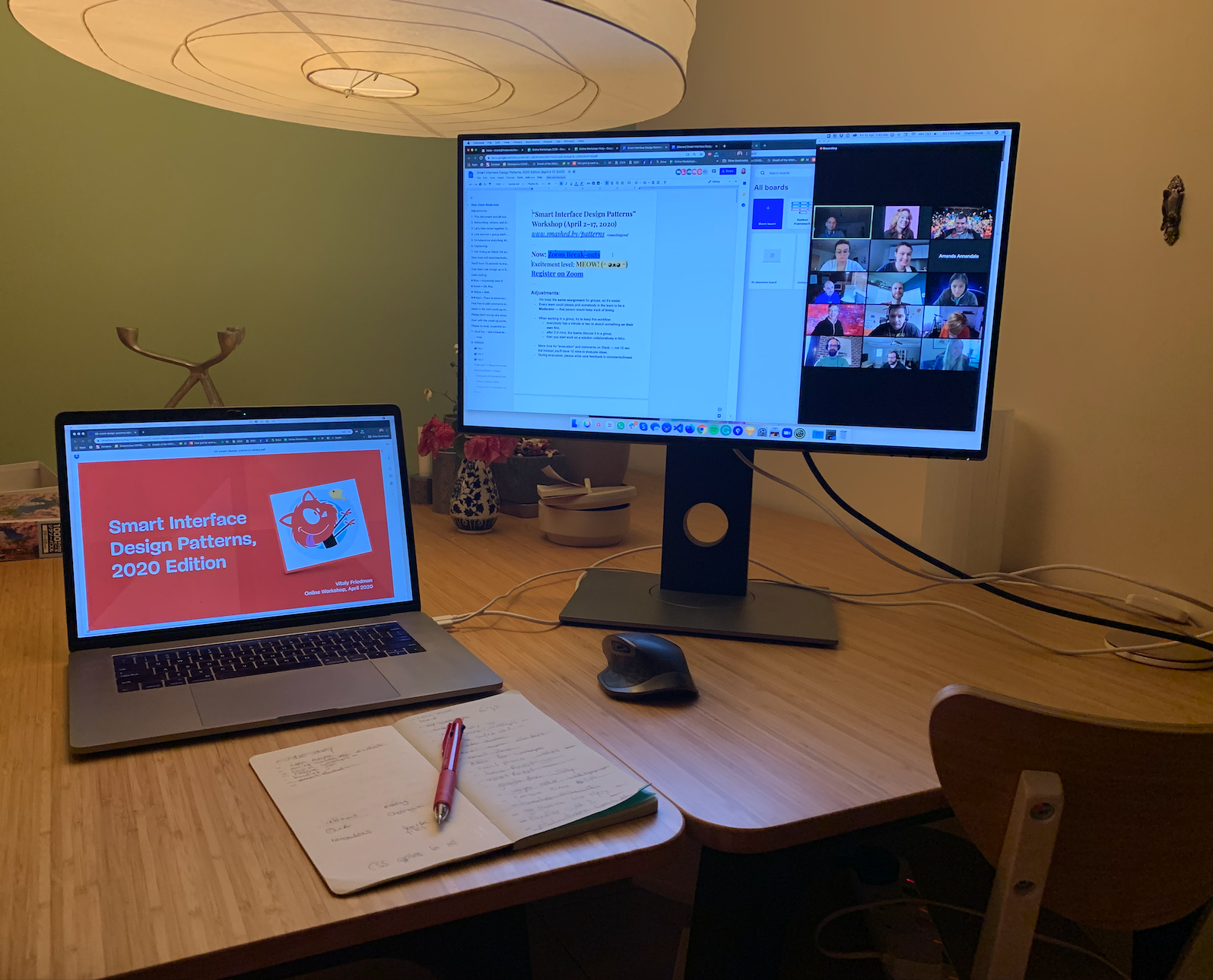
Speakers initially worried about presenting into a void without audience feedback. Instead, the online format made everyone feel more equal, with no teacher on a podium. Vitaly Friedman noted that the setup made the truly global nature of the audience visible — people joining from home environments around the world. That accessibility extends beyond the current pandemic; online workshops now reach participants who could never travel to an in-person event.
How The Workshops Work
In-person Smashing workshops traditionally run a full eight-hour day. The online version is deliberately different: each workshop is split across multiple shorter sessions, with exact days and times listed per event. This accommodates attendees juggling work-from-home duties, homeschooling, and screen fatigue.
Every session has at least one team member besides the presenter online to handle connectivity and technical issues. Sessions are recorded, so attendees can rewatch explanations or catch up after a missed session. A dedicated Q&A block is built into each session — and Rachel Andrew reported fielding more questions online than in person, easily filling 30 minutes of queries.
Workshops run over Zoom, chosen for the best balance of quality, reliability, and accessibility. Attendees can resize shared-screen and speaker windows or pop out the chat to suit their setup. Beyond the video platform, participants connect in a Slack group during and after the workshop. Collaborative Google docs let attendees share notes, resources, and tips, with people helping each other and posting questions for the speaker.
With so many conferences around the world being cancelled, I’m grateful to have virtually attended a very informative @smashingconf workshop for the past couple days. Even from home, the learning never stops.
Upcoming Schedule
The next two months bring a full slate of online workshops, each with a hard attendance cap. Previous events sold out, so early registration is advised.
May 7-22, Thu & Fri, 9–11:30 AM PDT
Resilient Web Systems with CSS & Sass with Miriam Suzanne. A six-day, two-hours-per-day deep dive into how CSS works and how to build resilient, maintainable design systems that scale.May 12–26, Thu & Fri, 9–11:30 AM PDT
Smart Interface Design Patterns with Vitaly Friedman. Five days at 2.5 hours each, studying hundreds of hand-picked interface examples — from accordions and mega-drop-downs to feature comparisons, car configurators, timelines, and onboarding.May 28–12, Thu & Fri, 9–11:30 AM PDT
Web Performance Masterclass with Harry Roberts. A multi-session journey from back-end to front, auditing real websites' performance, plotting data for non-technical stakeholders, building backlogs and hit-lists, and hacking on fixes and experiments.June 11-12, Thu & Fri, 10 AM – 12:30 PM CEST
CSS Layout Masterclass with Rachel Andrew. A two-day blend of theory and pragmatic browser-support advice, scheduled at a Europe and Asia-friendly time so attendees don't have to tackle Grid late at night.Jun 16-30, Tue & Wed, 9–11:30 AM PDT
Front-End Accessibility Masterclass with Marcy Sutton. Using HTML, CSS, and JavaScript with modern tools and techniques to eliminate access barriers, incorporating an accessibility mindset throughout the design and development process.Jun 18-26, Thu & Fri, 9–11:30 AM PDT
Building Modern HTML Emails with Rémi Parmentier. A focused look at coding HTML emails, a craft with its own set of differences from web pages.
Further Reading
- How To Become A Better Speaker At Conferences
- Inclusive Design For Accessible Presentations
- State Of CSS Survey: Influence The Future Of CSS
- Make Your Sites Fast, Accessible And Secure With Help From Google