
Edge proxies cut latency for global uploads and downloads
Dropbox has expanded its global network with new Points of Presence (PoPs) across Europe, Asia, and parts of the US, paired with a free open-peering policy. The company has already measured doubled transfer speeds for some clients worldwide, with more than 400 ISPs participating in the peering program.
The core problem is physics. A user connecting to Dropbox from across the Pacific faces up to 450 milliseconds of connection setup time before a single byte of file data moves. Light itself needs up to 180 milliseconds to cross that ocean via undersea cable, and 90 milliseconds across the Atlantic. TCP's slow-start mechanism compounds the delay: the client sends small packet bursts and waits for acknowledgements before ramping up to full link capacity. No amount of protocol tuning can fix a round trip that is bounded by the speed of light.
Proxies handle the handshake, not the data
Dropbox's answer is a set of edge proxy servers in California, Texas, Virginia, New York, Washington, the UK, the Netherlands, Germany, Japan, Singapore and Hong Kong. The client completes its TLS and TCP handshakes with the nearest proxy. Because the proxies have ample buffer space, the client can run through TCP slow start without pausing for an acknowledgement from the origin data center.
The proxies connect to Dropbox's data centers over the company's private backbone links rather than the public internet, and they keep those upstream connections warm. That avoids the latency penalty of opening a fresh connection for every sync request. The net effect is that a client gets to full transfer speed almost immediately.
Security is unchanged at the edge
The edge proxies do not weaken transport security. Both the origin data centers and the PoPs use TLS 1.2 with a perfect forward secrecy (PFS) cipher suite. The proxies also perform upstream certificate validation with certificate pinning, so an edge server can verify it is talking to a genuine Dropbox origin and not a man-in-the-middle.
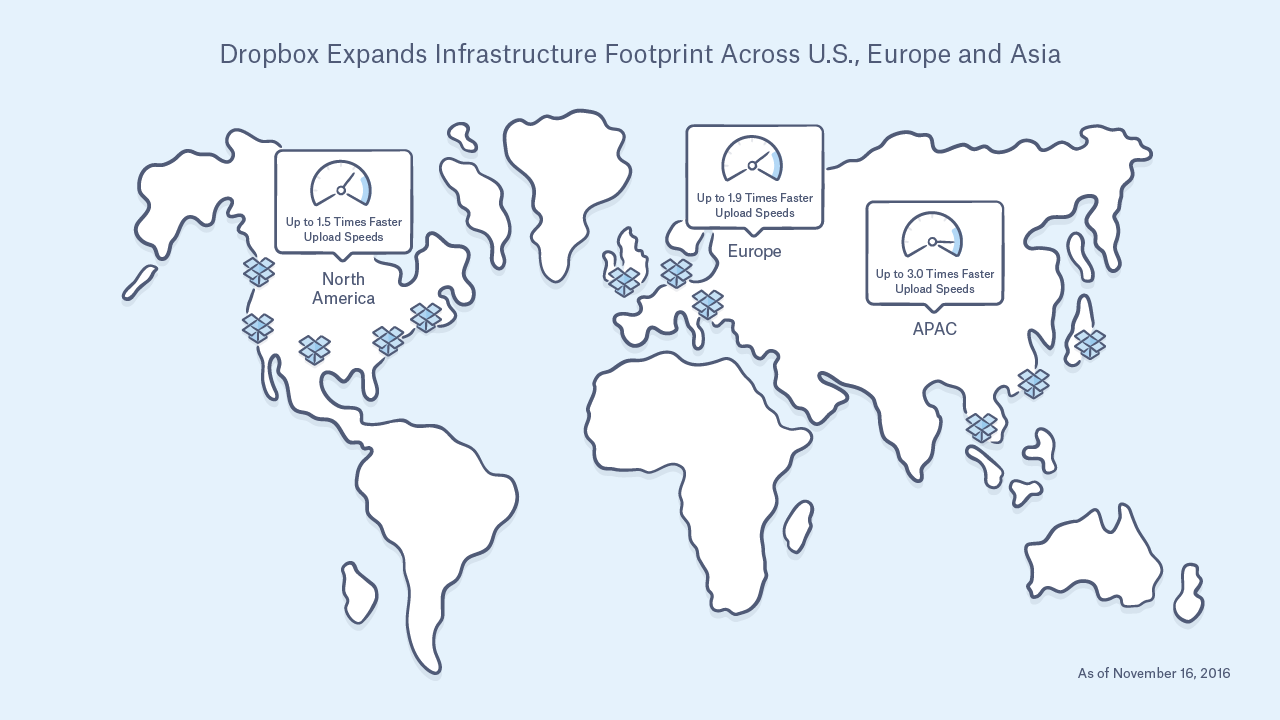
Measured gains in Europe and Asia
Field results from markets where the configuration has been deployed show substantial improvements. In France, median download speeds are 40% faster with proxies in place, and median uploads are about 90% faster. Japan saw median downloads double and median uploads triple.
The open-peering agreements complement the proxy rollout. ISPs can route Dropbox traffic directly over their own networks without transit fees, which lowers bandwidth costs for both parties and cuts user-visible latency. Participating providers include BT in England, Hetzner Online in Germany and Vocus Communications in New Zealand, the last through its Orcon, Slingshot and Flip brands.
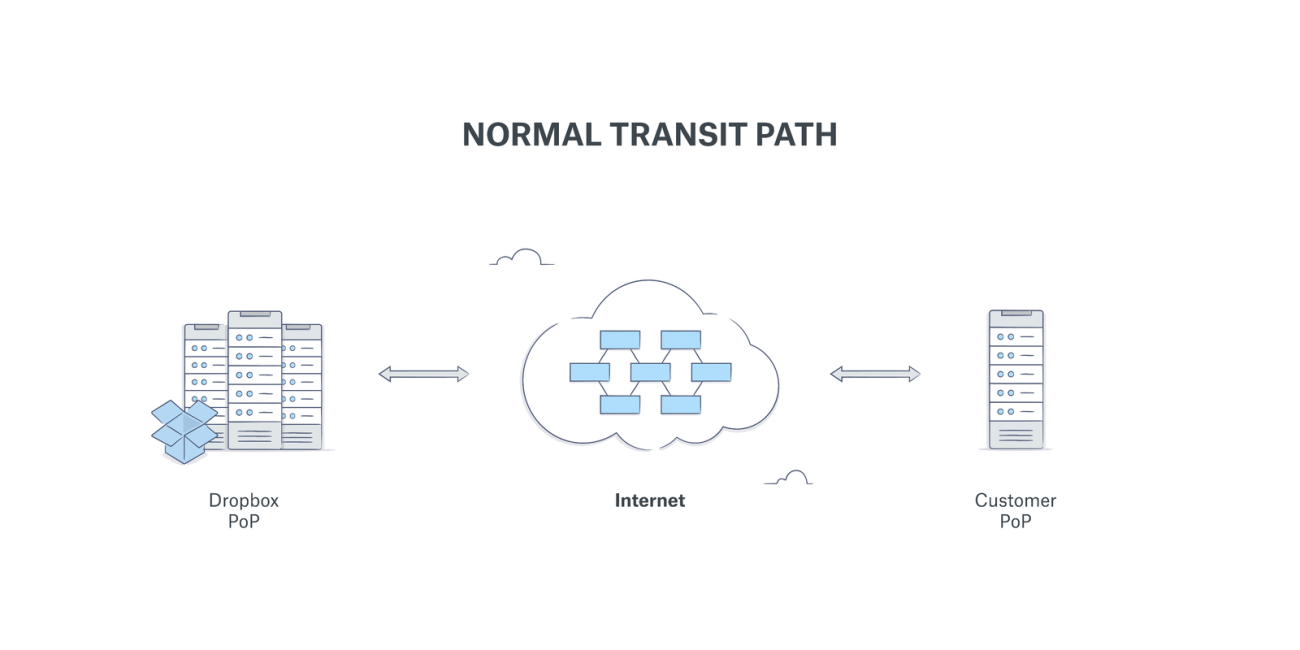
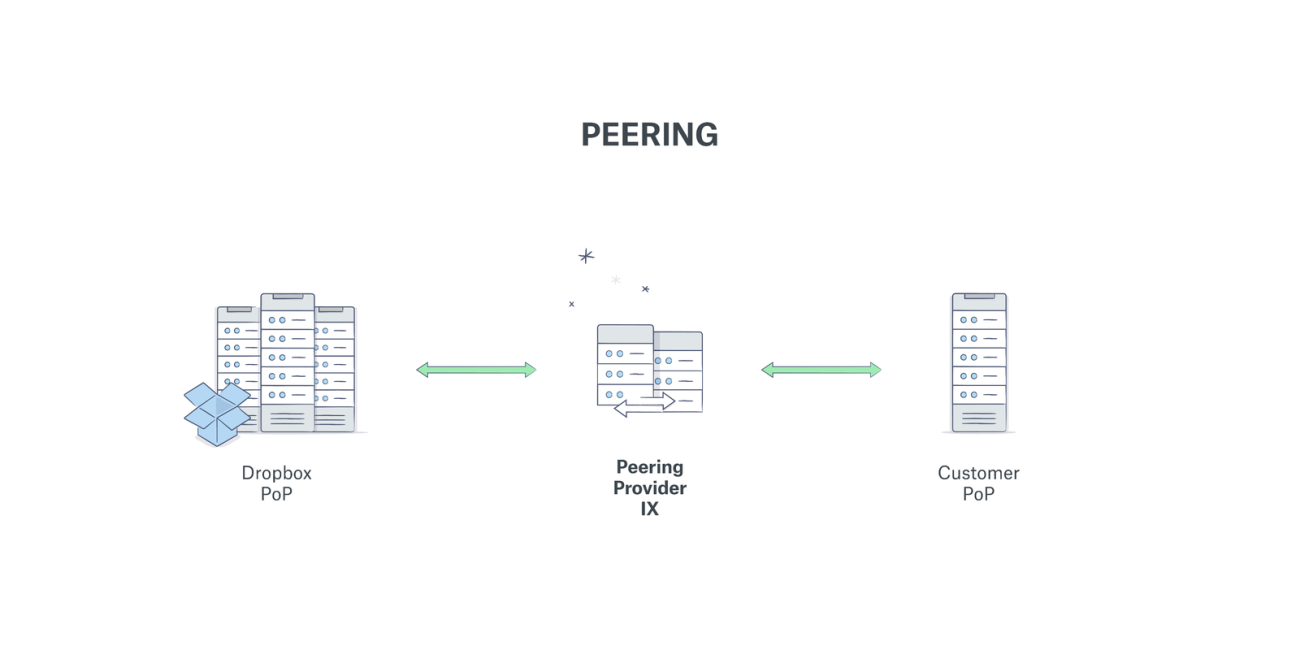
This edge expansion follows the earlier introduction of Magic Pocket, Dropbox's in-house multi-exabyte storage architecture, which now holds over 90% of user data. The company says it will continue opening new regions over the next six to twelve months as part of the same infrastructure investment program.



