
Choosing Research Methods By Product Stage
Product teams constantly make decisions, from early calls about features and scope to later refinements like microcopy. Each decision carries risk: a wrong choice reduces the odds of product success. While teams draw on intuition and market knowledge, the strongest evidence comes from understanding users—but only if the right research method is applied at the right time.
The Double Diamond As A Decision Framework
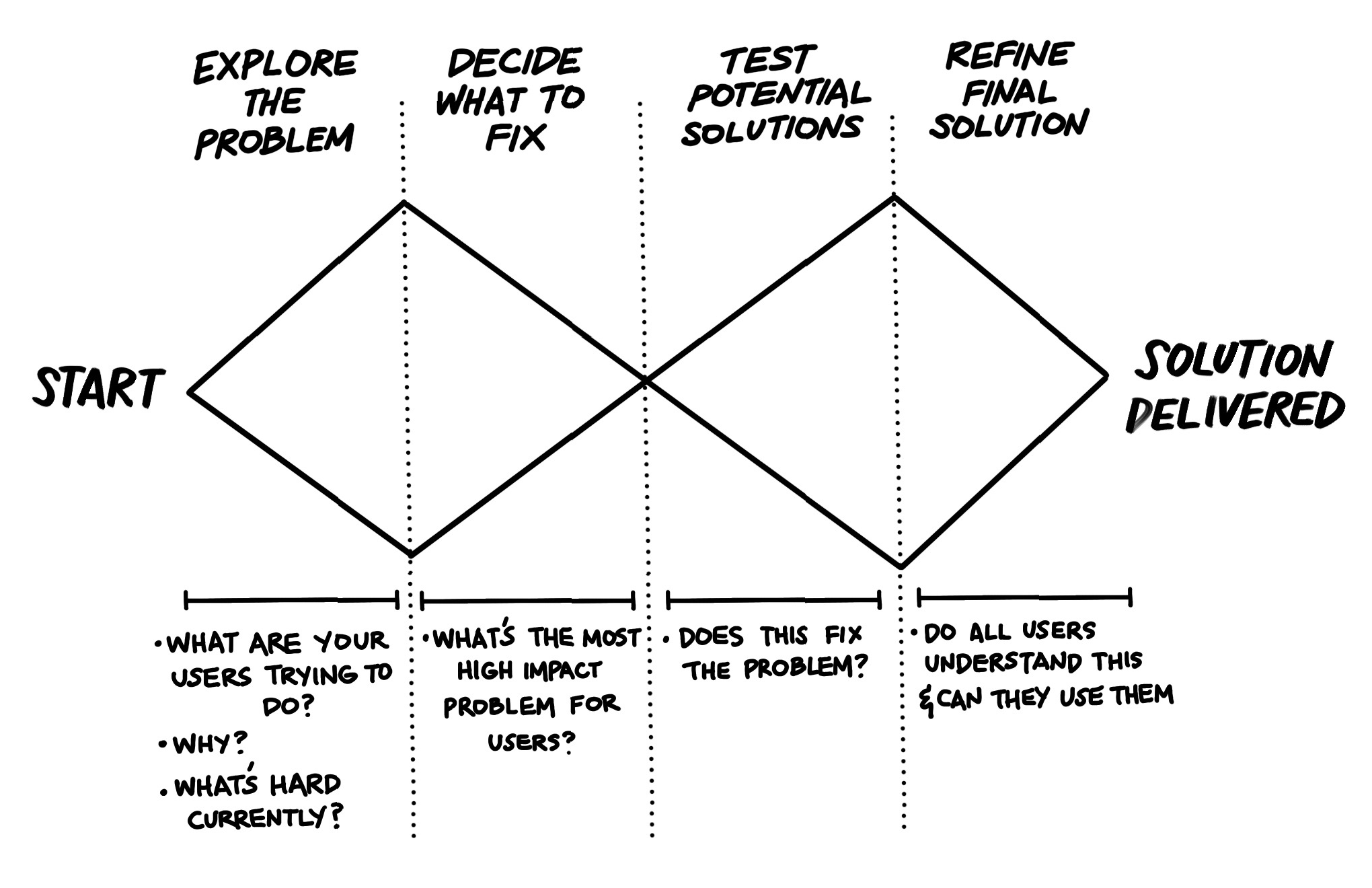
The UK Design Council's double diamond model describes a path for building successful products: explore a domain, select the right problem to solve, then investigate possible solutions. The goal is to validate both that you're solving real user problems and that your implementation works for those users.
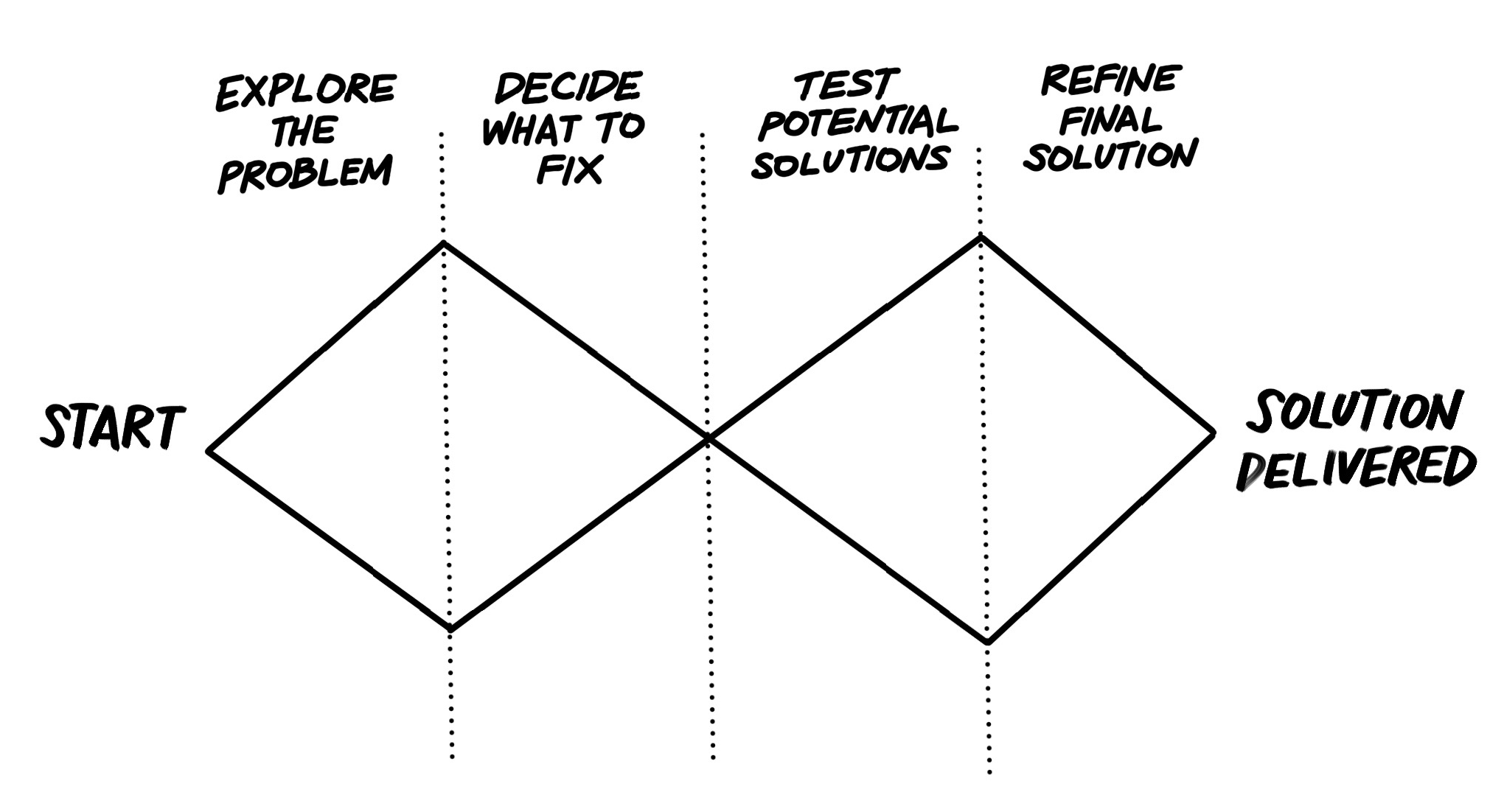
Each stage demands different information about users, and each type of information calls for its own research tool.
Diamond One: Understanding And Prioritizing Problems
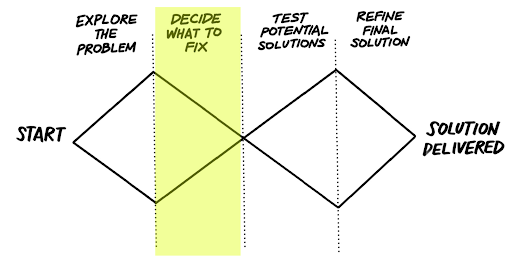
The first diamond tackles problem discovery. Teams need to learn what difficulties users actually have and then prioritize which one to address—reducing the risk of building something nobody adopts.
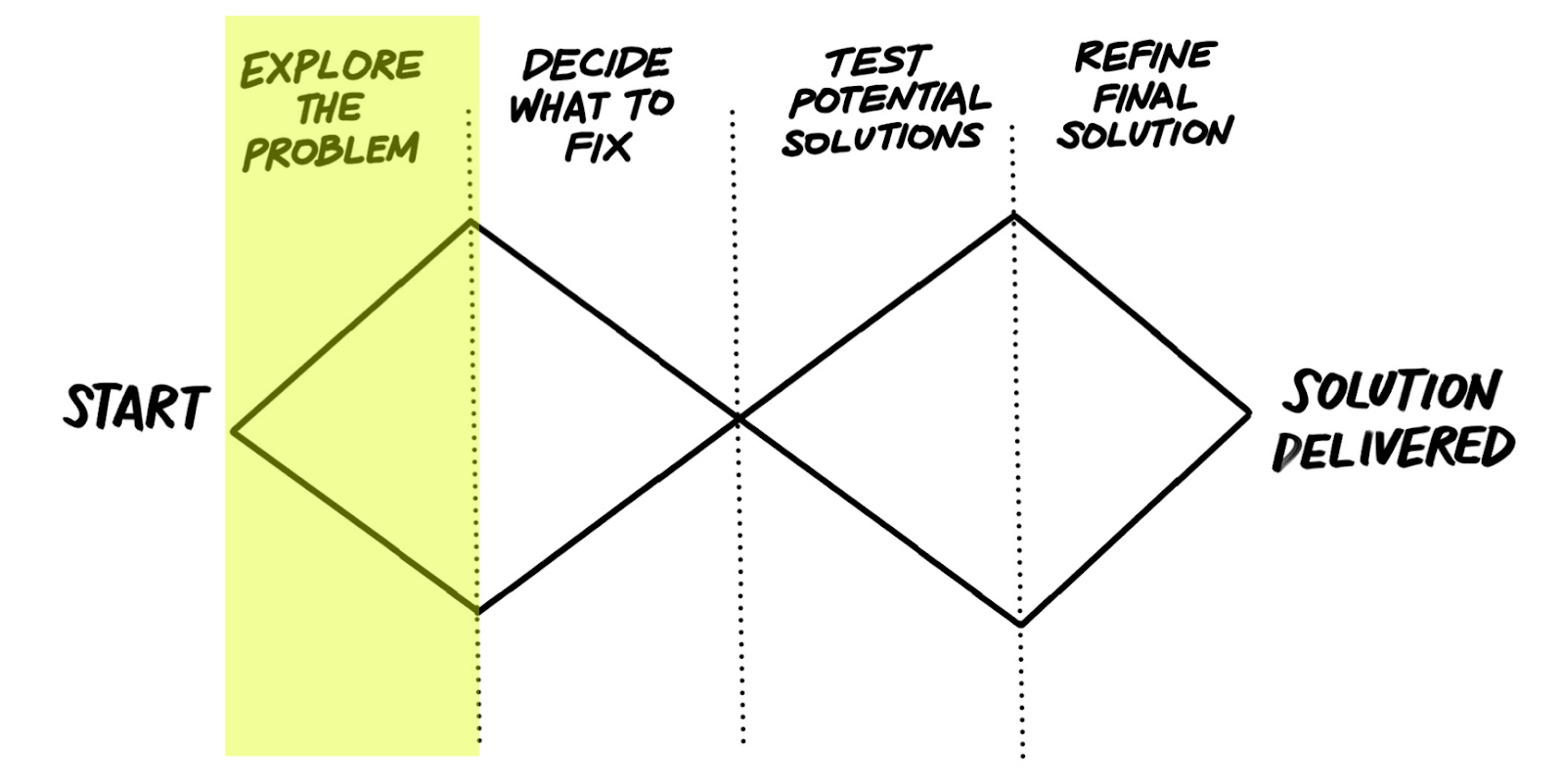
The most reliable route to understanding is first-hand observation of users doing real tasks in their own context. Ethnographic and observational methods surface the range of problems, while surveys then help prioritize them.
| Double Diamond Phase | Appropriate Method | Why? |
|---|---|---|
| Explore the problem | Ethnographic and Observational studies | Gives deep insight into what problems people have that can inspire product decisions |
| Decide what to fix | Surveys | Discovers how representative problems are, and helps prioritise them |
Uncovering Problems Through Observation
Watching people perform genuine tasks, and questioning them about motivations and frustrations, reveals behavioral insights that surveys alone miss. This qualitative groundwork generates product ideas and features, and can also kill weak concepts that lack a real user need.
Diary studies are one effective form of ethnography, capturing interaction over weeks and exposing issues that would not appear in a single session or that people would forget in an interview. Faster alternatives include observing users with existing products either in a lab or in their natural environment—sufficient for simpler interactions like navigating an online shop, but less suited to behavior that unfolds over time, such as fitness tracker usage, where a diary approach is more appropriate.
Prioritizing With Surveys
Once problems are documented, product managers weigh technical feasibility, business goals and other factors. User research contributes further by quantifying the scale of uncovered issues. Surveys based on earlier behavioral findings reveal how representative observed problems are, and help teams complete the first diamond knowing what problem they need to solve.
Combining these quantitative results with generative studies has proven successful in industry practice—Spotify's persona work on music consumption, grounded in primary fieldwork, is a well-known example of this approach.
Diamond Two: Testing And Refining Solutions
The second diamond focuses on implementation. With a chosen problem, research explores ways to solve it and fine-tunes the best direction.
| Double Diamond Phase | Appropriate Method | Why? |
|---|---|---|
| Test potential solutions | Moderated usability testing | Creates a deep understanding of why the solution works, to inform iteration |
| Refine final solution | Unmoderated usability testing | Can get quick results on small questions, such as with the UI |
Moderated Testing For Solution Exploration
Determining the best implementation requires usability testing with representative prototypes, observing whether users can complete tasks. This demands time and close attention to what drives observed behavior.
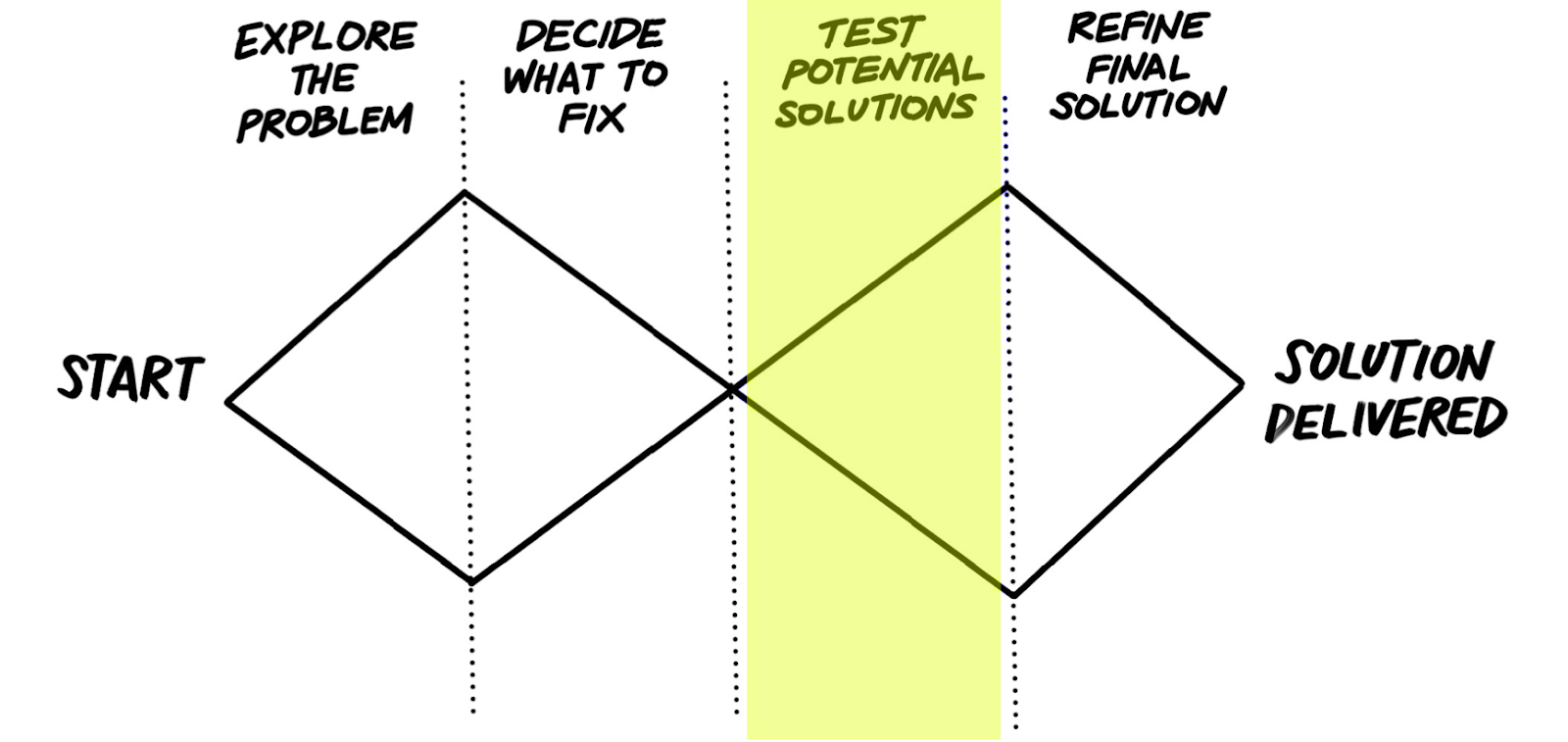
Moderated sessions let researchers ask probing follow-up questions—"What are you thinking right now?" or "Why did you choose that action?"—revealing insights participants would not volunteer unsolicited. A single moderated session can deliver richer data than a series of unmoderated ones, enabling deeper evaluation and iteration. This depth has proven pivotal in notable product turnarounds: Airbnb's 2009 near-bankruptcy was reversed after researchers watched users review site listings and discovered that room photos were the core problem.
Moderation does not require physical presence. Remote sessions using screen-sharing tools allow researchers to include geographically diverse participants and avoid over-sampling from the cities where research teams are usually located.
Unmoderated Testing For Final Refinements
The last diamond phase involves many small iterative tests of the nearly final product. Remote unmoderated tools—like UserTesting.com panels—provide quick, inexpensive feedback by sending URLs to users who record themselves interacting with the software.
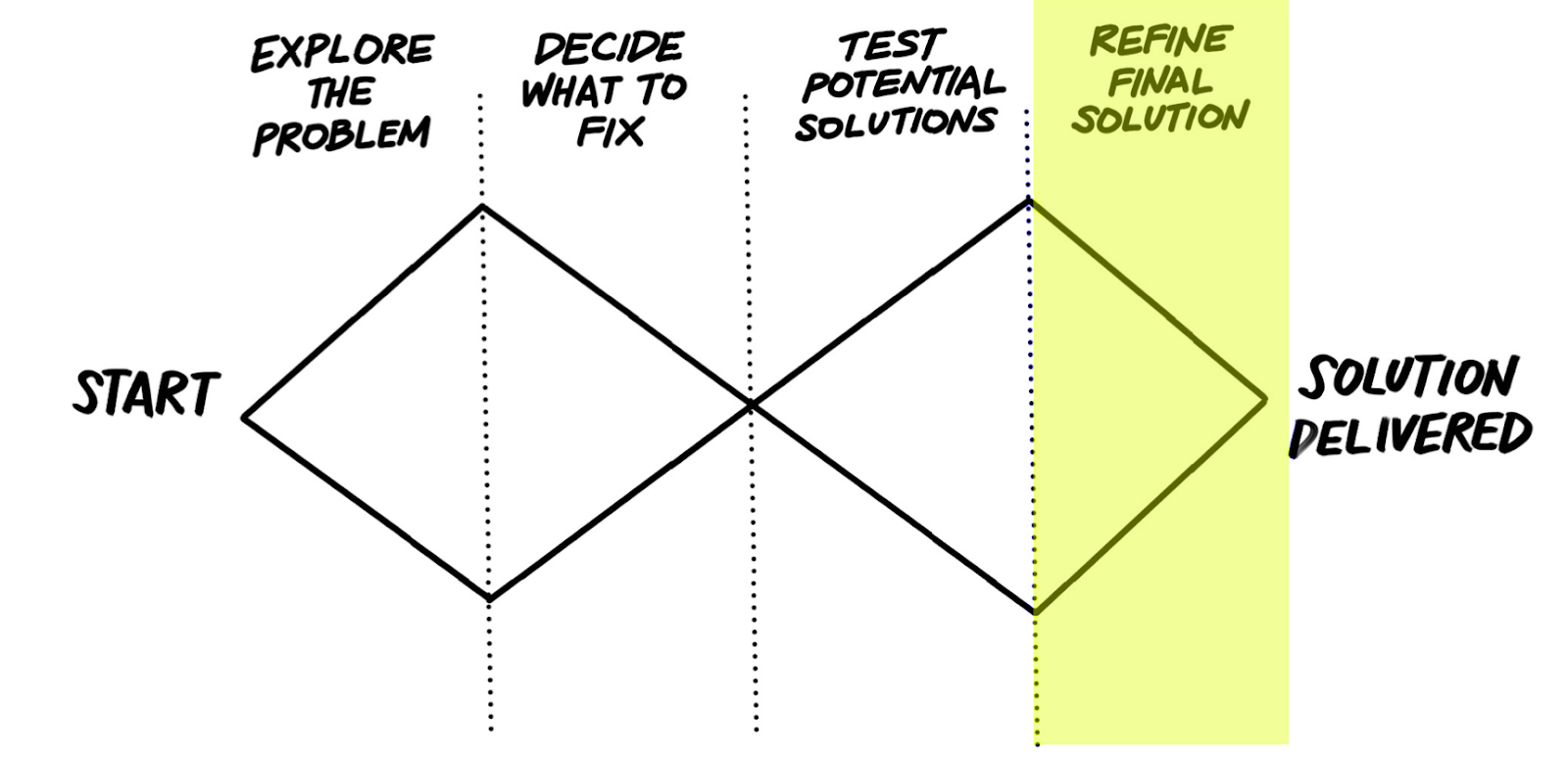
The apparent low cost and speed make these tools appealing, but caution is warranted. Panel participants routinely test websites, which makes them progressively unlike ordinary users—a sampling bias that distorts their behavior. Because of this risk, unmoderated testing is best suited to the late stages when changes are small and mistakes are cheap—such as content or UI adjustments, but not fundamental design decisions.
The UK Government Digital Service's iterative usability testing on GOV.UK Verify, ensuring citizens could establish their identity online, is an illustrative example of this testing style applied appropriately.
Beyond Launch
Launch itself tests the product—the market quickly reveals whether there is demand and whether users understand the software, through sales figures and customer feedback alike.
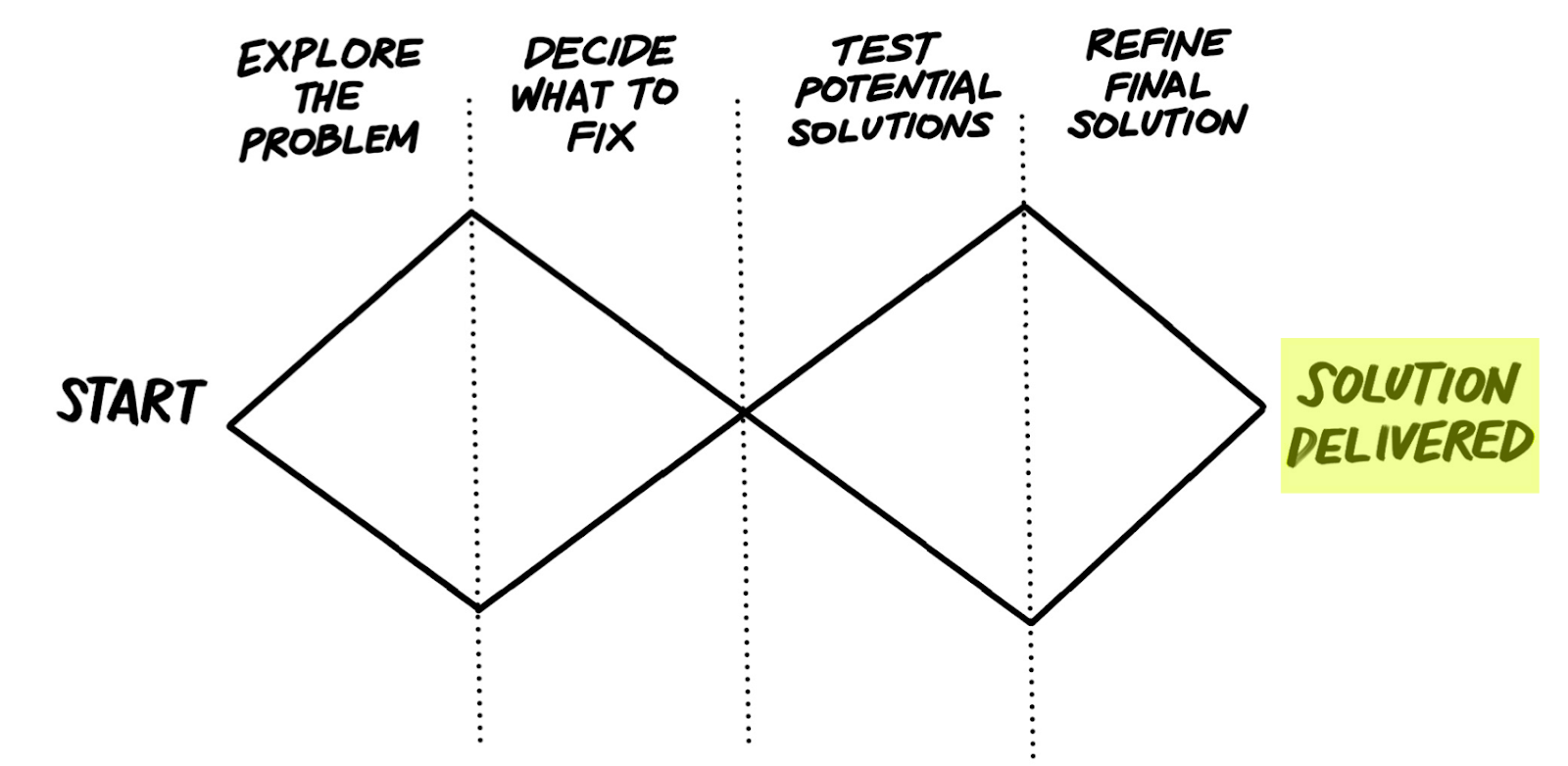
A successful launch does not end research opportunities, however. Post-launch user behavior continues to inspire new features, removals and adjustments.
| Double Diamond Phase | Appropriate Method | Why? |
| Solution delivered | Analytics + moderated usability testing combined | Inform future updates post-launch with qualitative and quantitative insight. |
Analytics For Post-Launch Insight
Analytics add essential information about what users do after a product ships. But quantitative data alone has blind spots: analytics capture only the on-site portion of a user's journey, and reveal behavior without explaining its cause.
Marrying analytics with qualitative research creates a fuller account—users' motivations and off-site context combine with measured actions for stronger decisions. Achieving this requires genuine collaboration between analysis and research teams, supported by regular community events, skills exchanges and project updates so both sides understand how to support one another's questions.
Defending Research Quality Against Shortcuts
Even when teams recognize which method fits a given question, pressure to cut corners often surfaces. One frequent compromise is relying on convenient participants — friends or colleagues — rather than screening people who genuinely match the user profile. Such shortcuts may appear pragmatic but produce findings that don’t stand up to scrutiny.
Colleagues who suggest these compromises usually aren’t acting from malice. They simply don’t see the downstream risk of basing product decisions on unrepresentative data. That places an educational burden on researchers: they must not only run studies but also explain why certain methods yield more reliable insight.
Practical tactics for raising awareness include presentations to product teams, informal roadshows, and posters that visually contrast the kind of information different study types provide. These help make the trade-offs visible to non-specialists.
Introducing research-led decision making can feel radical at organizations that traditionally defer to client requests or the loudest (and highest-paid) voice in the room. Shifting that culture takes persistence and creativity. The key is understanding what currently drives decision makers’ behavior and framing research benefits in terms that directly reduce their burden — not abstract notions of user-centeredness.
A genuine appetite to run studies with appropriate methods is a strong signal. When leadership accepts that process, it indicates an actual desire to improve decision quality, not just a box-ticking exercise. This is an encouraging foundation for any new research function.
Once that foundation holds, the remaining work is operational: designing a repeatable research process, selecting the right tools, and prioritizing which questions deserve immediate attention. Much of this groundwork is well documented — the research ops community, for instance, offers a wealth of guidance on building the mechanics of a research practice.