

The Case for Lighter Websites
Climate change, driven by greenhouse gas emissions from human activity, is the single biggest health threat to humanity. The earth’s surface is now 1.2°C warmer than in the late 1800s, and projections show that number more than doubling by the end of the century. The resulting consequences — severe fires, droughts, melting polar ice, and declining biodiversity — are already visible.
The internet is a significant contributor to this problem. It accounts for higher global greenhouse emissions than the aviation industry and is projected to be responsible for 14% of all global emissions by 2040. If the internet were a country, it would rank as the 4th largest polluter in the world — and it represents the largest coal-powered machine on the planet.
These emissions come from two primary sources: the vast data centres and transmission networks that power the internet and consume huge amounts of electricity, and the manufacturing, distribution, and usage of the estimated 30.5 billion devices we use to access it. With 60% of the world’s population spending, on average, 40% of their waking hours online, internet-related emissions are only increasing.
Why Speed Is a Sustainability Strategy
Although the UK government has added “Minimise environmental impact” to its best practice design principles, the industry still talks more than it acts. The reality of tightly constrained, fast-paced, and commercially driven web projects is that environmental impact rarely makes the agenda.
A recent project to optimise the mobile performance of www.talktofrank.com, a government drug advice website, offered a path forward. Mobile performance was critical for this service so that users with older devices and slower connections could still access the information they needed.
Following recommendations from tools such as Google Lighthouse, the developer made purely technical changes that reduced the page weights of a key user journey by up to 80%. Pages downloaded up to 30% faster, and the carbon footprint of the journey was reduced by 80%.
By minimising page weights, you improve performance (a win for users and service owners) and also consume less energy (by transferring and storing less data), creating additional benefits for the planet — so everyone wins.
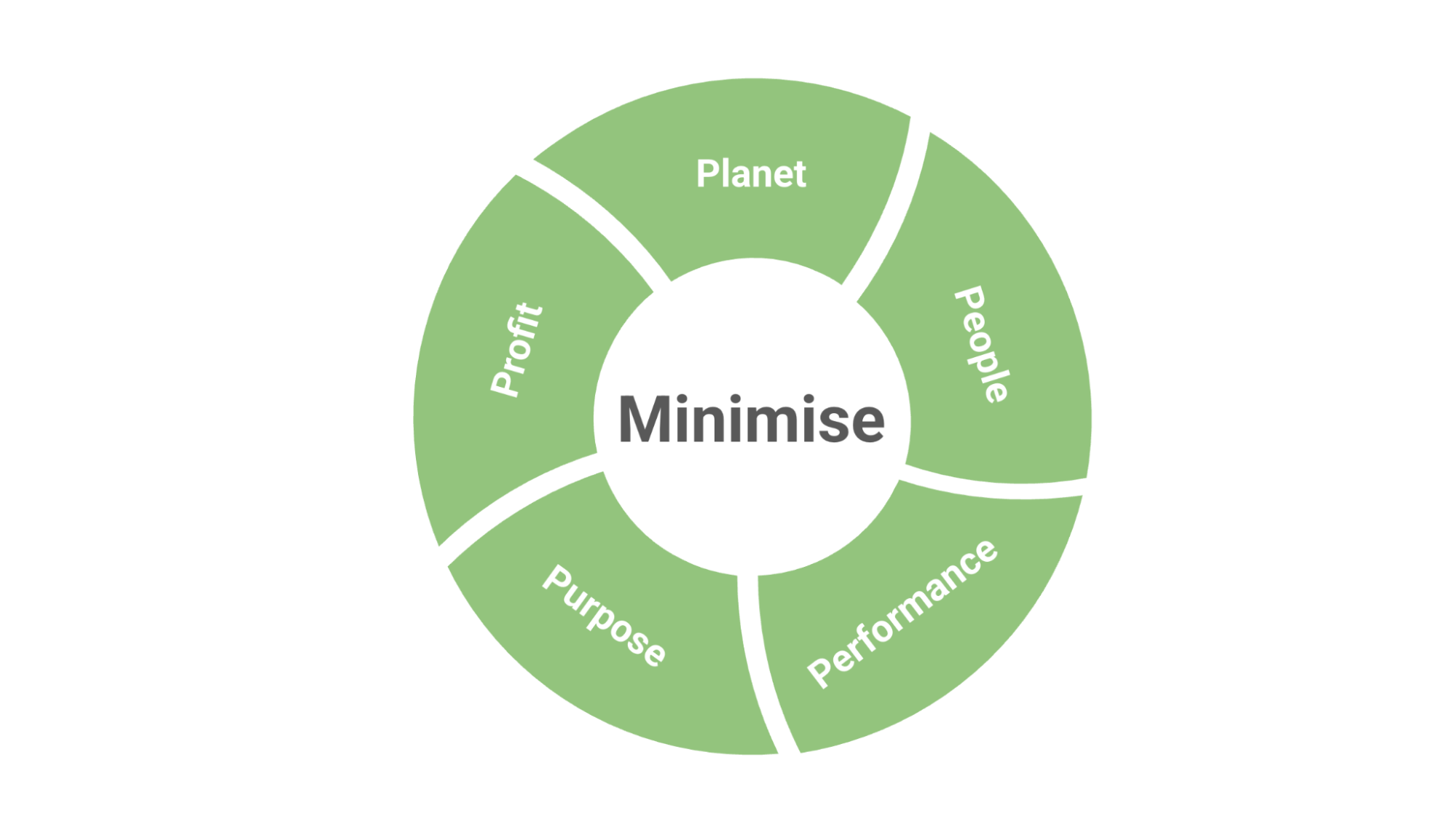
This is a genuine breakthrough because business, user, and environmental requirements are often at odds. But focusing on making websites as simple, lightweight, and easy to use as possible delivers benefits beyond the triple bottom line of people, planet, and profit:
- Profit — Website providers win because their site becomes more efficient and more likely to meet its outcomes, and a lighter site should lead to lower hosting bills.
- People — Users win because pages download faster and are quick and easy to use, designed for the minimum amount of effort and mental energy needed to complete tasks.
- Performance — Lightweight pages download faster, particularly for users on older devices and slower network connections.
- Planet — Less energy (and fewer associated emissions) is required to deliver the website.
- Purpose — Digital professionals do their best work when it contributes to making things better for people and the environment.
Even when environmental concerns feel like a low priority on a project, optimising page weights to boost performance — which is generally high on the agenda — offers a practical entry point. Many of the things that make websites easier to use and more accessible also help minimise their environmental impact, so the work will feel familiar rather than like another new discipline to learn.
Maximum Value, Minimum Energy
The overarching approach for creating websites with minimal environmental impact is to focus on offering the maximum value from the minimum input of energy. This is an adaptation of Buckminster Fuller’s “Dymaxion” principle, one of his progressive sustainability strategies for living on a planet with finite resources.
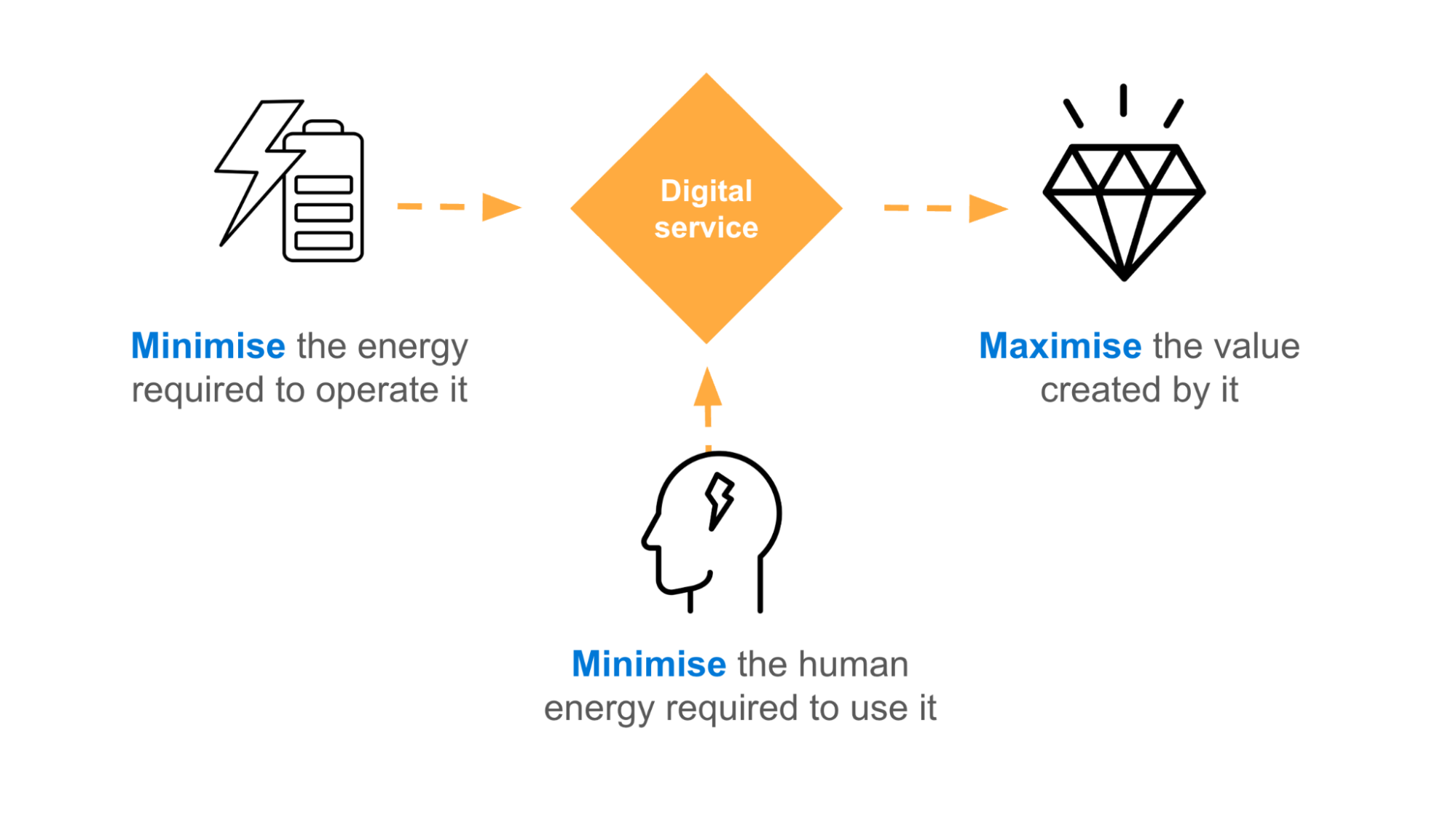
Inputs of energy include both the electrical energy required to run websites and the mental energy required to use them. This means minimising websites to their core content, features, and functionality, ensuring everything can be justified against a business or user need. Anything that does not add a proportional amount of value for the energy it requires should be removed.
To put that into practice, the new approach of “Decarbonising User Journeys” helps minimise environmental impact and maximise performance.
Note: The approach deliberately focuses on optimising key user journeys and not entire websites to keep things manageable and make it easier to get started. The secret is to start small, demonstrate improvements, and then scale.



