A Guided Design Exercise That Gets Clients on Board Faster
For the California DMV, the website is the primary gateway to essential services for roughly 30 million licensed drivers. The agency’s Strike Team brought in our design team at 10up to reimagine that entire experience. Early on, the challenge wasn’t just design — it was alignment. A government project means many stakeholders, each with different motivations, and gaining consensus during discovery was the top priority.
Clients often find design concepts confusing or intimidating. Our solution was to reframe the conversation entirely with an internal exercise we call Design Shopping. It’s built on a simple premise: everyone understands picking and choosing what fits. Shopping removes the pressure of right or wrong answers, and it activates the brain’s reward centers, creating positive feelings that drive engagement.
Ground the Work in Research First
Before any visual exploration or workshop planning, your design thinking needs a foundation. Not every item below is mandatory, but when possible, prepare:
- Identified project goals;
- Problem statements;
- Competitive analysis;
- Mental model comparisons;
- Historical context;
- Project brief;
- Preliminary UX discovery;
- Content maps.
When collecting artifacts for the shopping exercise, include both successful and unsuccessful examples that reflect what you learned. Use them as conversation triggers to explore aesthetics, user experience, business goals, and specific calls to action — showing how design supports more than just visual appeal. This gives clients ownership of a design vision tied to tangible benefits.
Curate the Artifacts
Don’t limit inspiration to familiar territory. Look across pure creativity sites, competitive analysis, and identity-specific exploration — sources like WePresent, Designspiration, Awwwards, and Muzli are good starting points.
Keep the total number of artifacts to 5-7 to avoid fatigue. Choose strategically:
- One from the client’s own vertical to show understanding of fundamentals;
- One from outside the vertical that challenges or demonstrates brand attributes;
- One that makes a challenging design choice you expect them to dislike;
- One with thoughtful choices you expect them to love;
- Something the client already referenced that deserves deeper exploration;
- One reflective of the audience’s mental model based on your research.
Prepare the Room
Before presenting anything, assign a facilitator to guide the workshop and encourage participation, plus an official notetaker so the facilitator can stay focused on the group. With the DMV’s unusually large stakeholder set, we ran two facilitators in the room; in virtual settings, multiple breakout rooms with separate facilitators work well too.
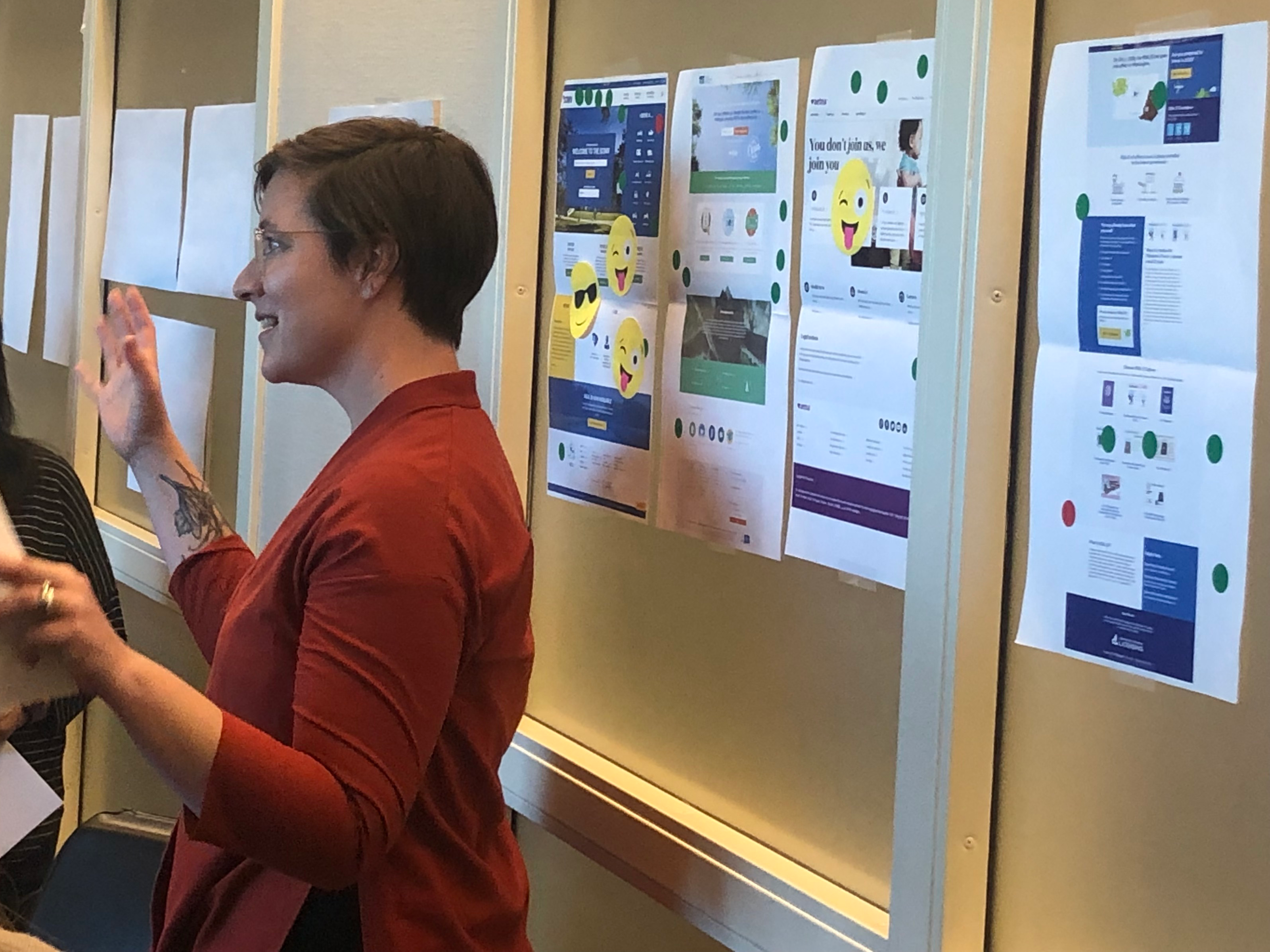
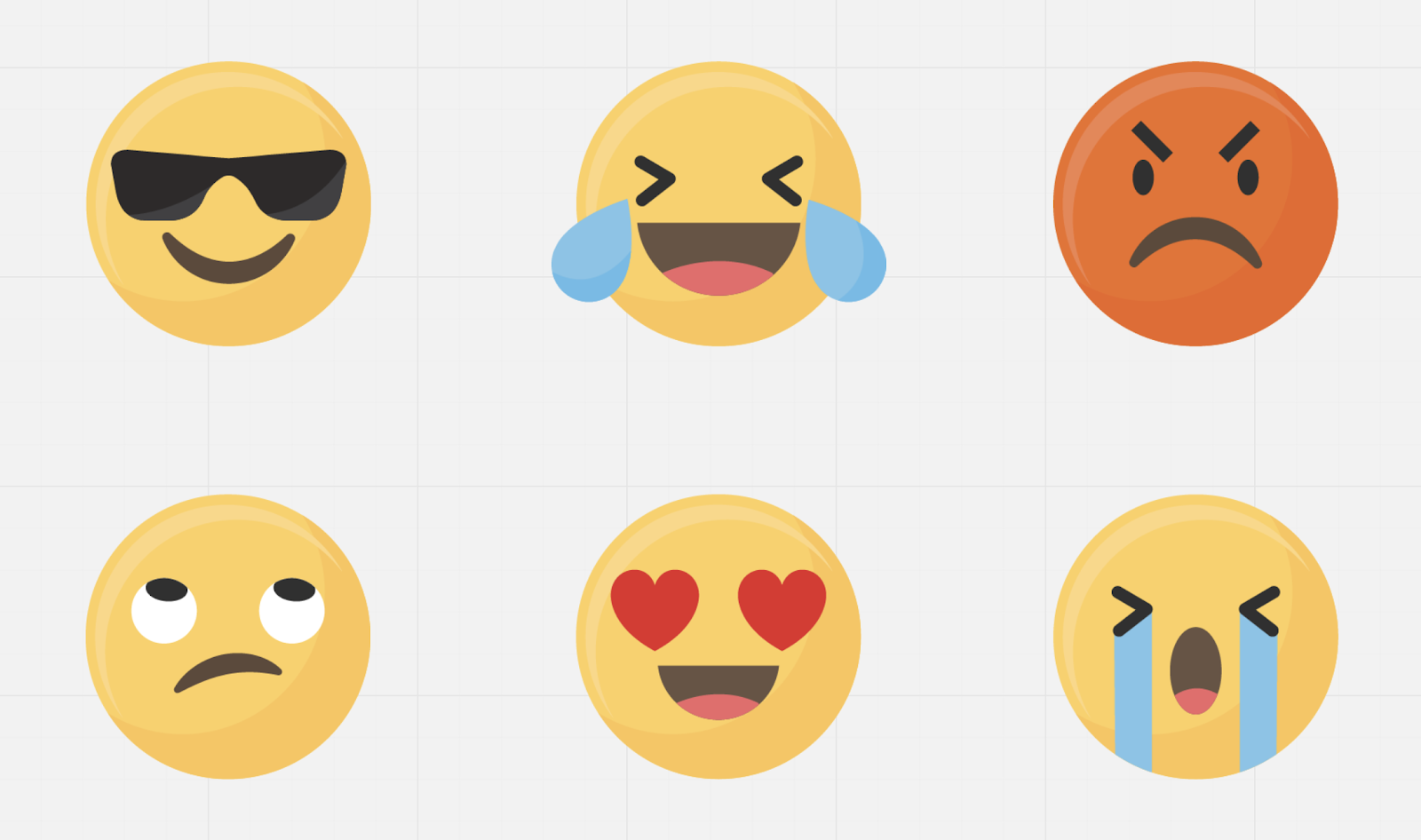
Materials are straightforward: red and green dot stickers for voting, emoji stickers for extra expression, Post-it notes for comments, and printed screenshots of websites.
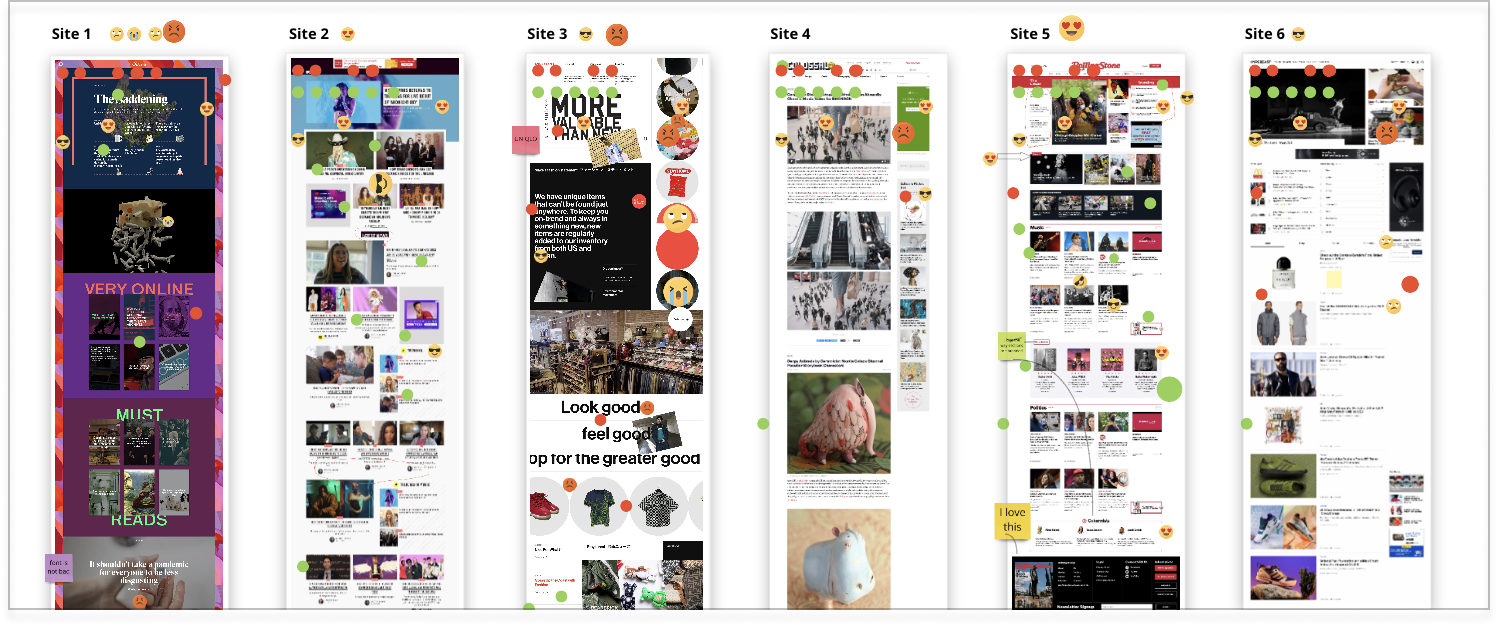
Run the Workshop
Spend the first 5-10 minutes breaking the ice. Establish ground rules so the loudest stakeholders don’t dominate. For virtual sessions, confirm all systems work and demo the tools — allow another 5-10 minutes for that. If time is tight, send the virtual board ahead of time with DIY instructions.
Limit each participant to 5 green and 5 red votes — 10 total. The constraint forces deliberate choices and richer discussion. The emoji stickers are an optional extra that tends to be very popular.
Set the timer for 15 minutes and let people mingle while voting on what they like and dislike. Ask pointed questions about the why behind their choices. Standing while shopping levels the playing field; in virtual sessions, pre-filling voting panels with participant avatars adds a human element in place of anonymous cursors.
Guide the Discussion
Once the timer ends, walk through each artifact and discuss the patterns that emerge. Invite volunteers rather than singling anyone out — say something like, “I’m seeing a lot of green dots here. Let’s talk about why?”
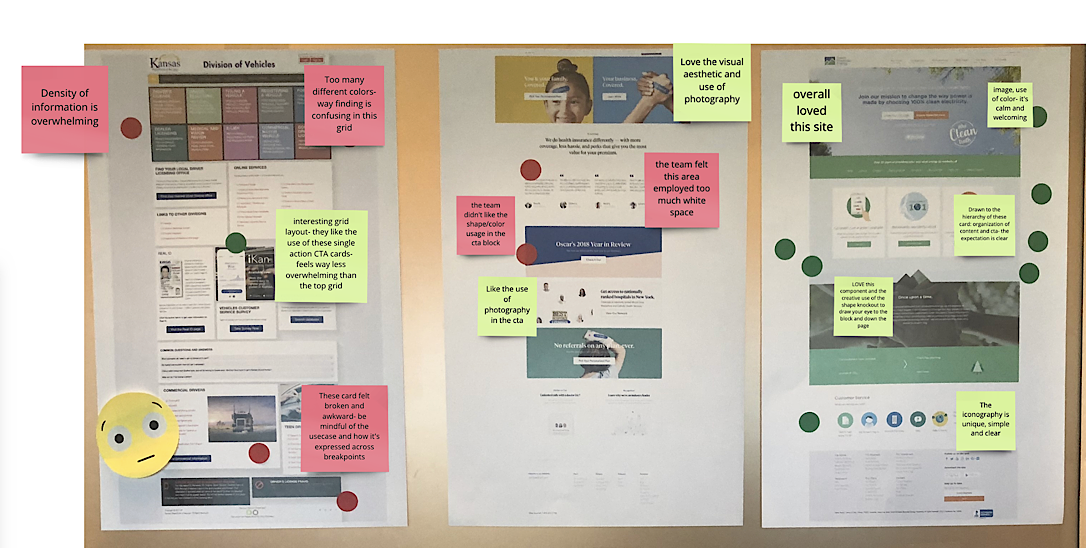
This keeps evaluation collaborative and removes the pressure of a correct answer. Listen for the client’s design vocabulary, then build on it. Connect the dots to lead the group toward foundational design principles and decisions for the phases ahead.
Validate and Repeat
After shopping, summarize what the results show: where there’s consensus, where opinions diverge, and what comes next.
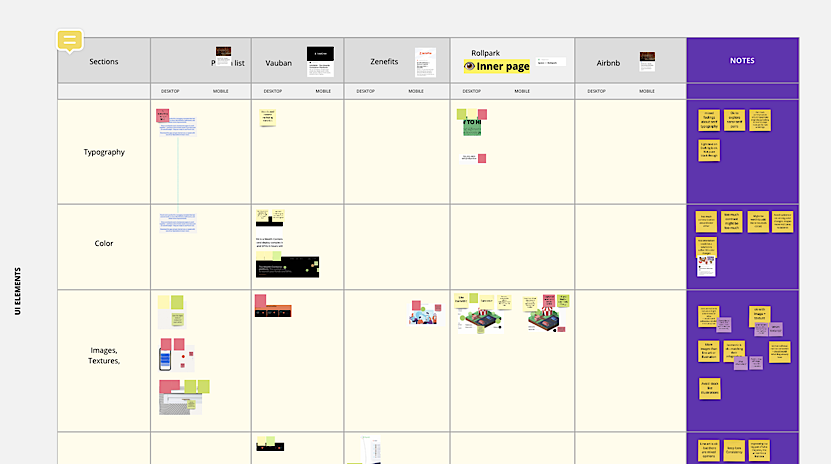
Design Shopping doesn’t have to be a one-time event. We often run a final round later, once you’re mid-way through prototypes, moodboards, style tiles, and design principles. Use it to validate your own design solutions with a client who already understands the format and has built a comfortable rapport. You can skip past vocabulary-building and move directly to evaluating the work itself.
Why the Exercise Matters Beyond the Workshop
The Design Shopping workflow is less about picking attractive fonts or colors and more about demonstrating the ROI of thoughtful design. It establishes a shared design vocabulary and foundational principles early, so the entire project can proceed with deliberate intent. The format turns abstract aesthetics into concrete choices that both the team and the client can discuss openly.
The visual, hands-on nature of the session also provides lasting value for stakeholders who could not attend live. When they review the shopping exercise later, the record clearly shows which directions to pursue and which to avoid. This helps preemptively head off conflict by creating collective agreement before detailed design work begins.
For the DMV team, which faced significant pressure, the goal was to avoid adding stress to the relationship. Further pressure tends to produce poor outcomes for both client rapport and the final design. The workshop format keeps the process painless and even fun — but the fun serves a purpose. It is a structured way to educate the client and align expectations.
When executed well, this exercise lets the client see real potential through real examples of design in action. With that foundation in place, the team can look forward to creative innovation and confidence from even the toughest critics: the clients themselves.
Further Reading
- Why Anticipatory Design Isn’t Working For Businesses
- Transforming The Relationship Between Designers And Developers
- When Friction Is A Good Thing: Designing Sustainable E-Commerce Experiences
- A Practical Guide To Designing For Children