Connectivity in Unprecedented Times
The past year has demonstrated how critical reliable internet access is for societies around the world. For many technology companies, including Facebook, the challenges of 2020 accelerated efforts to keep people connected even when physical separation became the norm. Whether by completely rebuilding core applications, laying new undersea infrastructure, or pushing the boundaries of wireless protocols, the work done in 2020 laid groundwork that will last well beyond the year itself. A particular focus fell on making networks faster, more reliable, and more accessible to underserved populations.
Faster Applications Through Ground-Up Rebuilds
In some cases, meeting the demands of a remote-first world meant going back to the drawing board. One prime example was the complete rewrite of Messenger for iOS. The internal project, code-named LightSpeed, brought together engineers from across the company to rebuild the application from scratch. The team reconfigured the app to lean more heavily on the native operating system, relying on dynamic templates powered by SQLite to handle the UI, and introducing a server broker to manage communication between the app and server-side features.
This architectural overhaul yielded staggering improvements. The new Messenger for iOS is a quarter of the previous app's size and performs at double the speed, while requiring 84 percent fewer lines of code.
A similar shift in engineering philosophy defined the redesign of the legacy Facebook web application. The original site, which launched in 2004, was a simple, server-rendered PHP platform. To support future growth and new product goals, engineers rebuilt the architecture of Facebook.com using React, a declarative JavaScript library for user interfaces, and Relay, a GraphQL client for React.
Modernizing Internet Foundations
Returning to basics also involved rethinking the very protocols the internet runs on. For decades, TCP served as the internet's transport layer. Recognizing its age and limitations, Facebook began replacing it with QUIC, a modern protocol designed to improve connection performance. Over the course of the year, more than 75 percent of Facebook's internet traffic shifted to QUIC and HTTP/3. The adoption has resulted in significant improvements across key performance metrics, including reductions in request errors and tail latency, as well as improvements in response header size.
Additionally, the company focused on making the hardware that powers its infrastructure more efficient and resilient. New methodologies were introduced to manage server hardware failures at a massive scale. These systems automatically detect and remediate issues and can monitor hardware events without undermining application performance. Machine learning models now help take a proactive approach to repairs, and the root cause analysis for hardware and system failures has also been automated.
To help engineers write better code, new tools such as Health Compass and Incident Tracker were rolled out. These automated regression detection systems monitor codebase changes, which occur frequently throughout the day. If left unchecked, a single change could degrade the experience for billions of users. On the hardware side of development, innovative methodologies such as SoftSKU allow servers to be tuned for specific microservices without new chips. When paired with Accelerometer, an analytical model that predicts the speed-up of an optimization, these tools help engineers optimize their platforms.
Expanding Worldwide Connectivity
One of the most ambitious projects of the year was the expansion of Africa's digital backbone. Facebook partnered with African and global operators to launch 2Africa, a subsea cable of 37,000 km in length, bringing it roughly to the circumference of the Earth. The project is expected to interconnect 23 countries across Africa, the Middle East, and Europe. Africa is currently the least connected continent, with just over a quarter of its 1.3 billion people online. When complete, 2Africa is slated to provide roughly three times the total network capacity of all subsea cables serving the region today, which will support the growth of 4G, 5G, and broadband access. Independent analysis from RTI International suggests the route could boost the continent's GDP by 0.42 percent to 0.58 percent within the first few years of operation, estimated to be in 2023–24.
For harder-to-reach rural areas, Facebook Connectivity has been prototyping SuperCell, a wide-area coverage solution. This approach utilizes towers up to 250 meters high paired with high-gain, narrow-sectored antennas. The goal is to provide sustainable and cost-effective mobile connectivity in rural communities.
Efforts to drive affordability also continue through open standards. The Evenstar program aims to build general-purpose radio access network (RAN) reference designs for 4G and 5G networks that comply with industry specifications. Launched with partners including AceAxis, Deutsche Telekom, and Vodafone, the program decouples the remote radio unit (RRU) hardware from the distributed unit and control unit software—a departure from the traditional package bundle. This gives mobile operators the flexibility to choose best-of-breed components instead of entering a walled garden.
The first Evenstar products have already completed lab testing and are now prepared for field testing. These projects build on prior open-source efforts, such as the Terragraph gigabit wireless technology, which has launched pilot programs in Puerto Rico and Malaysia, and the Magma software platform for core mobile networks.
Sustainable Operations and Goals
The global pandemic also prompted a deeper look at the long-term impact of running such massive digital infrastructure. Having met prior climate goals, the company announced a more aggressive target: achieving net zero emissions across its value chain by 2030. This builds on a 2018 commitment to cut greenhouse gas emissions by 75 percent while supporting global operations with 100 percent renewable energy. That effort involved constructing over 5,400 megawatts of new solar and wind capacity, enough to power 1.5 million U.S. households. It also reduced carbon dioxide equivalent emissions by more than 2.6 million metric tons over the last three years. Going forward, the focus shifts to reducing emissions in the supply chain and examining how server and consumer hardware are manufactured.
To chart its progress and maintain accountability, the company published its inaugural Sustainability Report in July. The publication compiled environmental data in an accessible format, clearly outlining the actions being taken. Transparency also extends to facilitating research; the company collaborated with global nonprofit organizations to develop a Climate Conversation Map. The tool aggregates anonymous, anonymized platform data with insights from data science and computing, illustrating how the conversation around climate change evolves across the globe.
Open Source Security and Tooling
To scale security efforts for Python — particularly the codebase that powers Instagram's servers — we released Pysa, an open source static analysis tool built to detect and prevent security and privacy issues in Python code. The tool has been instrumental in expanding application security coverage across large Python deployments.
We also published our Network Time Protocol (NTP) libraries under an open source license. 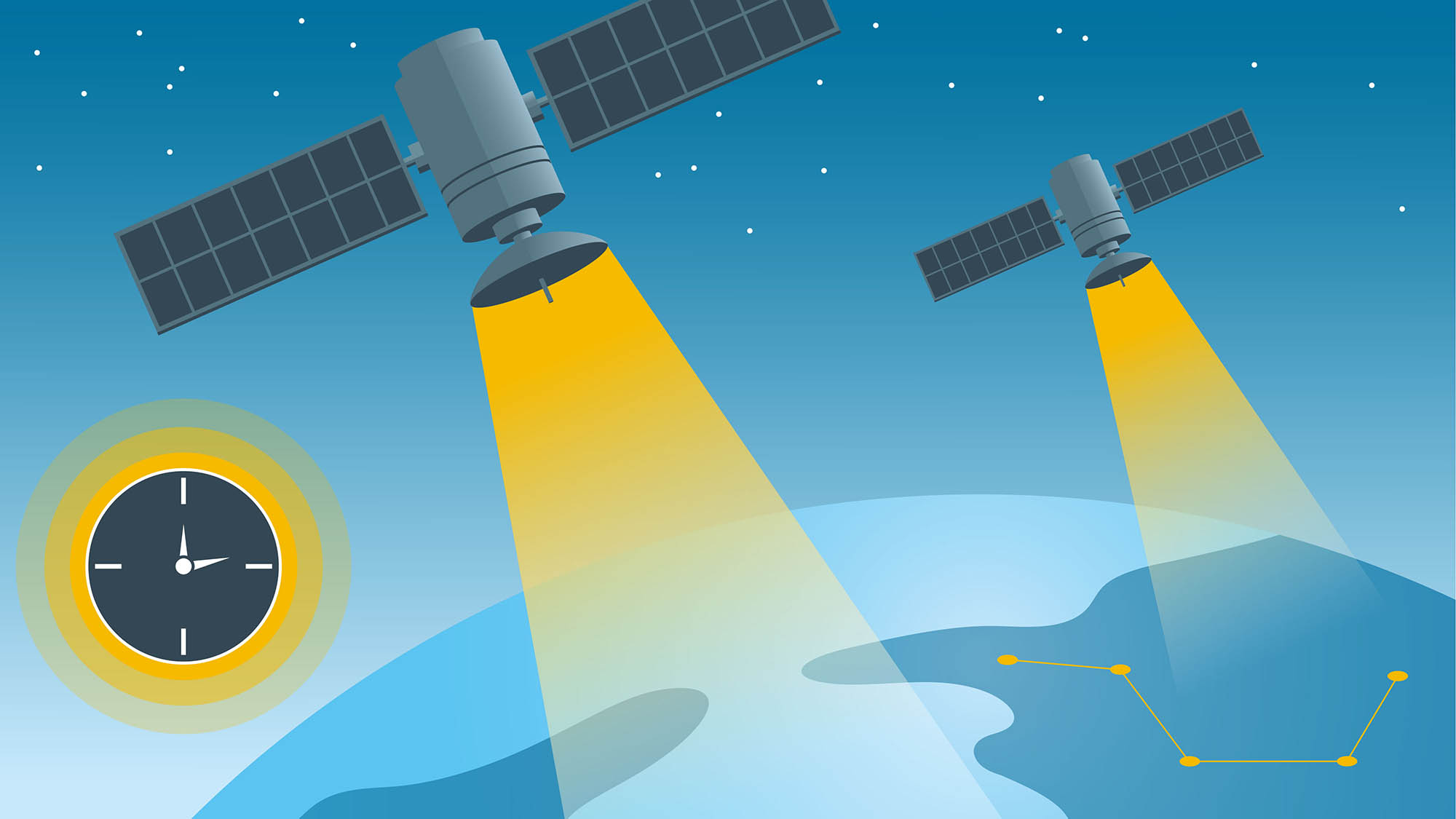
Precise timing is a cornerstone of our infrastructure: with millions of servers, knowing the submillisecond time difference between any two machines in a data center is essential to keeping transaction order consistent. We deployed a new system, chrony, which improved synchronization accuracy from 10 milliseconds to 100 microseconds. Chrony now anchors our public NTP service.
For developers working in Haskell, we introduced Retrie, an open source refactoring tool that makes codemodding faster, easier, and safer. Retrie handles rewrites on codebases exceeding 1 million lines, lets developers express transformations as equations in Haskell syntax rather than regular expressions, and reduces common codemodding errors. It supports rewriting expressions, types, and patterns; adding side conditions; scripting rewrites; and building more advanced rewrites via a dedicated library.