

The Limits of Measuring Prose
There is no shortage of software promising to make what we write easier to digest. Grammarly, Readable, Yoast, and a growing list of similar services offer automated judgments on clarity, complexity, and style. They serve as useful proofreaders, catching mistakes and simplifying convoluted sentences. However, letting these tools become the ultimate judges of your work is a mistake.
Readability scoring isn’t a new invention. The Flesch-Kincaid grade level, which dates back to 1975, and the Gunning fog index are built on research that quantifies traits like sentence length and syllable count. Modern programs frequently rely on these older formulas to deliver their verdicts.
These metrics pull double duty: they keep language simple and catch errors. Yet it is important to treat them as guides rather than gospel. Clarity is a worthy goal, but pursuing a high score blindly can strip writing of nuance and style.
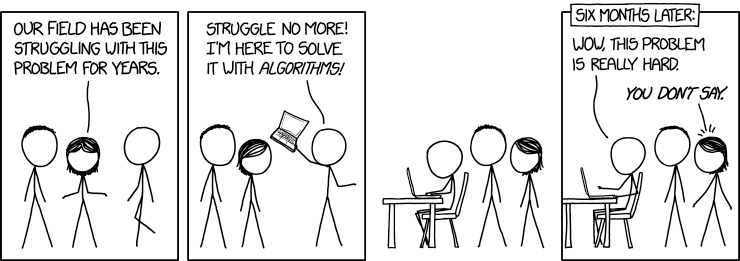
Deference to algorithms can push writers toward absurd extremes. Advice like "use short sentences" and "prefer monosyllabic words" makes sense in principle. But when followed obsessively, it can produce clunky, unnatural text that technically passes inspection while poorly serving the reader. If you write only to please a scoring system, you risk churning out prose that looks like everyone else’s and sounds like no one’s.
Scoring the Greats
It is telling to run celebrated works through these systems. The results highlight just how subjective “good writing” really is:
- Readable assigns the opening chapter of Charles Dickens’s A Tale of Two Cities a failing grade of E.
- George Orwell’s essay "Politics and the English Language," which criticizes vague language for concealing truth, earns a D.
- Ernest Hemingway’s The Old Man and the Sea fares better, but running it through the Hemingway Editor would still require aggressive edits to fully appease the app.
Far more striking is Ernie Pyle, a World War II correspondent whose columns reached hundreds of newspapers nationwide. His piece "The Death of Captain Waskow" is considered a high point of war reporting. Readable gives it a B, adding that the writing is a bit “impersonal.” A reader would have to disagree.

The point isn’t to ridicule these tools. Good writing doesn’t always have to conform to algorithmic preferences, and chopping a sentence into fragments doesn’t make you Hemingway. These apps are quick checks for overly long or complex passages, but the author still decides where that the threshold lies.
Matching Context, Not Computers
Algorithms have real value when applied correctly. If you aim to reduce filler words or spot grammar slips, automated feedback helps catch details you might otherwise miss. The problem arises when a metric becomes the single definition of success.
Software only knows the rules it was programmed with. It lacks judgment about audience, tone, and intent. Intuition and experience—along with the occasional urge to break a rule—remain distinctively human. Taking broad advice like “ideal article length is X words” or “always use this word” ignores the reality that context matters far more than any universal rule.
The purpose of text is to communicate with people. For a broad consumer audience that responds to simplified language and short articles, meeting basic readability standards is a sound strategy. For content aimed at specialists, more complex language is appropriate and even necessary. Alignment with your audience is what matters.
“When a measure becomes a target, it ceases to be a good measure.”
— Goodhart’s Law
Beyond the Score
Readability algorithms are not inherently bad—they are simply tools. The problem emerges when they become a substitute for genuine effort. Running a rough draft through a readability checker and calling it done will not make you a better writer. Like any craft, writing improves with deliberate practice, not with blind obedience to a numeric target.
If you are fortunate enough to work with a skilled editor, treat that relationship as a learning opportunity. Study their revisions, ask why they made specific changes, and look for patterns in your own recurring mistakes. Over time, this feedback loop does far more for your writing than any automated score ever will.
It also pays to understand how readability formulas actually work. Learn which metrics they use—sentence length, syllable counts, passive voice detection—and why. Once you know the rules, you earn the right to break them intentionally.
Rules Worth Following
George Orwell’s rules from “Politics and the English Language” remain a solid starting point for clear web writing:
- Never use a metaphor, simile, or other figure of speech which you are used to seeing in print.
- Never use a long word where a short one will do.
- If it is possible to cut a word out, always cut it out.
- Never use the passive where you can use the active.
- Never use a foreign phrase, a scientific word, or a jargon word if you can think of an everyday English equivalent.
- Break any of these rules sooner than say anything outright barbarous.
These maxims are grounded in communication principles that predate computers by decades. Honest self-reflection and real editorial feedback build long-term writing ability in a way that algorithm compliance cannot. Strong communication skills matter for everyone—copywriters, developers, managers—and empathy for the reader’s experience improves your own output.
Read, Then Write
Another habit separates good writers from average ones: they read relentlessly. No formula can compensate for an uninformed or disengaged mind. Whatever your niche, there is someone writing about it exceptionally well. Read them, and also read bad writing; spotting what fails is just as instructive as recognizing what works.
For those who want to study writing itself, a handful of resources offer both practical guidance and deeper insight into style:
- The Elements of Style, by William Strunk Jr.
- On Writing Well, by William Zinsser
- “Technical Writing with Rachel Andrew,” ShopTalk podcast
- “Politics and the English Language,” by George Orwell
- Waterhouse on Newspaper Style, by Keith Waterhouse
- “How to write with style,” by Kurt Vonnegut
- “How to Write Plain English,” by Rudolf Flesch
- “50 Free Resources That Will Improve Your Writing Skills,” by Vitaly Friedman
- Google Developers’ technical writing course for engineering students.
Design Speaks Too
Readability is not exclusively a word problem. Layout, visuals, and typography influence how easily content is consumed just as much as sentence structure does. Consider how your copy relates to surrounding elements and to the device it is read on. Examining advertising, newspapers, and branding reveals how design and text work in concert to guide readers.
Readability algorithms are legitimate aids—use them. But if the goal is copy that is genuinely compelling or useful, the effort cannot stop at a high Flesch score. The best writers are the ones algorithms try to imitate, not the reverse.



