

The tooling layer engines don't ship
An engine gets a project roughly a third of the way to done. The rest lives in the asset pipelines, editors, and utilities that surround it. These ten open source projects target the workflows that engines leave open: model creation, texture authoring, level design, audio cleanup, dialogue scripting, UI layout, and debug tooling.
Asset creation
Blockbench
Blockbench is a 3D model editor focused on low poly work with pixel art textures. Its roots as a Minecraft model editor show in an interface built around cubes, planes, and meshes that animate without a full rigging pipeline. It has grown into a general-purpose tool with texture painting, UV mapping, direct 3D painting, a keyframe animation timeline with a graph editor, a plugin store, and exports for glTF, OBJ, and many game-specific formats.
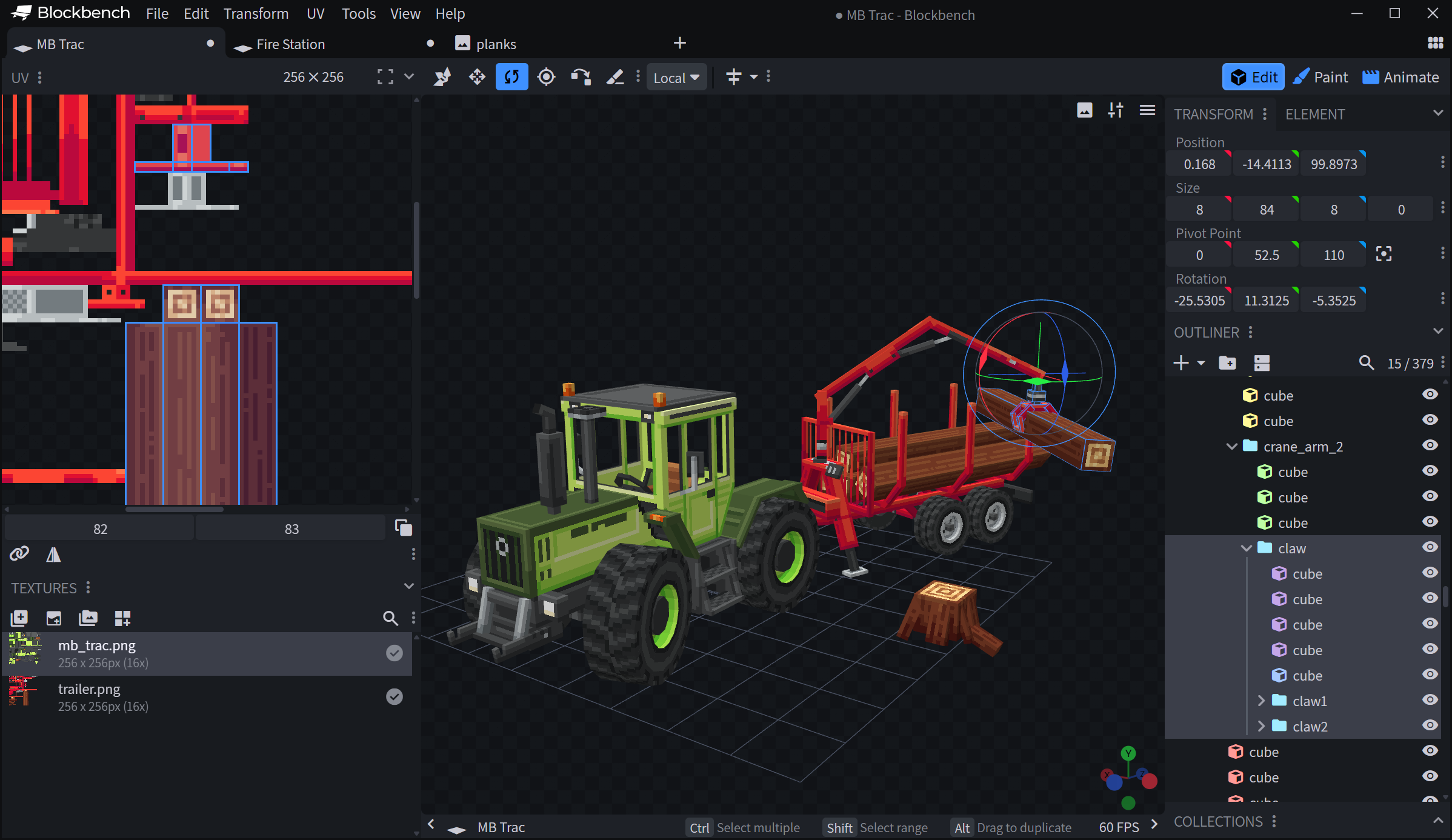
The payoff is speed for a specific style. An artist can go from a blank scene to a textured, animated, exported asset in one afternoon, because the tool commits to one slice of 3D instead of a full content pipeline.
Pencil2D
Pencil2D is a hand-drawn, frame-by-frame animation tool supporting bitmap and vector layers, onion skinning, and a redesigned camera system. Perspective grids and adjustable layer and keyframe opacity simplify fades. Exports go to image sequences and common video formats ready for slicing into spritesheets. It runs on Windows, macOS, Linux, and FreeBSD, and remains light enough for older hardware.
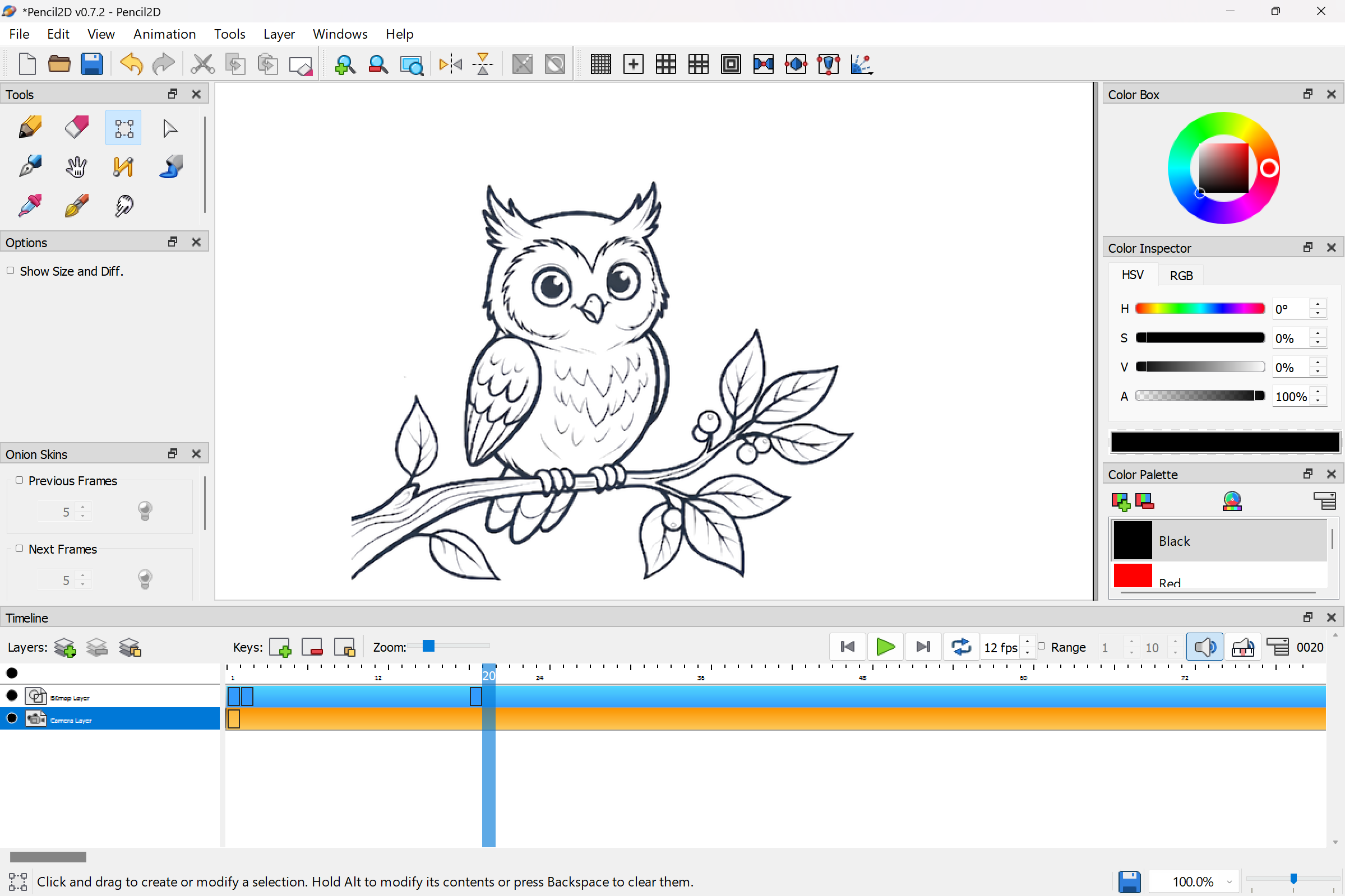
Roughing in raster strokes and inking on a vector layer above them happens in one timeline, no app round trip. The small footprint makes it a practical starting point for learning timing and spacing from first principles.
Pixelorama
Pixelorama is a pixel art tool built specifically for game development. Sprites, tilesets, and animations are first-class features, not bolt-ons to a paint program. Onion skinning, a tile mode for seamless patterns, and an animation timeline lead to exports of PNG sequences and spritesheets that drop directly into an engine importer. Built in Godot, it runs on Windows, Linux, macOS, and the web, including a browser build that works on a Chromebook.
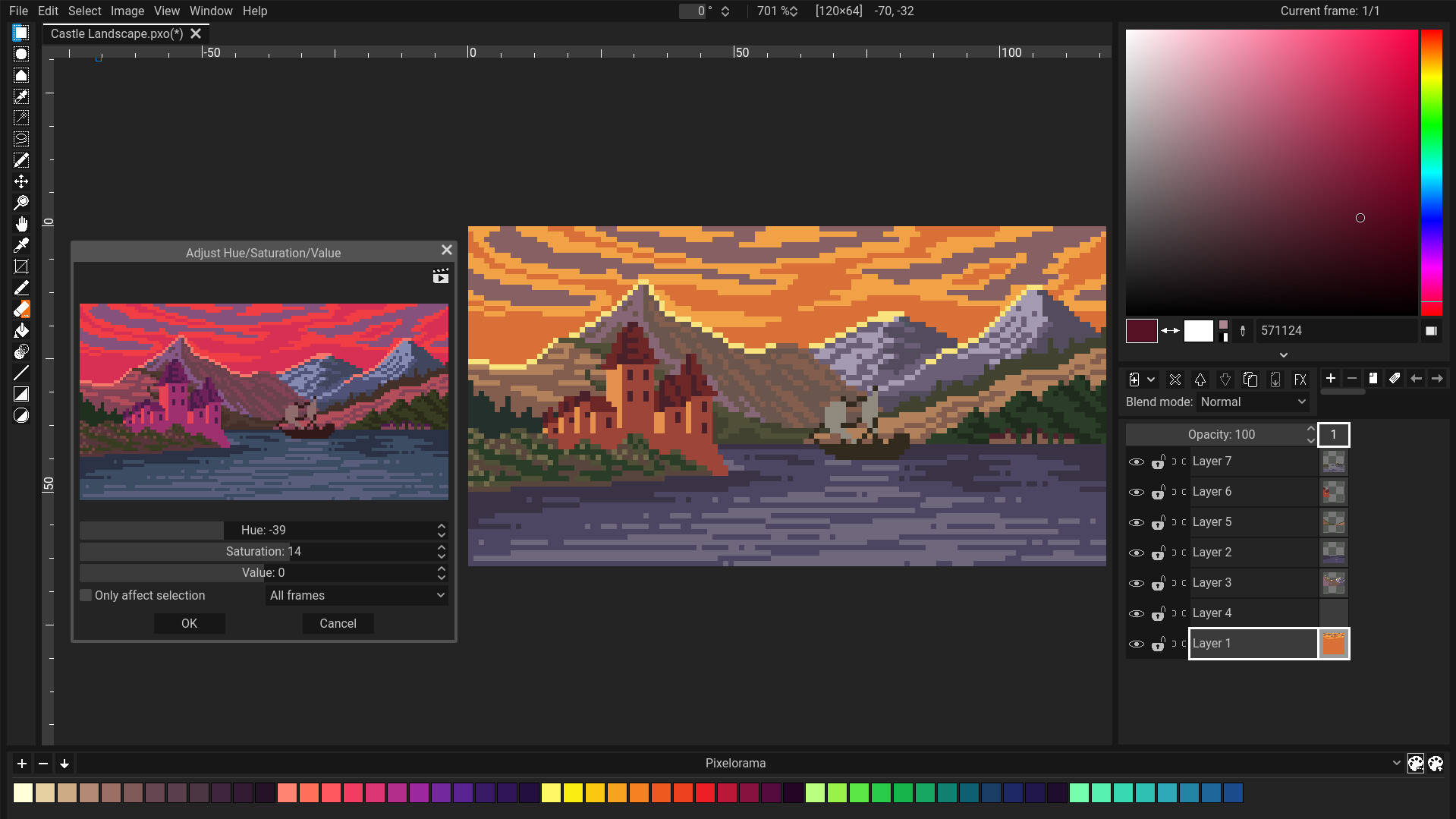
Because the primary units of work are sprites and animations, the path from idea to in-game frame is short. Tile mode, onion skinning, and the spritesheet exporter sit one click away on the toolbar.
Material Maker
Material Maker is a node-based procedural texture authoring tool. Generators, filters, and blends build a graph that outputs PBR texture sets for real-time renderers. Like Pixelorama, it is written in Godot, another case of an open content tool running on an open engine.
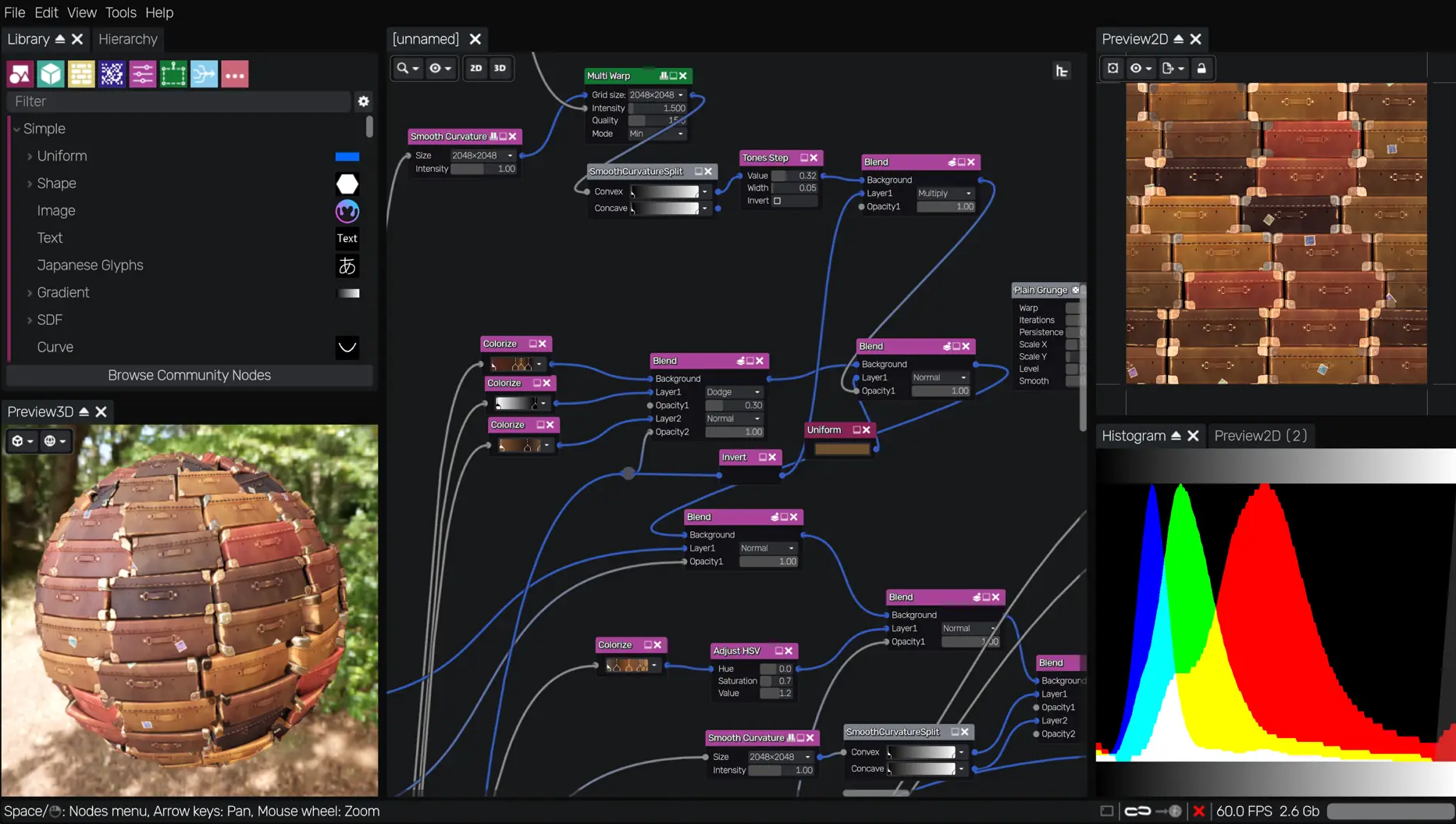
Procedural work replaces a one-off painted texture with a graph that can be re-tuned endlessly. Adjust the moss parameter and the same stone wall now looks weathered. Applied across every surface, texture work can scale with the project instead of fighting each art direction shift.
Level design
LDtk
LDtk is an entity-driven 2D level editor. Entity types are defined up front, auto-tiling rules are set, and enums keep data clean as a project grows. The design pushes toward workflows that survive production scale. Exports are clean JSON with official integration libraries for many engines.
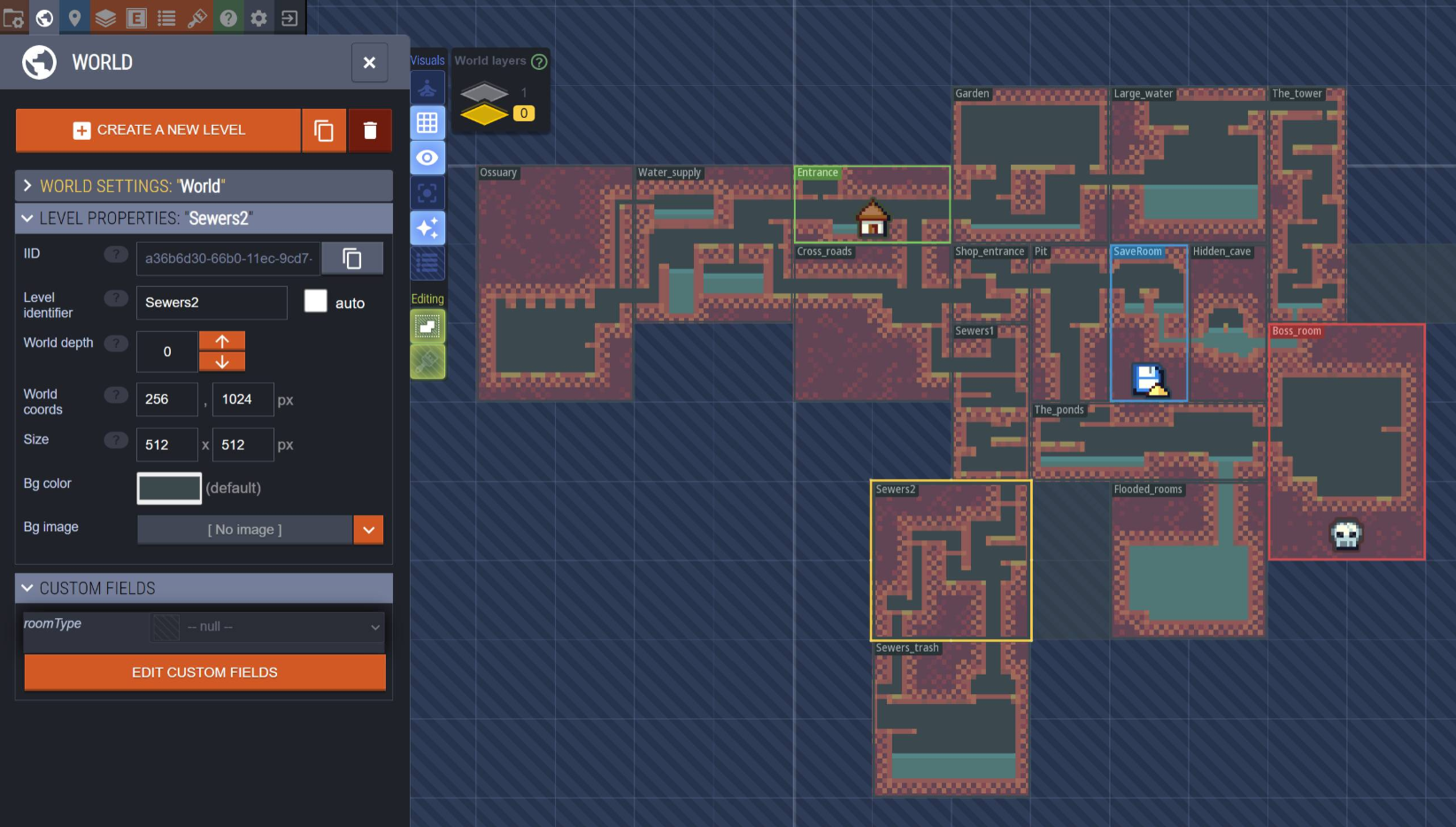
The entity-first model, auto-tiling rules, and typed enums push projects toward a structure that handles the messy middle of production. The constraints are the feature.
Tiled
Tiled is the long-running, broadly supported tilemap editor. It handles unlimited layers, configurable tile sizes, object layers with arbitrary properties, and exports both TMX and JSON. Engine-agnostic by design, native loaders exist for Godot, Unity, MonoGame, libGDX, Pygame, and more.
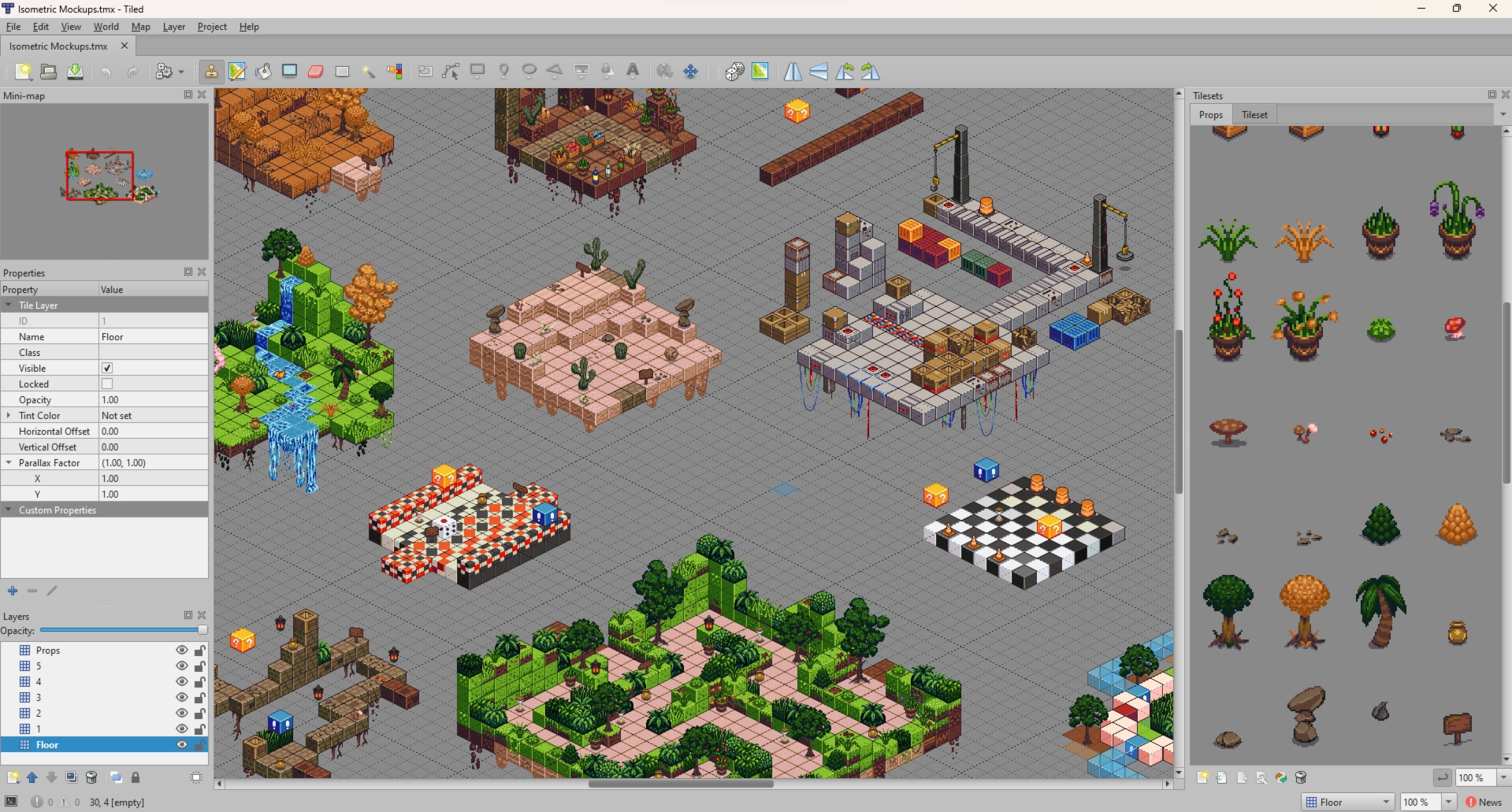
It does one thing and does it everywhere; a level designer learns Tiled once and carries that skill across projects. Over 15 years of development have produced a stable file format worth building a pipeline on.
Audio and narrative
Audacity
Audacity is the standard open source audio editor for cleaning recordings, trimming loops, batch converting, and chopping effects. It is multi-track and non-destructive, supporting the formats engines care about — WAV, OGG, FLAC, MP3 — with full sample rate and bit depth control. Spectral editing uncovers problems like room hum that a waveform view hides, and the macro system applies the same cleanup chain across an entire folder of SFX in one pass.
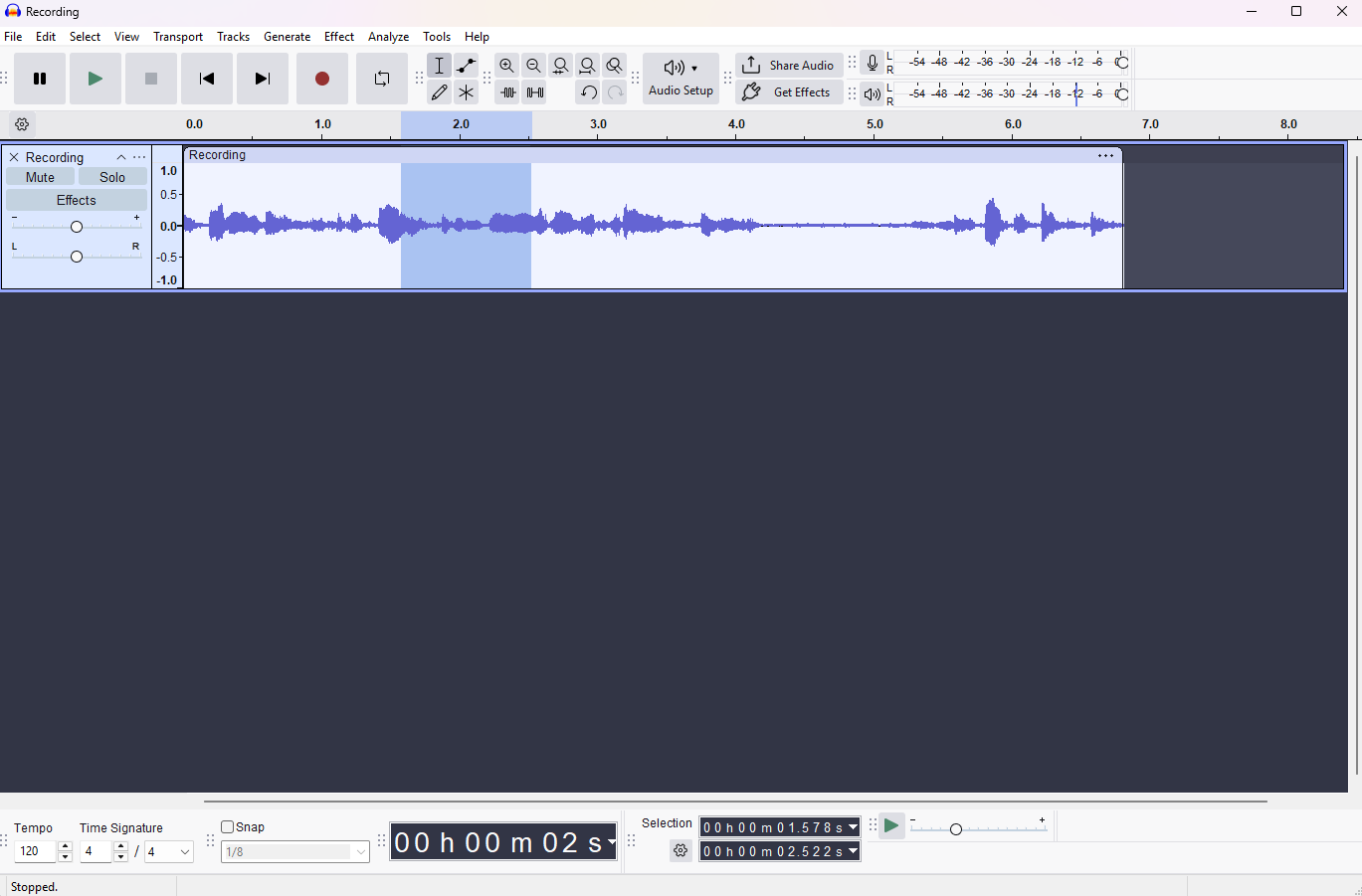
It owns the prep layer in front of any audio runtime: fast to launch, cut a loop, and export, which is exactly what an audio pass needs. The version 4 rewrite signals investment in the next decade rather than maintenance mode.
Yarn Spinner
Yarn Spinner is a dialogue system for branching narrative. Writers author in a markup language that reads like a screenplay; programmers wire up the runtime separately. Integrations exist for Unity, Godot, and a generic C# layer. It powers dialogue in Night in the Woods, A Short Hike, and DREDGE.
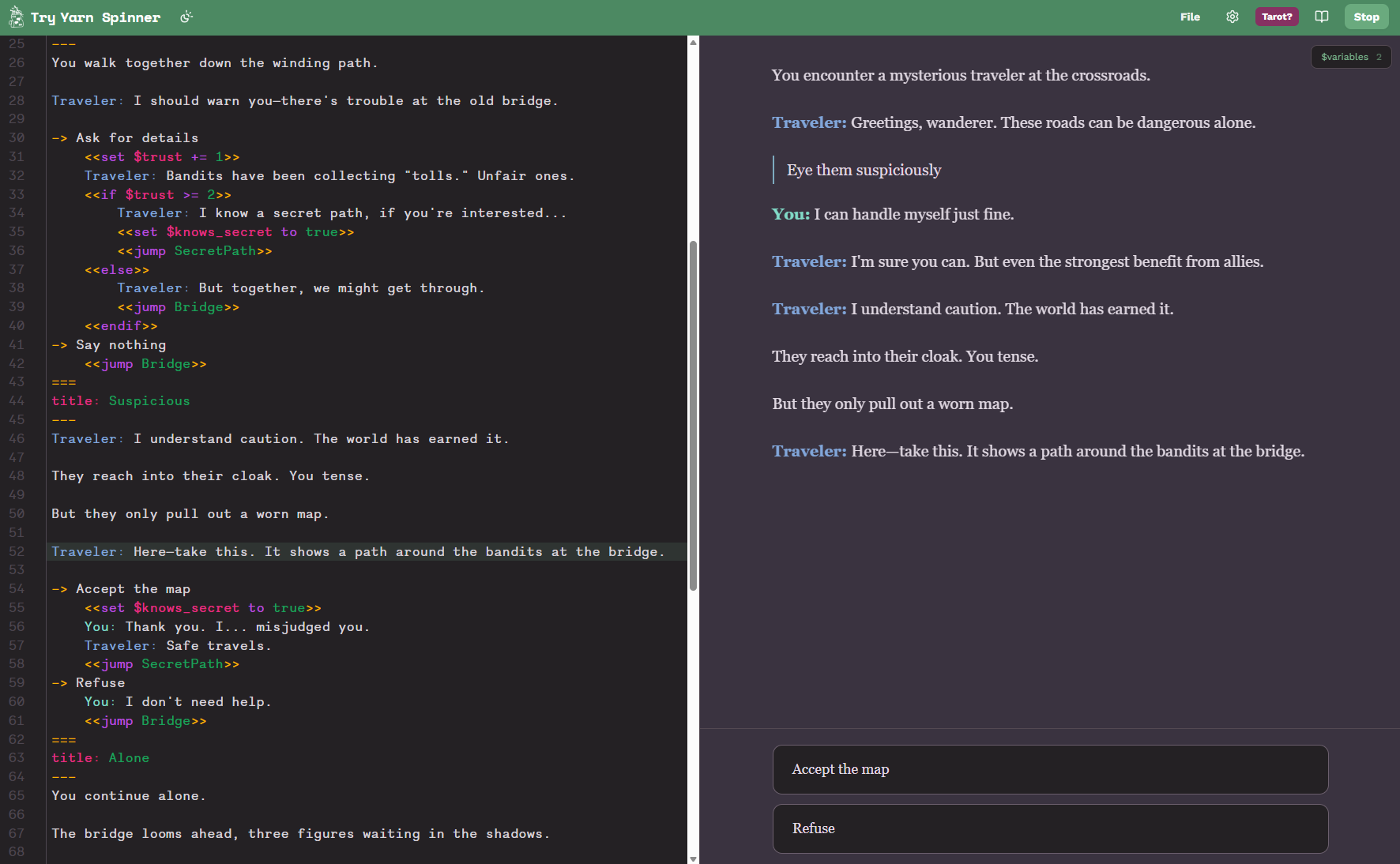
The writer's tool and the programmer's runtime stay on separate surfaces, making branching scripts of any size maintainable. A writer can own a dialogue layer end to end without waiting on engineering for every tweak.
UI and tooling
Gum
Gum is a general-purpose UI layout tool for in-game menus, HUDs, and screens. The visual editor handles anchoring, stretching, nested containers, and states for hover or pressed, exporting human-readable XML loaded at runtime. Native integrations exist for MonoGame, FNA, WPF, MAUI, Avalonia, and others.
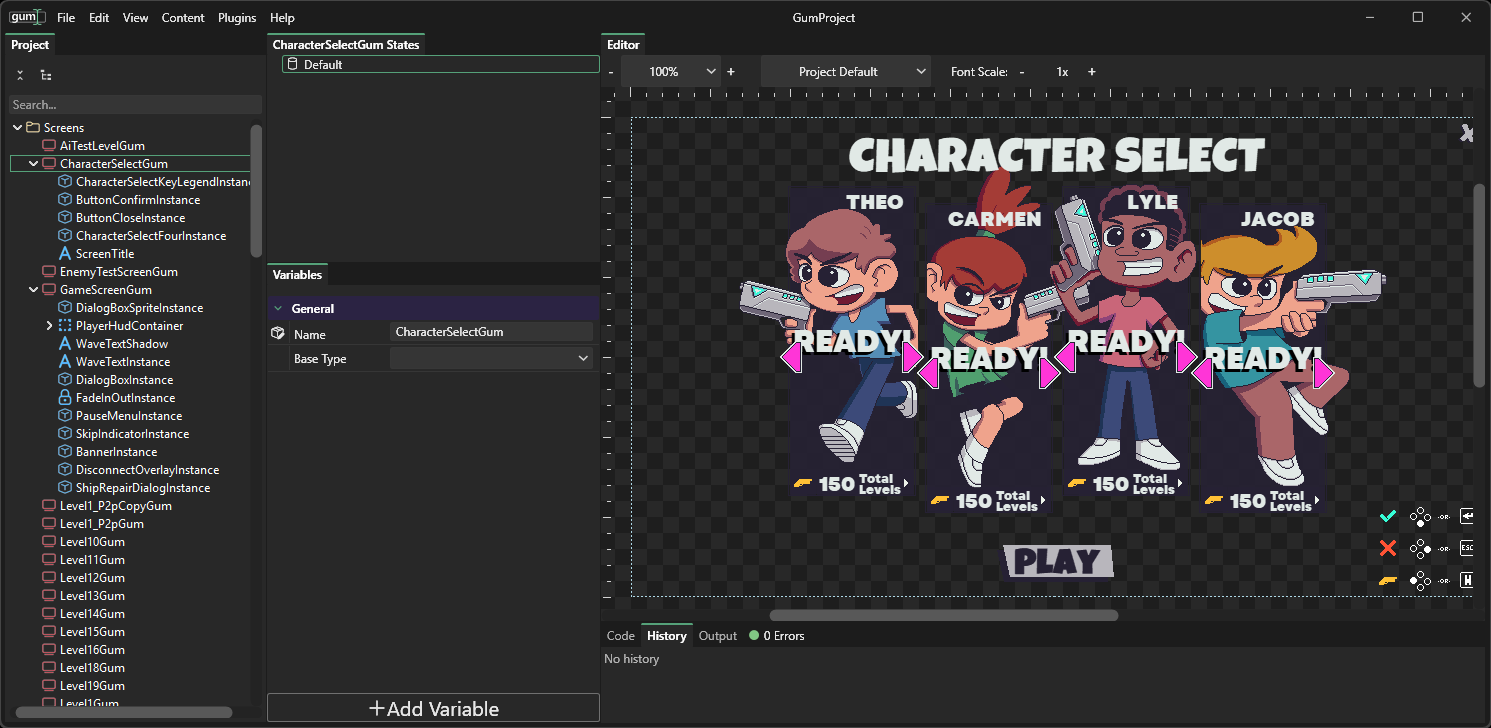
Engines may ship their own UI system, but in MonoGame, FNA, raylib, or lighter frameworks, menus are typically hand-written. Gum supplies a real visual designer with a small runtime, making it a default in the .NET game ecosystem.
Dear ImGui
Dear ImGui is an immediate-mode GUI library for building tools, debug overlays, and editors inside a game. It works in every engine, has bindings in over 30 languages, and assembles a debug panel in a few lines of code without layout system overhead.
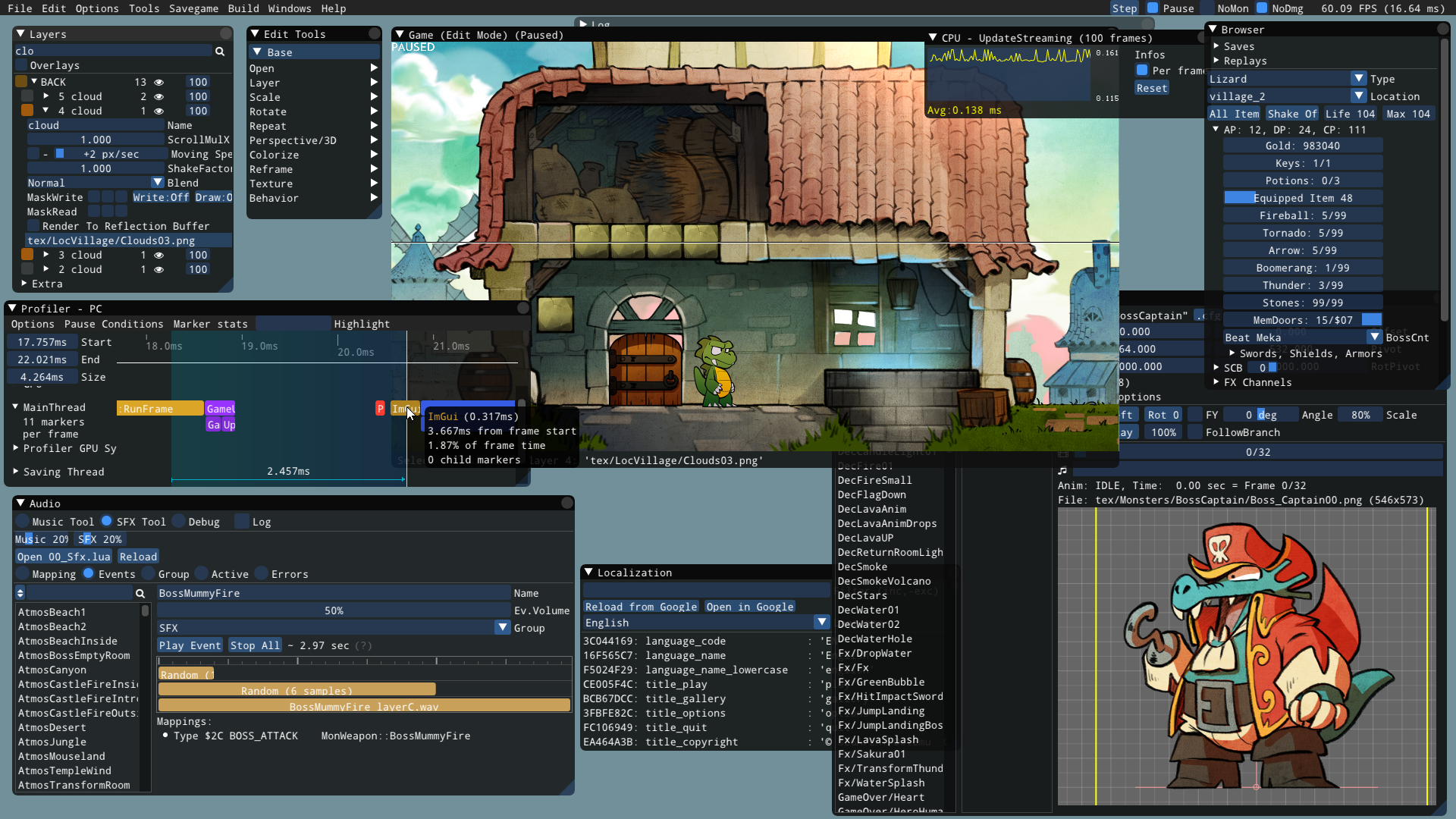
The immediate-mode model means no scene graph and no widget tree. Calling functions each frame collapses debug knob creation from half a day of plumbing to one line, which is why it became an industry default for game tooling.
Ways to support these projects
- Star the repositories. It is free feedback to maintainers that the work is used.
- File issues with real reproductions. A solid bug report is among the highest-value contributions.
- Contribute to "good first issues." Many projects tag them for newcomers.
- Sponsor a maintainer. Several projects accept funding through GitHub Sponsors.


