

September’s release highlights
September brought a steady stream of updates across GitHub’s platform, with notable releases for enterprise administrators and students alike. Alongside the general availability of GitHub Enterprise Server 3.2, the new GitHub Issues beta continued to evolve, and the education-focused GitHub Global Campus portal became the central hub for verified students.
Enterprise Server 3.2 goes GA
GitHub Enterprise Server 3.2 is now generally available, bringing a range of improvements for self-hosted deployments. This release focuses on administrative controls and developer experience, and while the full list of changes is extensive, key areas include enhanced security features and operational tooling for large-scale enterprise environments.
New hub for students: GitHub Global Campus
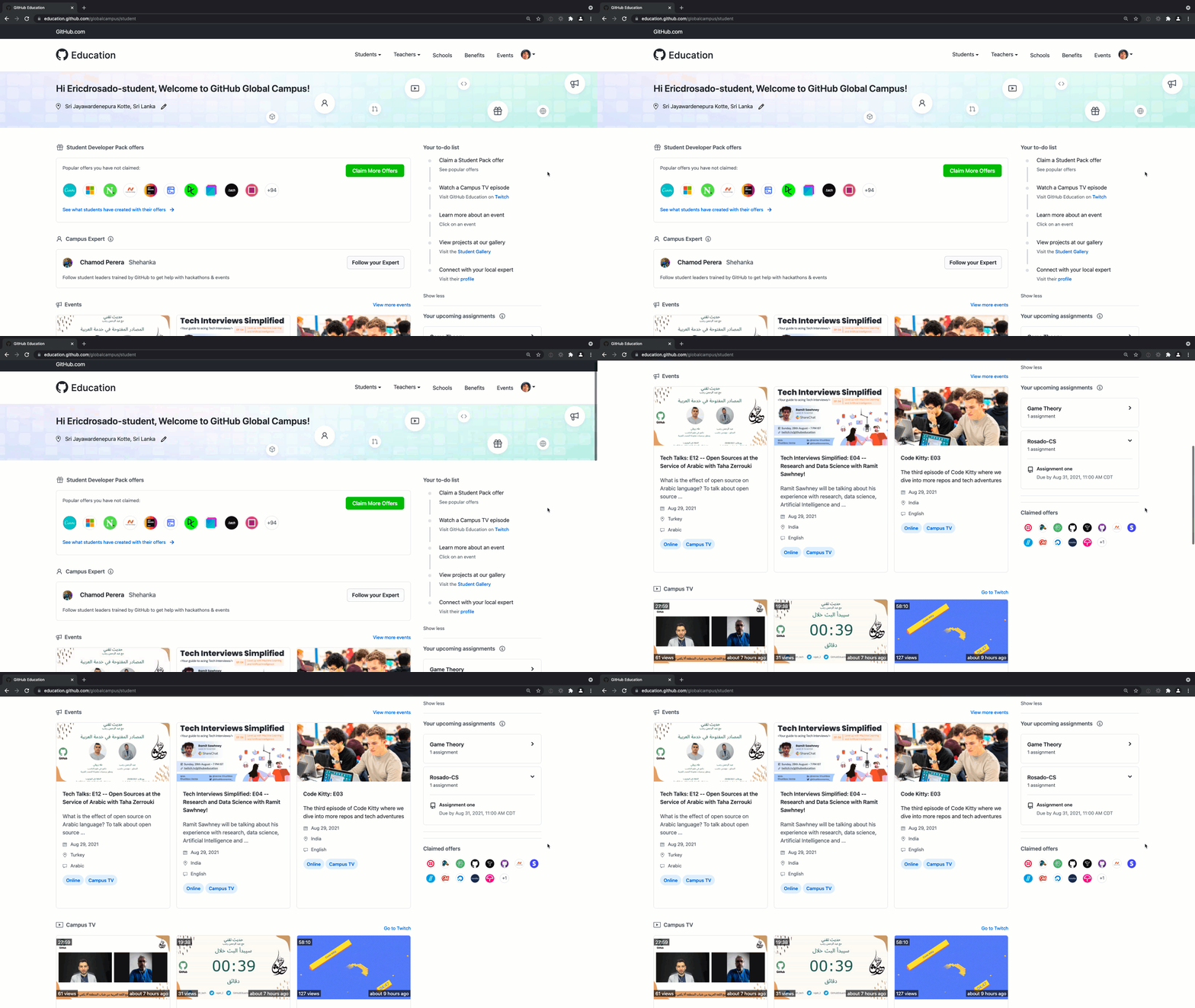
The GitHub Global Campus student portal is now the default destination for verified students. It consolidates community connections, access to industry tools, event discovery, and assigned coursework into a single interface. The education team published a detailed overview of the portal’s capabilities in a separate blog post.
Beyond these headline items, the September changelog included incremental updates to pull requests, code scanning, and Actions — mostly focused on usability refinements and bug fixes. For a complete rundown of every change shipped during the month, the individual changelog entries remain the authoritative source.
Organization Profiles and Fork Syncing
Organizations can now display a publicly visible README.md on their “Overview” tab, similar to individual user profiles. A documentation page covers the setup process.
Developers working with forks can now sync an out-of-date fork branch with its upstream repository via the beta merge upstream API, complementing the existing web UI option.
Code rendered with tab indentation now respects your personal tab size preference, configurable in the “Appearance” settings.

Actions, Runners, and CI/CD
September brought a wave of workflow enhancements. Workflow runs can now be filtered by creation date with the created filter (e.g., created:<2021-08-31), which is also supported in the API.
Deployment tracking is now integrated into the GitHub apps for Slack and Microsoft Teams. Teams get notifications for pending reviews, completed approvals, and real-time deployment status. Guidance is available for Microsoft Teams and Slack.
The setup-node action now supports caching dependencies in monorepo and pnpm projects via the optional cache-dependency-path field. Self-hosted runners get two upgrades: support for ephemeral (single-job) runners and a new workflow_job webhook, both designed to simplify autoscaling. The runner management experience has also been refreshed with new Runners and Runner groups pages that provide summary views and per-runner details.
GitHub Pages now serves IPv6 traffic for both *.github.io sites and custom domains. On the hosted runner side, macOS Big Sur (11) became generally available in August, and jobs using the macos-latest label have started migrating from Catalina (10.15). You can confirm which OS your job uses by checking the Virtual Environment information in the Set up job step. Finally, API authentication via query parameters is no longer supported with Actions; use the Authorization header instead.
Classroom, Discussions, and Markdown
GitHub Classroom’s Git and GitHub starter assignment is out of beta, with stabilized content. Teachers can now download a CSV file containing students’ GitHub aliases, roster identifiers, and grades.

Email notifications from GitHub Discussions are now easier to identify with a (Discussion #xx) marker in the subject line.
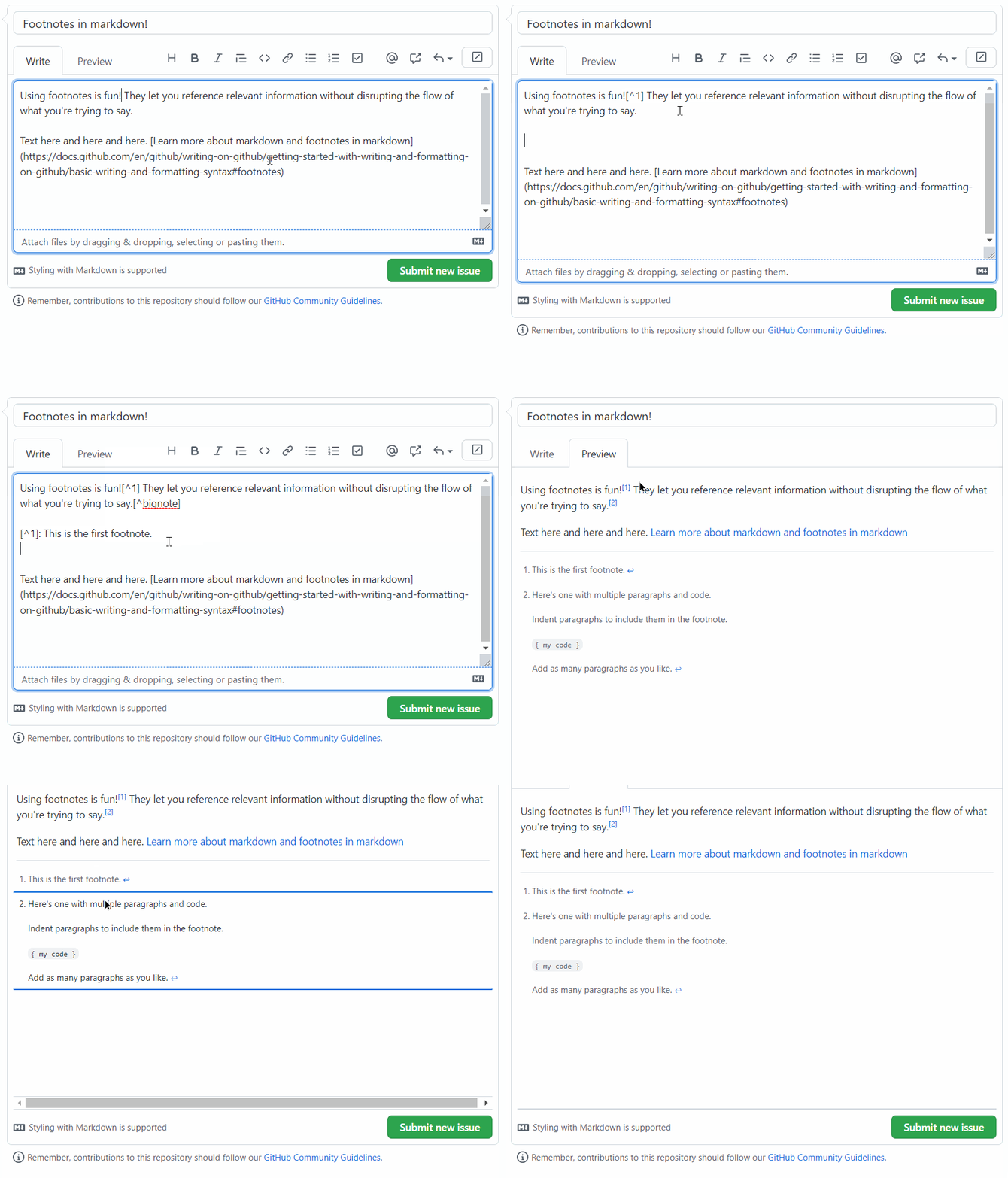
Markdown fields across GitHub now support footnote syntax, rendering as clickable superscript links. Gists with Markdown files also gained the ability to attach images and videos by pasting them into the body or using the dialog at the bottom of the file.
Enterprise and Security Management
Several enterprise features landed this month. The Services Continuity and Incident Management Plan for Enterprise Cloud is now self-service: enterprise owners can download compliance reports from the “Compliance” tab, and organization owners can view them from the “Organization security” settings.
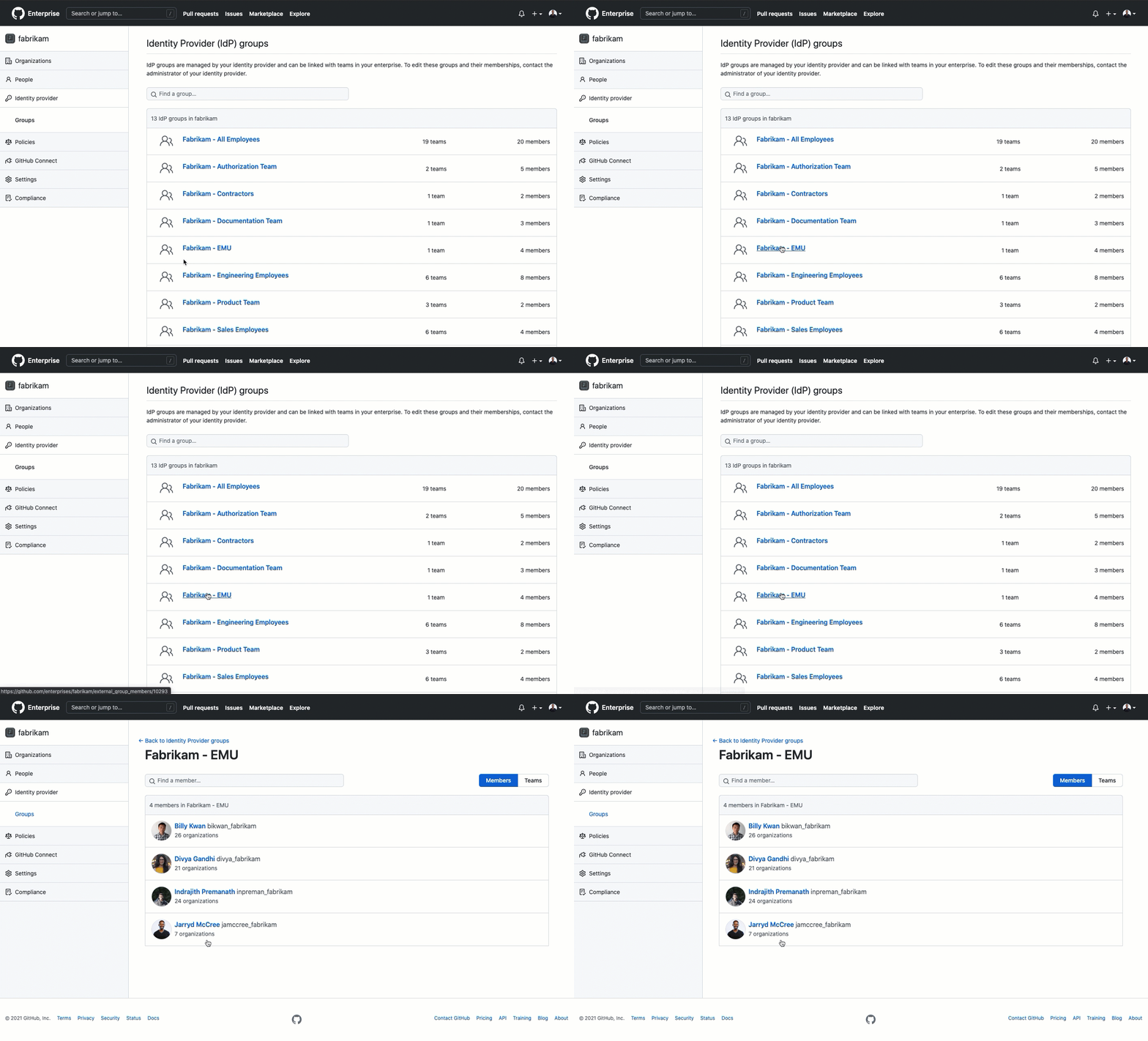
Audit log streaming entered public beta for Enterprise Cloud, allowing streams of audit log and Git events to Splunk or Azure Event Hub. Enterprise managed users (EMU) reached general availability, bringing centralized user and group management for cloud-based enterprise accounts. Enterprise owners can now invite organizations to join their account or remove existing ones, with self-service transfers requiring approval from both an organization owner and an enterprise owner. Git LFS can be toggled per repository via API.
Enterprise Server 3.2 is now generally available with over 70 new features and changes.
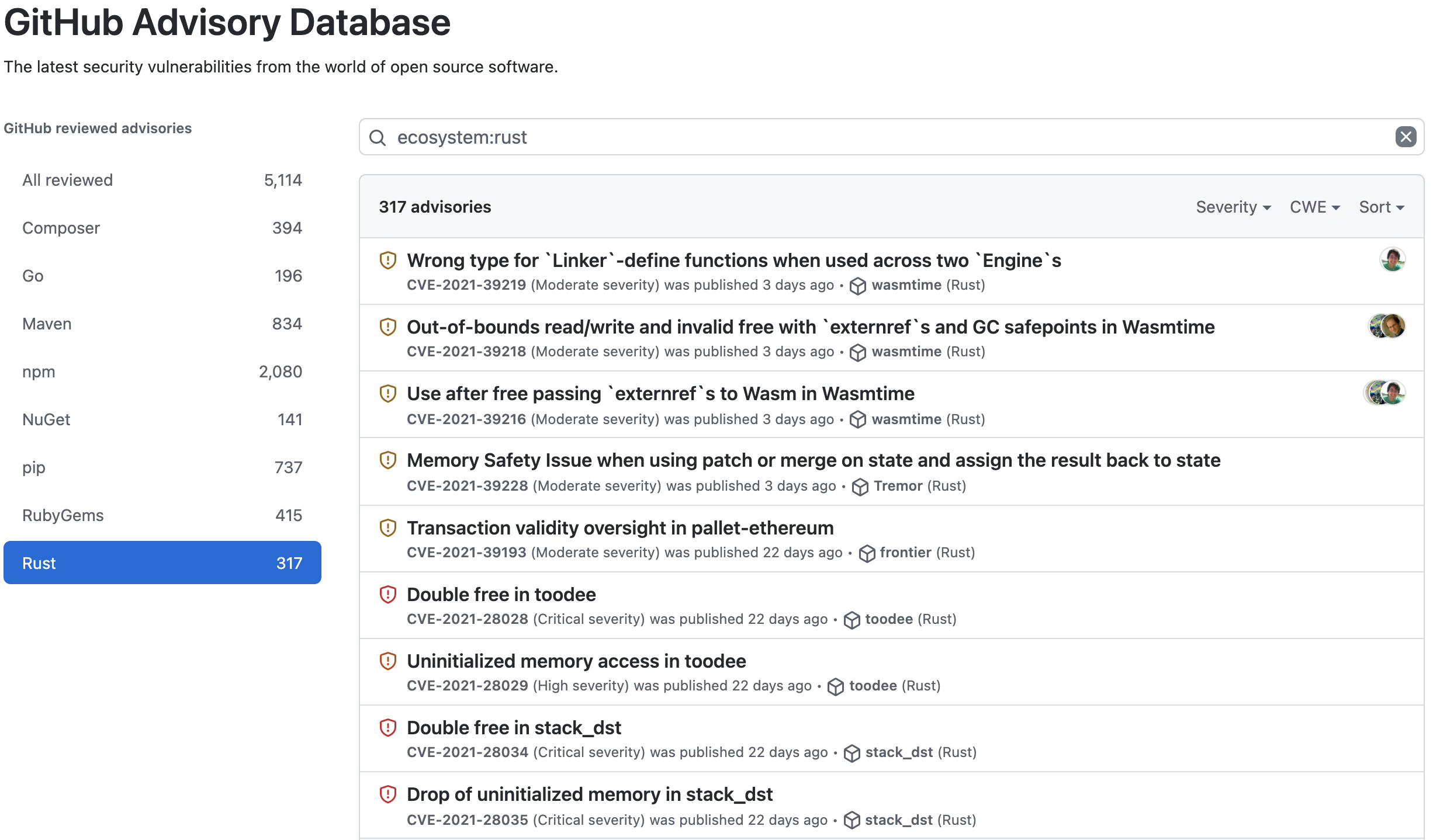
The GitHub Advisory Database now includes curated Rust security advisories, expanding coverage to eight ecosystems. Recover Accounts Elsewhere, a third-party 2FA recovery option, is being deprecated: new recovery tokens can no longer be stored, and existing tokens will stop working on December 1, 2021.
Secret scanning gained several capabilities: Advanced Security users can edit custom patterns at all levels, organization owners can view alerts across their organization in the security tab, and Contributed Systems joined the secret scanning partner program. Code scanning also saw updates: CodeQL runner functionality has been moved natively into the CodeQL CLI (runner is being deprecated), alerts can now be shown on pull requests for users of non-Actions CI/CD or on:push triggers, and CodeQL now supports Java 16 language features.
Issues and Repositories
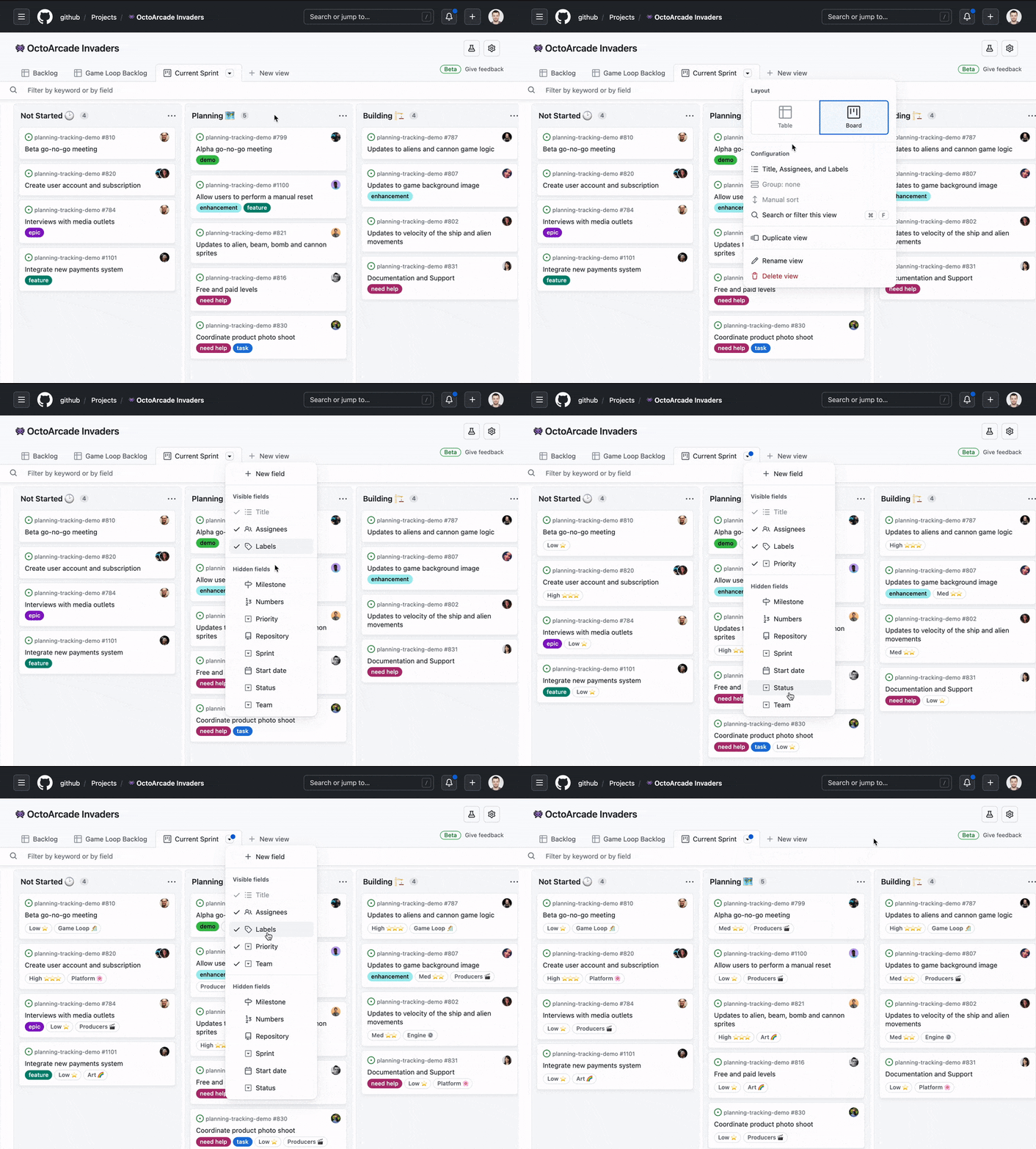
The new GitHub Issues (still in beta) received two rounds of updates. Users can now bulk-select and bulk-delete items in both table and board layouts, and customize which fields appear in the board view. Automated workflows got a new screen for customizing conditionals and methods, and completed tasks can be archived to keep context without clutter.
Repository management received a notable new GraphQL mutation, createCommitOnBranch, which simplifies adding, updating, and deleting files in a branch. Unlike the Git database REST APIs, this mutation eliminates the need to manually create blobs and trees before committing, and it can handle multiple files in a single call. Commits authored this way are automatically GPG signed and marked as verified. GitHub Apps can use the mutation to author commits directly or on behalf of users.
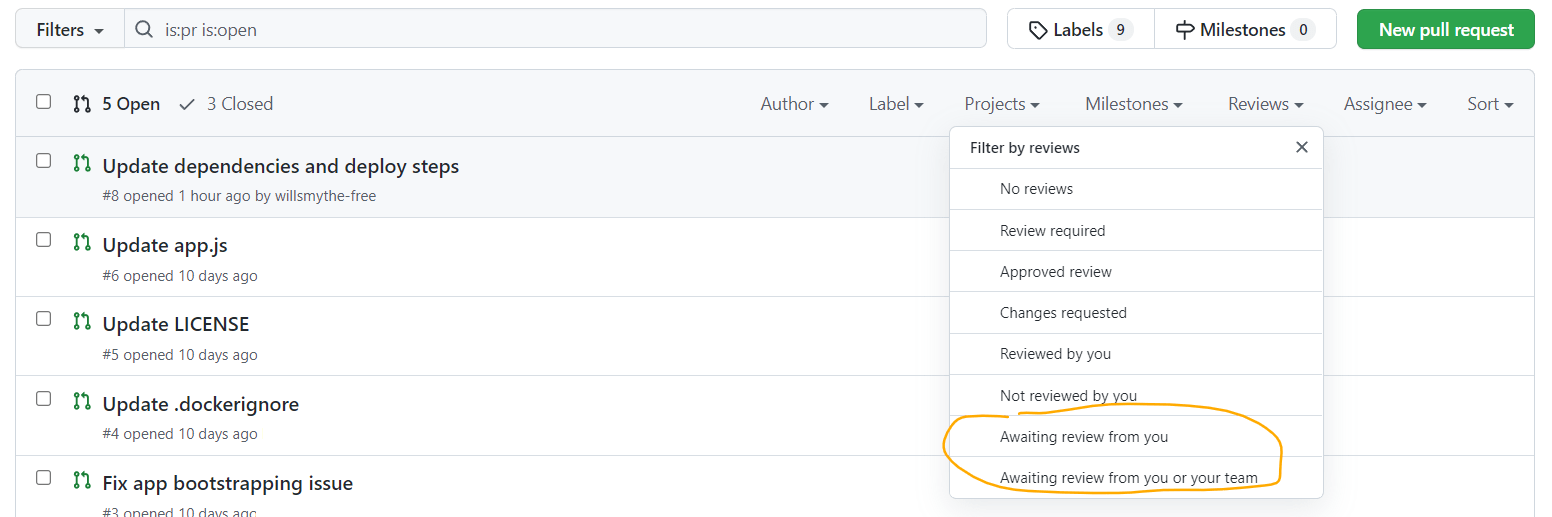
Code review assignment now supports additional customization, including limiting assignments to direct team members rather than child team members. Pull request searches can be filtered to only show items where you were directly requested to review. Other workflow improvements include: LFS usage per repository is now visible to owners, webhooks can listen for branch protection rule changes, filtered files on the “Files changed” tab are now fully hidden, and a new Copy raw contents button copies a file’s raw contents to the clipboard in one click.
Release notes now show an avatar list at the bottom for every GitHub account mentioned in the text.

Themes and Visual Customization
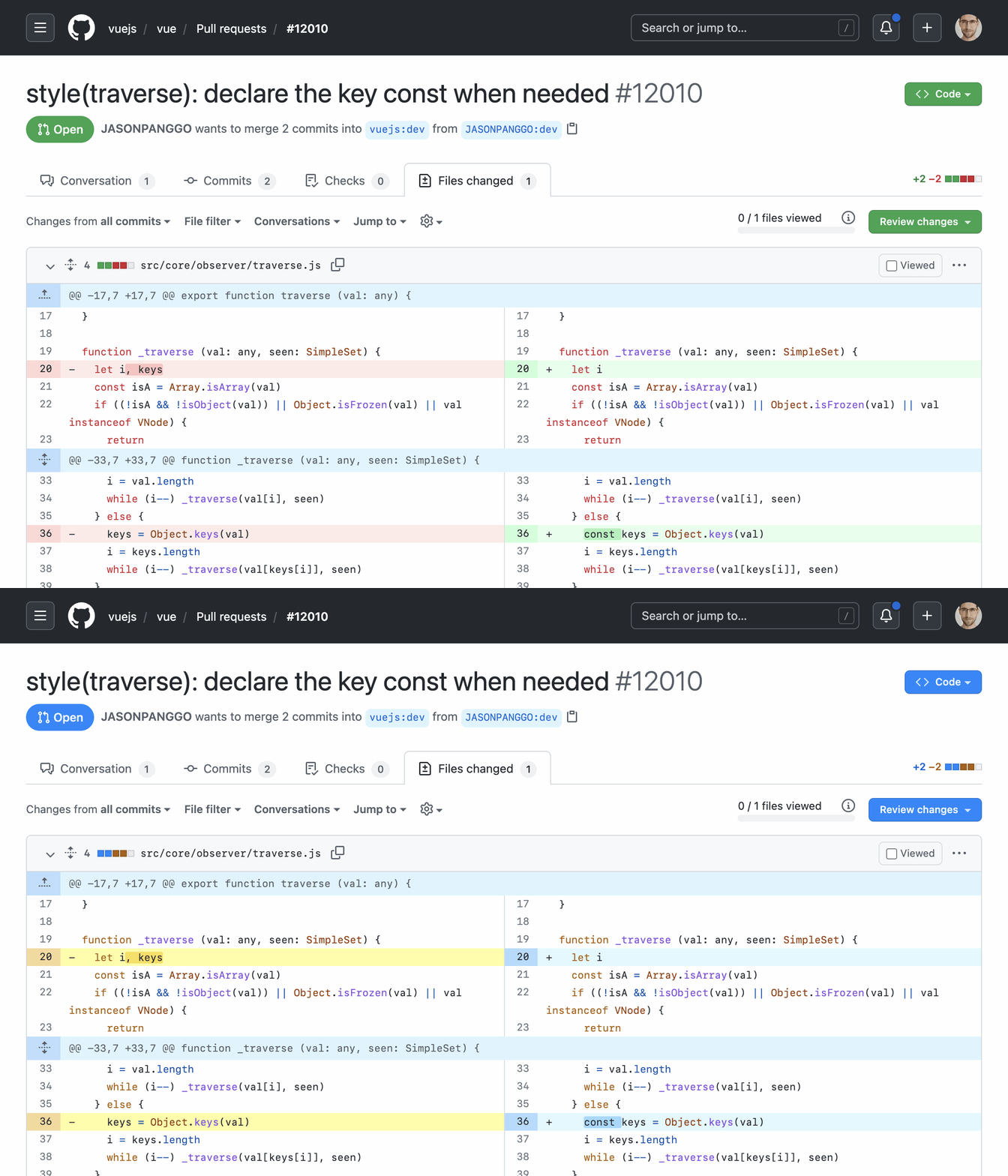
Two new colorblind-accessible themes, light and dark, are in public beta. They replace problematic color pairs, such as red/green with orange/blue, and can be selected in the “Appearance” page. Visual Studio Code users can install a new GitHub Dark High Contrast theme from the Visual Studio Marketplace.
npm Registry Updates
npm access tokens now follow the same format as GitHub authentication tokens, moving away from the 36-character UUID pattern that was harder to detect when compromised. The npm registry upgraded its public CouchDB instance on September 15, promoting a new replica to https://replicate.npmjs.com. This resets the CouchDB sequence number; users running npm install or other CLI commands will not be affected.


