

Why Remote Teams Need More Than Open Doors
For most of modern business history, opacity was the default: employees saw only what they needed to do their jobs. That expectation has shifted. Research published in Harvard Business Review frames transparency as a leadership imperative, and workplace surveys from companies like Slack and Tinypulse consistently show that employees rank openness among their top requirements.
“Transparency is the process of being open, honest, and straightforward about various company operations. Transparent companies share information relating to performance, small business revenue, internal processes, sourcing, pricing, and business values.”
— Forbes
Some organizations limit transparency to employees; others extend it to the public. In a remote company, the stakes are higher. With few or no in-person touchpoints, openness becomes a connective tissue: it lets distributed colleagues feel tied to each other and to the mission. It also counters timezone bias, because transparency relies on asynchronous records that everyone can consult regardless of when they work.
Make Information Findable by Default
Transparency is not the same as broadcasting everything. It’s about making the right information accessible without requiring a personal request. In practice, that means defaulting to shared, written artifacts over private messages or verbal updates.
- Write decisions down. A decision made in a video call is invisible to everyone not on that call. Capture the rationale and outcome in a shared document or wiki entry, and link back to it from the relevant project page.
- Record meetings. This does not mean forcing everyone to attend more calls. Recordings let people catch up asynchronously, and they reduce the pressure to schedule across timezones.
- Use open channels. Choose team-wide Slack channels or equivalent spaces over DMs for work discussions. If a conversation must start in a private message, summarize the conclusion in the public channel.
Share the Numbers Behind the Business
Financial transparency can feel uncomfortable, especially for newer remote leaders. Yet profit and loss data is a common starting point for companies that practice radical openness. Buffer, GitLab, and others have published salary formulas and revenue figures, treating them as governance tools rather than secrets.
You don’t have to publish globally. A workable middle ground is sharing key metrics with employees: revenue, churn, or customer satisfaction scores. The goal is to help people understand how their work connects to outcomes. Even simple dashboards, reviewed in a monthly all-hands, give employees context for prioritization.
Build Transparency Into Weekly Cadence
Transparency functions best as a habit, not an event. A weekly email or team meeting recap is a common pattern. Small rituals, repeated consistently, do more than an annual town hall.
- Weekly async update. Every team member posts three short sections: what they did, what they’ll do next, and any blockers. This creates a searchable history that also helps new hires see how work flows.
- Leadership Q&A. A recurring, moderated thread where anyone can ask about strategy or operations. Upvote questions to surface what matters most to the team.
- Monthly company metrics review. A live or recorded walkthrough of the business numbers. Pair it with a shared slide deck or spreadsheet.
Similarly, onboarding should teach transparency as a behavioral norm. New remote employees cannot observe how decisions are made by osmosis. Explicitly point them to the places where decisions and discussions live, and show them how decisions get recorded.
Balance Speed Against Openness in Meetings
Not every piece of information needs a meeting. In fact, meetings can reduce transparency if they rely on people absorbing information live. While there is still room for live discussion, managers should pair each meeting with a written summary and next steps.
Structure meetings around open questions rather than status updates. Status can be read in a shared doc; meeting time is better spent on decisions that genuinely require debate. This protects time and also keeps the recorded information consistent across the organization.
Avoid Performative Forms of Transparency
Sharing documents is only useful if they are the real source of truth. A common failure point is maintaining two versions of the same plan: one for leadership meetings and one for the rest of the company. When staff find out the public version is edited for them, trust drops sharply.
Likewise, be careful about how sharing is handled. Open financial data is a strong signal of trust, but it should be introduced after alignment on the consequences. If metrics include personal data, redact or aggregate them first. Cultural norms around data privacy vary from person to person, so defining what gets shared as a group, rather than imposing all transparency policies from the top, is important.
When Full Public Transparency Is the Goal
A few companies, like GitLab, go further and make most of their operation public. Their handbook is open, their product roadmap is visible, and even internal discussions can be accessed externally. This gives them an advantage in hiring because a candidate can evaluate the company before applying.
This level of exposure is not right for every business. Marketing plans, unreleased product research, and customer data can all be easily leaked, so full public transparency carries a trade-off between trust and competitiveness. What matters is choosing where your transparency line sits, then maintaining it consistently. Transparency is not about sharing all information, all the time. It is about building workflows that make it easy to discover what people need, when they need it, and that help you spot when you’ve drifted toward hiding information more than sharing it.
Putting Openness Into Practice
A remote workplace where nearly everything happens in private channels and direct messages creates silos and bottlenecks. People don’t know where to look for information, and they have to interrupt others just to find out what’s going on. The opposite approach — a team where work happens in hundreds of public channels covering every function — makes people feel more connected to the company’s overall mission. It also exposes questions to a wider audience, increasing the odds that someone unexpected has the answer.
Default To Open
- Onboard new employees on open working practices and gently nudge them to post questions and discussions in public channels.
- Create naming conventions for channels (e.g.,
#marketing-content,#marketing-design,#dev-qa) to keep the inevitable proliferation organized. - Remember that some things shouldn’t be public. HR matters like illness or performance, and anything that constitutes special category data under GDPR, must stay private. Be transparent about what won’t be open.
Prioritize Asynchronous Communication
Synchronous communication happens in real time — calls, instant messaging, in-person meetings. Asynchronous communication happens on each person’s own schedule, with no expectation of an immediate reply. Async work reduces roadblocks, increases flexibility, combats presenteeism, and reduces timezone bias. Crucially for transparency, it relies on written communication and documentation, which means the information trail is permanent and searchable.
Preferring async doesn’t mean abolishing meetings. It means making documentation and shared issue trackers the default place for work to happen. Documentation captures progress and decisions; issue trackers show what someone is working on and where they are in the process. Both are available to everyone without scheduling a call.
- Choose a project management tool that people actually like using — there are enough options that one should fit your workflow.
- Keep your issue tracker current, including links to in-progress work like Google Docs, Slides, and spreadsheets.
- Create guidelines and train people explicitly in async work — don’t assume it comes naturally.
- Encourage everyone to ask, “do I need a meeting for this?” and make async spaces the default.
- Document decisions so everyone knows what action to take and why.
Document Processes And Keep Them Fresh
Effective remote companies run on documentation. This matters more as the company grows: with a handful of people, everyone can just get on with work, but without embedded, documented practices, approaches to the same task proliferate. New employees can’t tell whose approach is right, and disagreements about the best way to do things surface as interpersonal friction.
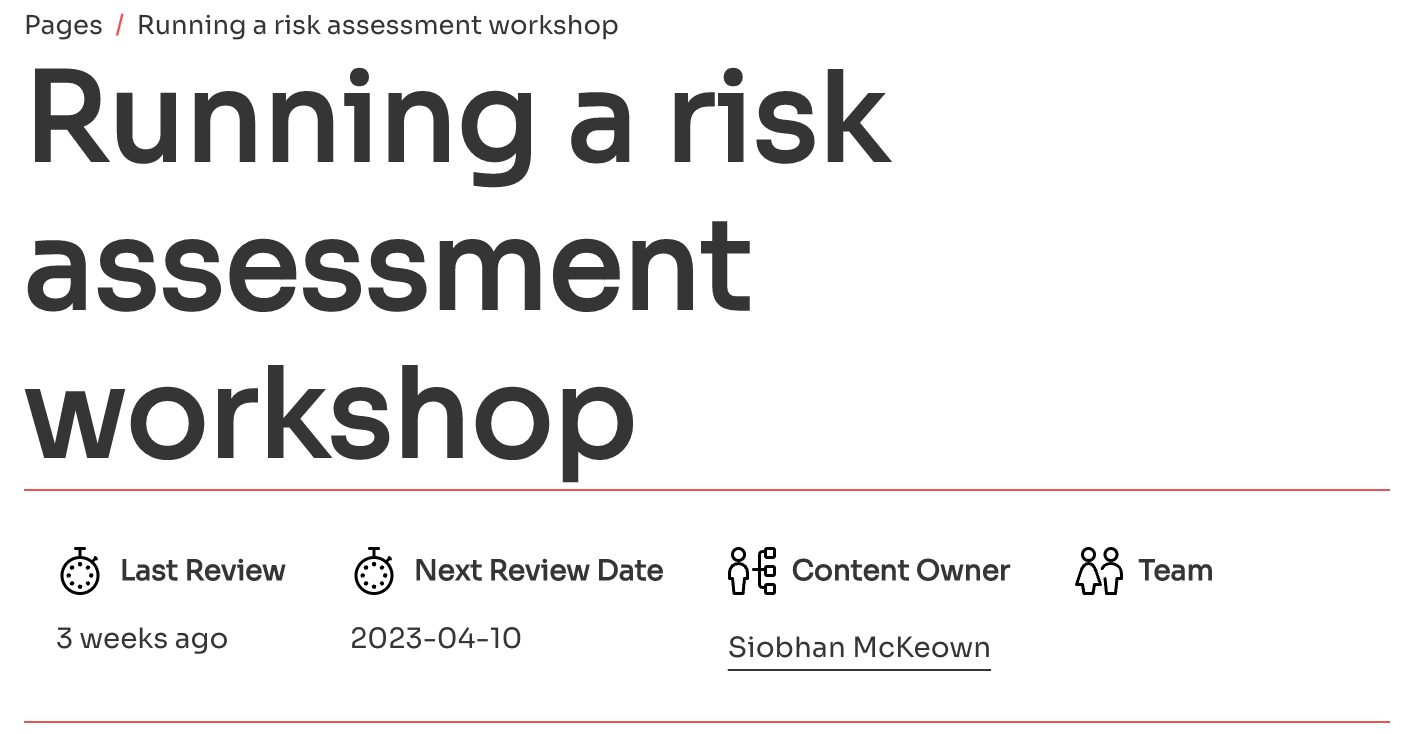
Good documentation creates shared expectations. A well-documented process should be a ladder, not a cage: it gives the steps to reach a goal but can be adapted to circumstances. It must also be current. Out-of-date documentation is worse than none, because it actively points people the wrong way. Keep documentation as concise as possible — only enough for a reader to achieve their goal. Anything else is maintenance overhead.
With solid documentation in place, employees don’t need a call to be walked through a process, and they don’t need to ping people to find an answer. It enables autonomous work and removes wasted time.
- Make sure your documentation tool supports easy navigation and updating; built-in version control is essential for seeing what changed.
- Add dates to documents so readers know when content was written. Consider adding expiry dates so process owners regularly review and refresh their material.
- Set clear expectations: if a process exists, it must be documented.
- GitLab’s “handbook-first” approach is a strong example worth studying.
Manage The Noise
Transparency creates a lot of information, and without structure it becomes an overgrown garden — everything is there, but you have to clamber through weeds to find it. Ten years into remote work, the volume of documentation and communication is staggering. If you’re early, build structures now that will scale: proactively manage your docs and tools before they become unmanageable.
- Create onboarding pathways for each role so new hires are stepped through exactly what they need.
- Keep your information architecture intuitive and consistent across tools like Google Drive and your handbook.
- Ensure your search actually works — most people will search for what they need.
- Set expectations about what to read thoroughly versus what can be skimmed or skipped.
- Create a single announcements channel or blog where only must-read company-wide items are posted.
Record Meetings And Take Useful Notes
Async-first doesn’t mean never meeting. But the content of meetings can be made transparent with minimal friction. Recording a meeting lets absent colleagues catch up fully, reducing the need for detailed minutes. Zoom’s built-in transcripts are good enough to scan. However, recordings aren’t for every occasion — knowing they’re being made can make participants more guarded.
Meeting notes themselves vary in format and purpose. Decide what someone who missed the meeting needs to know: decisions, actions, deadlines — or full detail if no video exists. Clarify who takes notes and whether that role rotates.
- Always have an agenda, and require anyone who adds an item to also write a summary with supporting links.
- Use a standard meeting template so everyone knows what to provide and what to look for when reading notes.
- Ask whether notes are needed at all. If actions are captured in the issue tracker, a video may be sufficient.
Onboard People To Transparency
Transparency is a shock to the system for people coming from less open organizations. New hires face a mountain of accumulated information, years of async communication, and notifications. They may feel vulnerable about asking “stupid” questions in public channels. Managers need to help them climb that mountain, not assume they’ll just adapt.
- Be explicit about what to read and what to skip; otherwise motivated people will try to absorb everything.
- Discuss transparency in onboarding: why it matters and how the company practices it.
- Respect a new employee’s comfort level. Some engage publicly immediately; others need to start in DMs and move gradually.
- Create role-specific pathways or tables of contents for required documentation and training.
- Provide guides on transparent working, including documentation and issue-tracker best practices.
Automate With Integrations, APIs And Bots
Integrations, APIs, and bots move information automatically between tools and prevent it from being stuck in silos. When sourcing a new tool, check which integrations it has — or whether it has an API for building a custom one. Zapier is a simple bridge for connecting tools without development.
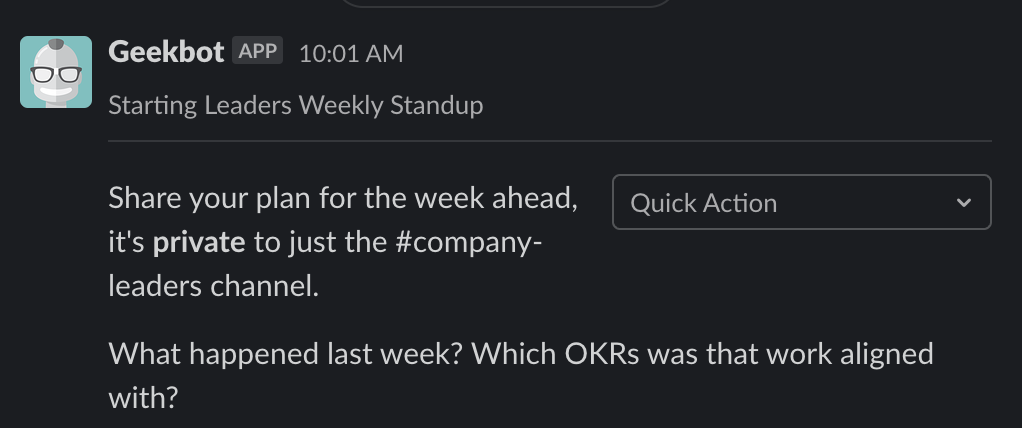
Bots also remove the need for people to manually run processes. Tools like geekbot can handle standups, and donut facilitates social connections like pairing colleagues for coffee. Integrations can pipe posts from GitHub or Hubspot into Slack or Teams. Beware of bot fatigue, though: if standups or other automated prompts aren't used well, they become a bureaucratic chore nobody enjoys.
- Find bots that suit your organization — Slack and Teams both have large bot ecosystems.
- Check integrations before signing up for a new tool and consider future use cases.
- Connect your issue tracker and other async tools to your messaging app so activity appears in relevant channels.
- If bots create excessive notifications, set up firehose channels that only pipe in automated output from a specific tool.
Build Feedback Into The Culture
Openness without feedback skills becomes toxic. Drive-by criticism from people lacking context, or cryptic one-liners saying something isn’t good without explaining why, makes people reluctant to share work in progress. Vague feedback requests like “what do you think?” rarely produce useful responses either. Teams need to be equipped to give constructive, specific feedback and to receive it without defensiveness, understanding that the recipient ultimately decides whether to act on it.
- Set company-wide expectations about when feedback is welcome — always, or only when explicitly requested.
- Be specific about what you want feedback on: design, content, tone, structure, or message.
- Adopt a few feedback frameworks that fit your company; Radical Candor and Situation, Behaviour, Impact are common options, but whatever you choose should be simple enough for anyone to use.
Embed Transparency In Leadership
Transparency is a culture, not just a practice. Writing it into company values is a start, but it must be behavior. Leaders set the example: if leadership runs everything through DMs, hoards information, and works in silos, so will everyone else. When leaders default to open communication, async practices, and information sharing, they create an environment others follow — saying you value transparency isn't enough from a CEO or founder; they have to practice it.
- Write transparent behaviors into leadership expectations, such as role descriptions or behavior frameworks.
- Gently move discussions from private spaces into public channels when appropriate.
- Acknowledge transparent behavior publicly, for instance through a kudos bot or as part of a career progression framework.
Finally, full transparency isn't for everyone. Companies can choose what to share — salaries, financials, or public-facing information — and what to keep private. The point is less about sharing everything and more about being upfront about what is shared, what isn't, and why. In remote work, though, even partial transparency dramatically improves how employees work together.
When Openness Backfires
Transparency is not a one-way street. Done poorly, it creates real operational drag and psychological strain. Before rolling out more open practices, it’s worth planning for the known failure modes:
- Decision-making slows down as input pools widen.
- Employees suffer from communication fatigue and overload.
- Constant visibility makes people feel exposed and vulnerable.
- Some staff hide work-in-progress to avoid scrutiny, even when there is nothing to hide.
- Experimentation drops because people avoid risk or vulnerability in front of peers.
- Administrative overhead grows: meeting notes, documentation, and issue trackers all demand upkeep.
- Sharing financial data can trigger anxiety during downturns.
- Creative work suffers from premature self-censorship.
- Recording or sharing all meetings can suppress honest debate.
Researcher Ethan Bernstein calls this the “transparency trap”. His work shows that the best organizations find a middle ground between full visibility and protected privacy, getting the benefits of both. The key is to introduce boundaries that preserve privacy in specific areas while retaining the upside of openness elsewhere.
So, however transparent you intend to be, keep these trade-offs visible. Design for transparency that informs without overwhelming, and that empowers rather than exposes your team.

(ah, yk, il)
Explore more on


