

GitHub’s new developer experience starts with AI
“Hey, GitHub!” is an experimental project from GitHub Next that adds voice-based interaction to Copilot within VS Code. The goal is straightforward: bring the benefits of an AI pair programmer to more developers, particularly those who find typing with their hands difficult. It is currently limited in scope, but interested developers can join the waitlist to provide feedback.
On the broader Copilot front, individual developers have had access since general availability. Now, the company is preparing to introduce GitHub Copilot for business. This offering adds administrative controls for organizations that purchase and manage seat licenses.
Enterprises will be able to configure Copilot settings for their teams, and GitHub has published research quantifying the impact on developer productivity and happiness. The benefits go beyond simple speed; Copilot’s understanding of natural language and code helps developers focus more on business logic rather than boilerplate, opening up new approaches they might not have considered otherwise. A waitlist is open for organizations wanting to test it.
Codespaces and code search for the every-day developer
Getting a local environment configured remains a hurdle for many developers. GitHub is expanding access to Codespaces by making it available to all individual users on Free and Pro plans, with 60 hours of free usage per month. This removes the need to own powerful hardware or manually set up dependencies. Cloud-based environments mean developers can spin up a ready state and start building in seconds—an approach that can notably reduce onboarding time for new contributors to any repository.
The experience is also becoming more flexible. Through a partnership with JetBrains, developers can use their preferred IDE, while JupyterLab is now available in public beta to serve the machine learning and data science community. This is more effective when paired with GPU-powered Codespaces, which is available in private preview for early access.
A complementary update targets code search and code view. The new search interface has been built to handle complex queries, complete suggestions, and filter results at speed. Code view has a new design closely integrating browsing and navigation, placing the code you are looking at in the context of the whole repository. The combined features help developers traverse code and find answers faster directly on GitHub.com. These are also available via a waitlist.
A stronger Projects and planning framework
Since the overhaul of GitHub Projects, the company says it has released more than 100 new features and updates. The core promise of Projects is adaptability: a planning tool that fits into existing workflows while still allowing teams to improve processes. It is built with issues at the foundation.
Three notable enhancements target structure and mobility:
- Roadmap views add a timeline dimension beyond traditional tables and boards. Teams can visualize items across a timespan, which helps monitor progress toward major deadlines and communicate plans with stakeholders.
- Tasklists is a reworked UI for complex checklists. Tasks can display metadata like assignees and labels, split into subtasks, and be converted into full GitHub Issues with a single click. This is also deeply integrated with Projects, with new
tracked byandtracksfields to map the hierarchy of parent and child issues. The underlying data remains simple Markdown. - GitHub Mobile improvements mean Projects can now be managed entirely from a phone. Users can access recent projects, edit custom fields, and switch between views on the go. This release also brings Actions triggers and the ability to edit files in pull requests to the mobile clients. These features are available now via the Google Play Beta and iOS TestFlight channels.
Roadmap and Tasklists are structured as controlled rollouts, with testers accepted via waitlist. With the portability of mobile, the portability of cloud environments, and the speed of the new search tools, the latest Universe updates reflect a push toward helping developers stay closer to their primary tasks rather than ancillary tooling.
Enterprise control and scale
GitHub's enterprise offerings are built around observability and managed access, whether your organization runs on GitHub Enterprise Cloud or a self-hosted server.

Access administration
Fine-grained personal access tokens are now generally available for organizations. Administrators can set approval policies, while developers gain individual repository targeting and fine-grained permissions, reducing the attack surface from leaked credentials. Enterprise owners can also now enable authentication token data in their audit log to trace activity back to specific tokens, helping to detect and isolate compromised credentials.

CI/CD modernization
GitHub Actions continues to mature as a CI/CD platform, with over 10 million builds running daily across Linux, Windows, and macOS. For larger workloads, the beta of larger GitHub-hosted runners offers up to 64 cores and 256 GB of RAM in Linux and Windows environments.
For teams migrating from other platforms, GitHub Actions Importer is now free for all customers. Distributed as a Docker container with a GitHub CLI extension, it automates much of the migration process for existing CI/CD footprints, eliminating tedious manual work.
Expanded platform support
In partnership with Arm, GitHub Actions now natively supports Arm Development tools—including the cross-compiler and Arm Virtual Hardware—in cloud-hosted runners, enabling efficient CI workflows for Internet of Things software development.
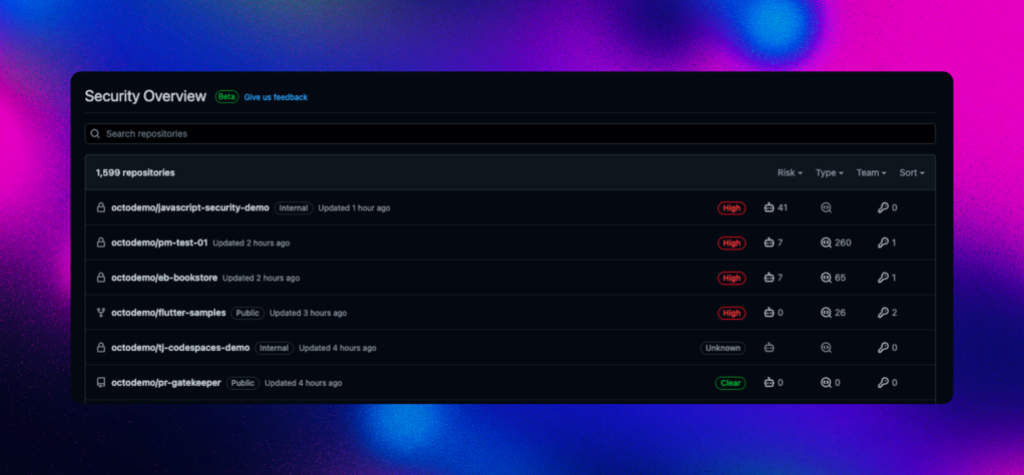
GitHub Enterprise Server 3.7 is now generally available for self-hosted deployments, bringing over 70 new features. Highlights include the security overview dashboard for all enterprise customers, support for nested reusable workflows, and new innersource policies that can restrict repositories to organizations and permit multiple forks within a single organization.
Strengthening the development lifecycle
Securing the software supply chain requires visibility into vulnerabilities and coordinated response. GitHub's recent releases target both ends of that problem.
Private vulnerability reporting
Maintainers of public repositories can now enable private vulnerability reporting. This provides a standardized, confidential channel for security researchers to submit issues directly within GitHub, replacing scattered emails or public disclosures. Repository owners can assess and address reports within their existing workflow.
Ruby security analysis
CodeQL support for Ruby has exited beta and is generally available by default in code scanning on GitHub.com, the CodeQL CLI, and the VS Code extension. Improvements during beta include doubled default query coverage, out-of-the-box coverage for all Ruby-related OWASP categories, and optimized performance: 90% of beta users run their tests in under five minutes, averaging nearly 5,000 tests per day.
To promote community involvement, the GitHub Security Lab Bug Bounty Program is offering a $2,000 bonus for the first 10 CodeQL queries targeting Ruby open source projects that score High or Critical. Submissions are accepted until March 31, 2023.
Sharper security visibility
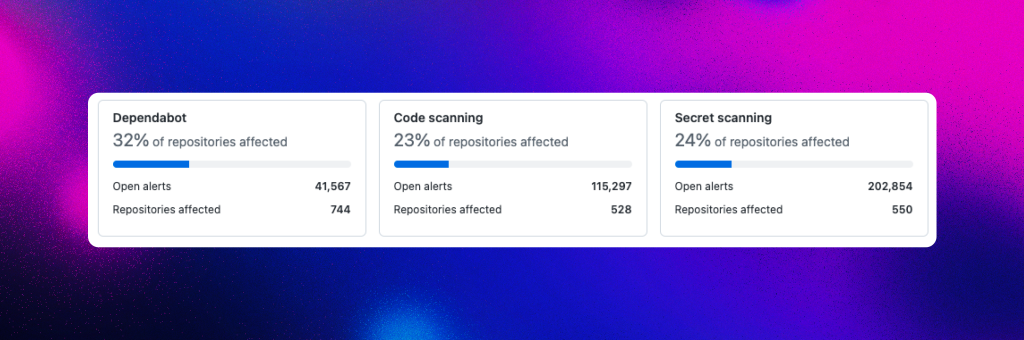
For GitHub Enterprise users managing many repositories, security overview introduces two new views. The coverage view tracks enablement of security features across all repositories, while the risk view consolidates alerts for a comprehensive posture assessment. Dynamic filtering by team, alert type, or severity supports prioritization of remediation efforts.

Investing in the people behind the code
Open source runs the world's software, but the developers who build and maintain that software often struggle to make it a sustainable career. GitHub's recent announcements target that gap with a series of programs designed to fund, mentor, and support maintainers. This includes a stipend program for full-time open source work, a new venture fund, and a bulk sponsorship feature for GitHub Sponsors.

The GitHub Accelerator is now accepting applications for 20 maintainers and teams who want to turn open source from a side project into a full-time career. Selected participants receive a full stipend and mentorship, with an emphasis on building enterprise-focused startups through GitHub Sponsors. Applications close December 31, 2022.
A separate initiative aims at the broader funding ecosystem: the M12 GitHub Fund, a new $10 million investment vehicle, will back open source companies. The goal is to ensure that today's developers and maintainers have the resources to keep open source vibrant tomorrow.
On the day-to-day side, GitHub Sponsors is working toward a bulk sponsorship feature. Earlier this year, GitHub used an internal version of this tool to contribute half a million dollars to 900 of its own dependencies. The public version, coming soon, will let users upload a list of maintainers and dollar amounts and check out in a single transaction, rather than one sponsorship at a time. That removes a significant hurdle to supporting multiple projects, and two of the three programs depend on it, so it's likely to be valuable to a wide range of developers.
Together, these programs formalize a growing connection between commercial interests and open source communities. The 2022 Octoverse report shows just how close that connection is: 90% of the top open source projects by contributors are now commercially backed, and first-time contributors increasingly choose those projects. On a lighter note, GitHub has also open sourced its signature typefaces, Mona Sans and Hubot Sans, for anyone to use.


