

Two Camps Under One Name
Brutalist web design has become one of the most talked-about trends online, yet it remains one of the least clearly defined. Major brands have adopted the aesthetic, directories catalog it, and awards celebrate it. But browse through any collection of so-called brutalist sites and you will quickly notice a problem: not everyone is describing the same thing.
For some, brutalism on the web means raw, stripped-down functionality. For others, it means deliberately audacious, convention-defying design. The term has splintered into two competing philosophies that share a name but little else. Neither approach is inherently wrong, but conflating them does a disservice to the practitioners of each.
The term itself comes from architecture. Brutalism emerged after World War II and peaked in the 1950s and 1960s as a reaction against the ornate, over-designed buildings of earlier decades, championing simple geometric forms and exposed materials. The name derives from béton brut — French for raw concrete — which remains the style's signature material. Embellishment was deemed unnecessary; form and material were enough.
English architectural critic Reyner Banham codified the philosophy in his 1955 essay "On the New Brutalism," boiling it down to a question of attitude:
"In the last resort what characterizes the New Brutalism in architecture as in painting is precisely its brutality, its je-m' en-foutisme, its bloody-mindedness."
That loose translation — a "don't give a damn" attitude — captures both the appeal and the criticism. Brutalist buildings are utilitarian and honest, but also frequently described as ugly, impersonal, and even totalitarian. The style's dual meaning of "raw" and "brutal" has clouded definitions from the start.
So what does any of this have to do with the web? The philosophy, mainly — and the way it has fractured in translation. Web brutalism has grown quickly over the past few years, with awards, articles, and directories springing up around it. Yet the style has splintered into at least two distinct approaches that are worth separating.
Type One: Raw Material
The first type of web brutalism stays closest to its architectural roots. Here the raw materials are HTML and, to a lesser extent, CSS. Light backgrounds, black text, blue hyperlinks. No fuss, no decoration, nothing that could be removed without losing function. These sites are shaped entirely around their content and purpose.
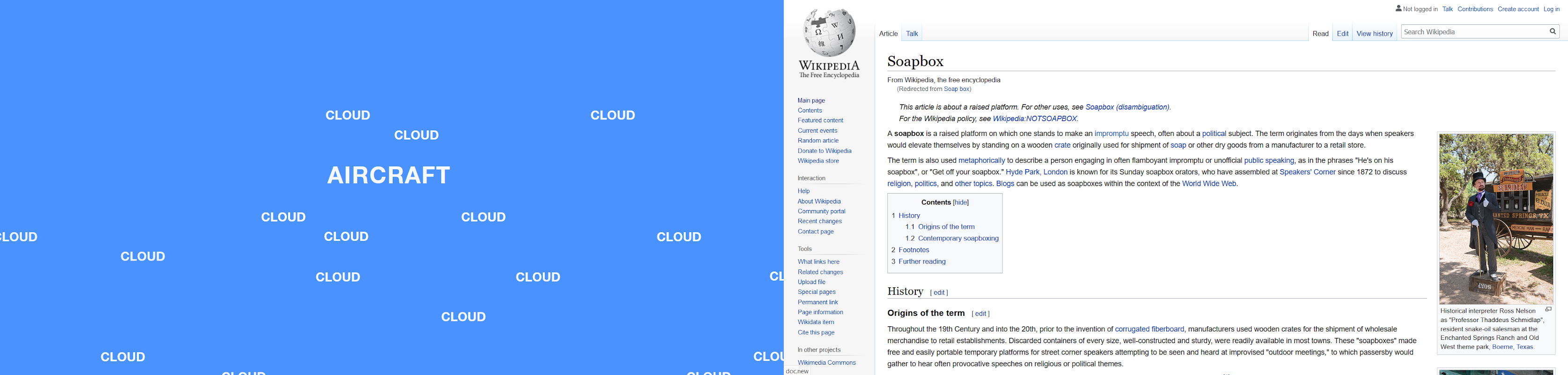
Examples range from the first ever website to modern classics: Craigslist, Wikipedia, A List Apart, old Reddit, Bloomberg, and Freecycle all display strong brutalist streaks. Notably, many of these sites did not set out to be brutalist at all. Like Villa Göth — widely considered the origin point of the term — they simply aimed for practicality and simplicity. Their success, and their endurance, is what made them exemplars of the approach. Craigslist, for instance, has barely changed in 20 years because it has never needed to.
There is a public-mindedness to many of these sites — marketplaces, forums, encyclopedias, news outlets. Wikipedia takes on the digital form of a housing estate; newspapers such as The New York Times and The Washington Post have adopted similarly blunt, functional layouts. These sites are not always beautiful in the conventional sense, but there is an elegance to their functionality. They are unconcerned with appearances precisely because they are confident in their purpose.
Type Two: Deliberate Disruption
The second strain of web brutalism is where the terminology gets messy. This is the faster-growing, more visible camp — the one that prompts headlines about "intentionally ugly" websites and articles decrying "style over substance." As Vitaly Friedman noted in Smashing Book 6:
"Brutalism in architecture is characterized by unconcerned aesthetics, not intentionally broken aesthetics. When applied to web design, this style often goes along with deliberately broken design conventions and guiding principles."
Here, design conventions are subverted and usability is an afterthought — when it is not being actively sabotaged. This approach has been described by Awwwards as design that "laughs in the face of rationalism and functionality," defined instead by what is freestyle, ugly, irreverent, and superficially decorative.
Proponents frame this as a younger generation's reaction to the lightness and optimism of contemporary web design. There is a loose connection to the original brutalist ethos in that rebellion against polish, but the execution differs fundamentally. Where type one strips away to reveal function, type two decorates in dysfunction. Both can be striking in their own way, but they are cut from entirely different cloth.
The danger in keeping both under one label is that it obscures what makes each meaningful. Raw, functional web design embodies the honesty of architectural brutalism. Deliberately broken design pursues a different goal entirely — artistic provocation rather than structural clarity. Knowing the difference matters, and it may be time to start calling them different things.
One Label, Three Divergent Schools
Brutalist web design has evolved into a term that covers approaches pulling in opposite directions. Pascal Deville, who coined the term in 2014 and founded the Brutalist Websites directory, sees the style as split into three distinct micro-stylistics:
- Purists,
- UX minimalists,
- Anti-ists (or artists).
Having reviewed hundreds of submissions, Deville distinguishes them as follows:
"The purists reference strongly to the architectural characteristics of Web Brutalism, such as the concept of 'truth to materials' and the use of the purest markup elements available. The UX minimalists, in contrast, see efficiency and performance as the main driver of Web Brutalism and even believe that the radical limitation of possibilities can boost conversions. The 'anti-ists' or artists see web design as an (still) undervalued form of art and don't show much respect the status quo and mostly get bad press."
What counts as “proper” brutalism depends heavily on context. An artist’s site may suit something bold and disruptive, while an efficiency-focused project might call for a stripped-down, fast experience. Yet the “anti-ist” mode — absurd, messy, and playful — arguably shares more DNA with Dadaism or Expressionism than with architectural Brutalism.
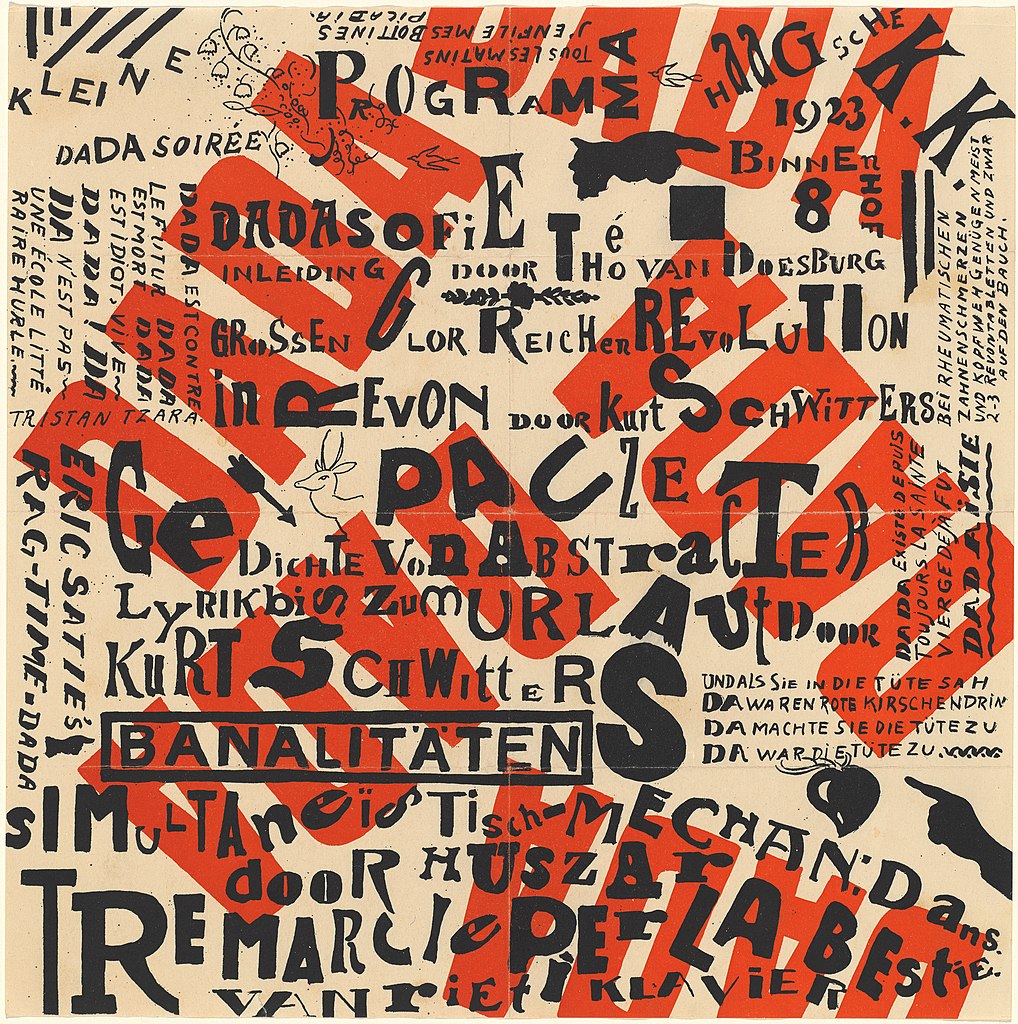
This is not merely a taxonomy exercise. The point is to recognize that different approaches require different creative space. Deville notes that the web’s creative potential is still unfolding: “It's a new form of art and I'm very happy to experience first hand,” he says. “It's happening now.”
The distinction carries practical weight for clients and developers alike. If you’re discussing a contract, make sure everyone agrees on which flavor of brutalism is being requested. Visual references are usually the most direct way to bridge the gap, rather than assuming a shared definition.
A broader vocabulary is probably overdue. While inconvenient for existing domains, awards, and articles, the single label has become too narrow to contain the diverging philosophies active under its banner. That fragmentation, however, signals how much uncharted territory still exists in web design.
Art history offers a wealth of movements — Romanticism, Futurism, Impressionism, minimalism — each expressed through different media. There is no structural reason websites can’t follow the same path. As developers push the boundaries, generic descriptions like “anti-mainstream” stop being useful. Designers are moving toward a genuine exploration of web design’s underlying philosophy, not mere reaction.
- Nielsen Norman Group on the difference between brutalism and antidesign
- ‘On Web Brutalism and Contemporary Web Design’ in Dialectic
- Creative Bloq asks if brutalist websites are the web’s ‘punk moment’
- Nick Babich outlines the principles of minimalist web design, by far the most popular ‘ism’ online to date.
Whatever one thinks of the Dadaist wing of brutalism, it has identified a real limit: the perceived scope of what a website can be remains too constrained. The web is a broad sandbox, and widening the range of acceptable forms is a healthy direction. That begins with adopting more precise terminology.