The Browser Outgrew the Template Era
In 2010, a custom website was a developer's calling card. Hiring a design engineer meant buying into the emerging promise of HTML5: expressive inline SVG, GSAP-driven timelines, and WebGL experiments that felt genuinely futuristic. The craft was as much about expression as function. Back then, developers were the Wix and Squarespace of the world—until those platforms caught up and made complex sites accessible to everyone.
That democratization was worth celebrating. But it quietly flattened the web. Animated transitions, background video, parallax scroll, and CMS-powered content became standard features of a predictable mold. Websites lost the capacity to surprise.
We have hit another inflection point. While most of us have stayed busy working within familiar constraints, browsers have undergone a quiet revolution. The modern web now handles container queries, advanced scoping and inheritance, and responsiveness to user preferences at a level of sophistication that outpaces most design tools. Color, typography, dynamic units, layout, and animation have all matured considerably. Yet many young designers and developers I meet at Figma are unaware these capabilities exist.
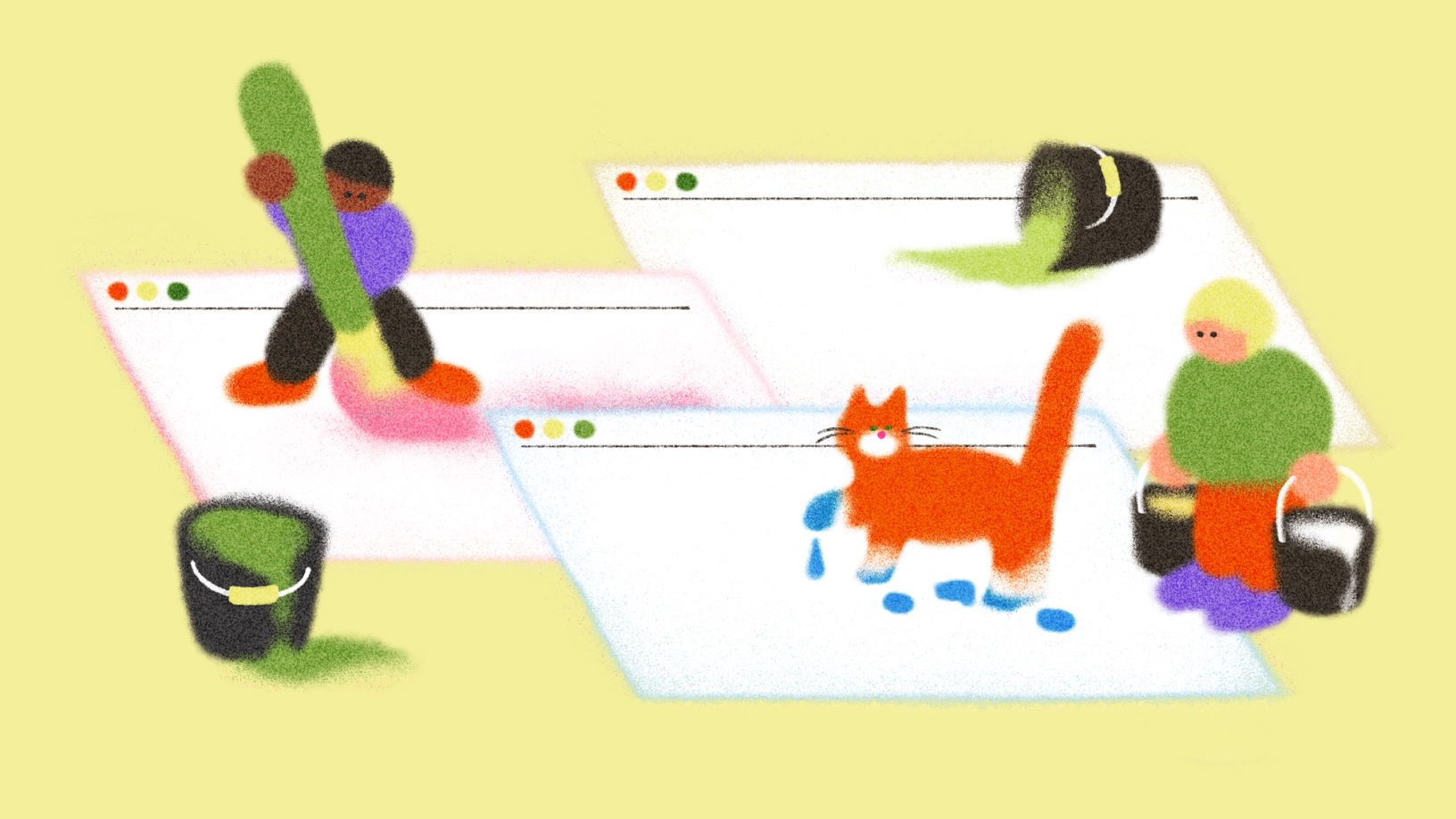
New Tools for Old Habits
Consider color gradients as a small example. Standard RGB transitions are the norm in most tools, but CSS now offers color spaces like HSL and OKLCH that enable more vibrant, precise transitions. To bridge the gap between conventional tools and modern browser capabilities, I built a Figma plugin called CSS color-mix(). When developers gain agency in their design tools, the tools themselves get pushed in exciting new directions.
Some creators are already charting the path forward. Henry Desroches builds websites with the control and intentionality of print design—but fully responsive. Sarah Drasner at Google pioneered SVG animation and illustration on the web. Tim Holman at Goldman Sachs embodies the creative spirit with projects like Optical Toys and The Useless Web. Lynn Fisher treats the browser as a medium, creating illustrations that transform with viewport width. Their work is a reminder that templates are a starting point, not a destination.
Expression Is a Feature
Websites should not be relegated to the roles of digital business cards or information containers. They remain a medium for creative expression, and the tools required to build a more expressive web already exist. What's needed is a revival of curiosity and a willingness to experiment. The constraint is no longer the browser—it is our adherence to old paradigms.