Payload joins Figma to accelerate the CMS roadmap
Figma has acquired the team behind Payload, the open-source headless CMS and application framework. The companies announced the move today, positioning the combination as a step toward unifying design and development workflows within a single platform.
The integration centers on Figma’s post-Config 2025 plans. At that event, the company demonstrated a broader vision for supporting the full software development lifecycle, from initial design through to deployed websites and applications. Figma Sites, the tool launched there for building custom responsive sites from designs, was explicitly slated to gain a CMS in the coming months. Payload is the answer to that promise.
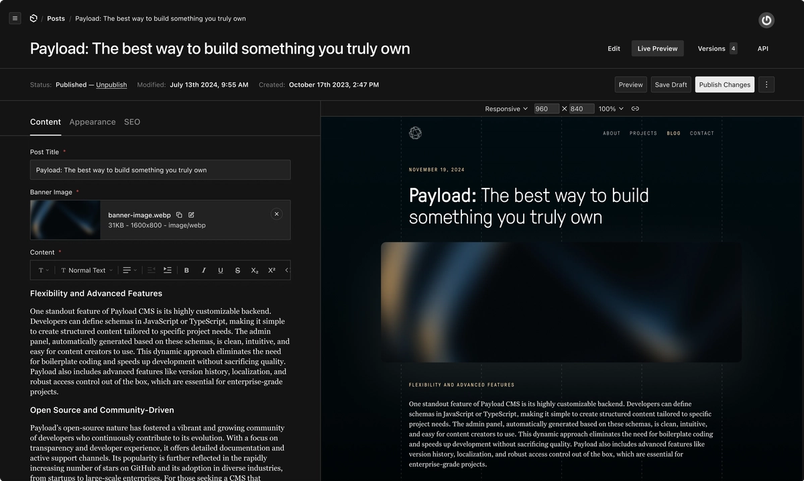
For developers, Payload’s appeal has been its extensibility—a customizable backend for scalable sites and apps, paired with an admin panel aimed at editors. Rather than forcing a fixed model on users, the framework allows deep modification of nearly every layer. That flexibility has driven adoption, including use inside several Fortune 100 companies, and it dovetails with Figma’s own collaborative philosophy, as both maintainers and communities feed improvements into a public product cycle.
What stays the same
Existing Payload deployments won’t see an immediate disruption. Figma states that Payload will remain an open-source product and that the near-term roadmap is unchanged, with continued investment in the project. The companies plan to coordinate on CMS strategy and product direction going forward, communicating jointly rather than making unilateral moves.
Operationally, the Payload team brings deep developer-tool experience to Figma’s engineering, security, and data science organizations—led, notably, by a CTO who has previously built realtime collaborative infrastructure. The bet is that combining Payload’s backend strength with Figma’s design ecosystem reduces the friction that has traditionally slowed teams moving from mockup to a controlled, deployed experience.
Ultimately, the acquisition signals Figma’s intent to serve as the operational hub for digital product creation, with content management and delivery as core capabilities alongside design. By folding Payload into that vision, the company is aiming to let teams not only design and build but also manage the content that drives those systems, in an era where AI makes generating both code and copy easier—and where controlling the final output matters more.