Why Visual Collaboration Is Reshaping the Classroom
For a growing number of educators, the traditional lecture-and-textbook model no longer fits how students actually learn. The shift toward visual, hands-on collaboration—often powered by tools like Figma—is changing who gets to participate and how ideas take shape. Two teachers explain why an open canvas can be more inclusive than a fixed curriculum.
Moving Beyond the Page
Teaching strictly from a textbook assumes every student processes information the same way. In practice, students arrive with different backgrounds, learning styles, and comfort levels with verbal or written expression. Visual collaborative platforms let them demonstrate understanding through diagrams, sticky notes, wireframes, and shared boards rather than only through essays or oral answers.
This approach lowers the barrier to entry. A student who hesitates to speak up in class can still contribute meaningfully by adding to a shared board or annotating a teammate’s work. The canvas becomes a neutral ground where ideas are evaluated on their merit, not on the confidence or speed of the person presenting them.
Designing for Participation, Not Perfection
One of the key insights from educators using Figma is that the tool’s flexibility supports differentiated instruction. Teachers can create templates with scaffolds for students who need more structure, while leaving the canvas open-ended for those ready to explore independently. The same project can accommodate multiple entry points without forcing anyone into a single path.
Collaboration in this format also shifts the teacher’s role. Instead of being the sole source of knowledge, instructors become facilitators who guide discussion around the artifacts students produce. Peer feedback happens naturally as students view, comment on, and build upon each other’s work in real time.
Accessibility as a Design Principle
The visual nature of these tools addresses certain accessibility needs that text-heavy materials often ignore. Color coding, spatial arrangement, and iconography can supplement or replace long written instructions. For neurodivergent students or those with language barriers, seeing a concept mapped out can make abstract ideas concrete.
However, educators note that accessibility is not automatic. It requires intentional design: choosing high-contrast color schemes, providing alt text for images, ensuring keyboard navigation works, and being mindful of motion or flashing elements. When these considerations are built into the classroom workflow, the tool becomes an enabler rather than another obstacle.
Preparing Students for Modern Workflows
Beyond the immediate learning benefits, working on a shared digital canvas mirrors the collaboration patterns students will encounter in many modern workplaces. Remote and hybrid teams rely on synchronous and asynchronous visual communication daily. Familiarity with such tools is becoming a practical skill, not just a pedagogical experiment.
This approach also normalizes iteration. In a textbook, answers are final. On a canvas, work is always revisable, and mistakes become visible parts of the process. That shift in mindset—from getting it right to getting it better—is a lesson that extends well beyond any single assignment.
Teaching to the Whole Student: How Open Tools Support Inclusive Classrooms
Lisa Highfill, a three-decade veteran of the Pleasanton, California public school district, recalls a time when students were passive recipients of instruction. "We used to call them robot students," she says. "They would come in, sit down, and do exactly what we told them to do." In that model, student investment ended at the grade book. Highfill wanted to change that dynamic, shifting from delivering ready-made lessons to designing purposeful learning experiences. "I knew that if I was designing [lesson plans] purposefully, I could give kids choices and help them build agency," she explains. Her work in this area led her to create Hyperdocs in 2016, digital lesson plans based on the explore, explain, apply learning cycle, an offshoot of the 5E learning model. When the pandemic forced schools into remote and hybrid formats, this skillset became critical as teachers sought ways to connect with students struggling with anxiety and depression.
I knew that if I was designing [lesson plans] purposefully, I could give kids choices and help them build agency by the way I asked them to learn.“I knew that if I was designing [lesson plans] purposefully, I could give kids choices and help them build agency by the way I asked them to learn.”
A System in Crisis
The challenges facing U.S. education are not new, but they have intensified. The 2023 National Assessment of Educational Progress (NAEP) reports historic lows in math and reading for 13-year-olds. Schools are coping with teacher shortages driven by burnout and low morale, while the number of students with disabilities has risen over two decades. A recent Pew study found that 40% of parents with kids under 18 consider their children's mental health a major concern. These problems predate Covid; NAEP scores have been rocky for a decade or more, following a period of public school funding cuts that pulled down test scores and college attendance rates.
The data points to a single, clear conclusion: the traditional one-size-fits-all model isn't working. A 2018 Robert Wood Johnson Foundation report urged educators to adopt a more "holistic approach to adolescent development," focusing on addressing individual student needs at scale. Meanwhile, spending on standardized testing continues to rise.
Frameworks for Flexible Learning
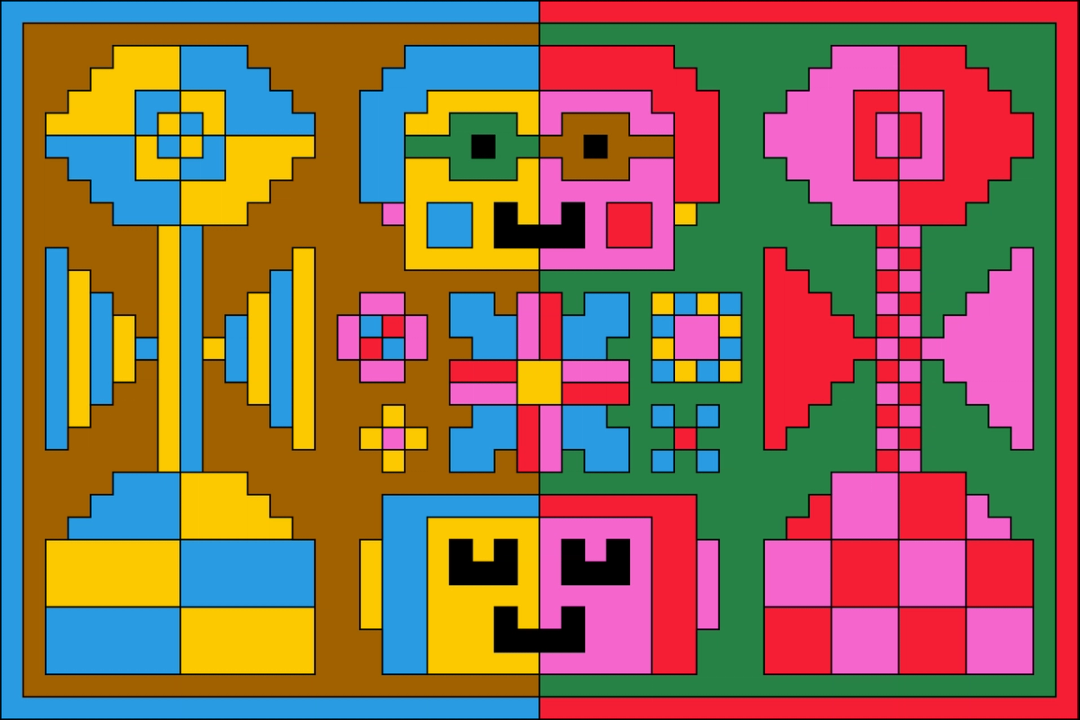
In response, districts and educators are turning to student-driven frameworks that offer multiple pathways into learning:
- Universal Design for Learning (UDL): First developed in the 1990s at the Harvard Graduate School of Education, this framework champions multiple means of representation, expression, and engagement to make goals achievable for students with diverse needs.
- The 5E Instructional Model: Growing from 1990 research on science education, this model features five distinct phases—engage, explore, explain, elaborate, and evaluate—that form a cyclical approach to inquiry. The explore, explain, apply cycle is a derivative methodology.
- Project Based Learning: Here, a project forms the organizing structure for exploring concepts through real-world problem-solving, with teachers serving as facilitators. Recent studies show students using this method can outperform peers in traditional instruction.
Growing evidence indicates that inclusive classrooms benefit all students, not just those with special needs. At The Pleasanton Virtual Academy, a hybrid K-12 school created out of the pandemic, Highfill sees these methods in action. Students attend for many reasons—health concerns, bullying, or specific educational needs—and they are more engaged as a result. "The students have more ownership and buy-in, because it's more their choice," she says. "They express to me that they feel in control of learning."
The students have more ownership and buy-in, because it’s more their choice…they feel in control of learning. And they start to care about their work more.“The students have more ownership and buy-in, because it’s more their choice…they feel in control of learning. And they start to care about their work more.”
In Newton, Massachusetts, special education teacher Meredith Greene uses UDL principles as the starting point for her lesson planning. She customizes access points for each student—an image bank for a struggling reader, audio clips for a student with low vision, or hidden sections of a lesson for those working on executive functioning skills. The entry point may differ for each student, but it meets the curriculum standard. Greene finds that multi-modal content benefits her general education peers too. When students record short videos to participate in class discussions, "other students see the video and it can spark their creativity," she notes, creating a more inclusive environment for everyone.
New methodologies require new tools, but teachers are stretched thin. Highfill limits herself to five tools to avoid platform fatigue for her students and herself. Greene finds the cognitive load of learning multiple platforms draining, and district budget processes can be slow and restrictive. "As a special ed teacher, you end up spending a lot of your own money on platforms that provide visuals that are 90% or less of what you want it to look like," she says.
The Value of a Flexible Canvas
For both educators, the number-one requirement for a classroom tool is flexibility—enough features to support different students, lessons, and styles. They have both found FigJam's open canvas useful for this. At The Virtual Academy, Highfill has used it for everything from one-on-one tutoring sessions to a virtual gathering space for a 300-student morning assembly. "It was magic to watch their cursors flying, to have all these kids all over the place come together and come up with innovative ideas," she remembers. She also uses it for lesson planning, because the ability to mix voice, video, and written instruction aligns with UDL principles.
It was magic to watch their cursors flying…I'm not the only one up at the whiteboard with the marker anymore, and that's pretty special.“It was magic to watch their cursors flying…I'm not the only one up at the whiteboard with the marker anymore, and that's pretty special.”
Greene values having diverse resources ready for every contingency. "Always having a plan B, C, and D when you design a lesson is important," she advises. With FigJam, she can offer students alternative modalities on the fly—a voice memo instead of typing, or asking a student to paste a representative picture as an answer. For younger students who may not engage with screens individually, she projects a large FigJam on the whiteboard as a shared reference point before students break into small groups, then reconvenes the class with the same visual anchor for discussion.
It’s beneficial to have a lesson that spans multiple cognitive backgrounds…If you get to a section where the student’s supposed to type something and then they're not feeling that modality for whatever reason, you can offer them a voice memo instead, or ask them to search the internet for a picture that represents the answer—copy, paste, done.“It’s beneficial to have a lesson that spans multiple cognitive backgrounds…If you get to a section where the student’s supposed to type something and then they're not feeling that modality for whatever reason, you can offer them a voice memo instead, or ask them to search the internet for a picture that represents the answer—copy, paste, done.”
Permission to be Messy
Educators like Highfill and Greene are investing significant effort to help students feel in control of their learning at a time when mental health and educational access are pressing concerns. But not every teacher has the time, energy, or administrative support to redesign their practice. Frameworks like UDL and the 5E model are accessible to any educator, and flexible tools must be as well. Highfill advocates for a mindset of experimentation for educators themselves: "I've given myself permission to just learn one thing at a time, to try it out and be messy. I say that upfront with the kids: If it doesn't go well, I'm going to learn from that and do it again."
Figma and FigJam are being made available to K-12 schools through an expanded partnership with Google for Education, bringing design tools directly to classrooms via Chromebook and Google Workspace for Education. Districts across the US and Japan can apply to bring Figma to their classrooms.

From static worksheets to shared space
In practice, this shifts how an activity is built. Instead of distributing a fixed handout, an instructor opens a Figma file as the day’s workspace. The board becomes a landing page with clear zones: a prompt at the top, a grid for responses, and a sticky-note area for open questions. Students drop in their own frames or comments, and the instructor can watch the work accumulate in real time rather than waiting for submissions.
Because the canvas is infinite and zoomable, there is room for every kind of contribution. A student who needs more time can park their draft in a separate corner without blocking others. A pair working together can claim a region of the file and build side by side. When it is time to share out, the whole class can re-center on one frame without anyone losing their individual work.
Feedback that lands where the work is
Traditional comment threads detach the critique from the artifact. On an open canvas, feedback lives on the object itself. An instructor can pin a comment to a specific button design or a paragraph of text, making the reference unambiguous. Students can reply in place, revise, and ask follow-up questions without hunting through a separate document.
This also changes who gets to participate in critique. Rather than a single voice at the front of the room, the canvas invites everyone to leave notes. Quiet students can write as easily as they speak, and the comment stream becomes a record of the conversation that persists after the class session ends.
Lowering the barrier for every learner
The open canvas model is particularly effective for students who struggle with linear, text-heavy workflows. Visual thinkers can sketch instead of typing. Students with language barriers can lean on icons, color, and spatial arrangement to express ideas. The instructor can scaffold the file with templates, starter shapes, or example frames so that the starting point is clear regardless of skill level.
The result is a classroom where the tool does not dictate the format of thinking. Learners engage at the level where they are comfortable and can stretch outward as confidence grows. Figma’s collaboration features mean that this happens in a shared space, not in isolated documents, reinforcing the idea that every contribution is part of the whole.