Design the Future
Design the Future is a two-week summer program that immerses high school students in design thinking, challenging them to solve real-world problems. Students build products for people living with disabilities, gaining hands-on design experience while making a positive impact.
Program creator Durrell Coleman has run in-person workshops across the U.S. for six years, partnering with institutions such as the Stanford d.school and Boston University. In each session, four high school students pair with a university coach and a project partner—someone who shares the unique challenges they face living with a disability—and design solutions to those obstacles through the partner's perspective.
When the in-person format wasn't an option for two straight summers, Coleman and his team rethought the approach for an all-remote environment.
Selecting a platform
With eight hours of online collaboration each day, avoiding Zoom fatigue was the team's top concern. The program needed a tool that was easy, intuitive, and that students genuinely enjoyed using.
Figma was tested first, since it had every feature Coleman needed to create workspaces for student activities. But spinning students up on Figma within such a short workshop proved difficult. The team moved to Figma's online whiteboard, FigJam, which students picked up quickly, supported interactivity in the file, and let Coleman paste templates he had already made in Figma directly into FigJam.
“FigJam was a game changer for us. We were able to get over 100 students working collaboratively as a group and in small teams to share ideas and design apps that truly made a difference for people with disabilities.”““FigJam was a game changer for us. We were able to get over 100 students working collaboratively as a group and in small teams to share ideas and design apps that truly made a difference for people with disabilities.””
One master whiteboard
The program follows the design process end to end, from gathering requirements and building empathy for the user to shipping an app that meets the user's needs. Several steps call for feedback at different altitudes, and learning to manage and incorporate input along the way is central to what the program teaches.
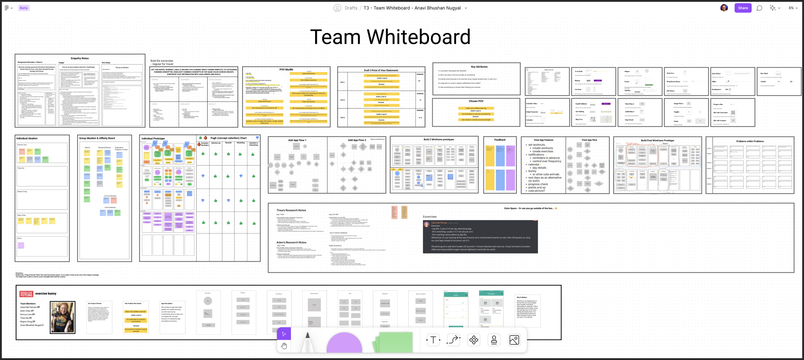
To structure that work, Coleman built a single FigJam team whiteboard that guides students through the full process. Designs from Figma were migrated into FigJam as templates; they function as a worksheet for every step, giving students structure while leaving open space for freeform iteration and collaboration.
Making room for community
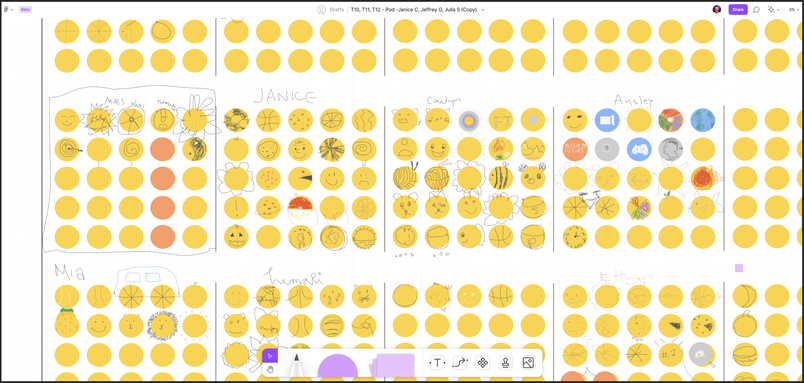
Skills were only part of the goal—Coleman also wanted students to have fun and connect. FigJam became a shared activity space where, between project work, larger groups ran icebreakers: sharing hometowns on a map, or the "30 circles" challenge popularized by IDEO. The result was a virtual lunchroom.
The lesson: empathy
Coleman worried about shifting to remote, but the virtual-first format produced a more open and inclusive workshop—the team welcomed more students and participants could join from anywhere in the country. Tenth-grader Analisa described liking that students could use "something that we are passionate about or interested in (STEM) to help make a change in someone's life," and that she got to work with people from different backgrounds and perspectives. Though the program is rooted in design, students, coaches, and project partners ultimately took away a greater understanding of each other.
Learn more about Design the Future and check out the students' final presentations.