Web Games: The Platform's Native Strengths
Game developers who succeed on any platform do so by leaning into what makes that platform distinct. For the web, that means thinking carefully about speed, shareability, and the ways players find and enter a game. The technical barriers that once made serious game development on the web difficult have largely fallen, but building a sustainable business still comes down to a few fundamentals.
What Makes a Game Work Today
Any successful game business needs three things: a working game, a way to reach users, and a monetization strategy. For web games specifically, the "working game" part has improved dramatically in recent years. Developers now have access to a capable set of technologies that cover the core pillars of game development:
- Performance: WebAssembly provides a standardized, high-performance execution model for CPU-heavy logic.
- Graphics: WebGL 1.0 enjoys broad cross-browser support, and upcoming standards like WebGPU promise a future aligned with modern APIs such as Vulkan and Metal.
- Audio: The Web Audio API, along with the newer Audio Worklet API, enables complex, low-latency sound design.
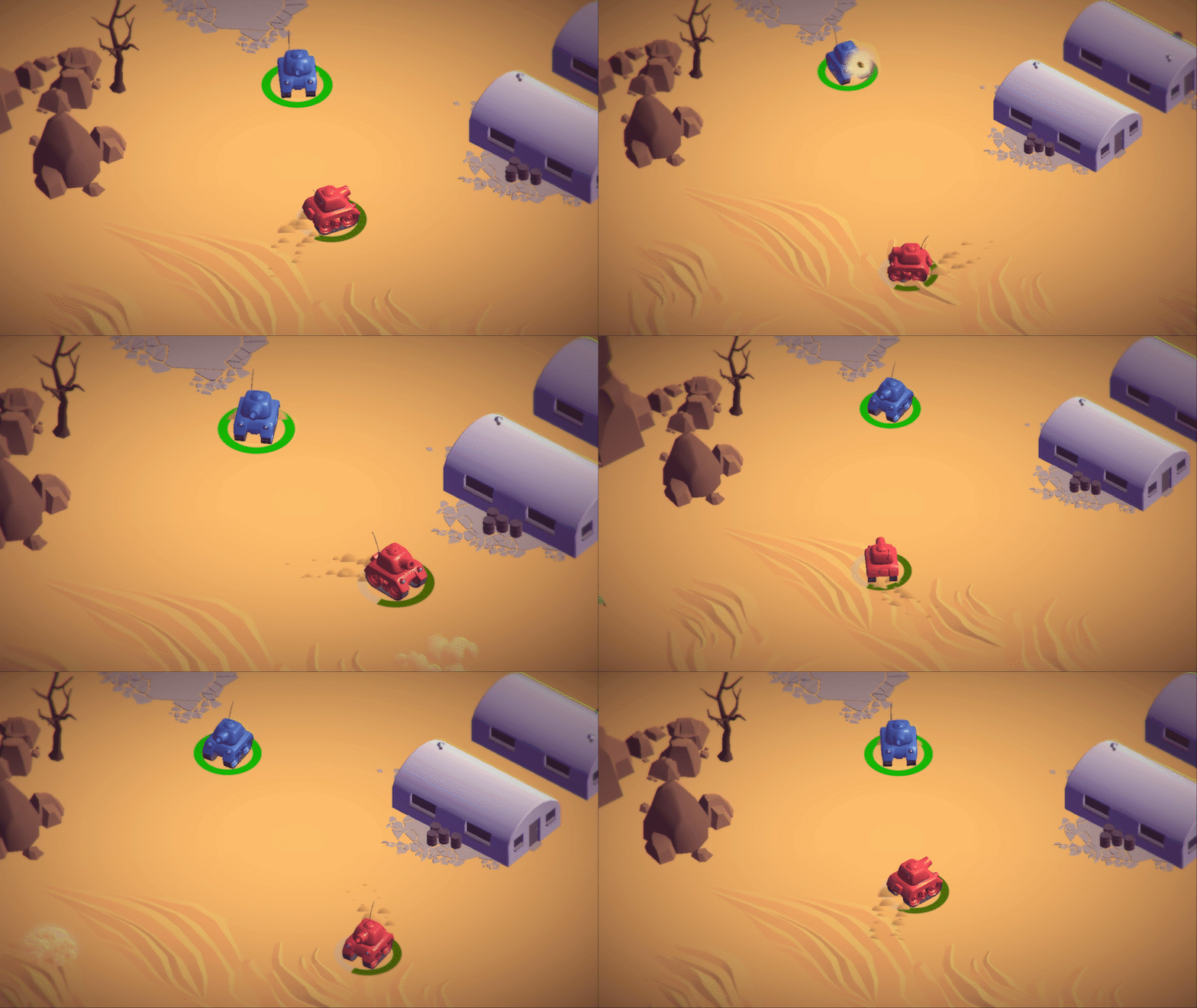
These advances haven't gone unnoticed by major engine vendors. Unity, for example, has previewed Project Tiny, a runtime designed to build 2D HTML5 games with a modular architecture that can keep the core engine under one megabyte.
From a purely technical standpoint, the timing for web game development has never been better.
Designing for the Sharing Loop
Performance, graphics, and audio only get a game so far. A game also needs to be fun. And when a game is fun enough, players want to share it. That desire is critical on the web, where there is no centralized discovery platform. Viral growth is the primary path to acquiring an audience.
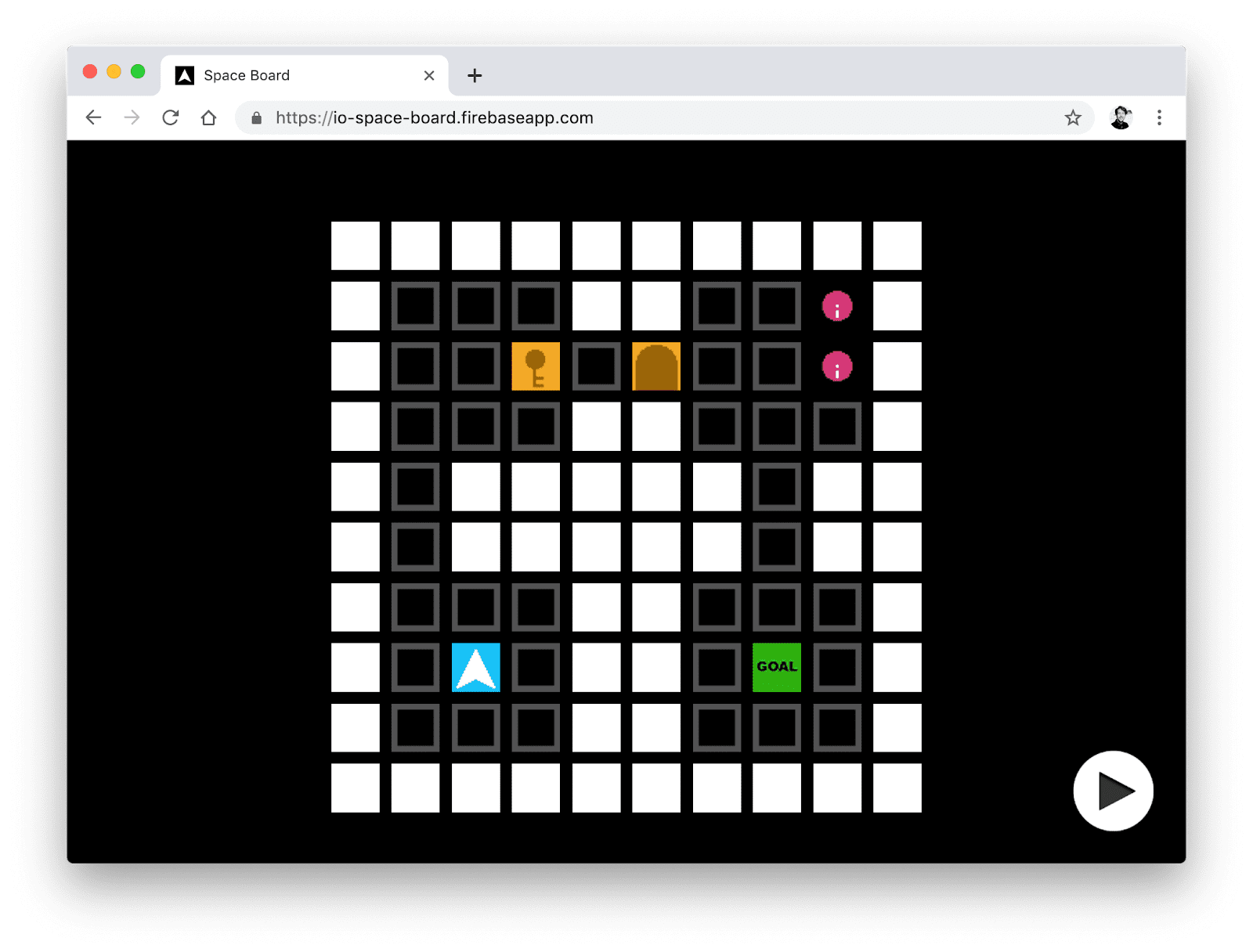
The web's unique characteristics are its URL and its inherent shareability. A game that builds its experience around deep links can create a natural loop: a player clicks a link, plays, and then shares a new link to bring someone else into the same experience. To illustrate this concept, consider Space Board, a web game built with Construct 3.
Space Board is a simple maze game playable with touch or keyboard. Its unique feature is that every level is encoded entirely within its URL. Each level is a 10 by 10 grid of object types—walls, turrets, keys, locked doors, and more—where each position is denoted by a single character. A wall is a W, and an empty space is an underscore.
https://io-space-board.firebaseapp.com/?gameWorld=_wwwwwwwwww___ww__eww_k__d___ww___ww___ww_wwwww_www_wwwww_www___ww___ww_s_ww_f_ww___ww___wwwwwwwwwwww
It's not pretty, but it is functional. When a player completes a level, they are offered a level editor to design and personalize their own challenge. That sense of ownership and creation is a powerful motivator for sharing, turning a completed game session into the starting point for a friend's new one.

This is just one pattern. The principle is broader: by respecting the user's expectation that content be fast to load and quick to engage with, and by weaving an incentive to share directly into the game design, developers can trigger the viral loop that drives user acquisition.
Monetization Strategies Are Splitting in Two
For developers looking to generate revenue, the current landscape suggests two main approaches.
- Direct monetization of the web game itself.
- Using the web game as an acquisition channel for a larger, platform-specific version of the title (on iOS, Android, or desktop) where built-in payment backends already exist.
Direct monetization usually involves advertising or microtransactions. The ad landscape for web games is still maturing; formats like rewarded video ads, a staple of mobile, are only beginning to appear from web ad networks. That said, traditional banner and interstitial formats continue to work for some developers, and Adsense for Games supports these approaches.
For microtransactions, the open web offers limitless flexibility in payment methods, but that freedom cuts both ways. Players tend to trust a familiar mobile storefront more than a random website. The Payment Request API can help bridge that gap by showing a consistent browser-driven UI for collecting payment details, though a backend billing platform is still required to complete transactions.
Signs of Momentum
The proof of concept is already out there. Slither.io built a business spanning both the web and native platforms, showcasing the viral potential of browser-based play. Independent portals, from Poki.com to titles like Subway Surfers, are delivering web experiences that match the fidelity and player engagement of their mobile equivalents.
Perhaps the most telling signal comes from beyond the open web. Closed ecosystems like WeChat and LINE run sophisticated, engaging games on top of HTML5 and WebViews. These titles aren't on the open internet, but their success shows that the web's underlying technologies are now capable of competing for player attention with platform-specific games—which is, in the end, the metric that matters most.