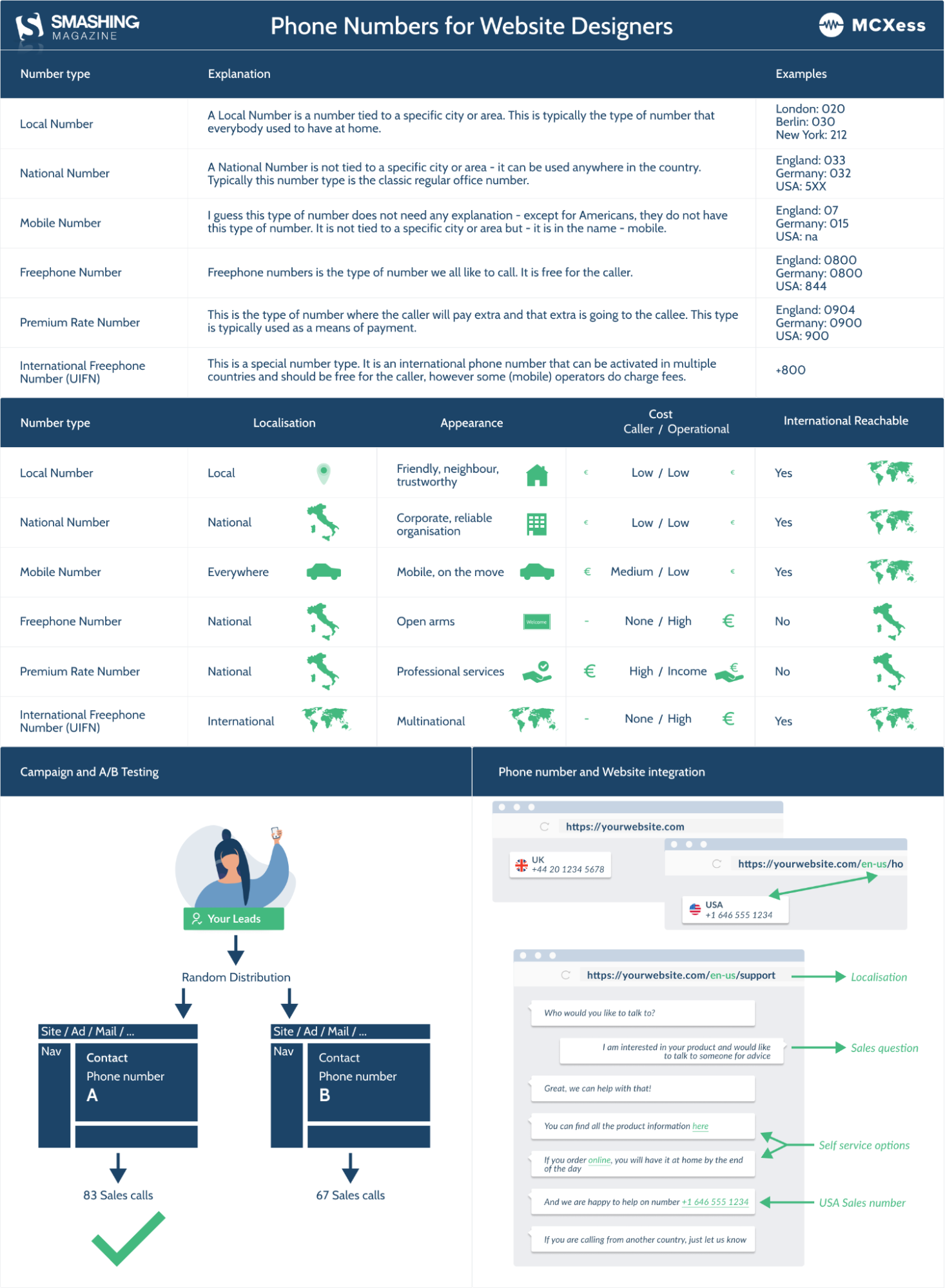

Beyond the Page: Why Your Phone Strategy Deserves the Same Attention as Your Site
Websites are getting smarter every year. Teams pour effort into localization, A/B testing, and cross-domain campaign tracking in pursuit of better conversions. But for many organizations, the customer journey still hits a dead end at the edges of the browser. Telephony remains an untapped part of the optimization puzzle, even though it shares familiar mechanics with website testing and requires no exotic new tooling.
The phone number you display is a contact point with your customer, just like the copy on your landing page. So, it deserves the same level of thought and testing. The following seven considerations will help you bring your phone number strategy up to speed with your web presence.
The Building Blocks of the Right Number
Choosing a number type is a decision that can make or break the user experience for your callers. Each type carries its own connotations, cost structure, and reachability profile. It is essential to understand the differences before you decide.
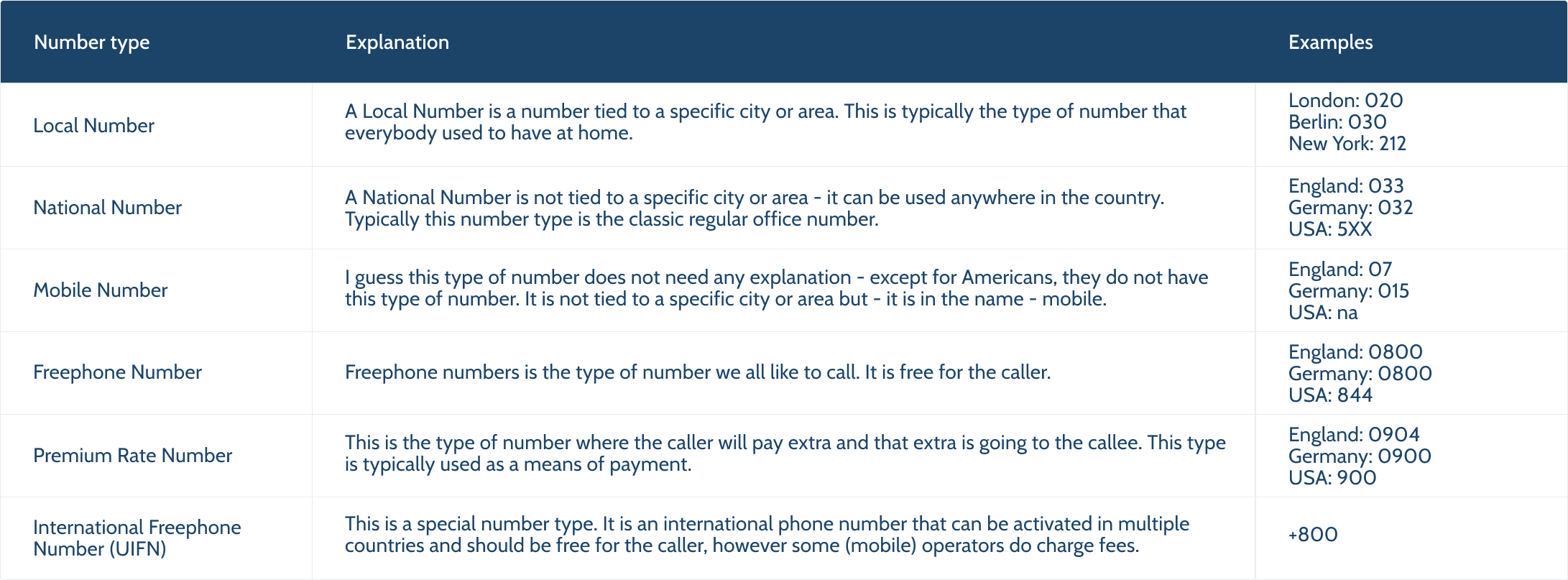
All of these options can be the right choice, but not for every business context. Your number type should align with the tone, localization, and goals of your website. And like everything else in this domain, your choice is not static. You should test it, measure it, and iterate.
Synchronizing Localization Efforts
A website that is tailored per country signals that you are invested in that market. But leaving a generic contact number on that localized site creates a jarring disconnect. The localization of your phone number should mirror your website's strategy, but the good news is you have likely already done the heavy lifting: the level of localization needed for your site is your guide for the number type.
If your website targets customers on a country level, your options are clear: a national number, a freephone number, or a premium rate number. Each fits a country-wide operation, but the "right" one depends on your goals for appearance and cost, which we will examine next.
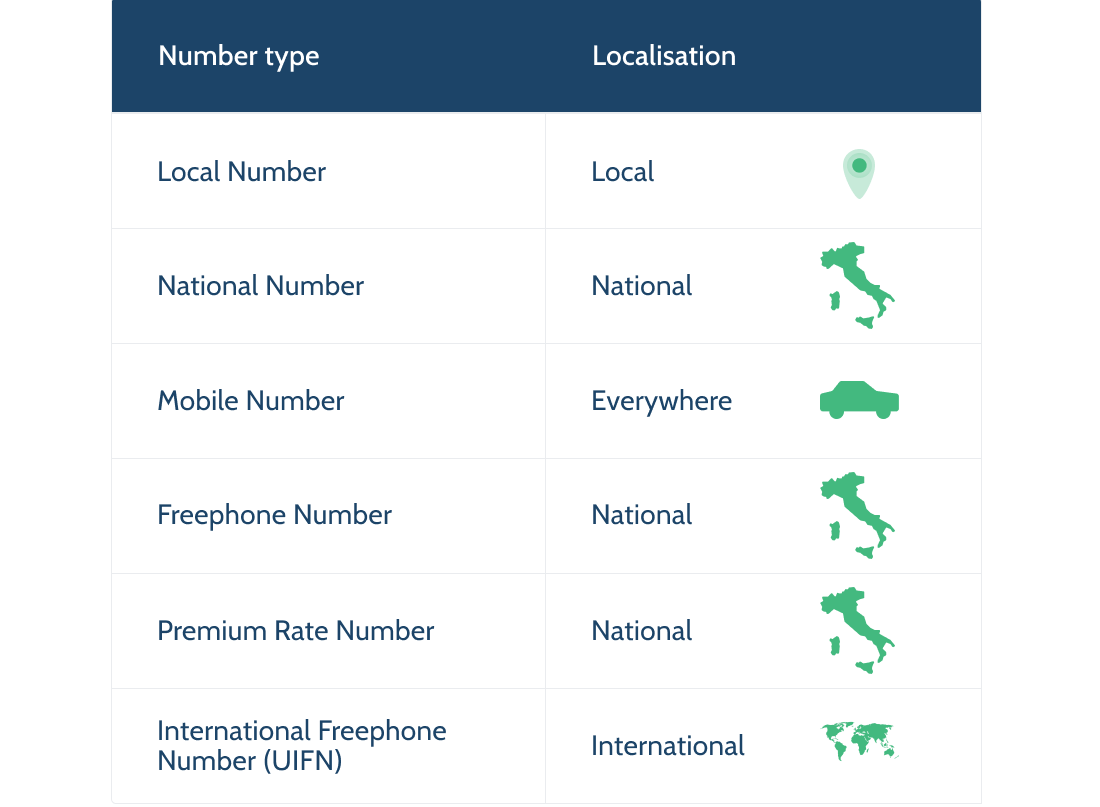
For businesses focusing on a region smaller than a country, the strategy shifts:
- Get local numbers that match the geographic areas your website targets.
- If you have a specific landing page for London, presenting a London local number is a seamless extension of that micro-targeting and builds trust through familiarity.
Two other types require extra attention. A mobile number is technically nationwide, but it suits a distinct niche: independently operating service providers who prioritize a direct, personal line. Alternatively, an international freephone number (the UIFN) is a single number that can work in multiple countries. This option is ideal for a global strategy that intentionally expresses a unified voice for the entire company.
What a Number Says to Your Caller
Every number type projects a specific identity. You want that identity to be in lockstep with the image on your screen. This alignment avoids confusing your visitors between the perception created by your site and the feeling they get when they see your contact details.
For a familiar and neighborly feel, lean on local numbers. The implication is that you are just around the corner, an established and trustworthy part of the local community.

If your brand is formal and corporate, look to national numbers. These are often called corporate numbers because they solve the logistics of companies with offices in multiple cities; one number keeps the company reachable across the map. Conversely, mobile numbers project independence and agility, but they are only appropriate when being a smaller, individual provider is part of your brand story.
Where you want to greet customers with open arms, freephone numbers are the undisputed champions. They signal readiness to serve and are therefore the go-to for high-end sales and support lines. If the service itself is the product you sell over the phone, premium rate numbers act as a payment mechanism. Still, be extremely cautious: while they can build a threshold against casual calls, they also obstruct service lines, and many regulators prohibit them for support on products under warranty.
Lastly, the international freephone number exists as an international standard defined by the ITU. It uses the +800 calling code. Despite counteracting localization, it saves you from plastering different numbers on international documentation and gives international travelers a single digit to memorize.
Evaluating the Cost for Callers and on Operations
Your budget and your customer's wallet both play a role in the selection. These variables differ drastically by number type.
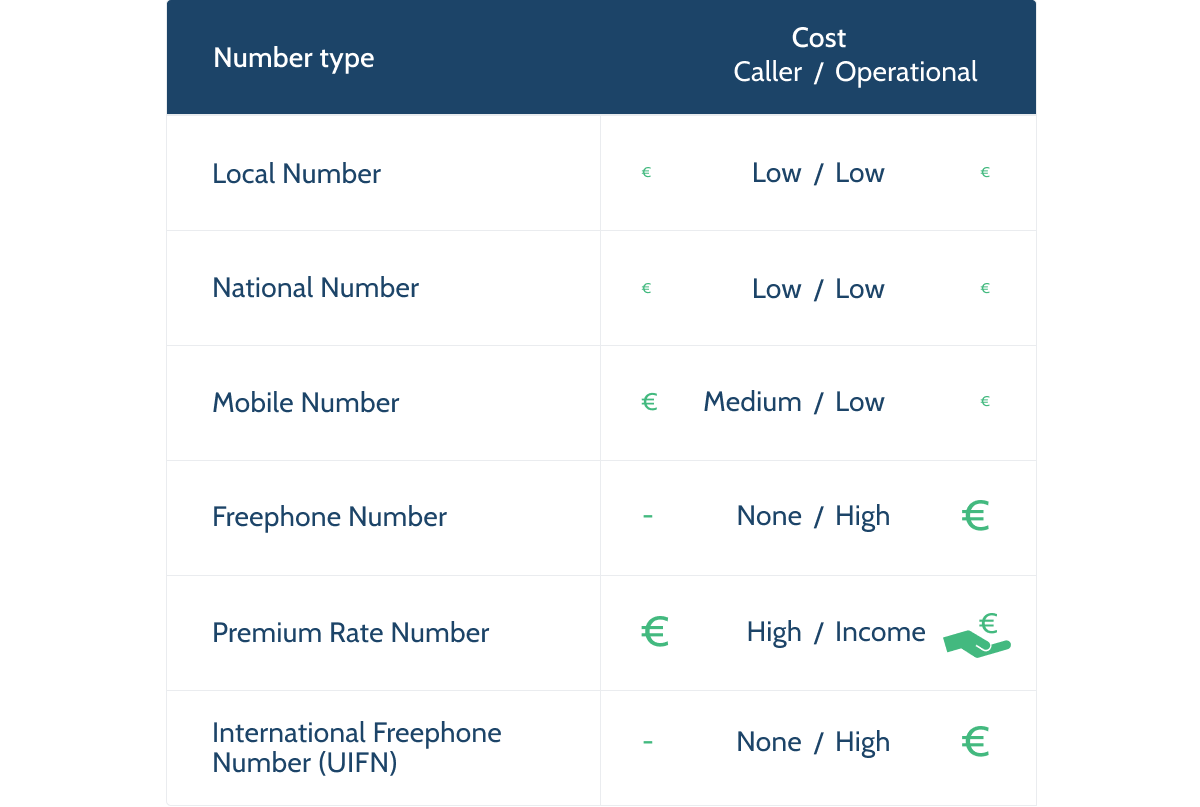
Typically, local, national, and mobile numbers are the most affordable for both parties, as calls usually fall within standard bundles and involve minimal operational overhead. A freephone number inverts the model, shifting the burden onto your operational costs in exchange for removing any friction for the caller.
The premium rate line, by contrast, charges the caller high rates to generate income for you. The international freephone number follows the trend of the national freephone model: the cost sits with your operations.
Note: The international freephone number sits outside most national regulators. While fixed-line operators mostly honor the zero-caller tariff, some mobile operators exploit this gap and ring up charges on their customers.
Ensuring the Line Goes Through
There is no point optimizing for a number that your audience cannot dial. Reachability is a non-negotiable technical constraint.
For a global audience, local, national, mobile, and international freephone numbers typically offer the broadest international reachability. Standard freephone and premium rate numbers, however, generally do not.
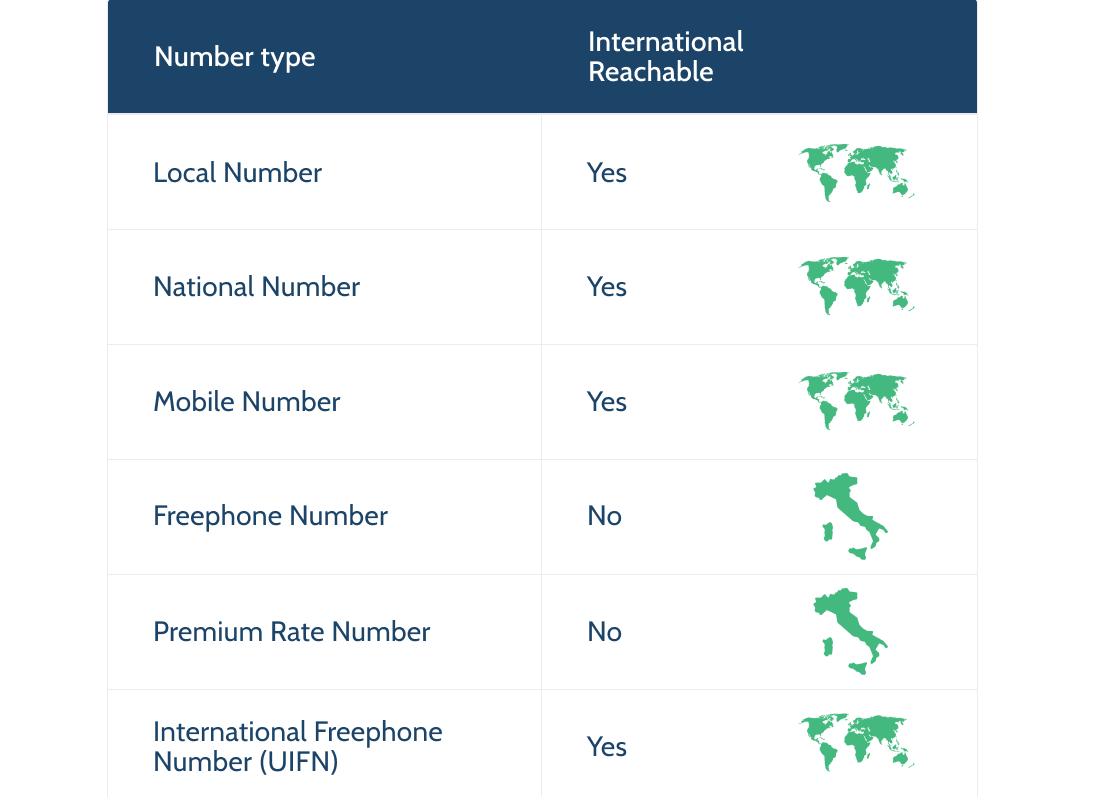
If you rely on these restricted types, you must proactively secure numbers in every target market. Or, at the very least, provide a secondary alternative for local customers who might be traveling abroad when they need to reach you.
Testing Calls Like You Test Clicks
These recommendations give you a solid baseline, but truly great optimization does not pause at the launch date. It extends into a continuous loop of improvement.
When you A/B test your site, why would you exclude the number itself from the variable list? All the required tools are already in place. Simply incorporate the phone number as a parameter, and enrich your evaluations with call statistics rather than relying solely on clicks. This method gives you a more nuanced view, allowing you to optimize the entire interplay between the landing page and the call center.
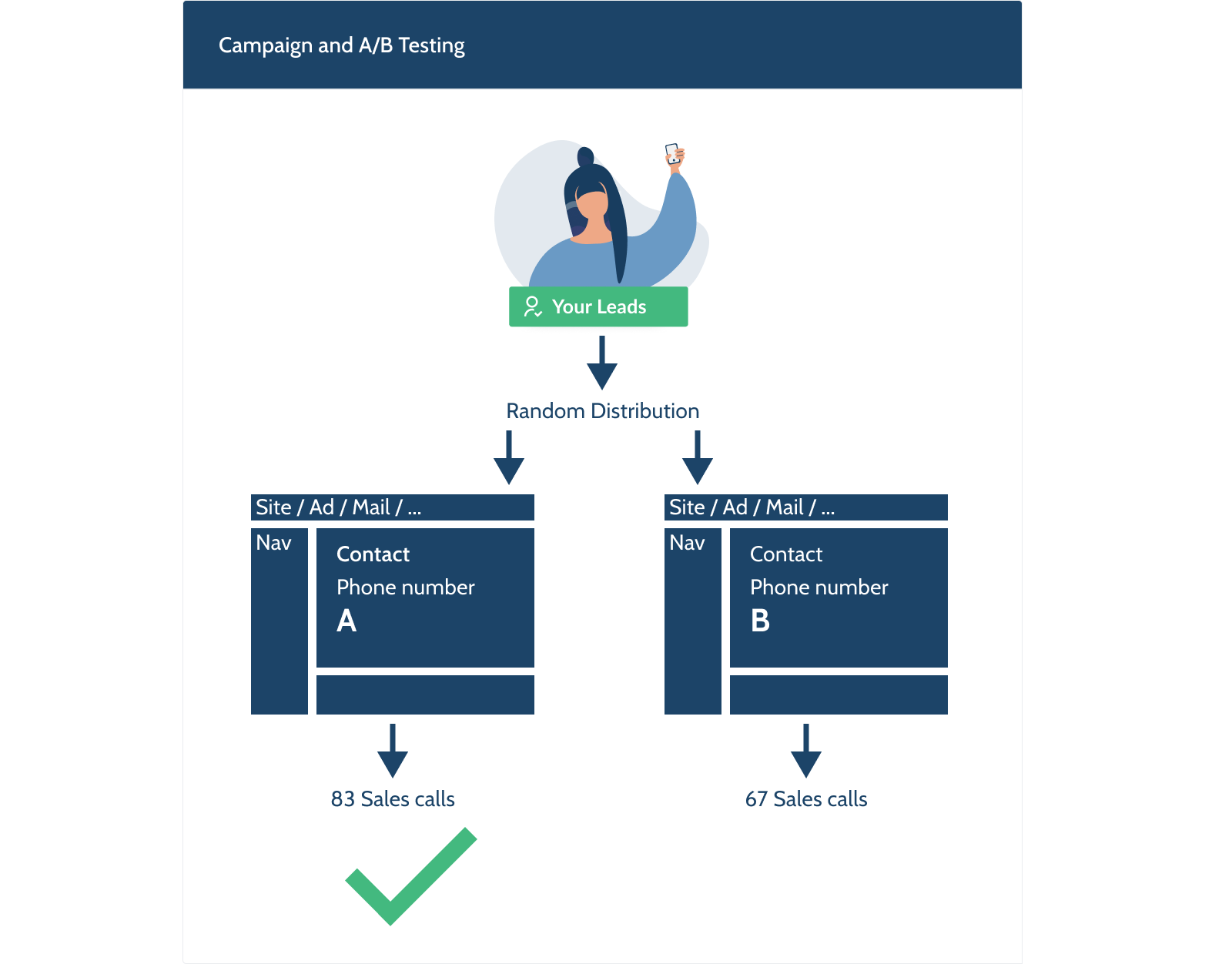
The same principle applies to assessing ad campaigns and mailings. Using different numbers of the same type on each variant adds a powerful layer of real-world data. Call volumes and outcomes become a measurable metric, transforming pay-per-click evaluations into full-funnel sales analyses.
The Integrated Contact Point
The days of printing one central office number below your logo to guard every single department are long gone. With that evolution, we have seen entire blocks of numbers displayed just to help callers guess which line routes to the correct destination.
Today, the smartest approaches consider the website and the phone line as one fluid system, rather than distinct entities fighting for attention.

Best practice in 2024 is integration. Analyze the data you have on the browsing visitor, and serve them a relevant number based on that context. Combine this with smart routing, and you can bypass the infamous IVR menu maze and the repetitive ID checks, propelling your customer straight to the right agent with all prior context ready. This applies not only to click-to-call set-ups but to any mechanism that triggers a connection.
In many scenarios, that same data can proactively suggest relevant self-service alternatives that might answer the user's query faster. The key, however, is to gentle guide without herding. Always keep the manual call option visible and accessible; hiding it will strip away customer satisfaction and potentially drive leads directly to a competitor.
Displaying Numbers That Get Called
Once you have a number that fits your campaign and a tracking plan in place, how you present that number on the page is the last piece of the puzzle. The exact presentation depends on your design system, but a few telephony-specific rules will keep your numbers working as hard as possible.
Always Use a Link
Every phone number you display should be clickable. Connected devices make it trivial to start a call, and the tel: scheme is all you need. The critical detail is the format inside the link: always use the international format. A locally formatted number will fail for anyone calling from abroad, which defeats the purpose of having a web presence. When constructing the link, strip out spaces and dashes — tel:+31201234567 is a valid example.
Add a Flag or ISO Code
Showing the flag or ISO code next to a number tells the visitor which country they are calling. That confirmation is valuable: someone recognizing their own country’s flag will feel safe dialing, and anyone else will at least know they are about to make an international call. This prevents post-dial surprises.
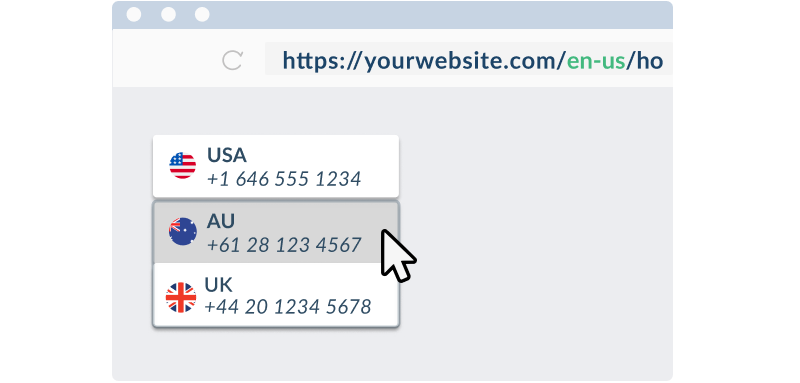
A flag also opens the door to offering alternatives. If you support multiple markets, a dropdown with flags and their corresponding numbers lets any visitor find the right line, regardless of what language or locale your site detection guessed. When you have several numbers, don’t dump all of them on the page. Show one — the one your site’s localization suggests is most relevant — and indicate that more options exist. Keep it simple.
State the Cost, Especially for Premium and Free Numbers
If you publish a premium-rate number, you must show the caller what it costs. This is not just good manners; it is a legal requirement in most countries, and many jurisdictions go further, demanding the charge be printed in the same font type, size and color as the number itself to rule out any confusion.
The reverse holds for freephone numbers. Make it explicit that the call is free, because not every visitor recognizes the number format. Choose your wording carefully — “freephone,” “toll-free” and “green number” all mean the same thing in different regions, so match the label to your audience’s expectations before you commit.
Standard geographic numbers usually fall inside a caller’s bundled minutes, and there is little reason to annotate the number type. What matters for those is the country code, because an international call may incur out-of-bundle costs.
Treating Numbers Like URLs
On an abstract level, phone numbers behave a lot like URLs. They carry the same kind of dynamics and the same kind of measurable statistics.
| Visits | vs | Calls |
| Session duration | vs | Call duration |
| Conversion result | vs | Conversion result |
The customer journey rarely stops at a page view. Combining web design with telephony thinking yields better results for the whole organization — and because the two disciplines share so much common ground, the step is easier than it sounds.