The Confidence Gap
Design has a famously low barrier to entry, which is part of its appeal. The harder skills to acquire are the softer ones: presenting work, handling critique, and navigating team dynamics. Not everyone has a senior mentor to guide them, so many of us are left to figure these things out alone. It is intimidating, but stepping back from the pixels and reflecting on your own values and principles can make those design critique meetings far less daunting. The goal is to walk in with enough confidence to represent your ideas effectively.
At some point, you have likely volunteered to present your work to the wider team. The praise from your boss feels good, but by the time you are standing in front of the room, you are acutely aware of every inconsistent padding value, every misaligned chevron, and the layers in your design file that you never bothered to name. We operate in a world where perceived seniority demands respect, so we feel pressure to present for the job we want, which is also the path to progression and, frankly, better compensation.
It helps to know this feeling is universal. As Benek Lisefski put it:
"It’s not uncommon for me to love the direction a design is going at the start of a project, but by the time it’s complete, I’m cringing and wishing I’d done so many little things better. And it’s not just imposter syndrome, it’s also that you have a gap between your vision and your skills. You can picture something in your mind — or you see inspiration elsewhere that you know you can match — but when it comes down to executing that vision, your skills and experience fall short of what you were aiming for."
The unfortunate side effect of being creative is that you may never be fully satisfied with your output. Unless you accept that 80% done is often good enough to convince the people you need to impress, this dissatisfaction can become a serious confidence drain. Presenting your work is fundamental to career growth, so you either become excellent at acting or you develop coping mechanisms. Oddly enough, presenting to your own team should be the safest environment you encounter at work, yet it can feel like the most daunting task because of internal competition. Instead of relying on sheer luck or charisma, it helps to build a repeatable foundation to stand on.
The Experience Paradox
You might look at more experienced colleagues and wonder how they present with such ease. The funny thing about this is that as your experience level increases, so does your self-doubt.
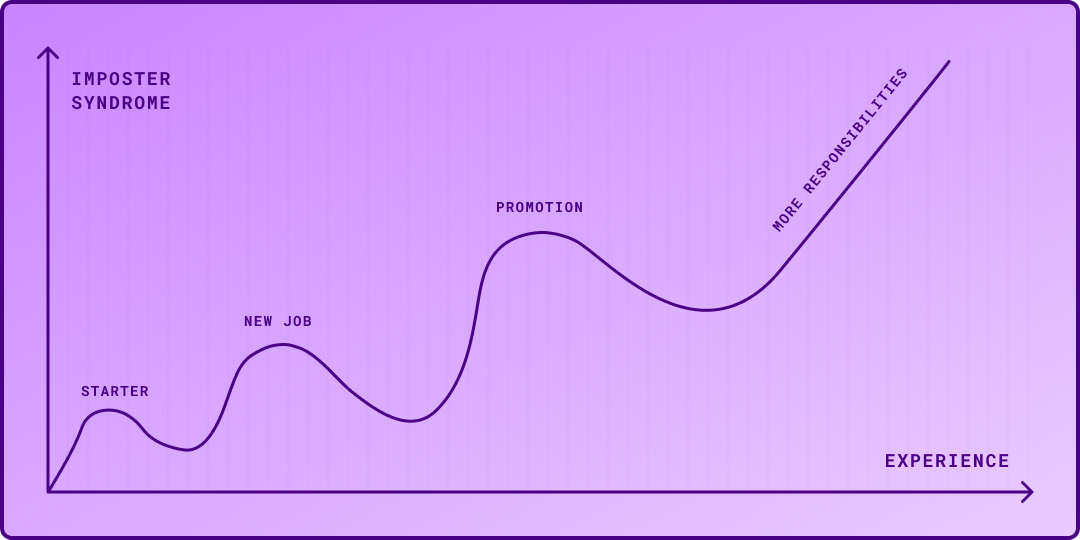
This oxymoron keeps people sprinting in blind panic, burning out, and then wondering what went wrong. A second side effect of a creative mindset is focusing on what is wrong rather than what is working. Highs lead to slumps at the first sniff of negative feedback. In those vulnerable slumps, you need a set of personal values to keep your head up. Developing your own principles gives you a touchstone when external validation disappears.
Personal Principles
Principles often have a reputation for being ethereal or stuck in the self-help genre. Peel that back and it is about knowing yourself: what you can control, what you cannot, and where you can actually win. Knowing where you can win presents marginal gains that, when planned for, compound into noticeable improvement.

Your mind might jump to something spiritual when you hear the word principle, but this is about something far more practical. Forcing yourself into rigid routines often fails; this is more about noticing what you naturally repeat. Do you have a motto or phrase that resonates? Having a few personal directives can anchor you in chaotic situations.
- Always be two steps ahead.
Working extra hard to be one step further in front means that even when you slip, you are still in pole position. It forces you to anticipate scenarios and tension, preparing responses in advance and building solutions to address them. The philosophy of making your best decisions in advance is a strong one. - Expectations lead to disappointment.
Setting out-of-reach expectations for yourself or your peers sets you up for letdown. The way out is accepting that you cannot bank on people doing what you think they will. People are human and will make good and bad decisions, and that is not something you control. Removing that tension helps you stay relaxed and in command of your own results.
You do not need to read more books to find this. This is not about taking someone else’s prescription for who you should be; it is about relying on what you believe to be true. Just as you should not blindly steal principles from elsewhere, no one can write a description of your outlook for you. What follows is a way into the right frame of mind for that discovery.
Thinking Through Your Principles
Start by boiling down what you love most about your current work into one short statement. If working feels like a grind, consider that you may love the moments when you are not working the most; that sentiment also forms a useful statement. From there, trim the statement down until it becomes tweet-sized, then strip out the descriptive words to condense it to under ten words.
If you reach that point, you have a principle or the beginning of one. This is not a principle to advertise; it is something you will feel comfortable repeating to yourself. If your instinctive statement is something like “I love being the best in the room,” that will not serve you. Reshape it into an outward perspective, such as “I love educating others,” which flips the focus from an insular ego boost to a constructive and shareable value.
If you have not arrived at a principle yet, use these prompts to spark reflection:
- When do you feel most comfortable at work?
- When do you feel least comfortable?
- When was the last time you received praise, and what was it for?
- Where would you like to be in six months, a year, or two? A lack of answer here highlights a potential growth opportunity.
- How would someone else describe you? Pick out the keywords and expand them into a phrase.
- What makes you distinctly unique? If your instinct is negative, try to invert that perspective.
- What is your working style? Notice whether your best work comes in the morning or the evening.
- How do you prefer to communicate? In person, via message, or through other channels?
Write the answers down if it helps. The very act of recording your thoughts is itself a signal of your preferred process.
Working With The Team
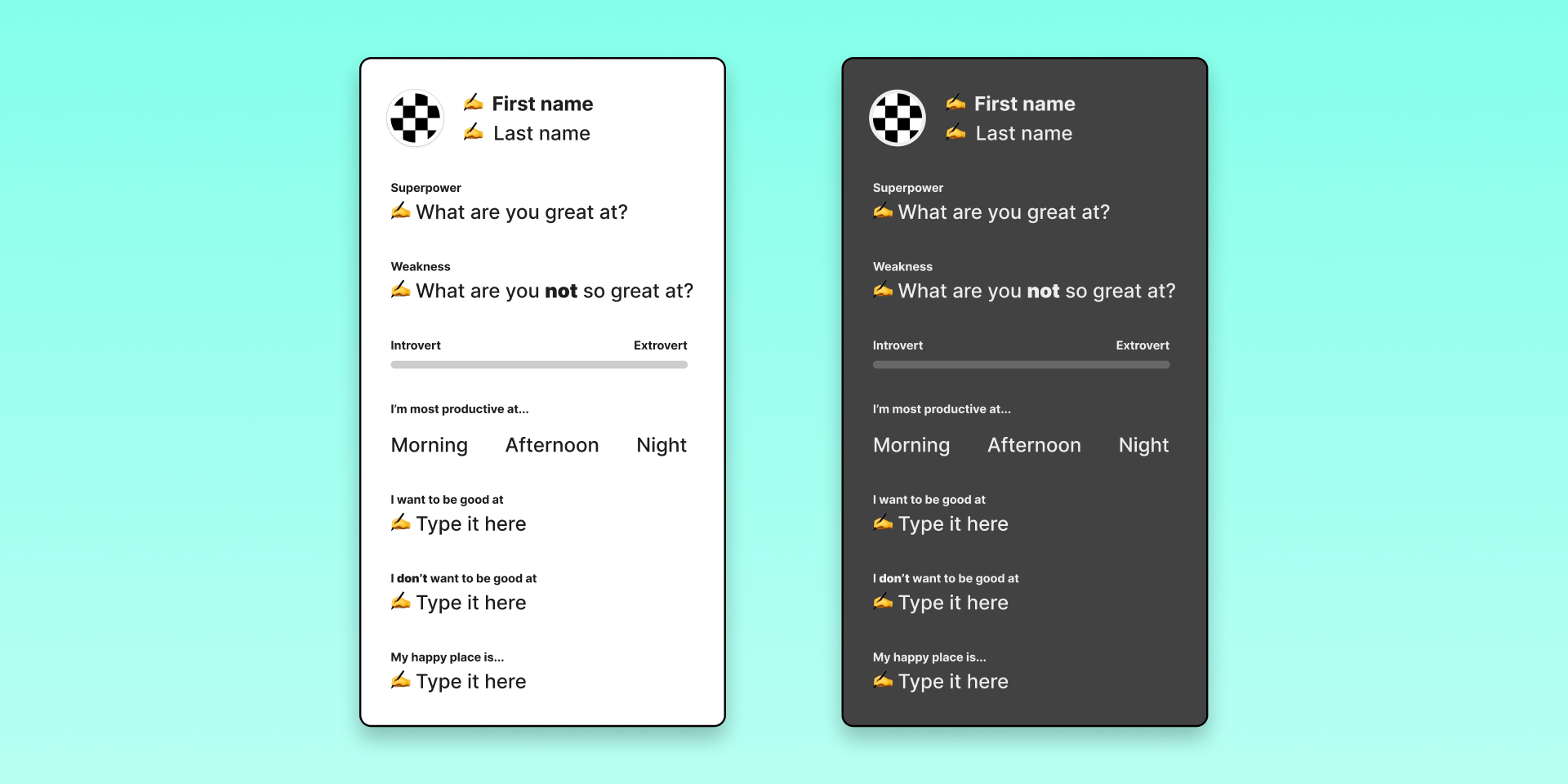
Some people prefer this as a visual exercise. A resource with prompts is available in the Figma community for just that purpose. You can go through it on your own, but it is stronger as a team activity. Finding out these workplace tendencies collectively spots each other’s strengths and weaknesses, which encourages a more open communication style and collaborative atmosphere. Doing it together surfaces working styles and pinpoints inefficiencies, driving ownership among those who want it, domain expertise among the specialists, and an explicit respect for differences.
Putting Principles Into Practice
Once you have settled on a few guiding principles, the next step is applying them to the situations that trigger your imposter syndrome. Consider the recurring scenario of presenting your work to the team. When you are nervous about that moment, your principles can shift the dynamic in your favor.
- If you identified with the principle "I love educating others," presenting becomes less about performance and more about sharing. Talking through your decisions, the research behind them, and what the team can learn from your process is exactly what an educator does.
- If your principle is that you do your best work in the morning, schedule the meeting for 10 am rather than late afternoon. Managing the timing of high-stakes moments is a practical way to reduce stress.
- If the problem is memory or focus during presentations, adopt a principle like "take notes about everything." Fill your workspace with reminders of what you want to cover, or give attendees a handout summarizing the core points. When the material is in front of everyone, the presentation explains itself.
When presenting projects internally to stakeholders, a few key practices keep the session productive and reduce anxiety:
- Publish an agenda. Share a concise agenda well before the meeting so everyone knows what to expect.
- Prepare attendees. If the meeting is scheduled far out, send reminders about what is coming up and whether you need anything from them.
- Provide context. Whether you are addressing your immediate team or external stakeholders, frame the conversation with a short list of actionable points.
- Work backwards. For first-time presentations of new work, show the finished design first, then walk through the early scoping and decision-making.
Stress often peaks when we try to become the person we assume others expect us to be. By defining who we are as individuals and letting go of imagined expectations, we give ourselves a real platform to succeed.
Building Confidence Through Self-Definition
Crafting personal principles is a first step toward feeling stronger and more confident as you progress in the design industry. The core takeaways are straightforward: you are good at what you do, sometimes you have to take control of your own path and seize opportunities as they arise, and you likely did not realize how much confidence you already have in your own methods until you wrote them down.
There are also external resources worth exploring for anyone looking to reinforce these ideas. "Why Good Designers Can Never Do Their Best Work" by Benek Lisefski examines the systemic hurdles designers face. Shane Parrish's course on making smart decisions offers practical, time-tested principles for effective judgment. For a more collaborative approach, the FigJam template for team trading cards can help surface shared values and working styles across a team.