Design-Led Leadership: A New Mandate for the C-Suite?
When Brian Chesky speaks about pulling Airbnb back from the brink, his language is less about metrics and roadmaps and more about craft, detail, and experience. The story is now a famous case study in business recovery — and a touchstone for how leadership is evolving at the intersection of product, engineering, and design.
But Chesky’s approach raises a practical question that ripples through the industry: if a CEO is making decisions like a head of design, what does that mean for the product managers, design managers, and agile coaches who once bridged those worlds? We asked five industry leaders whether this signals a fundamental shift in the corporate operating model, or simply a refined division of labor at the top.
The Ambiguity of Oversight
For some, the news is not that a CEO owns the experience — it’s that companies ever allowed the "design" function to become siloed. The challenge, according to one camp, isn't crafting a better interface; it's managing the ambiguity between what people say they want and what they actually do. This is increasingly a problem of data, evidence, and knowing which risks to take.
At its core, design-led leadership is not solely about visual polish. It is about creating a strategic conversation — where discovery, synthesis, and validation feed directly into business bets. For those leading successful transitions, the design office is not separate from product strategy; it is the vehicle for prioritization and choice.
Who Owns the Downstream Work?
One executive observer points out that while Chesky’s personal taste and judgment might refine a feature’s details, someone still has to manage logistics — who's building what, what falls out of scope, and how cross-functional dependencies are sequenced. Even if design isn't a pawn in a high-level committee, it does not absolve the rest of the organization from executing with precision.
The lingering issue is scale. Chief design officers and their teams can oversee elegance, but when a company grows beyond a certain complexity, strategy has to translate through layers of delegated authority — be it directors of design, engineering managers, or more entrepreneurial project leads who interface with multiple disciplines.
Beyond a Chief of Staff
If Chesky’s leadership is a model, it’s not one of a lone founder with strong opinions. It’s the structure surrounding him — including staff and operations — that enables, filters, and implements his decisions, distributing attentional capacity outward to the firm's key projects.
The takeaway for critics of the product manager role? Boxes aren’t the issue; information flow is. Of the leaders we spoke to, none predicted the outright elimination of traditional product management. Many, however, saw a refinement — where design leaders are increasingly involved before commitments are made, not after the fact.
The Decision-Making Continuum
There remains plenty of room within the modern enterprise discussion for a debate between design control and "profit-first" efficiency. What emerges is an insight that product management might lose authority over owning the decision, but retains its hold over feeding it with evidence and operational context.
Indeed, the five voices in this dialogue converge on a distinct perspective: the "new deal" for business is not to have designers rule the hierarchy, but to ensure that the people who must make trades-offs and sign off on them — regardless of their job title — operate using collaborative judgment built on taste, data, and ethics. Where that overlaps precisely with PMs is a competitive advantage for whichever company acknowledges it.
While the founder story remains king, business success will not answer solely to aesthetic magic. It will bow to the coordination, and often quiet resistance, of those who engineer workflows to deliver and sustain modern experiences.
Design’s seat at the strategy table
When Brian Chesky sat down with Figma’s Dylan Field at Config 2023, the conversation quickly moved beyond the usual founder-talk. Chesky’s retelling of Airbnb’s near-death experience during COVID—and the product overhaul that followed—became a catalyst for a wider debate about who really owns product vision. His core argument: designers should stop being order-takers and start leading, and traditional product management structures may be getting in the way.
That message spread fast, and, as these things do, got simplified in the retelling. Airbnb eliminated PMs was the shorthand. The reality is more nuanced, and the people who build products for a living have been sorting through the implications ever since. Five leaders across design and product weighed in on what Chesky actually said—and what it means for how teams should be structured.
Domain knowledge beats job titles
Julie Zhuo, co-founder at Sundial and former VP of Product Design at Facebook, argues that the real issue isn’t who holds which title, but who holds the best judgment and the best context.

Zhuo’s point: designers often have excellent judgment about what will make a product resonate with users, but they frequently lack the broader business context to apply that judgment effectively. If they don’t understand the business model, the competitive landscape, or which users are most valuable, their decisions will be skewed toward one side of the equation.
The fix, she suggests, is for designers to actively learn the domain they’re designing for. “Wrapping your arms around the problem,” as Chesky put it, is a requirement for creativity to flourish. “It’s very, very hard to be creative... when you don’t feel like you know the domain,” she says. The disciplines converge at high levels, and the best outcomes come from combining different brains, not from enforcing strict boundaries.
Design without business is decoration
Steve Johnson, VP of Design at Netflix, is quick to clarify the record. “I don’t think that anyone would disagree with ‘the what’ of Brian’s argument. It’s just ‘the how.’” Pointing out that Airbnb still hires product managers—they’ve just renamed the function—Johnson says Chesky’s real target is the negativity and hubris that can accrete around the PM role.

Johnson’s own Config talk carried the mantra, “Design without business is just decoration.” To him, Chesky’s call and his own are two sides of the same coin: they both want creative, empathetic people who see users as more than numbers in a spreadsheet to take a stronger hand in shaping strategy. The rivalry between design and product management, he argues, is over. What’s needed now is a new set of terms and definitions that center on the mission, not the org chart.
“I would not want to make the PMs at Netflix go away,” Johnson says, but he understands the impetus to rebrand and reset expectations.
We have to assume that we’re all reaching for the same goal, and it might be time for us to come up with new terms.“We have to assume that we’re all reaching for the same goal, and it might be time for us to come up with new terms.”
The trap of middle management
Sho Kuwamoto, VP of Product at Figma, sees Chesky’s critique of PMs as aimed at a particular archetype: the middle manager who spends more time coordinating opinions and reporting up than solving problems. Too often, PMs follow a strategy handed to them without keeping their eye on the result, producing a product that “meets all the objectives on paper” but doesn’t resonate.

Kuwamoto frames the choice as between being a film director (art) and a studio exec (commerce). He wants to be the director—helping the team ship something that fits a vision of what a truly great product could be. Chesky argues that this is inherently a designer’s job, not a PM’s. Kuwamoto accepts that logic for IC designers, but pushes back on a world that leaves no room for people like him.
“I would never make it as an IC designer... and yet, I feel like I’m effective at the level that I’m at,” he says, before adding: “Where does that leave me?” Teams work best when people are allowed to contribute beyond their title, without being confined to boxes.
When we think about our careers, many of us end up having to pick between choices that maybe aren’t perfect. We have certain ideas about what we want to do, and about who we are.“When we think about our careers, many of us end up having to pick between choices that maybe aren’t perfect. We have certain ideas about what we want to do, and about who we are. ”
What Airbnb actually changed
Lenny Rachitsky, the writer and podcaster who was a product lead at Airbnb, offers the clearest explanation of what Chesky’s restructuring really involved. It wasn’t an elimination—it was a shift in philosophy. To move faster during COVID, Airbnb pivoted to a more “vision-oriented,” Apple-style approach where founders set the roadmap and experiments take a back seat.

The product management function was renamed “product marketing” to underscore a focus on adoption and go-to-market strategy, and the coordination work was offloaded to more program and project managers. Rachitsky acknowledges the excitement over the PM role’s apparent demise is telling: “There are many bad PMs that can suck the life out of any team.” But his experience is that a great PM transforms the work.
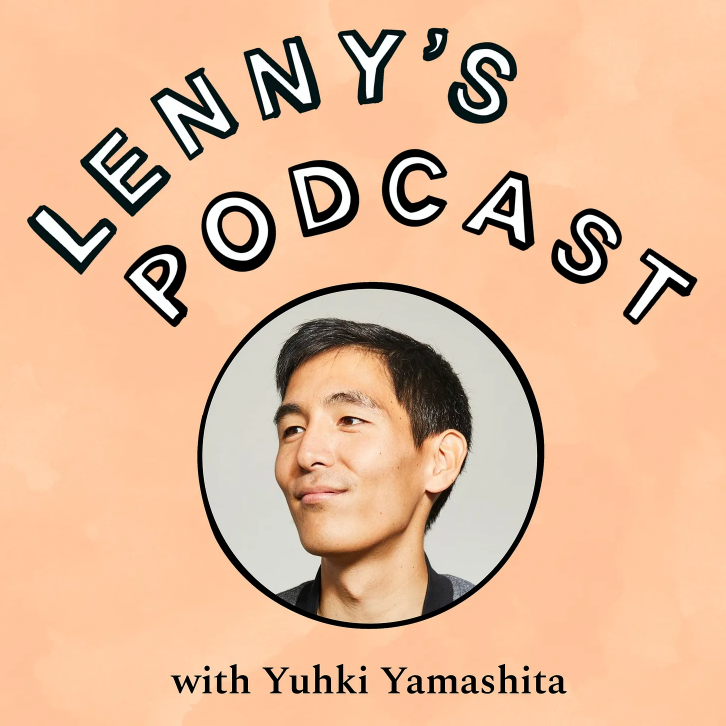
“A good PM will help you do the best work of your life,” he says. The market’s hunger for content about how to build product—which grew Rachitsky’s newsletter and podcast into a phenomenon—suggests these questions aren’t going away anytime soon.
Refactoring, not eradicating
Yuhki Yamashita, Chief Product Officer at Figma, takes a pragmatic view. He’s not precious about product management as a discipline: if it disappeared tomorrow, he says, its skills would simply be refactored into other roles. But the job itself—talking to customers, negotiating trade-offs, understanding priorities—remains critical.

Yamashita argues that Chesky’s instinct to “cut it all out” (the decks, the reviews, the strategy docs) is addressing a symptom, not the cause. When a PM’s job becomes too internal-facing—all alignment and communication—the distance from shipping product grows. That’s a failure of execution, not proof that the role is obsolete. He has seen the value in opposing forces: designers pushing “a little bit impossible” ideas can inspire engineers to reach further, and a PM in the middle provides useful creative friction.
There’s a world where design and product management are going to be refactored over time, because designers are “moving up the stack.” They are no longer just in design details, and that pushes them up in altitude.“There’s a world where design and product management are going to be refactored over time, because designers are “moving up the stack.” They are no longer just in design details, and that pushes them up in altitude.”
But Yamashita also connects Chesky’s language to a deeper trend. Designers are indeed “moving up the stack.” As they take on more product ownership, PMs will be pushed to think even more about the strategic business side. Boundaries will blur, and the roles will be refactored over time. Chesky’s battle cry, says Yamashita, was aimed more at designers than at PMs—a call for them to have the nerve to apply their first-principles thinking and creative problem-solving beyond pixels.
“Those are core attributes of a designer. But they are also core attributes of a great leader, too.”

Built for the way modern teams work
Figma is not just a design tool—it is a collaboration platform. Because it runs in the browser, there is no installation, no version confusion, and no "final_v2" file disasters. Everyone works on the same live file, whether they are in the same room or on different continents. Comments, cursors, and edits appear in real time, which turns design reviews into conversations rather than email threads.
This approach changes the rhythm of a project. Developers can inspect specs without waiting for handoff. Product managers can jump in to see progress without breaking the flow. Presenters can share a link instead of exporting slides. The result is a single source of truth that keeps design and development aligned from first sketch to final build.
From individual craft to shared momentum
Working in Figma removes the friction that usually slows design work. Rough ideas can be tested in minutes, and iteration becomes a habit rather than a hurdle. When a change is needed, it stays in context—no syncing, no re-uploading, no "which screen are we talking about?"
For teams, this means fewer meetings about process and more time solving product problems.
- Sketch, prototype, and gather feedback in a single workspace.
- Share files with a simple link—no exports or attachments.
- Track decisions with comments attached directly to the design.
- Keep developers in lockstep with inspectable specs and code-ready assets.
Whether you are refining a micro-interaction or mapping an entire user journey, the tools stay out of the way. What remains is a transparent, fast, and honest way to make products together.
Get started for free and see what shifts when design stops being a bottleneck and starts being a shared language.