The Coinbase Design System (CDS) team, which maintains components for the largest U.S. cryptocurrency exchange across mobile and web, ran a controlled evaluation of Code Connect against coding agents. The result: better adherence to the design system and an average 22.5% reduction in token costs.
Why the design system needed a new approach
Technical Lead Erich Kuerschner had already built CDS agent skills that teach agents the team's conventions—selecting appropriate components, avoiding deprecated patterns, and using CDS design tokens. An internal prototyping playground sat on top of those skills, so anything built there defaulted to CDS. Both, however, were designed for writing code from scratch. The workflow of converting a Figma design into production-ready CDS code remained a weak spot; product engineers described it as slow, inaccurate and too unpredictable for everyday use.
Code Connect looked like the right lever, but CDS had not revisited its mappings since before the Figma MCP server shipped. Those mappings were stale, and many newer components had no templates at all. As Kuerschner put it, Code Connect offered a path to reliable design-to-code work without depending solely on agent skills.
Rolling out coverage across the system
Modernizing the setup meant updating hundreds of components on both mobile and web. Kuerschner used Claude Code to build a parallel agentic workflow: it took a list of Figma components, processed them concurrently, and had the figma-code-connect skill generate the templates. Full coverage of the design system, up from a handful of migrated components, took roughly four hours.
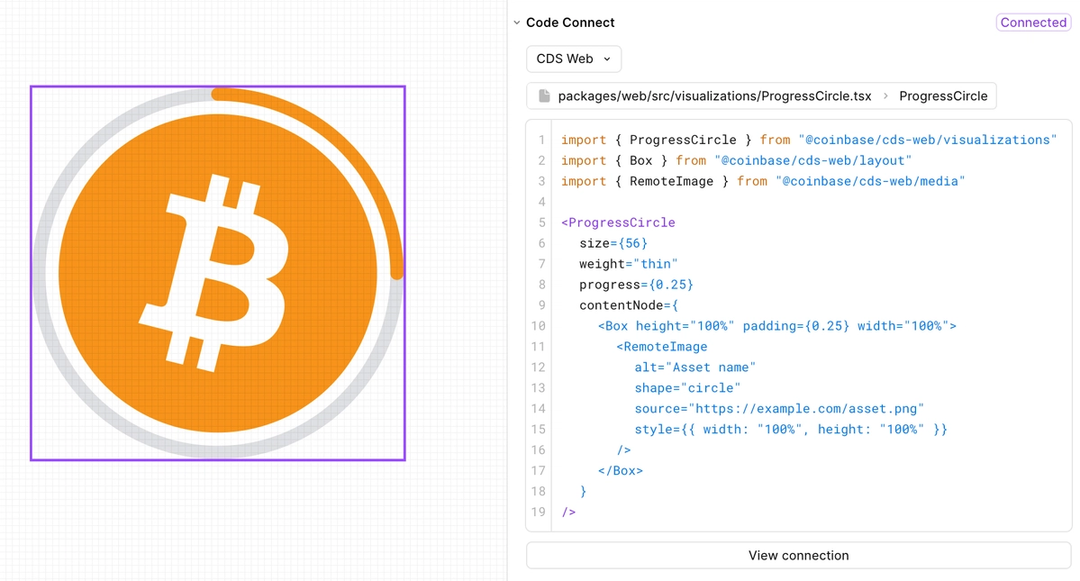
Every CDS component in Figma now maps to its code counterpart through Code Connect, and Code Connect is embedded in the team's component workflow. Engineers use the Figma MCP server to pull design specs, create or update code components, and keep each component's Code Connect template current.
Design of the benchmark
To quantify what Code Connect contributes to quality, token use and implementation time, Kuerschner ran three trials with and without it, holding the design, prompt and model (Sonnet 4.6) constant. Each run started in a blank codebase, reset between trials to remove lingering context, and prompt caching was controlled for so it could not skew results toward Code Connect. The prompt itself was deliberately minimal: Implement this design from Figma, plus a link to the file.
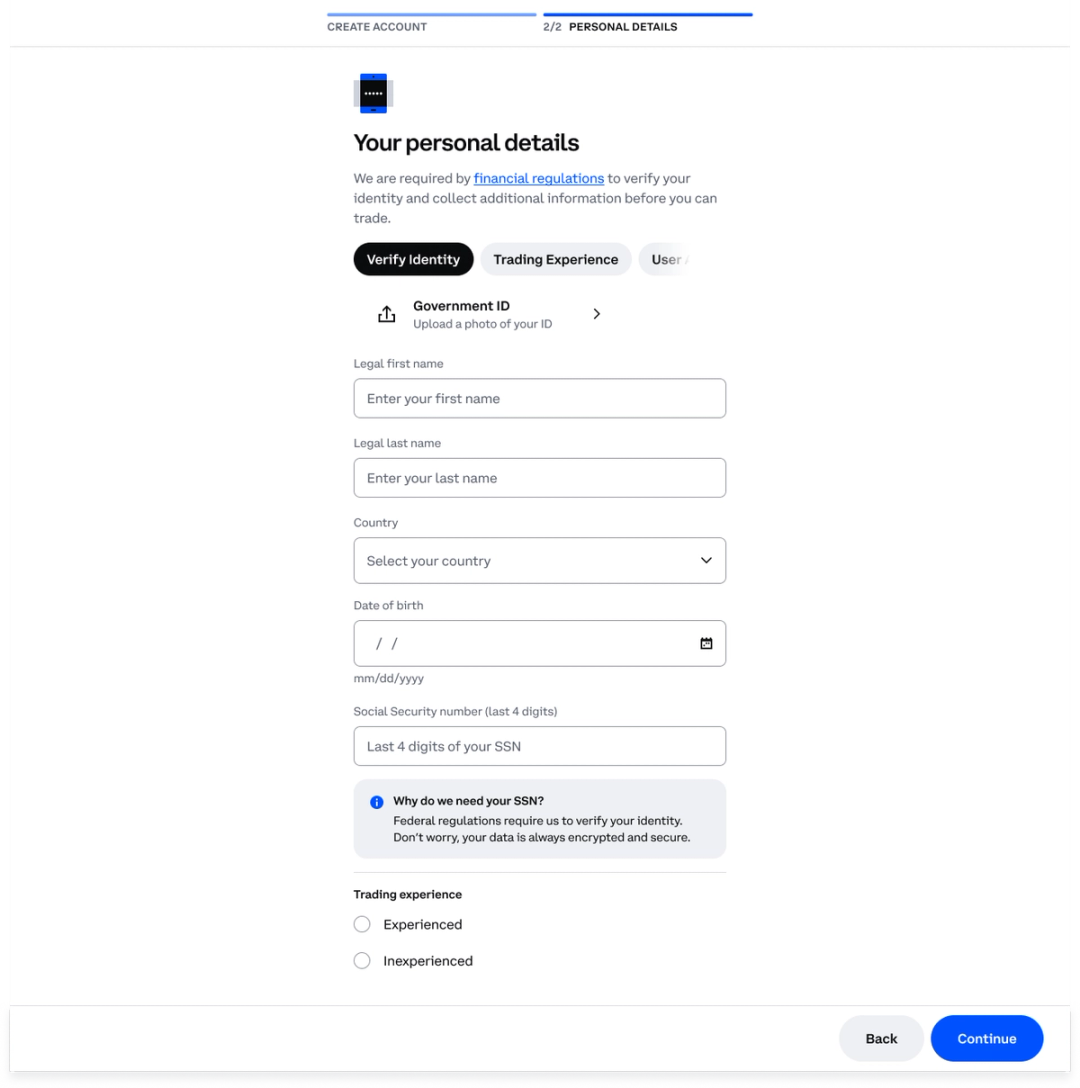
The chosen design sat between trivial and complex. It deliberately included difficult cases—the CDS Stepper, which exposes dozens of properties and is complex in code, appeared in the header—alongside a broad mix of components that agents had historically struggled with. Illustration and icon names, for instance, were a frequent source of hallucination. After full Code Connect adoption, Kuerschner says, that problem vanished.
What the trials measured
Two criteria anchored the assessment of both visual and code output: component choice and design system adherence. With Code Connect in place, component selection was consistently correct, including the hard cases like ListCell and Stepper. Without it, agents tended to rebuild controls from primitives—one recurring failure was a Stepper assembled from two progress bars and labels. The trials also checked token usage, verifying that agents applied semantic colors and sizing rather than CSS or inline styles.
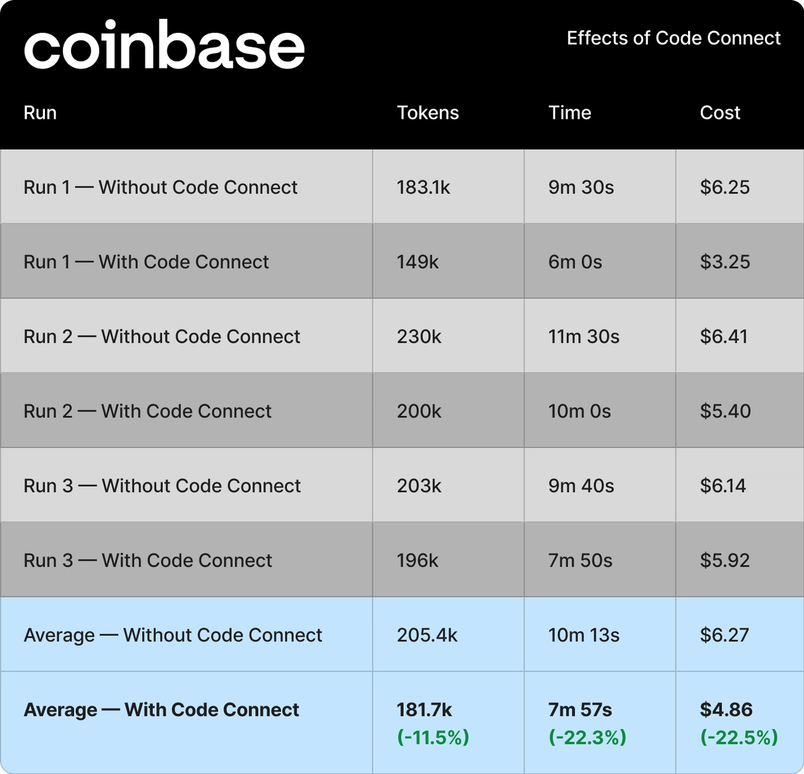
The gains held in every run: on average, 11.5% fewer tokens, 22.3% less implementation time and 22.5% lower cost. The evaluation also sharpened the division of labor between the two mechanisms. CDS agent skills govern how a solution is implemented—pattern choice, deprecation avoidance—steering quality at scale. Code Connect supplies starting context from designs, so agents spend fewer tokens searching and guessing. Because that benefit is contextual, it translates into time and cost savings regardless of what the skills do.
Evaluations as a hedge against model churn
The CDS team regularly tests its design system skills so that edits do not break agent behavior, and it has observed that newer model generations need those skills less and less. Kuerschner treats the evaluations as preparation for a future where skills may be unnecessary, while arguing that context quality will always matter. Without Code Connect, he warns, an agent can interpret a design wildly; relying on that outcome is not a position the team wants to be stuck in.
Code Connect is available on Organization and Enterprise plans for Full or Dev seats.